
How to Chicken Breast Soft: Simple Ways That Work
You can make chicken breast soft every time when you focus on three things: shape, moisture, and heat.
Chicken breast is lean and dries out fast if you cook it unevenly or too long.
The simplest path to a juicy chicken breast is to start with even pieces, add salt and moisture before cooking, and use gentle heat until the meat just reaches safe temperature.
Those steps give you a tender chicken breast without extra fuss.
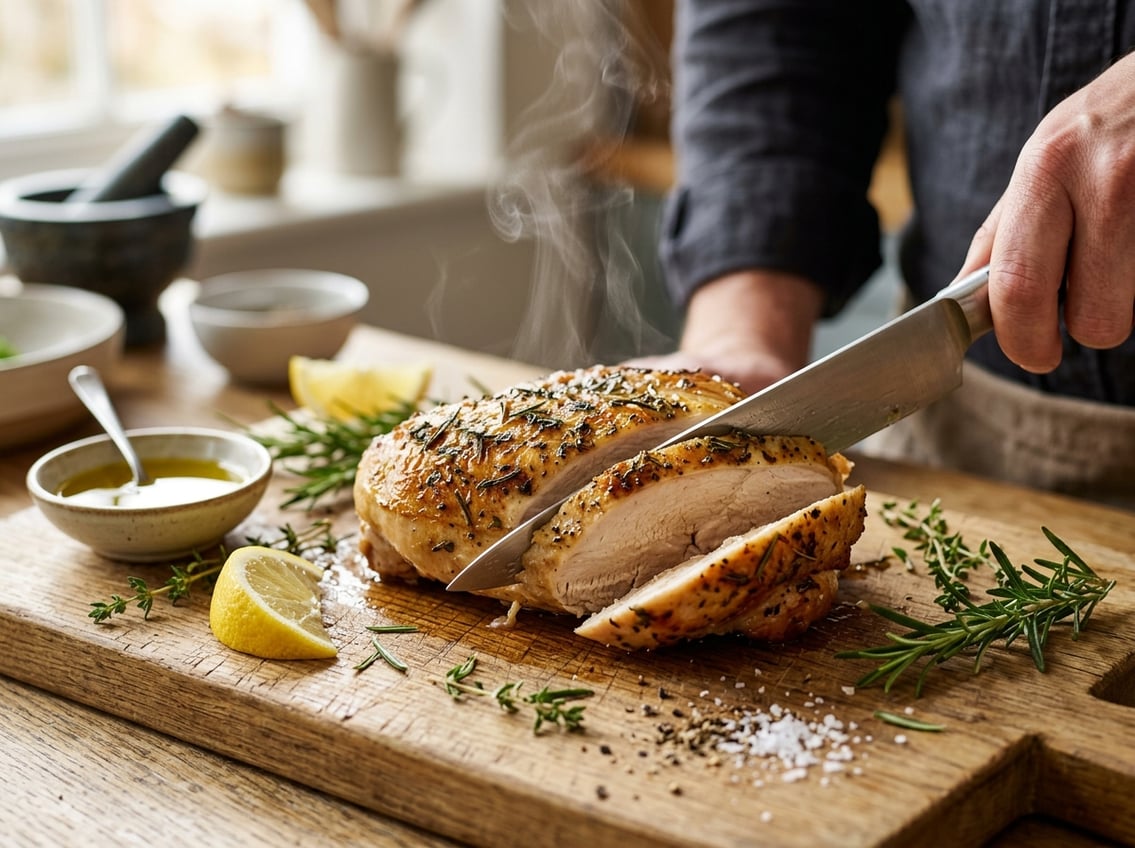
If you want truly juicy chicken, the details matter.
Small changes, like pounding to an even thickness or resting the meat after cooking, make a clear difference in texture and flavor.
Prepare Chicken Breast for a Softer Texture

Good prep makes tenderizing chicken breast much easier.
When you cook the pieces evenly and slice them cleanly, you get tender chicken breasts with less risk of dry edges and underdone centers.
Choose Even-Sized Boneless Cuts
Start with boneless, skinless breasts that are close in size and thickness.
Even pieces cook at the same pace, which helps you avoid one dry breast and one undercooked one.
If one breast is much thicker, trim it carefully or split it into cutlets.
That simple step sets you up for more reliable results.
Pound to an Even Thickness
Place the chicken between sheets of plastic wrap or in a bag, then gently pound it to an even thickness.
This method tenderizes chicken breast by removing thick spots that need extra time.
Keep the motion light and steady.
Aim for a flatter, more even piece, not shredded meat.
Cut Against the Grain for Better Bite
After cooking, slice the chicken against the grain.
That shortens the muscle fibers and gives you a softer bite.
The USDA food safety guidance also reminds you to handle poultry safely and cook it to a safe internal temperature.
Good slicing improves texture at serving time.
Use Brining and Marinades to Lock In Moisture

Brining and marinating chicken both help you build a juicier result, but they work in different ways.
A brine helps the meat hold water, while a marinade adds flavor and can soften the surface of the meat.
When to Use a Quick Brine
Use a quick brine when you want a simple moisture boost with little effort.
A basic mix of water and salt for 30 minutes to a few hours can help you get a juicy chicken breast, especially with thicker cuts.
You can brine while you prep the rest of the meal.
This is a smart option when you plan to cook with higher heat.
How Marinating Chicken Improves Tenderness
Marinating chicken can help you get a more tender chicken breast, especially when the marinade includes yogurt, buttermilk, lemon juice, or vinegar.
As noted in the Meat Chef Tools guide, acidic ingredients and dairy can support tenderness while adding flavor.
Marinating is most useful when you want a seasoned chicken breast with a stronger taste.
Give it enough time for the flavor to reach the surface, from about 30 minutes up to several hours.
Best Marinade Ingredients Without Making It Mushy
Use ingredients that balance flavor and texture.
Good choices include oil, salt, garlic, herbs, yogurt, and a small amount of acid.
Keep strong acids like lemon juice or vinegar in check.
Too much acid for too long can make the surface soft in an unpleasant way, so use a marinade that seasons without breaking down the meat too far.
Cook Gently So the Meat Stays Juicy

Gentle cooking keeps chicken breast moist and gives it even texture.
High heat and long cook times often cause chicken to turn dry and stringy.
Covered Skillet Method for Reliable Results
A covered skillet gives you steady heat and helps trap moisture.
Sear the chicken briefly, add a small splash of liquid if needed, then cover and cook until done.
This method is fast and dependable.
It gives you a seasoned chicken breast with a good outer surface and a juicy center.
Poaching and Other Low-Heat Options
Poaching is a simple low-heat method for juicy chicken breast.
You cook the chicken in gently simmering liquid, which helps it stay soft instead of tightening up.
The Meat Chef Tools article notes that poaching, baking, and slow cooking can all keep chicken breast tender when you control the heat.
These methods help you get a softer texture and a more forgiving cook.
Use Temperature and Resting Time Correctly
Use a thermometer and remove the chicken when it reaches 165°F in the thickest part.
That gives you safe chicken without guessing.
Rest the meat for 5 to 10 minutes before slicing.
This helps the juices settle back into the chicken breast instead of running onto the cutting board.
Common Mistakes That Make Chicken Breast Tough
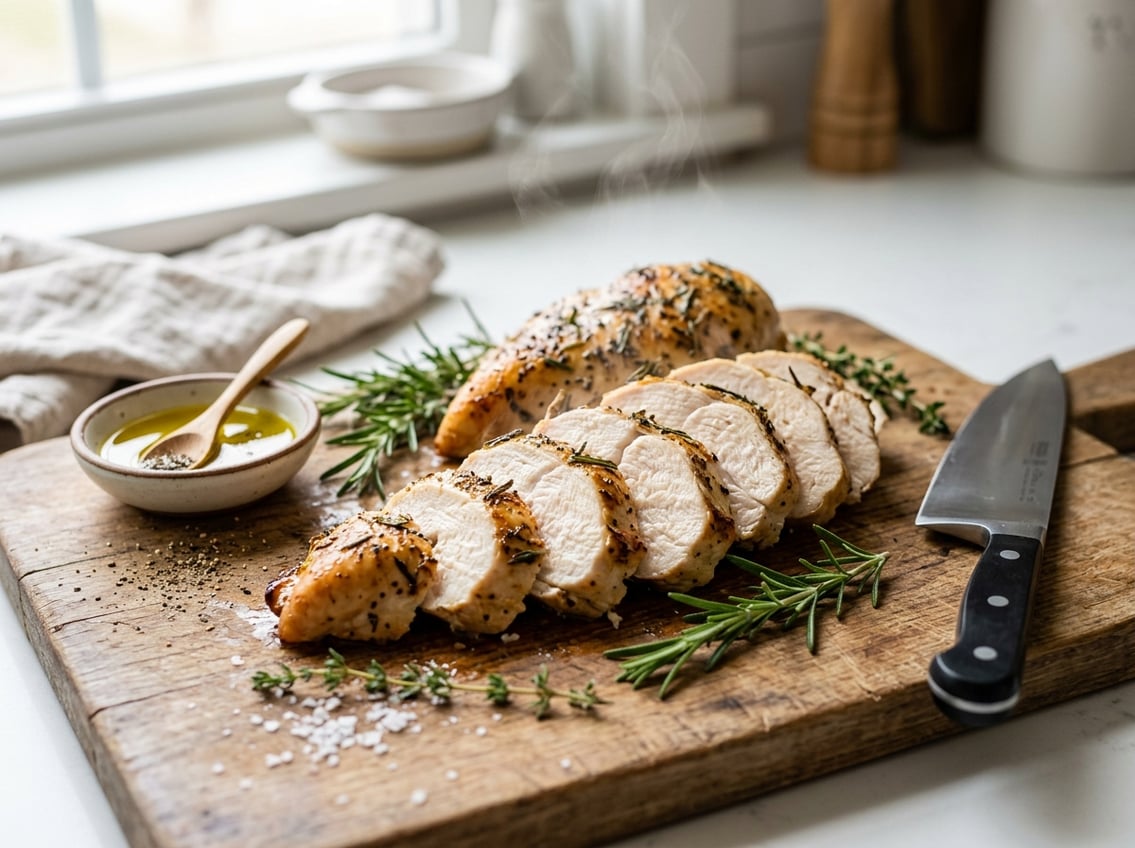
A few common habits can turn a tender chicken breast into dry meat.
Most problems come from heat, skipped prep, or cutting too soon.
Overcooking and High Heat Problems
The biggest issue is cooking too long.
Chicken breast dries out quickly when the heat is too strong or the time runs too long, as noted by Cook Answers.
Try to avoid blasting the pan or oven with unnecessary heat.
A steady, moderate cook gives you a better chance at juicy chicken.
Skipping Drying, Seasoning, or Resting
Pat the chicken dry before cooking so the surface browns well.
Then season it evenly so the outer layer tastes complete.
Rest the meat before slicing.
If you slice right away, the juices leave the meat faster and the texture feels drier.
How to Fix Dry Chicken After Cooking
Slice dry chicken thin and serve it with sauce, broth, or pan juices. This method adds moisture back to each bite.
Chop the chicken and mix it into salads, soups, pasta, or tacos. These dishes hide dryness and make the meat easier to enjoy.


