
How Long for Chicken Breasts: Oven Time Guide
You may wonder how long to cook chicken breasts in the oven when you want meat that is safe, juicy, and not dry.
Most boneless chicken breasts bake in about 20 to 30 minutes at 375°F. Bone-in breasts usually need longer.
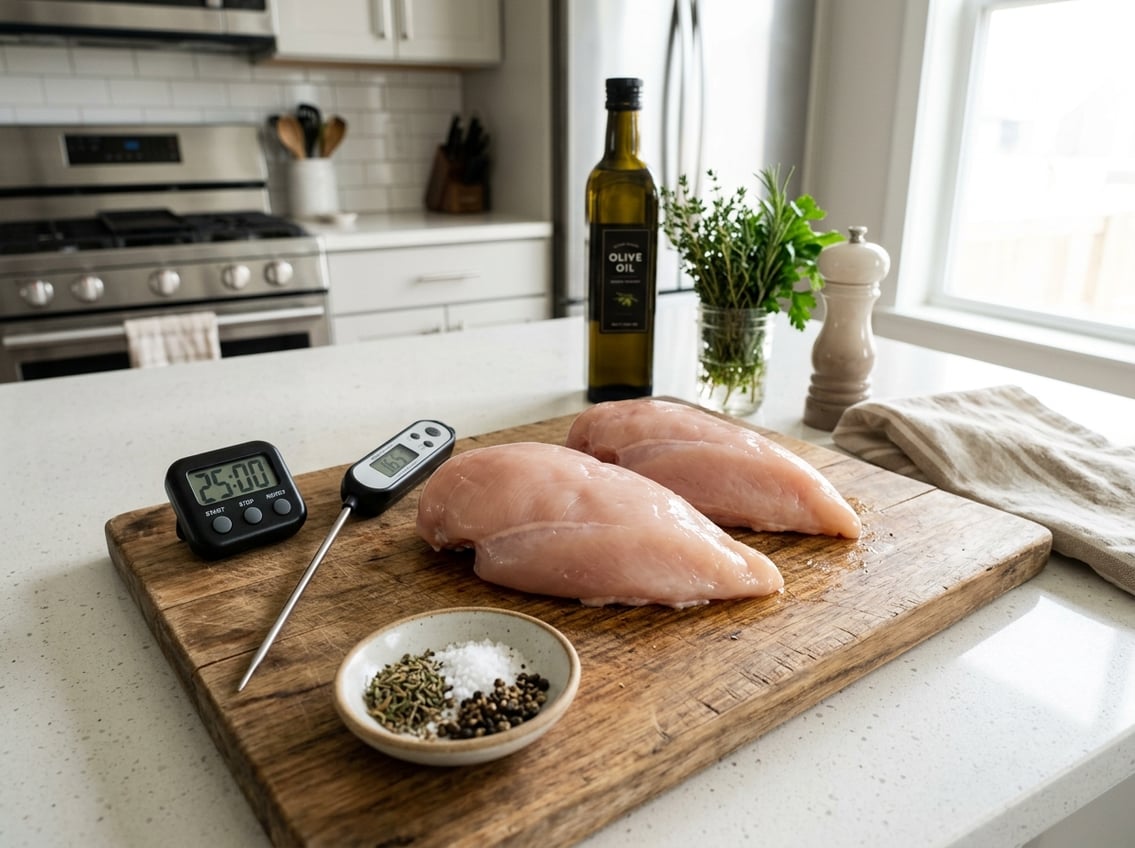
Use time as a guide and check the temperature for doneness. The thickest part should reach 165°F.
Size, thickness, oven heat, and whether the chicken has bone all change the cooking time.
Best Oven Times at a Glance
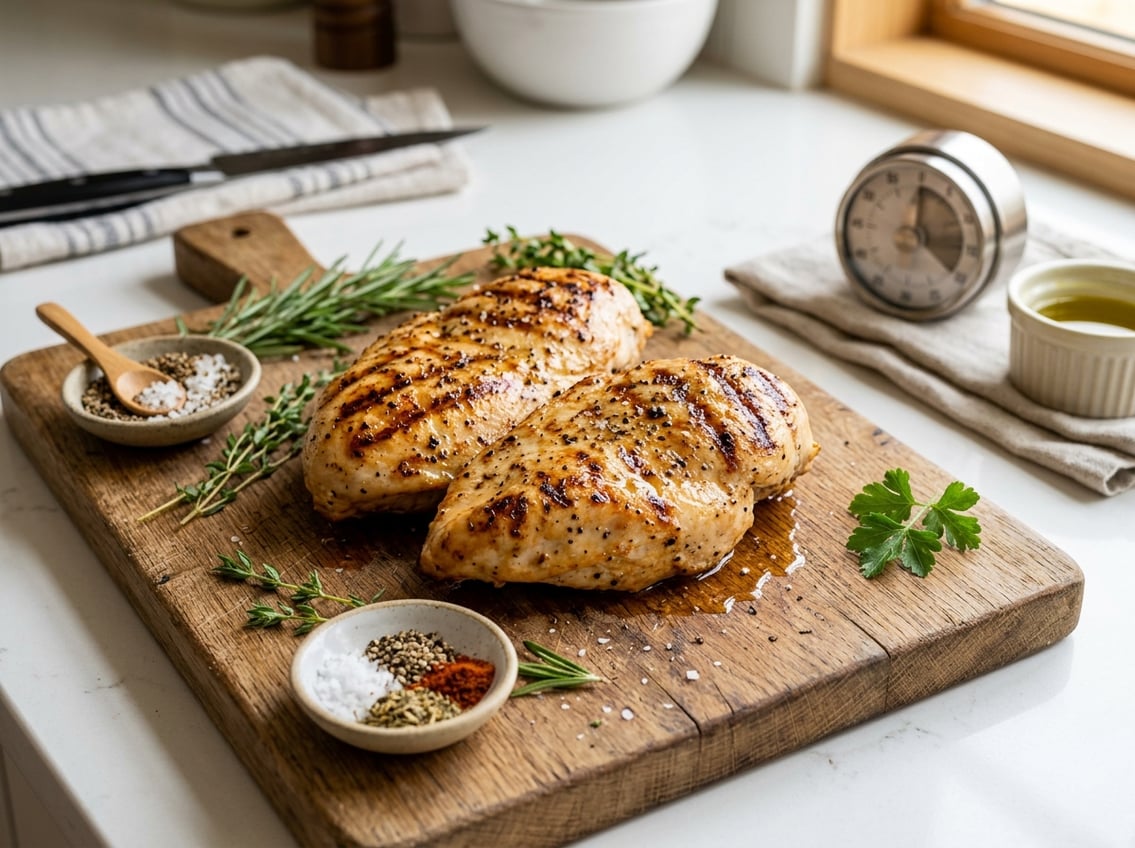
Start with your oven temperature and breast type. A 6 to 8 ounce boneless breast is the usual baseline.
Thicker pieces and bone-in cuts need more time. Boneless breasts cook faster than bone-in ones, and 165°F is the safe finish point.
Boneless Breasts by Temperature
| Oven Temp | Time Range | Notes |
|---|---|---|
| 350°F | 25 to 30 minutes | Gentle heat, good for thicker pieces |
| 375°F | 20 to 25 minutes | Reliable everyday choice |
| 400°F | 18 to 22 minutes | Faster browning |
| 425°F | 16 to 20 minutes | Best for thinner breasts |
Bone-In Breasts by Temperature
Bone slows heat flow, so bone-in chicken breast takes longer. Bake it for about 30 to 40 minutes at 375°F, adjusting for size.
If the skin is on, the surface may brown before the center reaches temperature. Always use a thermometer to check doneness.
How Thickness Changes Cooking Time
Thickness affects cooking time as much as weight. A thin breast may finish 5 to 10 minutes sooner than a thick one at the same temperature.
If the thick end is much larger than the thin end, the thin part can dry out before the center cooks. Pound the breast to even thickness for better results.
How to Check for Doneness Without Drying It Out
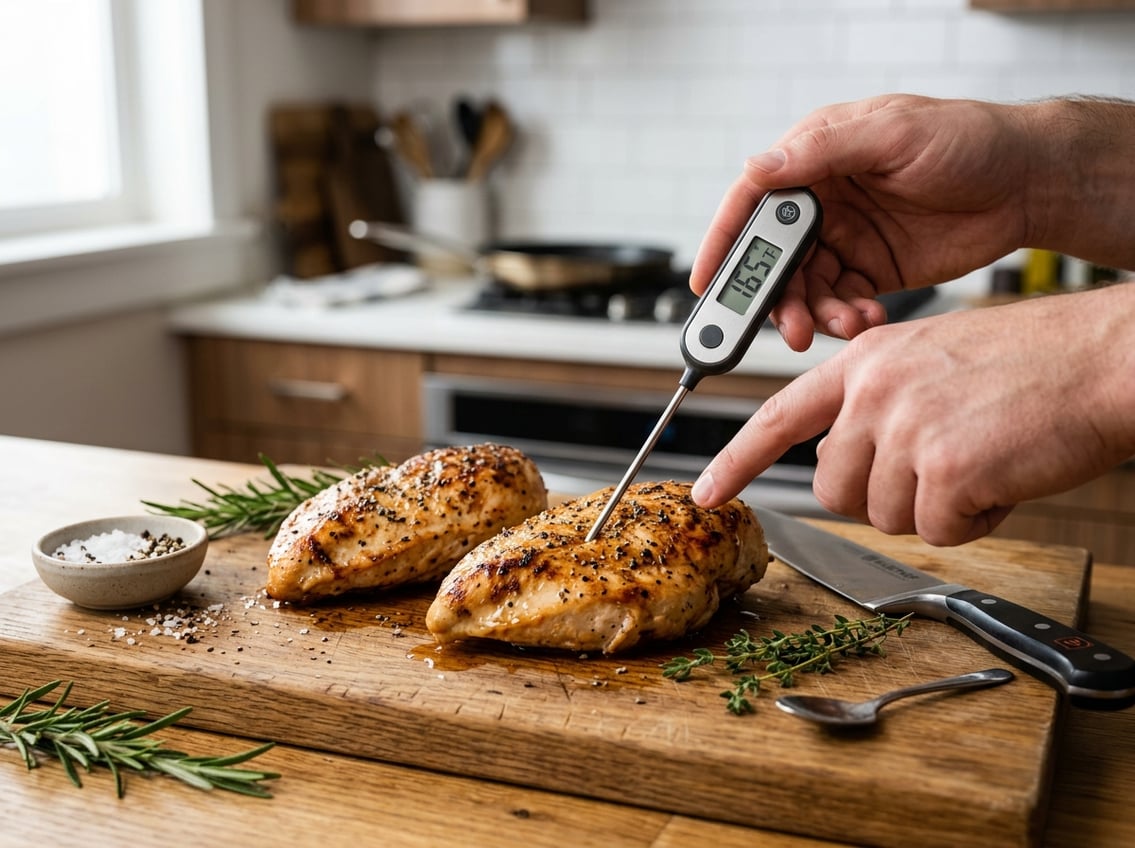
Use time as a rough guide, then check with a thermometer. Even a few extra minutes can turn moist chicken into dry meat.
Aim for safe chicken with good texture.
Use a Meat Thermometer the Right Way
Insert the thermometer into the thickest part of the breast, away from the edge or pan. Wait for the reading to settle.
Check the center of the thickest breast in the pan for extra confidence.
Why 165°F Matters
The USDA says chicken breast is safe at 165°F. This temperature ensures safety without relying on color.
Resting Before Slicing
Let the chicken rest for 5 to 10 minutes after baking. This helps the juices settle back into the meat.
If you cut too soon, juices run out and the chicken can seem drier.
Prep Steps That Improve Texture and Flavor
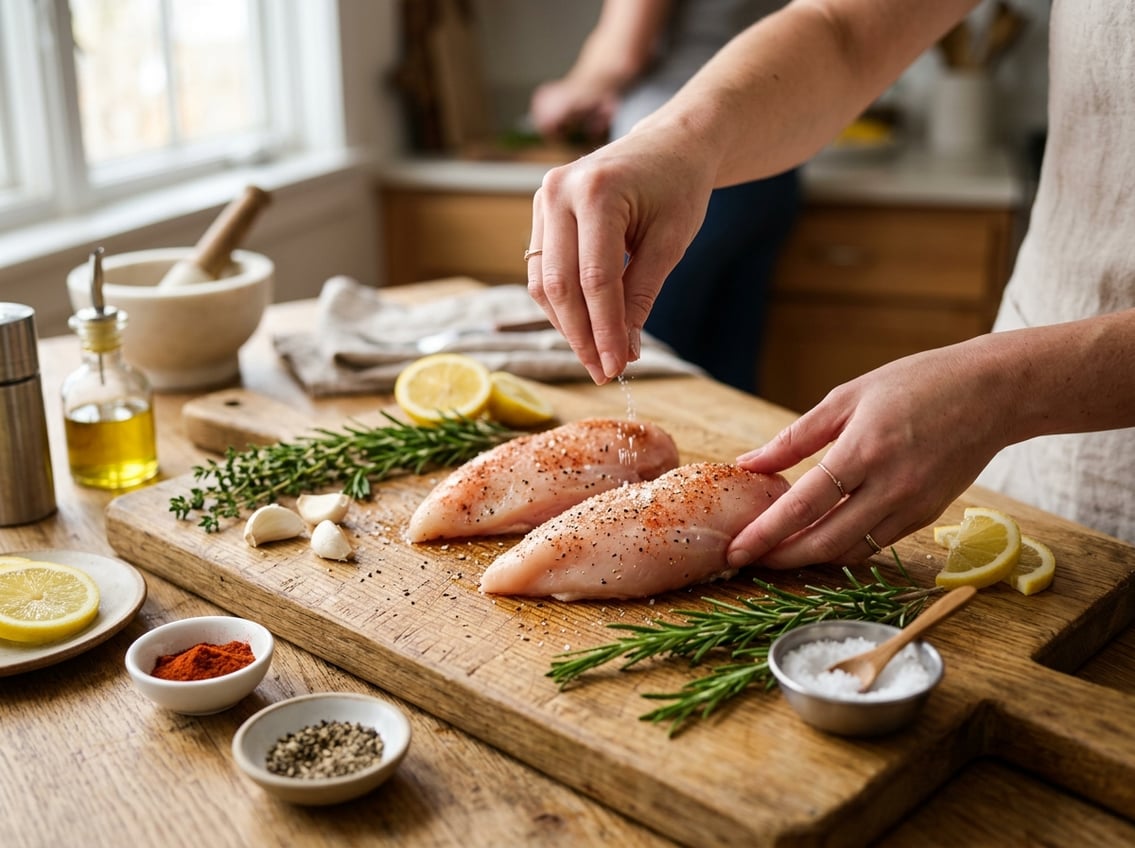
Good prep makes a big difference in how baked chicken breast turns out. Salt, oil, and even thickness help with browning and moisture.
Simple steps can make your baked chicken breast taste much better.
Seasoning and Oil for Better Browning
Pat the chicken dry, then coat it lightly with oil. Add salt, pepper, garlic powder, paprika, or another dry seasoning blend.
Oil helps the surface brown. Dry, skinless chicken browns better than wet chicken.
A light coating is enough, since too much oil can make the pan greasy.
Brining, Marinating, and Pounding Evenly
Brining for 30 minutes to 24 hours can improve moisture and seasoning.
Marinating adds flavor, especially with lemon, yogurt, or herbs. Pound the thick end to match the thinner end so the chicken cooks at the same rate.
Covered vs. Uncovered Baking
Bake uncovered for more browning and a firmer surface. Covered baking traps steam, which can help keep lean meat moist.
You can start covered and finish uncovered if the outside is drying too fast.
Leftovers, Storage, and Reheating
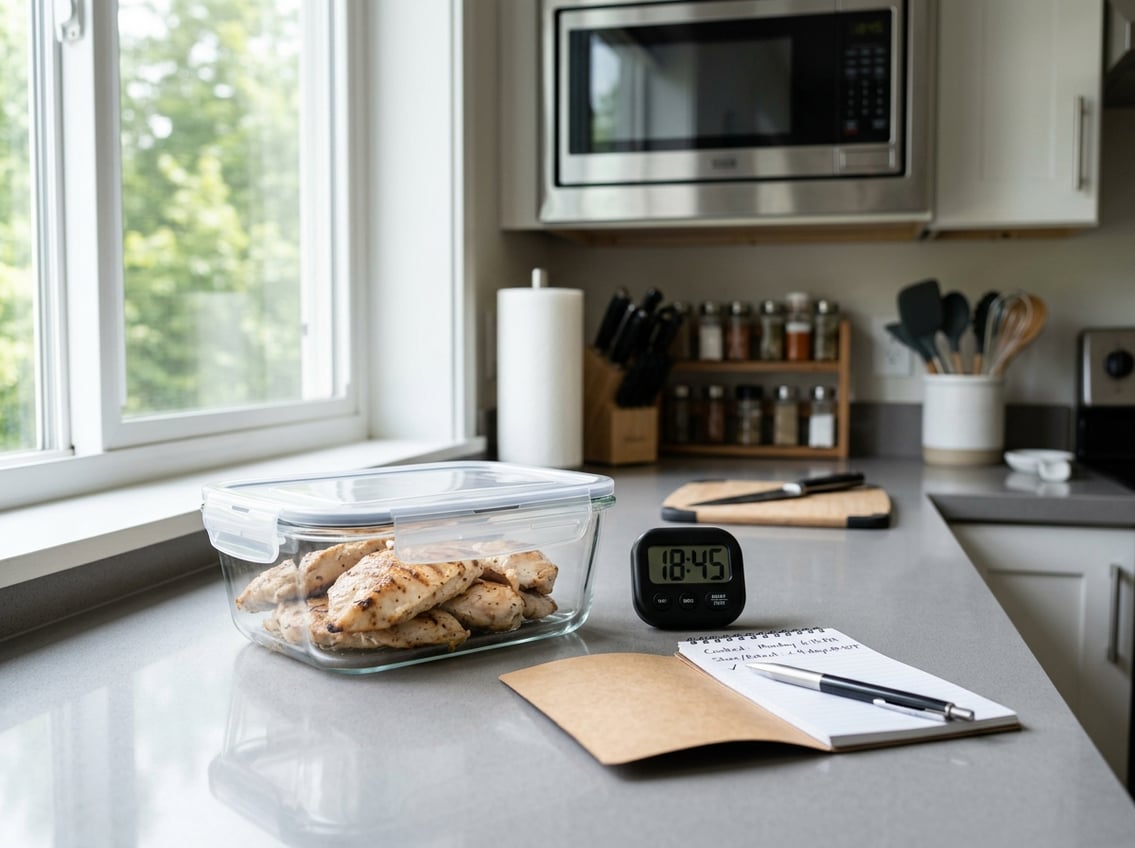
Store baked chicken breast the right way to use it for several meals during the week. Cool it quickly, keep it sealed, and reheat gently.
This helps preserve texture and keeps food safe.
How to Store Baked Chicken Breast
Place cooled chicken in an airtight container and refrigerate within 2 hours. Most cooked chicken keeps well for up to 4 days in the fridge.
For longer storage, freeze portions in sealed bags or containers. Label them with the date so you know what to use first.
How to Reheat Without Drying It Out
Use low heat when reheating chicken. An oven around 350°F works well.
Add a splash of broth or cover the dish to keep moisture in. Avoid high heat in the microwave or oven, since that can make the meat tough.
Reheat only until the center is hot.
Best Uses for Make-Ahead Portions
Leftover chicken works well in salads, grain bowls, wraps, pasta, and soups.
Sliced pieces make quick lunches. Shredded pieces fit casseroles and tacos.
If you meal prep, portion the chicken before you refrigerate it.
This step helps you use it during the week without drying it out from repeated reheating.


