
Why Do Chicken Breasts Get Tough?
Chicken breast turns tough mostly because it loses moisture too fast or cooks unevenly. Since it is a lean cut, even a small mistake can make a tough chicken breast feel dry, chewy, or rubbery instead of like a juicy chicken breast.
You can avoid most problems by controlling heat, using a meat thermometer, and giving the meat an even shape before it hits the pan or oven. That simple approach makes it much easier to cook chicken breast well, especially with boneless chicken breasts and skinless chicken breast cuts that dry out faster.
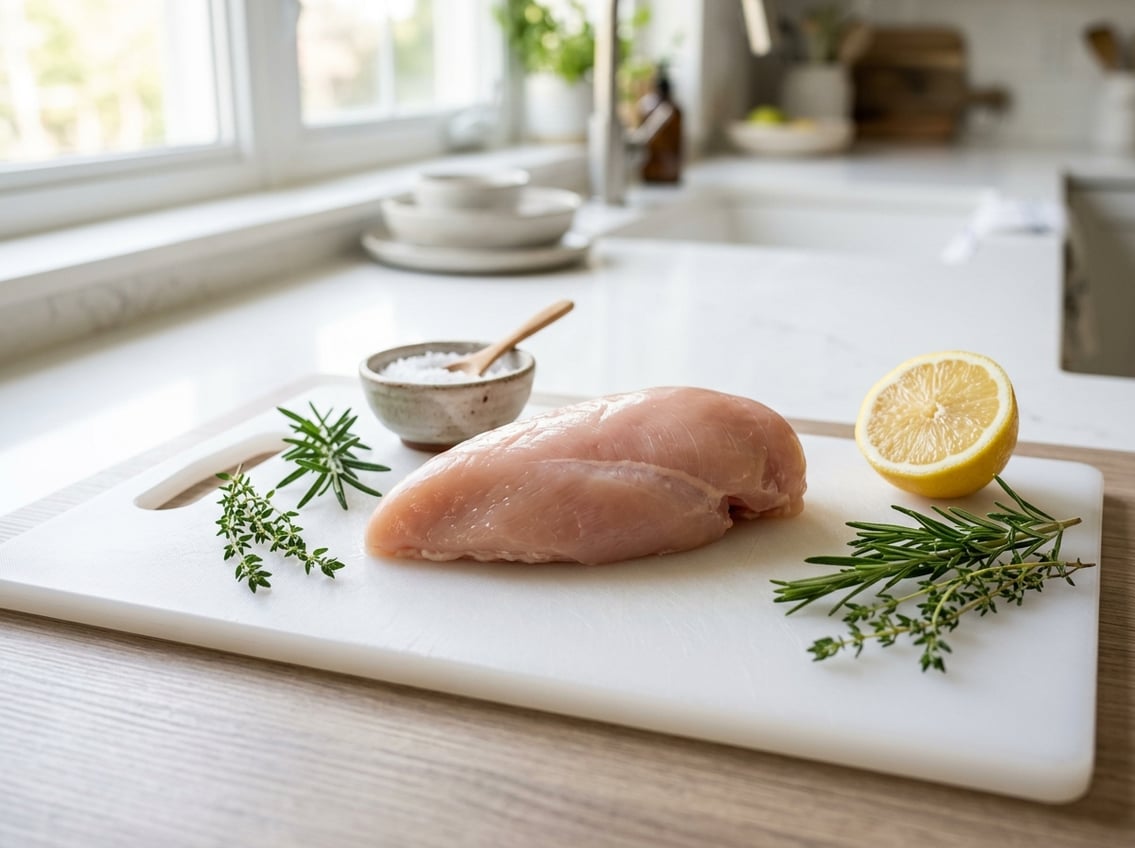
What Makes Chicken Breast Turn Tough
Chicken breast is lean, mild, and easy to overcook. The main reasons it turns tough are heat, timing, and uneven thickness.
A meat thermometer helps you stop at the right point instead of guessing.
Overcooking and Protein Tightening
When you cook chicken breast too long, the proteins tighten and squeeze out moisture. That is why a tough chicken breast often feels dry and springy at the same time.
This happens often with boneless chicken breasts because they cook quickly and have little fat to protect them. If you want to cook chicken breast without drying it out, pull it as soon as it reaches 165°F in the thickest part.
Chef’s Resource recommends using a thermometer to keep chicken moist and safe.
Undercooking, Texture, and Food Safety
Undercooked chicken is not safe, and it can also feel unpleasantly soft or slick. A skinless chicken breast that is underdone may seem rubbery in some spots and raw in others, which makes the texture hard to judge by sight alone.
A meat thermometer removes that guesswork. You want the center to reach 165°F, not just the outside.
Why Large Boneless Cuts Cook Unevenly
Large boneless chicken breasts are often thick on one end and thin on the other. The thin part reaches the target temperature first, then keeps cooking while the thicker part catches up.
That extra time dries out the thin end. If one side is much thicker, the breast cooks unevenly and loses moisture before the center is done.
How to Keep It Juicy From the Start
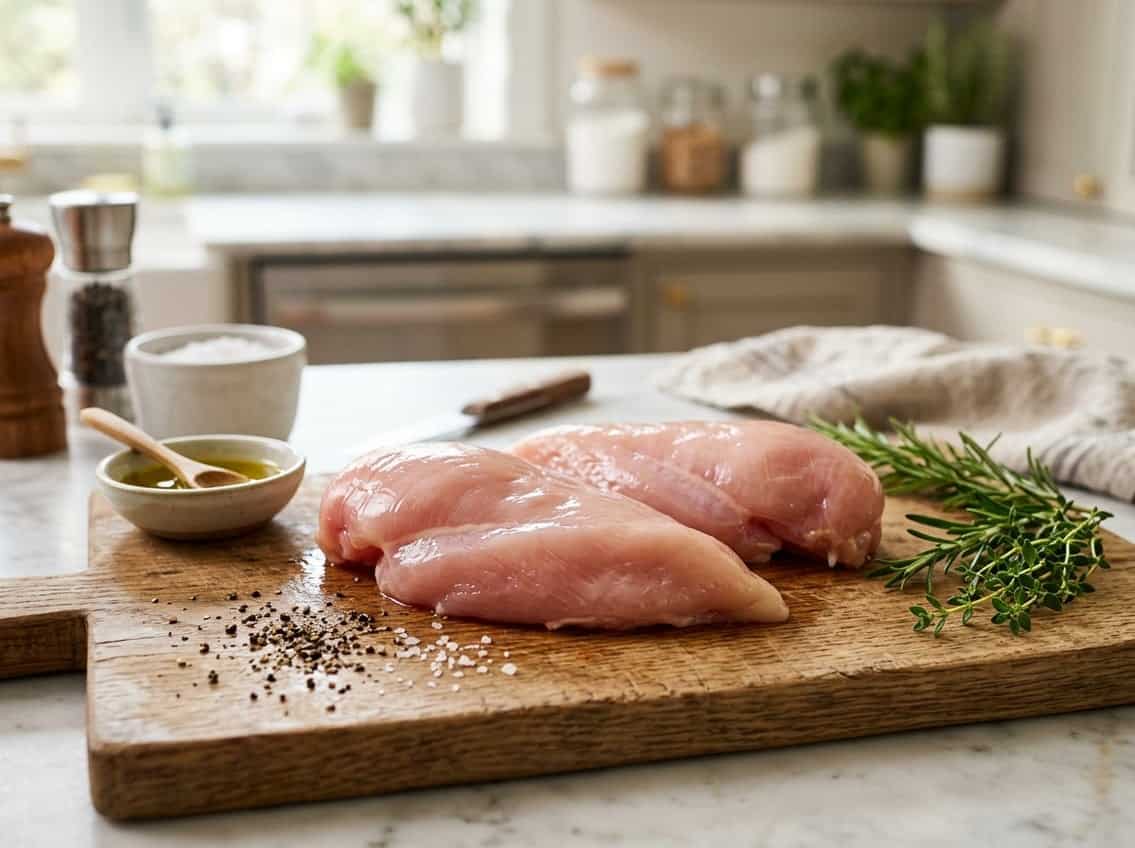
You get better results when you start with moisture control before cooking. Dry brining, careful marinating, and even thickness all help make juicy chicken more likely.
Dry Brining for Better Moisture Retention
Dry brining means salting the chicken ahead of time and letting it rest in the fridge. The salt helps the meat hold onto moisture and seasons it more evenly.
It also gives you a better surface for browning. For most chicken breasts, salt both sides and rest the meat uncovered for at least 30 minutes, or up to 24 hours.
Marinating Chicken Without Making It Mushy
Marinating chicken adds flavor and can help surface tenderness. A good marinade for juicy chicken breast uses acid, oil, salt, and herbs, but not too much acid for too long.
Too much lemon juice or vinegar can make the outside soft before the inside is ready. For best results, keep marinades short for thin cuts and moderate for thicker pieces.
Pounding or Butterflying for Even Thickness
When one end of the breast is much thicker, it is hard to cook evenly. Pounding to a similar thickness or butterflying the breast helps the whole piece finish at the same time.
That even shape matters most with skinless chicken breast, since there is no skin or bone to slow the heat.
Cooking Methods That Protect Texture
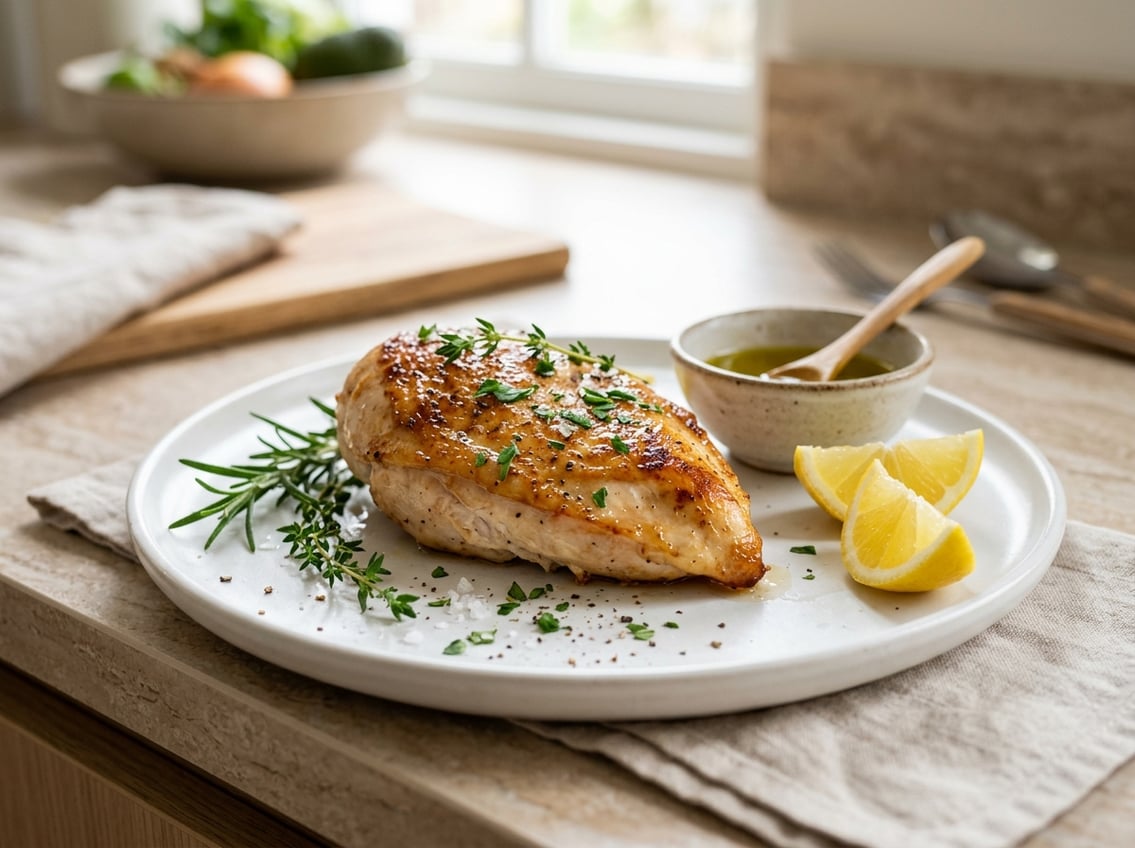
The best way to cook chicken breast is to use steady heat and stop at the right temperature. A meat thermometer is still your most reliable tool, no matter which method you choose.
Pan Cooking With the Right Heat
Pan cooking works well when you use medium to medium-high heat, not a scorching pan. A hot pan can brown the outside too fast while leaving the center behind, which leads to a dry finish.
For a skinless chicken breast, give the meat enough time to sear, then lower the heat if needed. Once the center reaches 165°F, remove it from the pan right away.
Baking and Roasting Without Drying It Out
Baking and roasting can make a juicy chicken breast if you avoid high oven heat and long cook times. A moderate oven and a quick check with a thermometer are more useful than following time alone.
If the breast is thin, start checking early. Thicker pieces may need a few extra minutes, but the thermometer should decide when it is done.
Gentle Options Like Poaching or Sous Vide
Gentle cooking methods protect texture well because they limit harsh heat. Poaching keeps the chicken in hot liquid, while sous vide cooks it in a sealed bag at a controlled temperature.
According to EatingWell, poaching can leave chicken tender, moist, and shreddable.
Common Use Cases and Mistakes to Watch
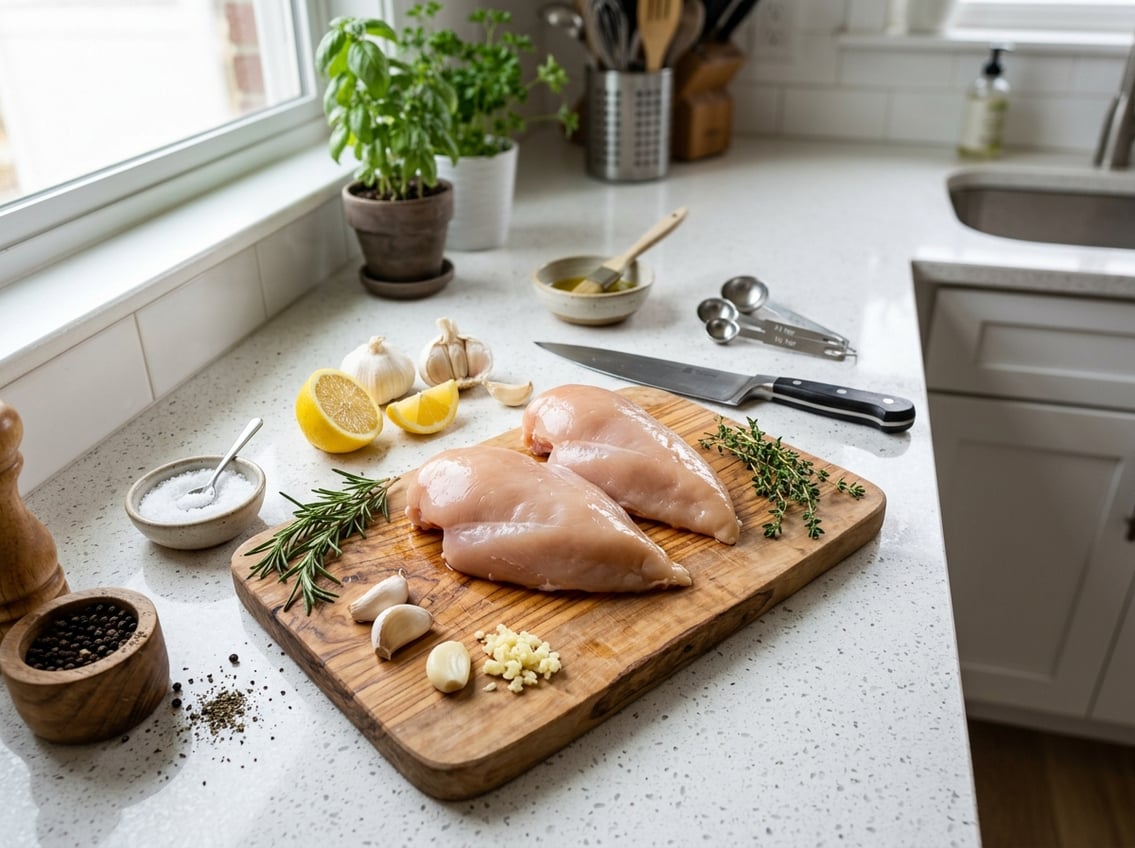
Some dishes and habits make dryness more likely. Rest time, slicing style, and extra oven time all matter.
Resting and Slicing for Better Juiciness
After cooking chicken breast, let it rest before slicing. That short pause gives the juices time to settle back into the meat instead of running out on the cutting board.
Slice across the grain for a softer bite. This is a simple step, yet it makes a clear difference in texture.
When Chicken Parmesan Raises the Risk of Dryness
Chicken parmesan often cooks the breast twice, first in a pan and then in the oven. That extra time can push a chicken breast past the point where it stays moist.
To reduce the risk, keep the cutlets even, avoid overbrowning in the pan, and watch the oven closely. A thinner piece can dry out fast during the sauce-and-cheese stage.
How to Recover Slightly Overcooked Meat
If the chicken is only a little dry, add moisture back with sauce, broth, or a pan jus.
Slicing it thin also helps it feel less dry in each bite.
You can use overcooked chicken in soups, casseroles, tacos, or salads with dressing.
These dishes hide dryness better than serving the meat plain.


