
Why Brine Chicken Breast for Juicier, Better Flavor
Why brine chicken breast? A short soak in saltwater helps a lean cut hold onto moisture, season more evenly, and cook with a better bite.
If you often end up with dry chicken breast, brining is one of the simplest fixes.
When you brine chicken breast, you give the meat a better chance to stay moist during cooking while also improving flavor from the inside out.
That is especially useful for boneless skinless chicken breast, which is easy to overcook and can taste plain without extra help.

Brining chicken does not require special equipment or a long prep list.
A simple brine can make a clear difference in texture and seasoning, whether you bake, grill, or sear the chicken.
What Brining Changes in Chicken
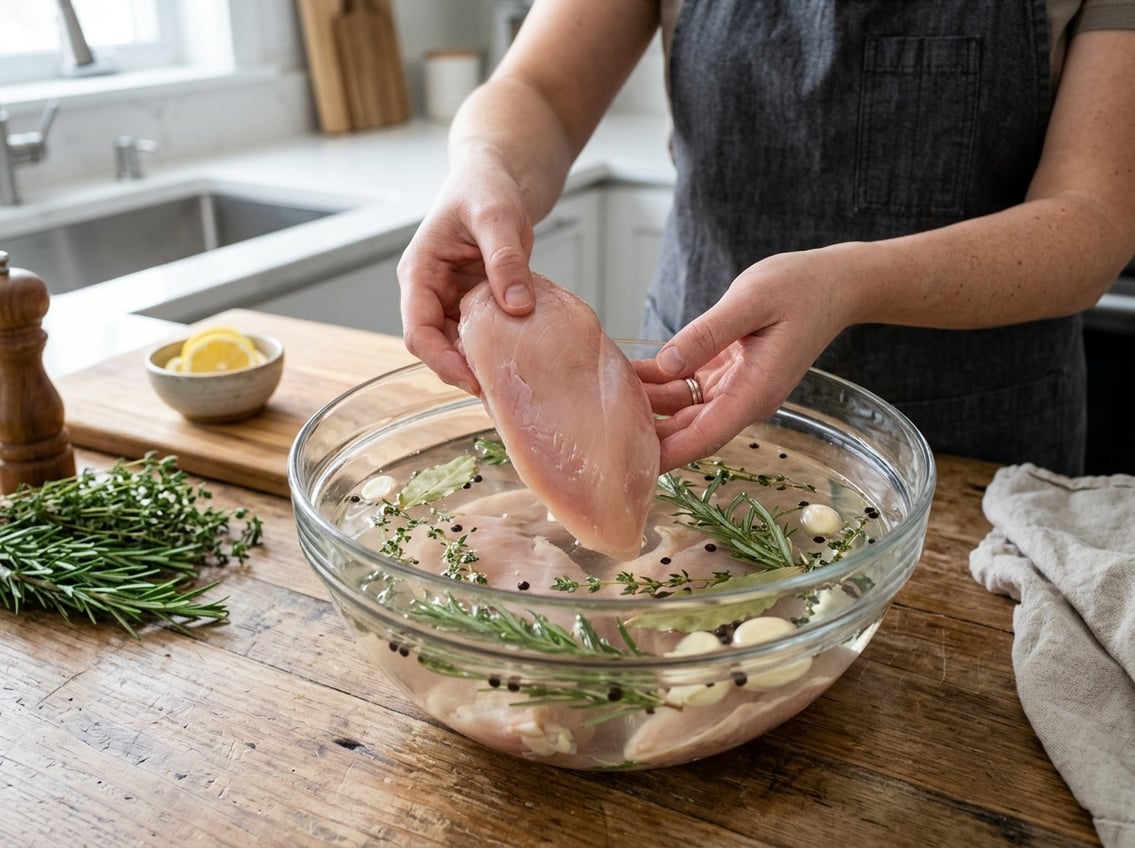
A saltwater solution changes how the meat behaves before and during cooking.
The salt moves into the chicken, helps the proteins hold water, and improves the way seasoning tastes after cooking.
That is why brining steps often lead to juicier, better tasting results than plain seasoning alone.
The effect is especially useful for lean cuts that can dry out fast.
How Saltwater Improves Moisture Retention
Salt in the water moves through the meat through osmosis.
As that happens, the muscle fibers hold onto more liquid during cooking.
Brining does not make chicken soak up endless water, but it helps the meat lose less moisture in the heat.
That is why brining chicken breast often feels like a practical insurance step.
How Protein Denaturation Affects Texture
Salt changes protein structure through protein denaturation.
The result is simple: the chicken can stay more tender and less stringy.
Used correctly, brining can tenderize without making the meat soft in a bad way.
If you brine too long, the texture can turn unpleasant, so timing matters.
Why Internal Seasoning Beats Surface Flavor
Surface salt only seasons the outside.
A brine adds flavor deeper into the meat, so each bite tastes more even.
That internal seasoning also helps the chicken taste less bland after cooking.
For a lean cut like chicken breast, that difference is easy to notice.
How to Brine It Correctly
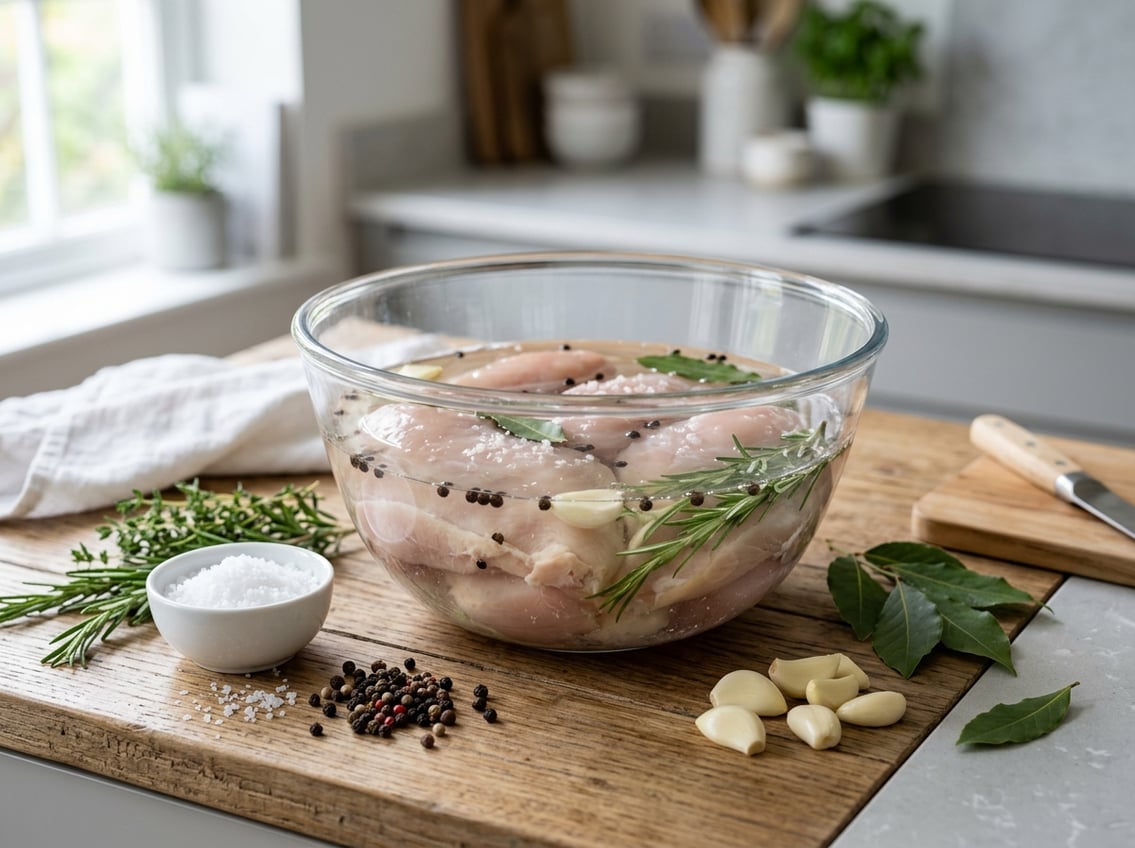
A good brine for chicken is simple, but the salt amount and soak time matter.
If you want to brine chicken breast without making it too salty, start with a measured wet brine and keep the process short.
A basic brine recipe can use just water and salt.
You can add flavor if it makes sense, but the goal is better texture and seasoning, not a heavily seasoned soak.
Wet Brine Basics and Salt Choices
A wet brine is water plus salt.
For home cooking, use a measured salt concentration so you do not end up with overly salty chicken.
Salt type changes the volume you need.
According to Simply Recipes, 4 cups of cold water pairs with 33 grams of salt, which equals about 1/4 cup Diamond Crystal kosher salt, 2 tablespoons Morton’s kosher salt, or 1 1/2 tablespoons fine sea salt.
If you use kosher salt, check the brand before measuring.
Morton’s kosher salt and Diamond Crystal kosher salt are not the same by volume, and that matters for brining chicken breast correctly.
How Long to Soak Without Overdoing It
Brining time should stay short for boneless cuts.
For a quick brine, 30 minutes is a common target for chicken breast, and that is long enough to help without over-brining.
Too much time can lead to overly salty chicken and a mushy texture.
If your pieces are thicker, a little more time may help, but long soaks are not better by default.
Flavor Add-Ins That Actually Make Sense
Keep add-ins simple and balanced.
Sugar or brown sugar can soften the salt edge, while spices and herbs such as garlic, peppercorns, thyme, rosemary, bay leaves, onion powder, and oregano add familiar flavor.
Citrus peels can brighten the brine.
Small amounts of soy sauce, ginger, or honey can work in a more specific style of brine.
Avoid crowding the brine recipe with too many strong flavors, since the chicken should still taste like chicken.
When to Dry Brine or Marinate Instead

A wet brine is not the only option.
Dry brining, marinating, and brining different cuts all serve different goals, so the best choice depends on the meat and the finish you want.
For lean chicken breast, a wet brine often gives you the most direct moisture boost.
For other cuts or stronger flavors, another method may fit better.
Wet Brine vs. Dry Brine for Lean Cuts
Dry brining uses salt without added water.
It can improve seasoning and help with moisture in a simpler way, and it is often useful when you want a less fussy prep.
A wet brine still has an edge when you want extra insurance against dryness.
For very lean chicken breast, that added water can help more than a dry brine.
How Marinating Differs From Brining
Marinating uses flavoring agents like lemon juice, vinegar, yogurt, oil, herbs, and spices.
It is better for surface flavor than for the moisture effect you get from brining.
Acidic ingredients can change texture, which is useful in some cases and not ideal in others.
If your goal is juicier chicken breast, marinating is not a full substitute for brining.
When Other Cuts Benefit More
Some cuts do not need the same treatment.
Brining chicken thighs can still be useful, yet their higher fat content makes them more forgiving than breast meat.
Brining pork chops can also help, especially because they can dry out during cooking.
For lean cuts, the choice comes down to moisture, seasoning, and your cooking method.
Cooking Brined Chicken Without Losing the Benefits

Brined chicken breasts still need careful cooking.
The point of brining chicken breast is to make the meat more forgiving, not to let it cook without attention.
Use steady heat, avoid extra salt, and pull the chicken at the right time.
That is how you keep the brine work from being wasted.
Best Methods for Baking, Grilling, and Searing
Baking works well when you want even heat and low risk.
Grilling gives good browning and flavor, while searing creates a strong crust on the outside.
Dry the brined chicken breasts before cooking so they brown properly.
If the surface is too wet, you can lose the sear and end up steaming the meat instead.
Using a Meat Thermometer for Reliable Doneness
A meat thermometer removes guesswork.
Chicken breast is done at 165°F, and that is the safest way to avoid undercooking.
Check the thickest part of the meat, not the edge.
If you stop cooking at the right point, you keep the brined chicken breasts juicy instead of pushing them into dryness.
Avoiding Extra Salt and Finishing Smartly
Use a light pepper rub, a simple herb mix, or a mild glaze after brining.
If you want a finishing sauce, keep it balanced and not too salty. This lets the brine do its job and keeps the final dish tasting clean.


