
Why Eat Chicken Breast for Protein and Health
You may wonder why you should eat chicken breast when so many protein foods are available. Chicken breast gives you a lot of protein with relatively little fat, making it a practical choice for many health goals.
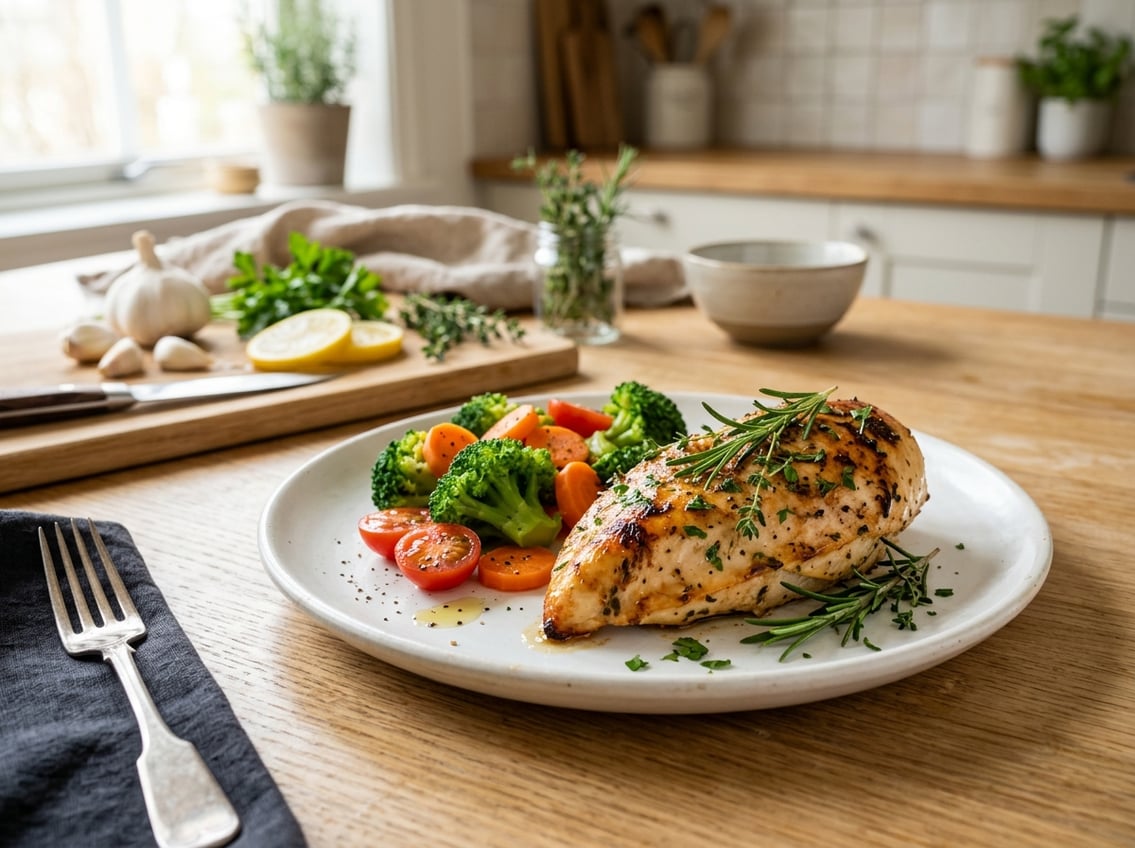
The main benefits of chicken breast come from its lean protein, useful nutrient profile, and easy fit in balanced meals. When you eat chicken breast in the right portion and prepare it well, it can support fullness and muscle maintenance.
Not every chicken dish is equally healthy. The benefits depend on the cut, the skin, and the cooking method you choose.
What Makes Chicken Breast a Smart Protein Choice
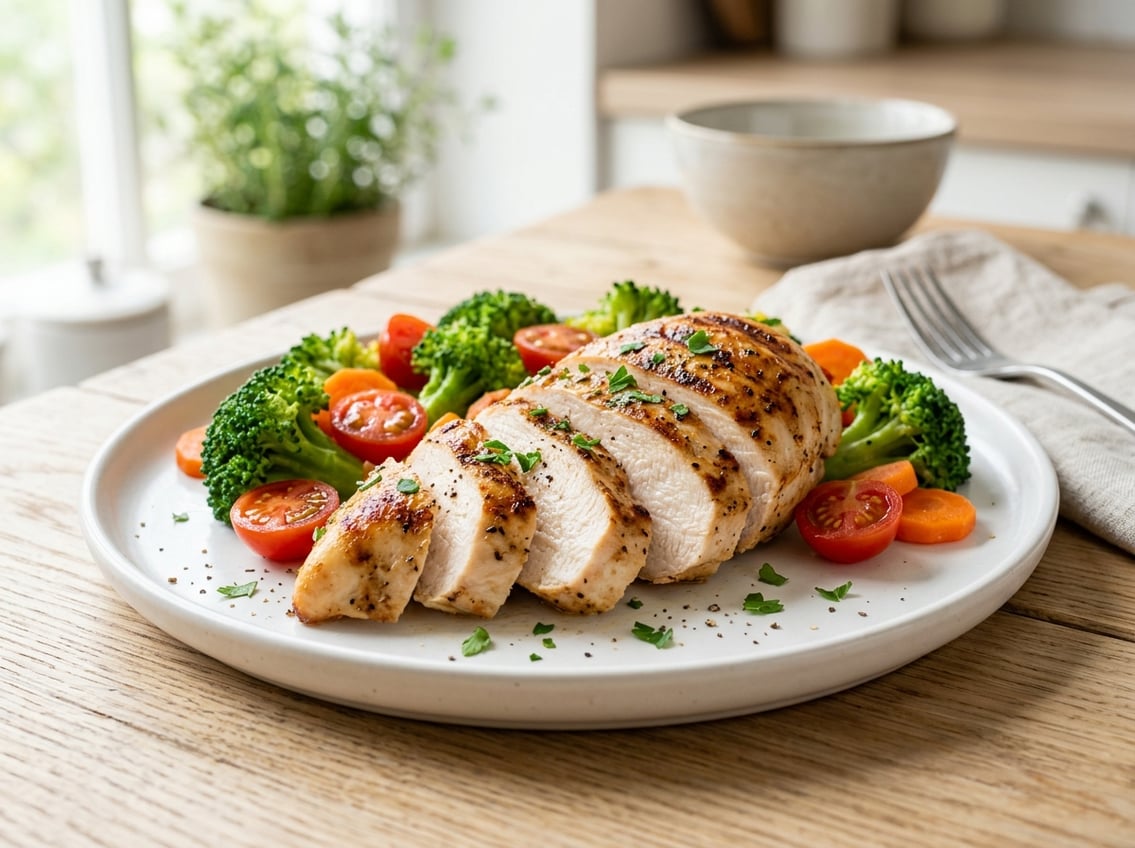
Chicken breast offers a lot of protein without much extra fat. A boneless, skinless chicken breast is one of the leanest options, useful when you want high protein in a simple meal.
How Lean Protein Supports Fullness and Daily Nutrition
Lean protein helps you feel full after meals, which may make it easier to manage portions during the day. Protein-rich meals can support weight management because they often leave you satisfied with less food.
Chicken breast fits easily into lunch or dinner without adding much saturated fat. This makes it a flexible choice as a simple base for vegetables, grains, or salads.
Why High-Quality Protein and Essential Amino Acids Matter
Chicken breast contains all the essential amino acids your body needs from food. Your body uses these amino acids to build and repair muscle and support tissues.
This matters if you exercise, age, or want steady nutrition in your meals. A food that gives you complete protein in one serving can make meal planning easier.
How Much Protein Per Meal Is Useful for Most Adults
Many adults benefit from about 25 to 30 grams of protein per meal. That amount can help support fullness and make it easier to spread protein across the day.
A cooked chicken breast can get you close to that range in a single serving. The exact amount depends on portion size, so checking the label or weighing the meat can help you stay on track.
Chicken Breast Nutrition and Health Benefits
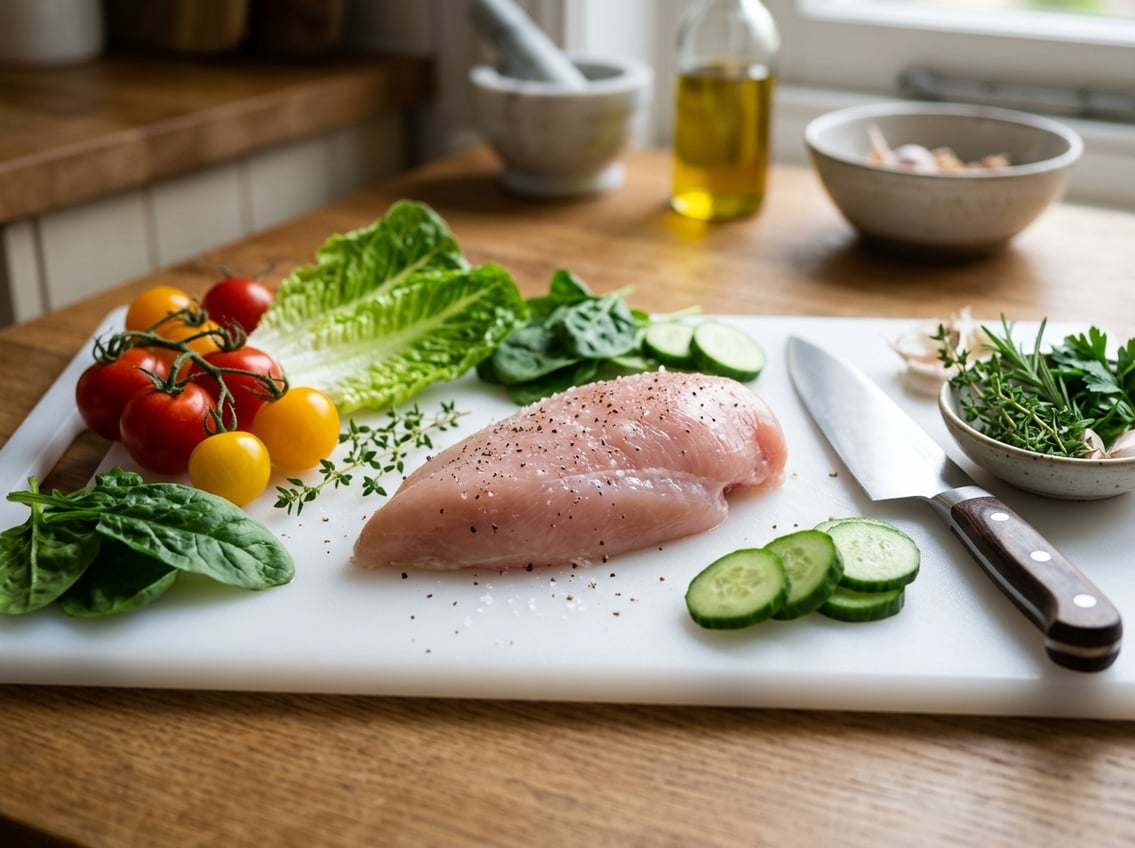
Chicken breast nutrition is simple, which is part of its appeal. It gives you protein along with important vitamins and minerals while staying low in fat when you choose the skinless cut.
Key Nutrients in Chicken Breast Nutrition
Chicken breast contains iron, zinc, vitamin B12, and choline along with protein. These nutrients play roles in energy use, immune function, and cell health.
It also provides tryptophan, an amino acid involved in serotonin production. While chicken does not cure mood changes, it adds value to a varied diet.
How It Can Support Heart Health and Weight Management
Chicken breast can support weight management because it is filling and relatively low in calories when prepared well. Replacing higher-fat meats with chicken breast can lower saturated fat intake.
That swap may support heart health, especially when you pair chicken with vegetables, beans, whole grains, and healthy fats.
Tryptophan, Choline, and Vitamin B12 in Everyday Diets
Tryptophan is part of the protein package in chicken breast and helps your body make important brain chemicals. Choline supports cell membranes and normal nerve function.
Vitamin B12 helps your body make red blood cells and supports the nervous system. If you eat chicken breast regularly, you can add these nutrients without relying on heavily processed food.
How Preparation Changes the Health Value
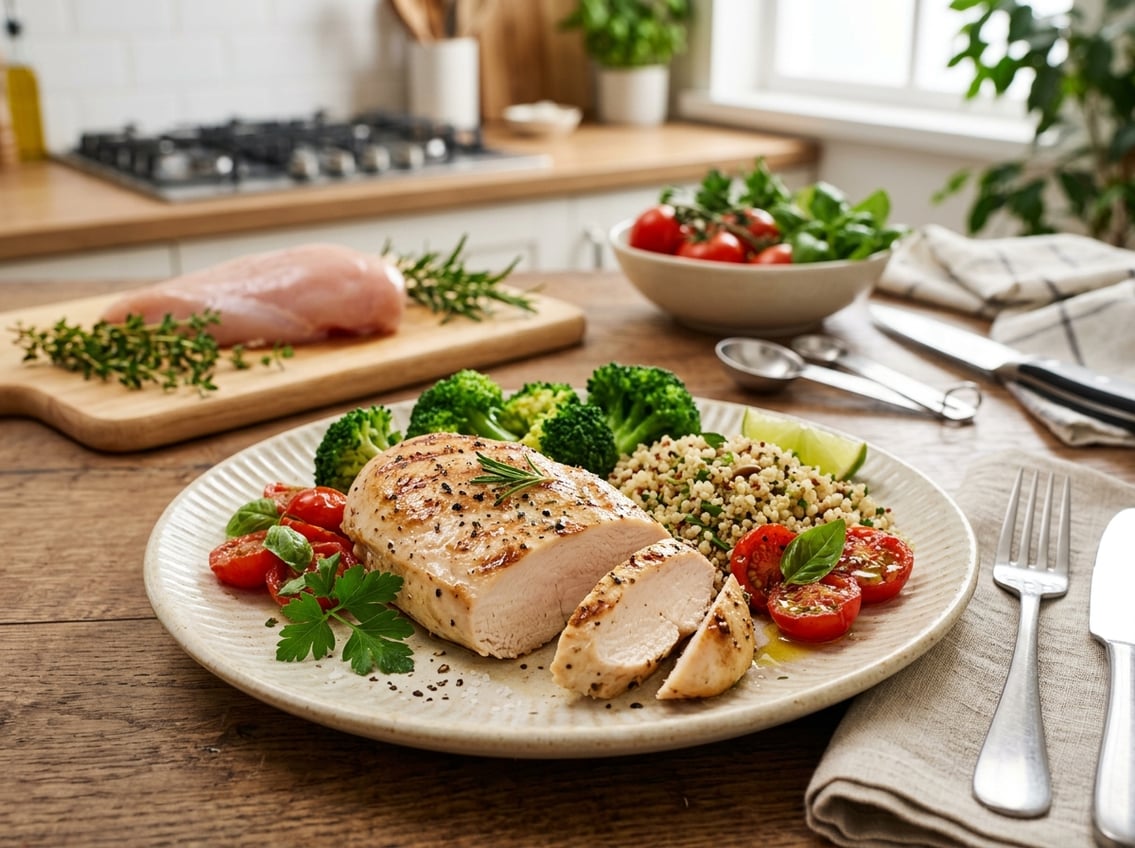
How you cook chicken breast matters as much as the cut itself. Simple, dry-heat or gentle cooking methods keep the meal lean, while breading, frying, or heavy sauces can change the nutrition fast.
Why Grilled Chicken Breast Is Often Preferred
Grilled chicken is popular because it keeps the texture firm without adding much fat. Grilled chicken breast can fit easily into salads, grain bowls, and vegetable plates.
Poaching, baking, and steaming also work well if you want tender chicken with minimal added fat.
Skinless vs Skin-On and the Role of Fat Content
Skinless chicken breast is usually the better choice when you want a lean meal. The skin adds extra fat and calories, which can matter if you are watching intake closely.
Skin-on chicken can still fit in a balanced diet if portion sizes stay reasonable. Removing the skin gives you more control over the final nutrition.
Advanced Glycation End Products and High-Heat Cooking
High-heat cooking can create advanced glycation end products, often called AGEs. These compounds form more easily when you cook food at very high temperatures for a long time.
Gentler methods like poaching, steaming, or boiling may lower that issue. If you grill chicken breast, avoid burning the surface and use moderate heat when possible.
When Chicken Breast Fits Best in a Balanced Diet
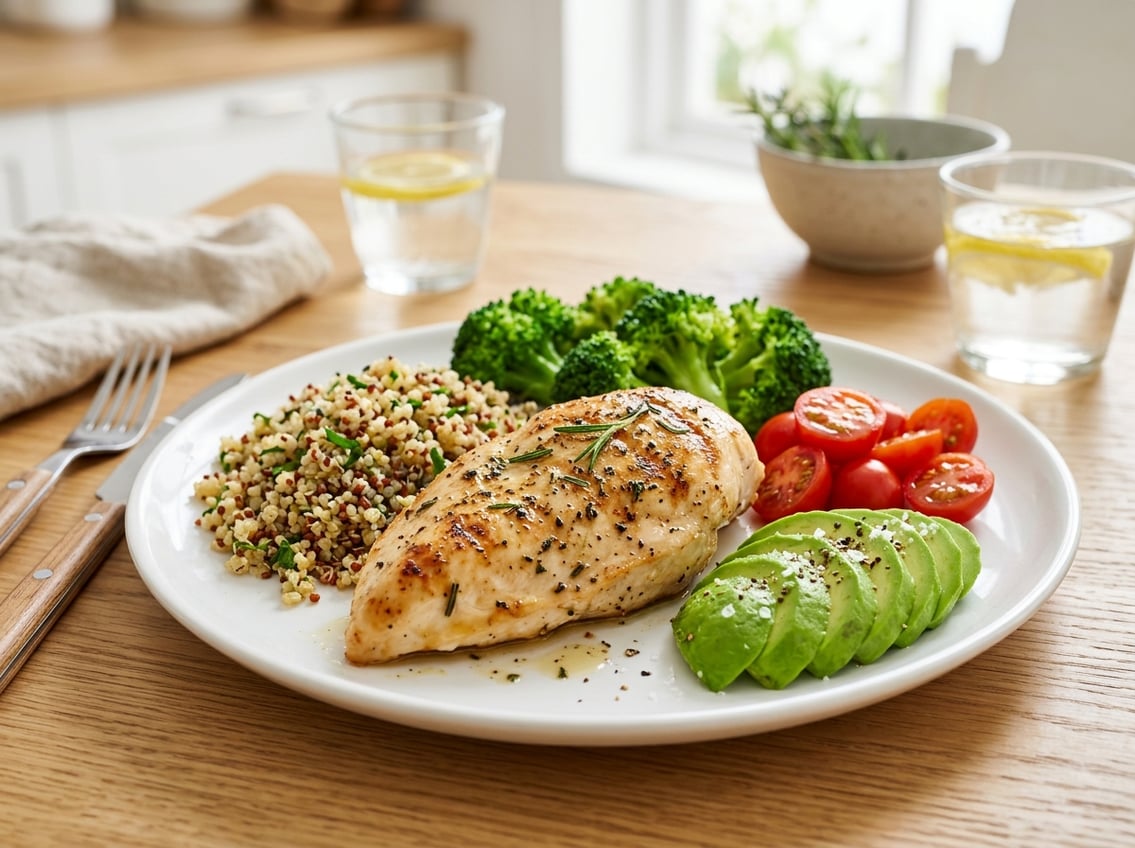
Chicken breast works best when you use it for specific goals and pair it with other foods. It can support a healthy eating pattern, but variety still matters for long-term nutrition.
Chicken Breast vs Chicken Thigh for Different Goals
A chicken thigh has more fat and calories than chicken breast, so it may fit better if you want a richer taste or a higher-calorie meal. Chicken breast is usually the better pick when you want the leanest protein option.
If your goal is lower fat intake, chicken breast has the edge. If you want more flavor and do not mind extra fat, thigh meat can still be part of a healthy diet.
Easy Meal Ideas Like Chicken Salad and Simple Bowls
Chicken breast fits well in chicken salad, wraps, rice bowls, and pasta dishes. It also works with vegetables, salsa, hummus, and light dressings.
For a simple meal, try sliced chicken breast over greens with beans and avocado. You can also serve it with brown rice and roasted vegetables for a balanced plate.
Why Variety Still Matters Even If You Eat Chicken Often
You can eat chicken often and still keep your diet balanced if you vary the rest of your meals.
Rotating proteins like fish, beans, eggs, tofu, and yogurt helps you cover more nutrients.
Chicken breast offers clear benefits, but no single food should carry your whole diet.
A mix of protein foods, produce, grains, and healthy fats gives you better long-term nutrition.


