
Why Pound Chicken Breast Before Cooking
Why pound chicken breast before cooking? You do it to make the meat cook more evenly, stay juicier, and finish faster.
A typical breast is thick on one end and thin on the other. Pounding it into a more even shape helps you avoid dry edges and an undercooked center.
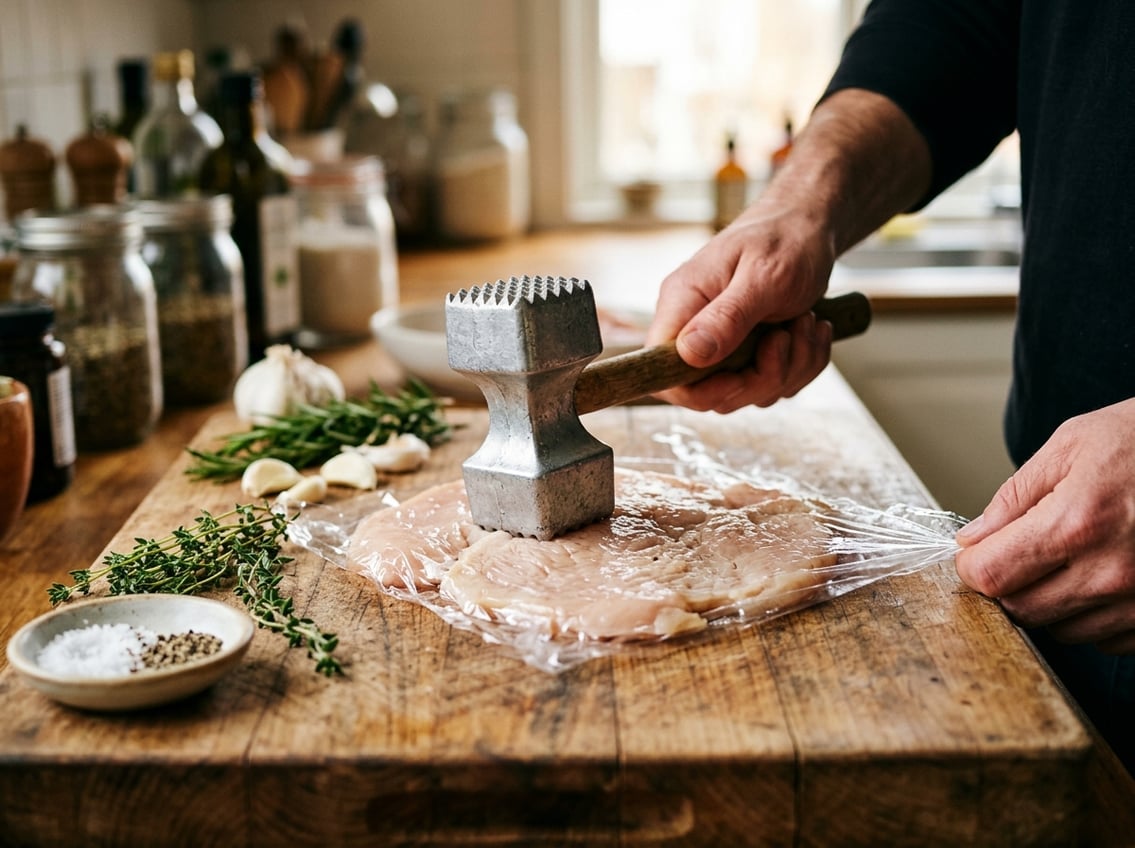
Most home cooks value pounding chicken breast because it gives more reliable doneness with less risk of dry, uneven results.
It also gives you more control over texture and presentation.
If you wonder whether to pound chicken before making cutlets, schnitzel, or a quick pan-seared dinner, the answer is often yes. The technique solves several common cooking problems at once.
What Pounding Changes in the Breast
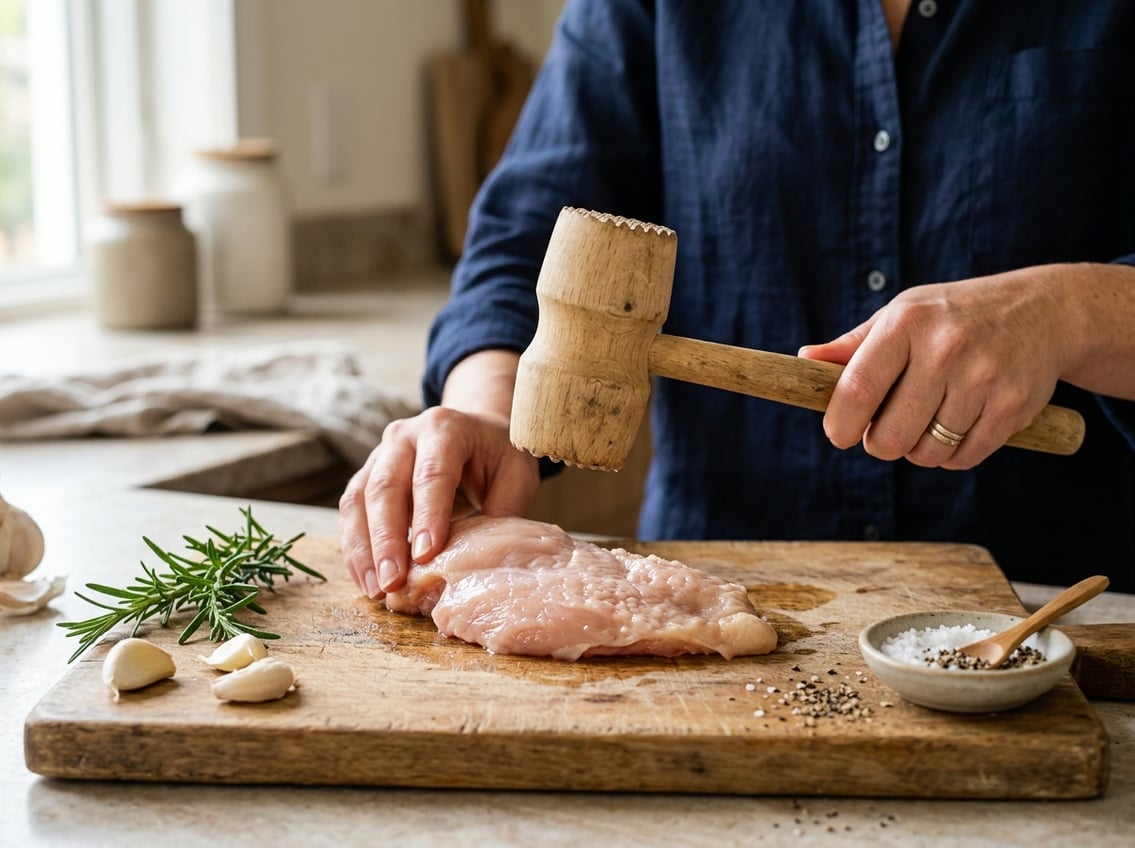
Pounding chicken breast changes both shape and cooking behavior.
Instead of a thick, tapered piece, you get a more even piece that cooks at a similar rate across the whole surface.
That is why pounded chicken works so well for fast cooking methods and recipes that need a neat, uniform shape.
You get a flatter piece that is easier to season, bread, and cook through without guesswork.
Even Thickness Means More Reliable Doneness
When you pound chicken breast to a consistent thickness, the heat reaches the center more evenly.
That matters because a thick end and a thin end do not cook at the same speed.
A more even shape helps you avoid the common problem of a dry thin side and a raw thick side.
Pounded chicken breast is easier to cook through cleanly, especially in dishes that need a short cook time.
Faster Cooking With Less Risk of Dryness
A flattened chicken breast cooks faster because the heat has less distance to travel.
That shorter cooking time can help you keep the meat moist.
According to a detailed guide on pounding chicken breast, thinner pieces work especially well for pan-frying and grilling, where overcooking can dry out lean breast meat.
Many cooks turn to chicken cutlets for busy weeknights for this reason.
How Mechanical Tenderizing Affects Texture
Pounding also changes texture.
The force gently breaks up muscle fibers, which can make the meat feel softer and less chewy.
This is a mechanical change, not a chemical one like marinating.
You get a more tender bite that works well in flattened chicken breast recipes and quick-cook dishes.
How to Flatten It Without Tearing the Meat
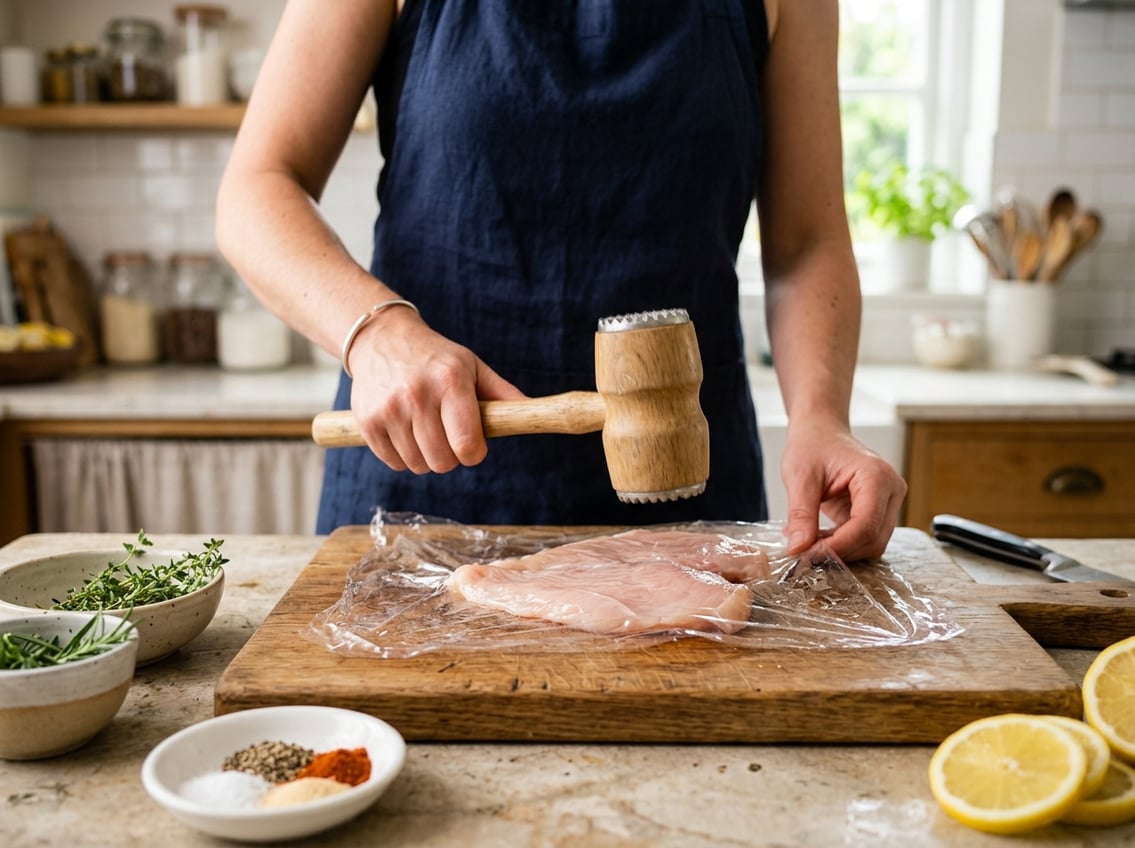
To pound chicken breast well, use even pressure and a stable setup.
The goal is to flatten the meat into a uniform shape without shredding the surface or making thin spots.
The right tools help, and so does a calm, steady method.
If you learn how to pound chicken breast the right way, you can make consistent pounded chicken breasts for many recipes.
Best Tools and Simple Substitutes
The most common tool is a meat mallet.
A rolling pin, heavy skillet, or even the bottom of a sturdy pan can work too, as long as you use controlled pressure.
For the cleanest results, place the chicken breasts between parchment paper or plastic wrap.
That helps keep the meat from sticking and reduces mess while you pound the chicken breast flat.
Step-by-Step Method for Uniform Results
Start with boneless, skinless chicken breasts.
If one side is much thicker, you can slice it open partway before pounding so it spreads more evenly.
Place the meat on a cutting board, cover it, and tap from the center outward.
Use short, firm strikes instead of hard blows, since that gives you better control and lowers the chance of tearing.
The target thickness for pounded chicken usually falls around 1/4 to 1/2 inch, depending on the recipe.
How Thin to Go for Different Cooking Styles
The right thickness depends on what you plan to cook.
For breaded cutlets and chicken parmesan, a thinner piece, close to 1/4 inch, works well.
For grilling or searing, a slightly thicker cut, around 1/2 inch, gives you more room before the meat dries out.
If you are making stuffed chicken breasts, keep the breast flattened enough to roll or fold, yet thick enough to hold the filling.
When This Technique Helps Most
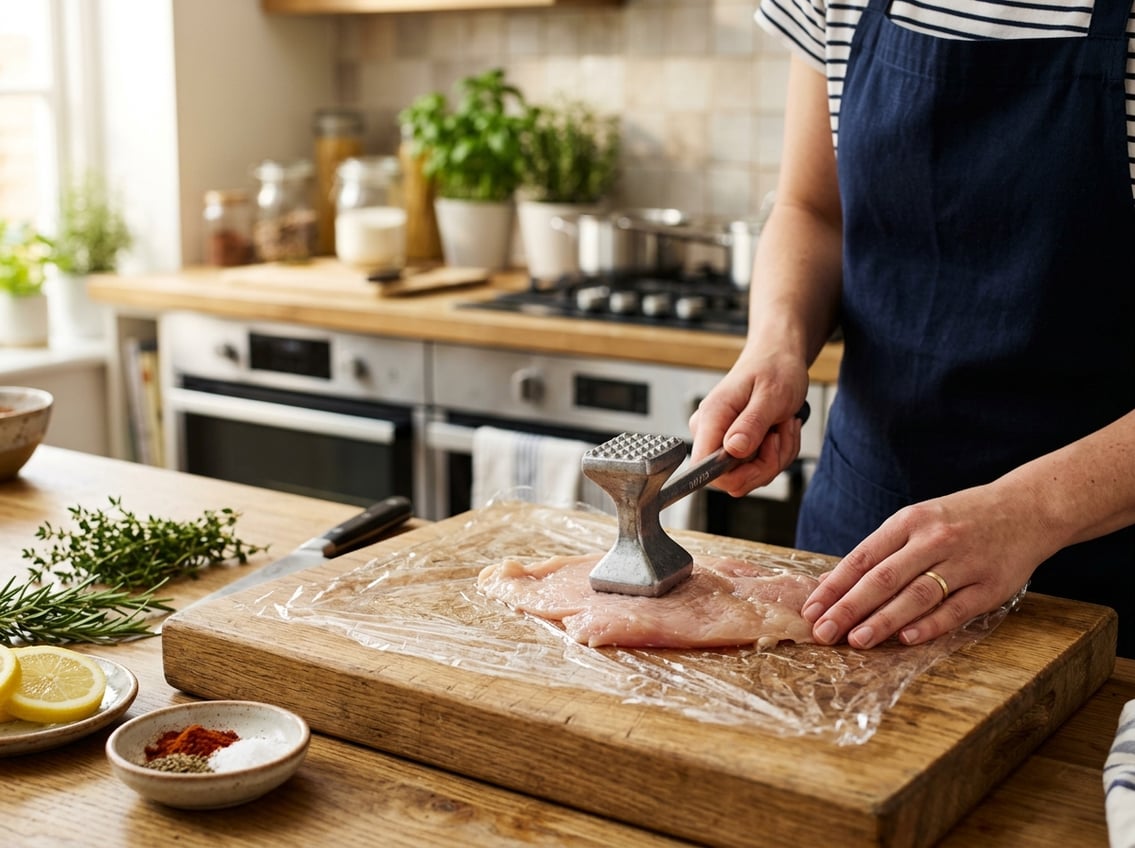
Pounding helps most when the recipe depends on even browning, quick cooking, or a tidy shape.
It is especially useful any time the chicken needs to cook through at the same pace from edge to center.
Some dishes almost expect a flattened breast.
Others work better because the meat is easier to season, fill, or fry.
Breaded and Pan-Fried Dishes
Classic breaded recipes like chicken piccata, chicken parmesan, and chicken schnitzel benefit from pounded chicken.
A thin, even piece browns well and cooks before the coating burns.
Chicken cutlets also make sense here because the shape stays consistent in the pan.
That makes it easier to get a crisp exterior and a fully cooked center.
Rolled and Filled Preparations
Stuffed chicken breast recipes need a breast that can open, fold, or roll without cracking apart.
A flatter piece is easier to work with and seals more neatly around the filling.
For stuffed chicken breasts, a pounded piece also cooks more evenly after rolling.
That lowers the chance of serving a dry outside with an underdone middle.
Marinating, Searing, and Quick Weeknight Cooking
A flattened chicken breast has more surface area. Seasoning and marinade touch more of the meat, which helps flavor spread more evenly across the whole piece.
Pounded chicken works well for fast searing. This technique gives you a shorter cook time and fewer temperature surprises when you want dinner on the table quickly.


