
When Is Chicken Breast Done? Timing and Doneness Guide
When is chicken breast done? The thickest part reaches 165°F on an instant-read thermometer, with a brief rest after cooking.
That single check gives you a safer, juicier result than guessing by color or time alone.
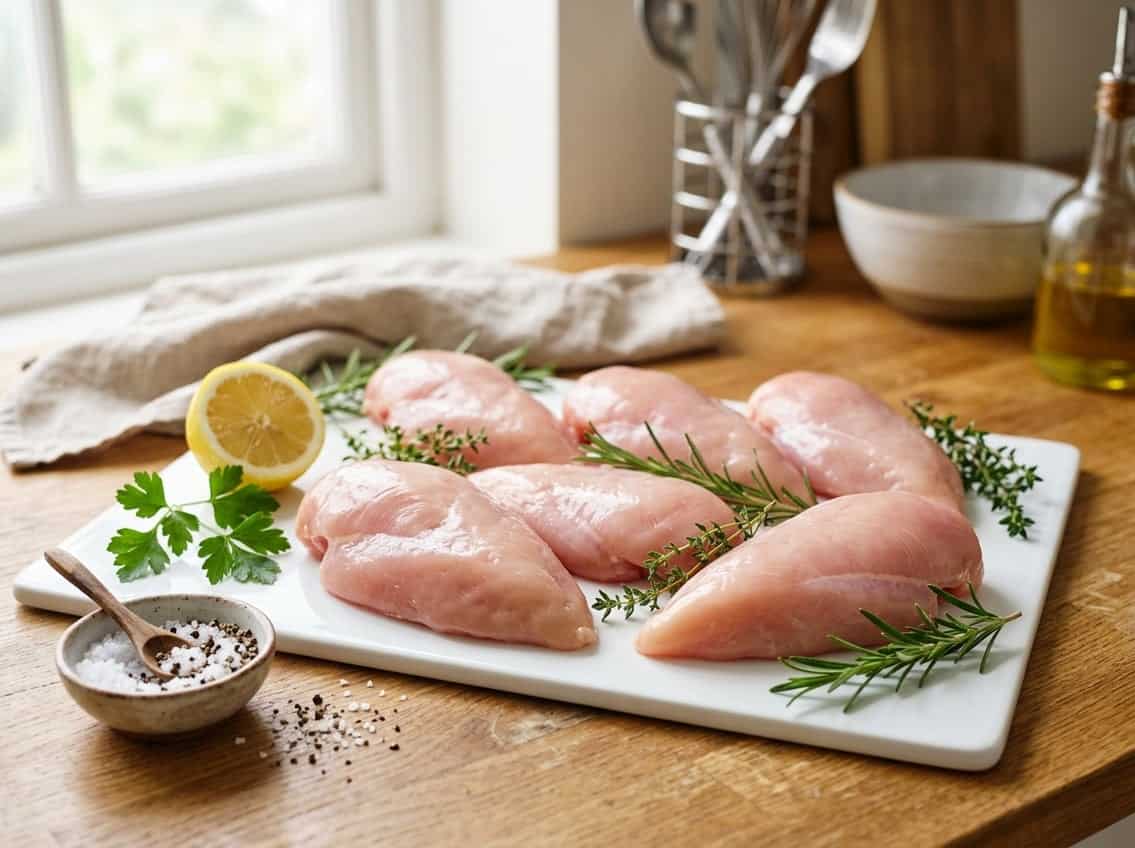
Chicken breasts are lean, so they can go from moist to dry fast. Your main goal is simple: hit the right temperature without pushing past it.
You can do that with a thermometer, a few visual checks, and the right cooking method. Once you know what to look for, timing a chicken breast recipe becomes much easier.
How to Tell It Is Done
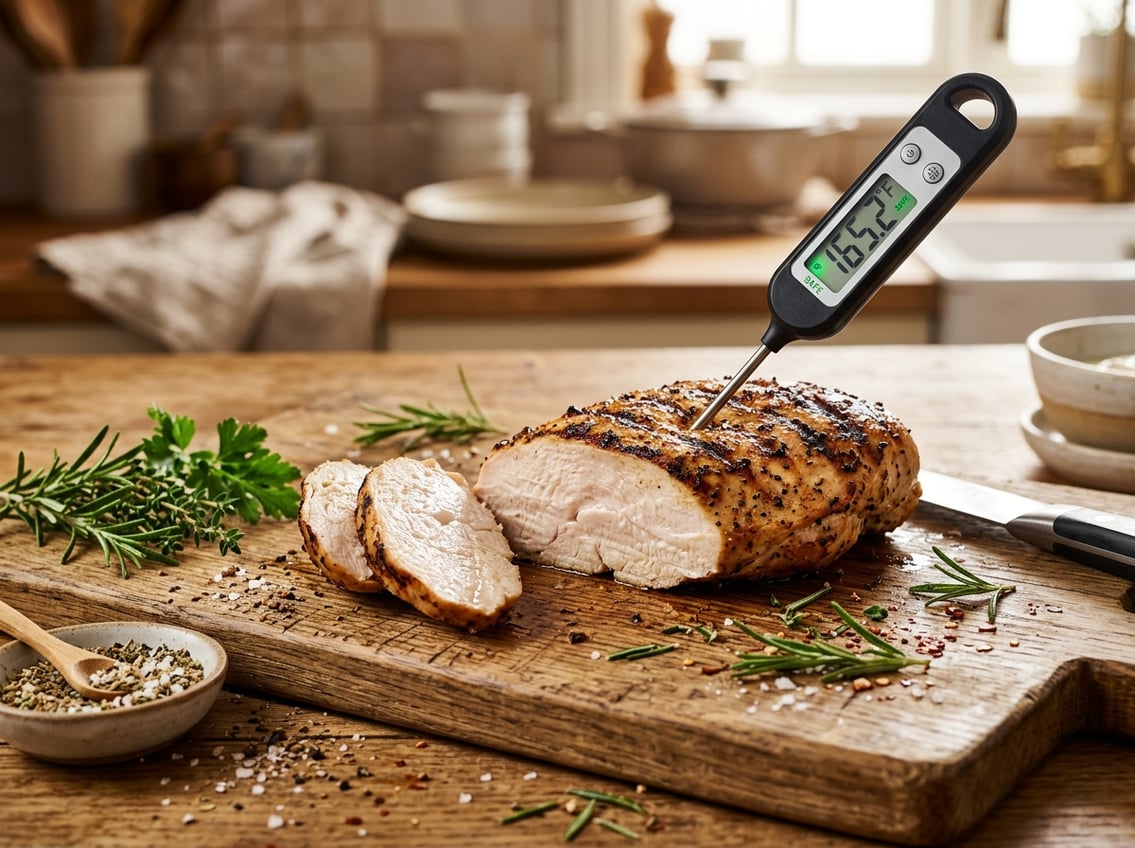
The safest way to check chicken breasts is with temperature, not color alone. A seasoned chicken breast can look done on the outside while still being undercooked inside.
This happens especially with pan-fried, baked, or grilled chicken breasts.
Use Internal Temperature First
Insert an instant-read thermometer into the thickest part of the meat, avoiding bone if there is one. Chicken is done at 165°F, which is the standard safe temperature for poultry in the U.S.
If the reading is a little below that, keep cooking and check again in short intervals.
Carryover Cooking and Resting
Chicken keeps cooking after you remove it from heat. A breast near 165°F may rise a few degrees while resting, especially after baking or grilling.
Let it rest for about 5 minutes before slicing. This helps the juices settle back into the meat.
Visual Signs That Help but Do Not Replace a Thermometer
Cooked chicken breast should look opaque, not glossy or translucent. The juices should run clear, and the meat should feel firm but still spring back a little when pressed.
These signs help, but they do not replace a thermometer. Thin parts may finish early, while the center of thicker chicken breasts can stay undercooked.
Why Overcooking Happens So Easily
Chicken breast is lean, so it has less fat to protect it from heat. Even a few extra minutes can dry it out.
Uneven thickness is another common problem. A thick end and a thin end do not cook at the same pace.
Flattening or slicing can make a big difference.
Cooking Times by Method
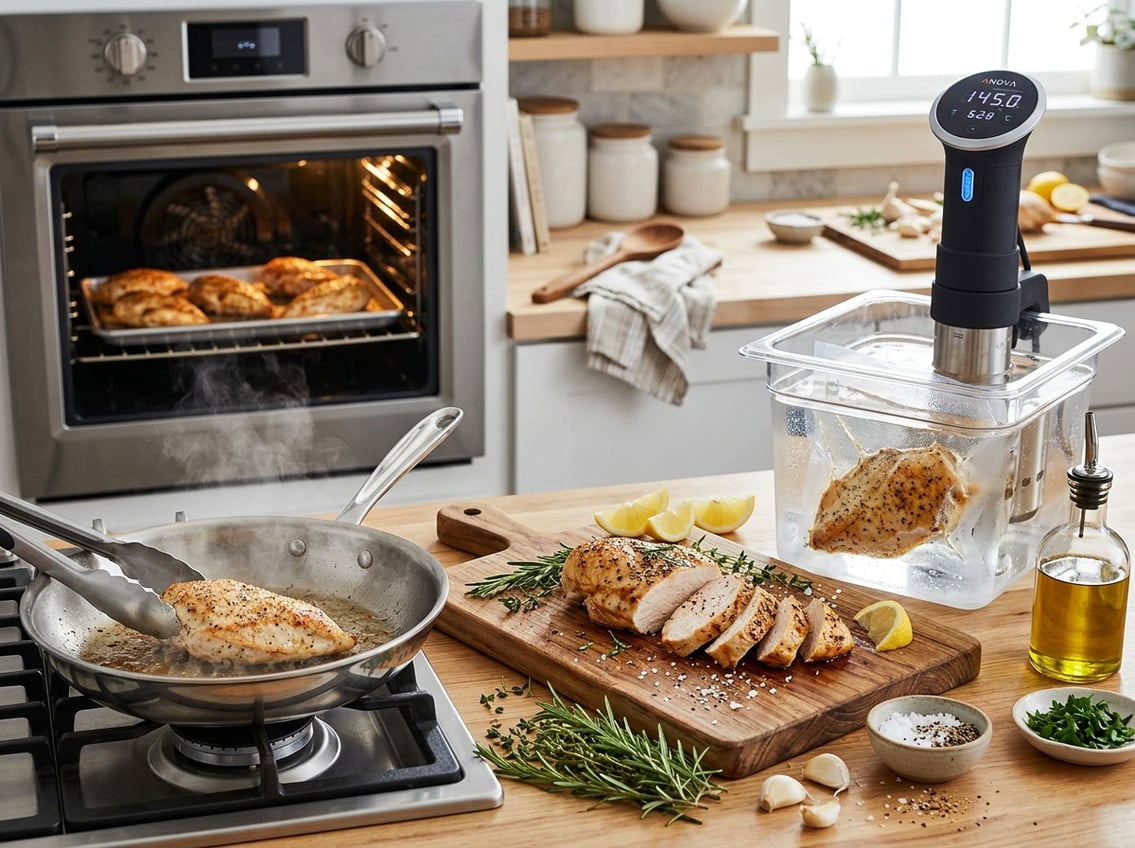
Cooking time changes with the method, the thickness of the meat, and whether you are cooking chicken cutlets or whole breasts. Temperature should still guide the finish.
Oven Timing for Baked Chicken
For baked chicken, use 400°F for about 20 to 25 minutes, according to The Spruce Eats. Start checking early if the breasts are small or pounded thin.
Thicker pieces may need a little longer. Pull them when the thickest part reaches 165°F, then let them rest before serving.
Skillet Timing for Pan-Seared Cutlets
Chicken cutlets cook faster because they are thinner. In a hot skillet, they often need about 3 to 5 minutes per side, depending on thickness and heat level.
A golden crust is a good sign, yet temperature still matters. If your pan-fried chicken browns fast, lower the heat a little so the center can finish without burning the outside.
Grill Timing for Evenly Cooked Breasts
For grilled chicken breasts, medium heat works best. The Spruce Eats recommends about 5 to 7 minutes on the first side, then flipping and checking until the center reaches 165°F.
Even thickness matters a lot on the grill. Flattening the breast or slicing it into cutlets helps it cook more evenly and keeps the texture more consistent.
Slow Cooker Chicken Timing and Texture
Use a slow cooker when you want hands-off cooking, especially for shredded meat. It usually takes several hours on low, and the exact time depends on the size of the breasts and the setting.
The texture is softer and more pulled apart than seared chicken. That makes it useful for sandwiches, casseroles, and tacos.
Prep Steps That Keep It Juicy
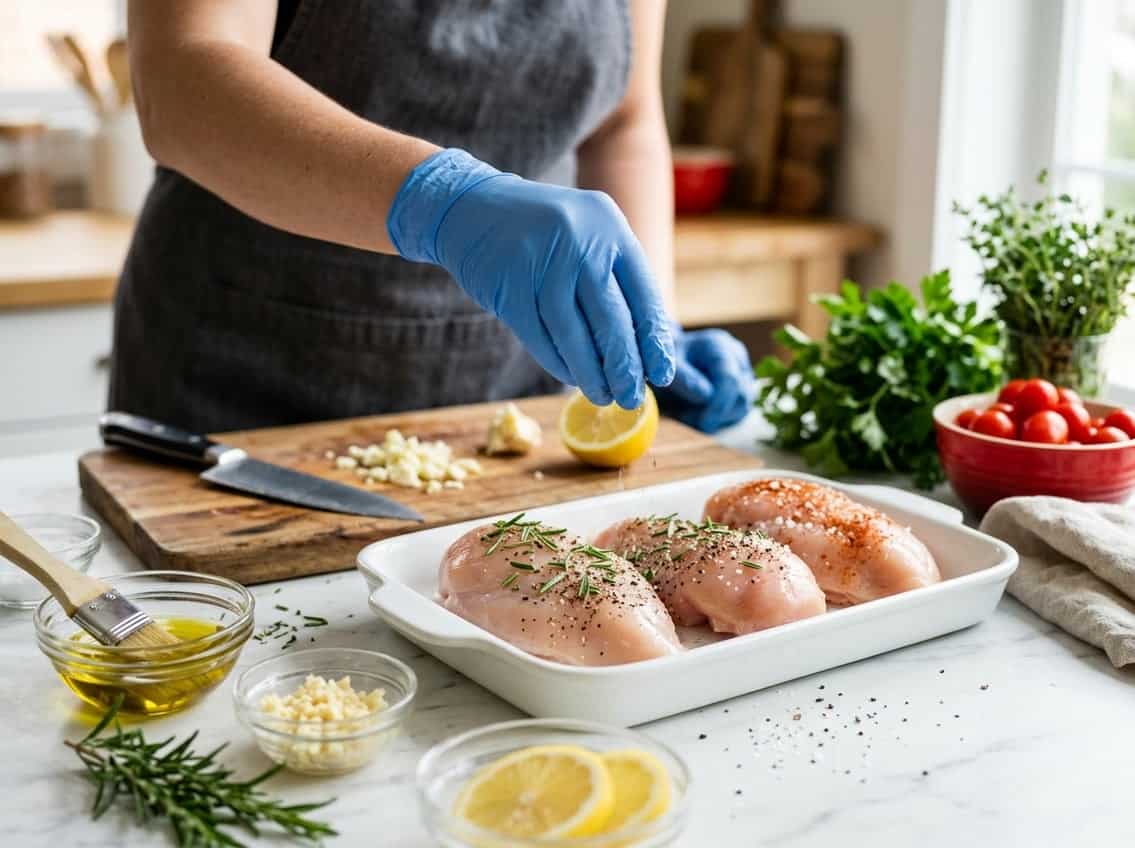
A juicy chicken breast starts before the heat goes on. Salt, moisture, and even thickness all shape the final result.
Brining, Marinating, and Seasoning
Brining adds salt to the meat so it holds onto moisture better during cooking. Marinating can add flavor and a little tenderness, while simple seasoning gives the surface more taste without extra prep.
Even a basic seasoned chicken breast with salt, pepper, garlic, and herbs can taste strong when cooked well. According to The Spruce Eats, dry brining and even coating can both help with better results.
Why Thickness Matters More Than Size
A wide breast is not the real issue, an uneven breast is. A thick end and thin end cook at different speeds, which can leave one part dry and another part underdone.
Pounding to an even thickness helps more than choosing a smaller piece. It also improves pan-fried chicken and baked chicken by making the whole breast finish at nearly the same time.
When to Slice Into Cutlets
Cut chicken cutlets when you want faster cooking and more surface browning. This works well for breaded meals, quick skillet dinners, and recipes that need even heat.
Cutlets also help if your chicken breasts are very thick. You can split them in half, pound them lightly, and get a more even result.
How Pan Sauce Helps Recover Flavor
A pan sauce can bring back moisture and flavor after searing. Butter sauce, white wine pan sauce, and white wine butter sauce all work well with browned chicken.
Even a quick sauce made in the same skillet picks up the flavor stuck to the pan. Ranch seasoning also works well with simple butter-based sauces when you want a richer, savory finish.
What to Make Once It Is Perfectly Cooked
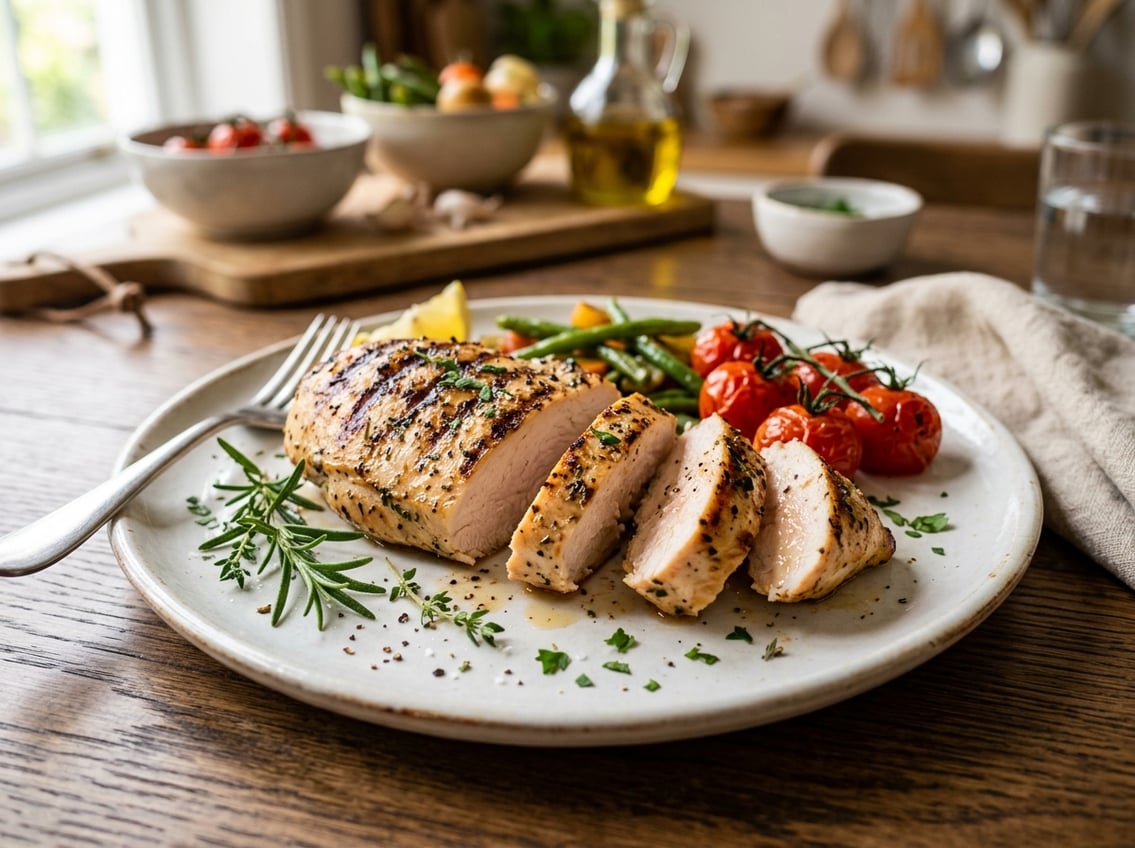
Once your chicken is done, you can turn it into a wide range of meals. A plain breast can become a classic skillet dinner, a baked casserole, a salad topping, or a filling for pasta and sandwiches.
Classic Skillet and Sauce Dishes
For a fast dinner, use your cooked chicken in chicken piccata, chicken marsala, chicken scallopini, or marry me chicken. These dishes work well because the sauce adds flavor and helps keep the meat moist.
Chicken florentine also fits this group, since spinach and a light sauce pair well with lean chicken.
Baked and Breaded Dinner Ideas
Chicken parmesan, chicken cordon bleu, and chicken schnitzel are strong options when you want a crisp crust. These recipes use breading or filling to add texture and richer flavor.
Ranch chicken, caprese chicken, and feta chicken are also easy baked choices. They give you a built-in flavor boost without needing much extra work.
Grilled, Salad, and Sandwich Options
Grilled chicken breasts work well in a chicken sandwich, grilled chicken salad, or chicken caesar salad. These meals are useful when you want something lighter or need cooked chicken for meal prep.
Chicken breast also slices cleanly once rested, which makes it easy to layer into a sandwich or toss over greens. If you want a fresher flavor, caprese chicken works well with tomatoes and herbs.
Pasta and Crowd-Pleasing Variations
Try chicken fajitas, hot honey chicken, cajun chicken pasta, or pizza chicken for pasta dishes. These meals use cooked chicken breast with stronger seasoning.
You can turn one chicken breast recipe into several different meals. Chicken breast works well as a flexible base for weeknight cooking and larger family meals.


