
When Grilling Chicken Breast: Timing, Temp, and Juiciness
When you grill chicken breast, you get the best results by managing three things: thickness, grill heat, and internal temperature. If you match those well, you can enjoy grilled chicken breast that is cooked through, safe to eat, and still juicy.
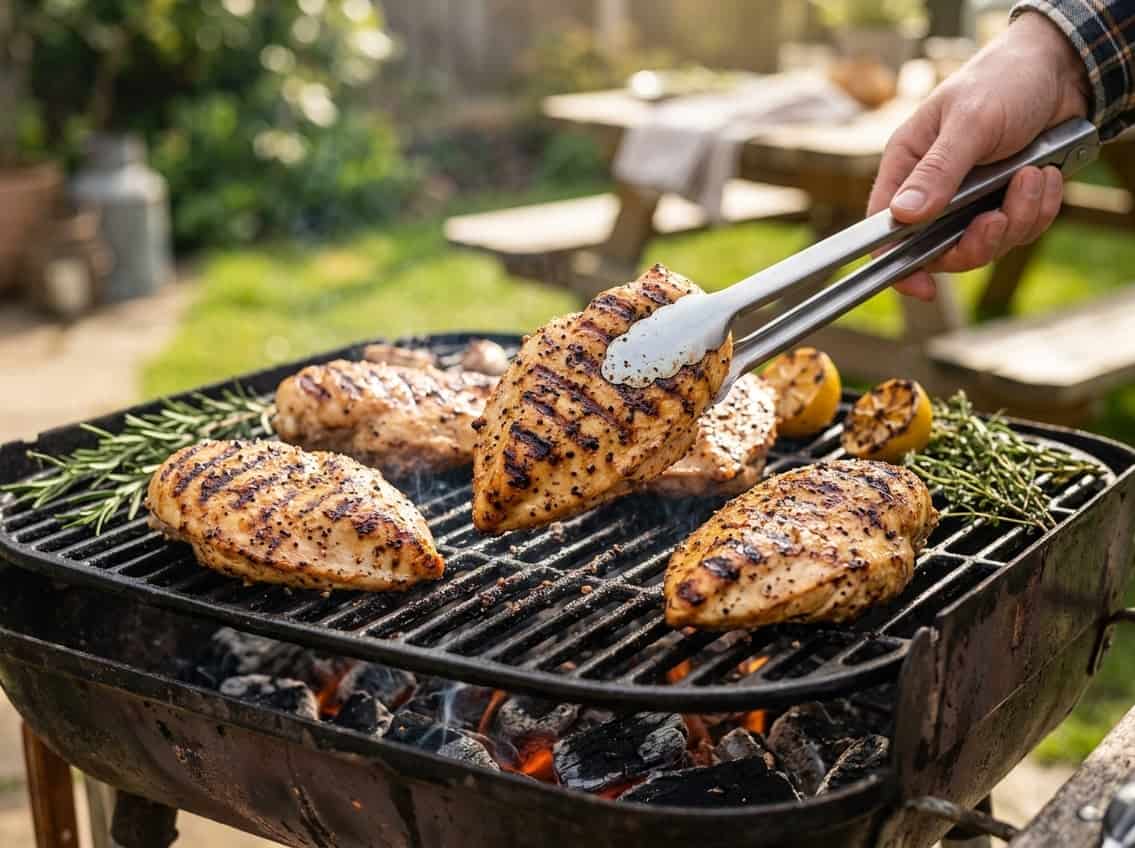
The most reliable way to grill chicken breast is to cook it over medium-high heat, then pull it at 160°F with an instant-read thermometer and let carryover cooking finish the job.
Chicken breast is lean, so it dries out fast if you guess on timing or let it sit too long over high heat. A simple prep step, like pounding, brining, or using a balanced marinade, gives you a much better chance at juicy grilled chicken.
Cook Time, Temperature, and Doneness
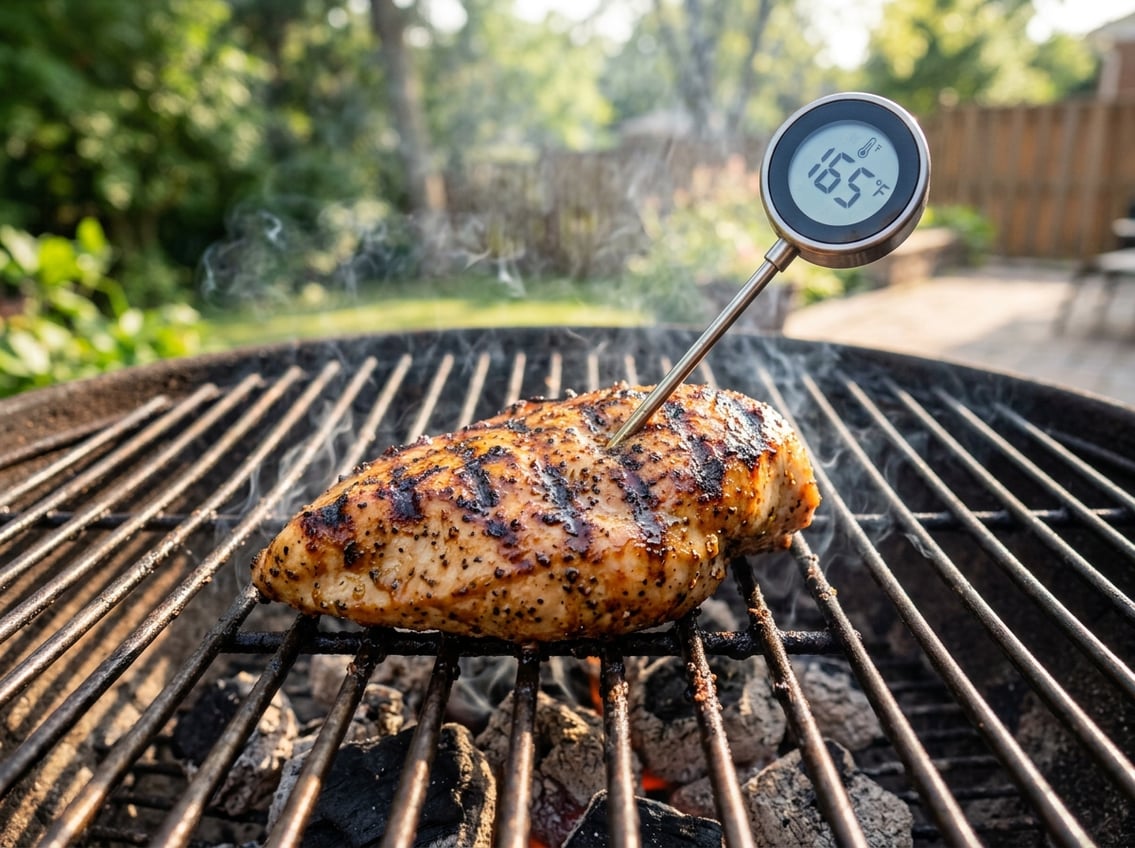
How long you grill chicken breast depends on thickness, grill temperature, and whether you are cooking one piece or several at once. The safest approach is to cook to temperature, not just time, and use the clock as a guide.
How Long to Grill Chicken Breasts by Thickness
Thickness matters more than weight for grilling chicken breasts. A pounded breast about 3/4 inch thick usually takes 10 to 14 minutes total at 375°F to 425°F, while a thicker unpounded breast can take longer.
A simple guide:
- 1/2 inch: about 3 to 4 minutes per side
- 3/4 inch: about 5 to 7 minutes per side
- 1 inch: about 7 to 8 minutes per side
- 1.5 inches: about 8 to 10 minutes per side
Grill chicken breasts of similar size so they finish close together. Uneven pieces often cause one breast to turn dry while another is still undercooked.
Best Grill Temperature for Even Cooking
Set your grill to 375°F to 450°F for chicken breast. That range gives you enough heat for browning without scorching the outside before the inside cooks.
A two-zone setup works well because you can sear on direct heat, then move the chicken to gentler heat if needed.
When to Flip and When to Pull the Chicken
Leave chicken alone for the first few minutes on the grill. Put it on the grates, close the lid, and let it cook for about 5 to 7 minutes before flipping.
Flip once, then cook the second side until the center reaches 160°F. Pull the chicken breast at that point, because carryover cooking usually brings it to 165°F while it rests.
Why an Instant-Read Thermometer Matters
An instant-read thermometer removes the guesswork from grilling chicken breast. Color, firmness, and juice color can all mislead you, especially on thicker pieces.
Insert the thermometer into the thickest part of the breast, not touching the grill or pan. This tool helps you get juicy chicken breasts every time.
Prep Steps That Keep It Juicy
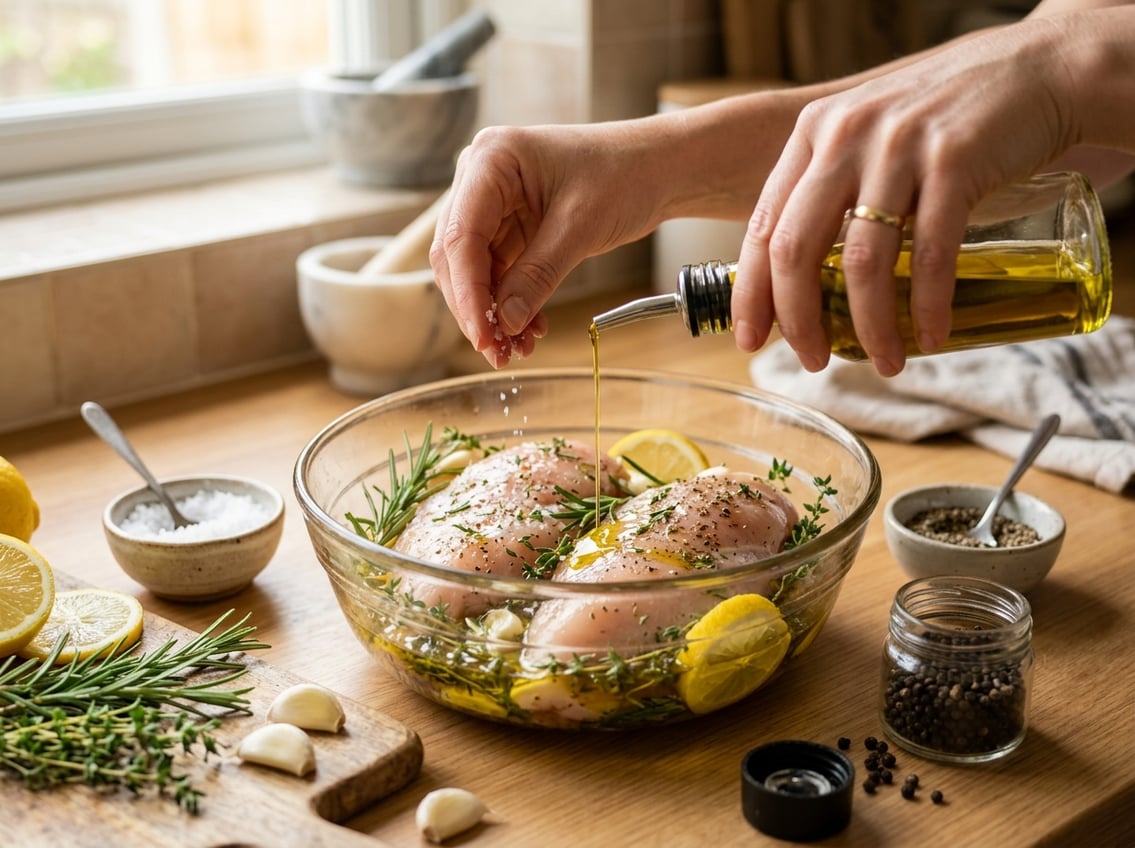
Good prep helps even the leanest boneless skinless chicken breasts stay tender on the grill. Make the pieces even, season them well, and give the meat time to hold moisture before it meets the heat.
Choosing Boneless Skinless Chicken Breasts
Choose boneless skinless chicken breasts that are similar in size and not overly thick at one end. A single chicken breast can taper a lot, which creates uneven cooking.
Pick pieces with a uniform shape when possible. That makes it easier to cook chicken breast without drying out the thinner end.
When to Pound Chicken Breast Evenly
Pound chicken breast so the thickest part matches the rest of the piece. Place it between plastic wrap or in a zip-top bag, then pound it to about 3/4 inch thick.
Even thickness means you are less likely to overcook the edges before the center is done.
Brine vs. Chicken Marinade
Brine chicken breasts with salt and water or a dry salt brine before grilling to help the meat hold onto moisture during high heat cooking.
For more flavor, marinate chicken in a balanced marinade with oil, acid, herbs, and seasoning. Marinated chicken breast can taste brighter and more seasoned, while brining focuses more on juiciness.
How Long to Marinate Chicken Safely
For a standard acidic marinade, 30 minutes to 2 hours in the refrigerator is enough. Longer than that can make the surface soft if the marinade has a lot of citrus or vinegar.
Keep the chicken cold the whole time, and do not reuse marinade that touched raw poultry unless you boil it first.
Grill Setup and Technique
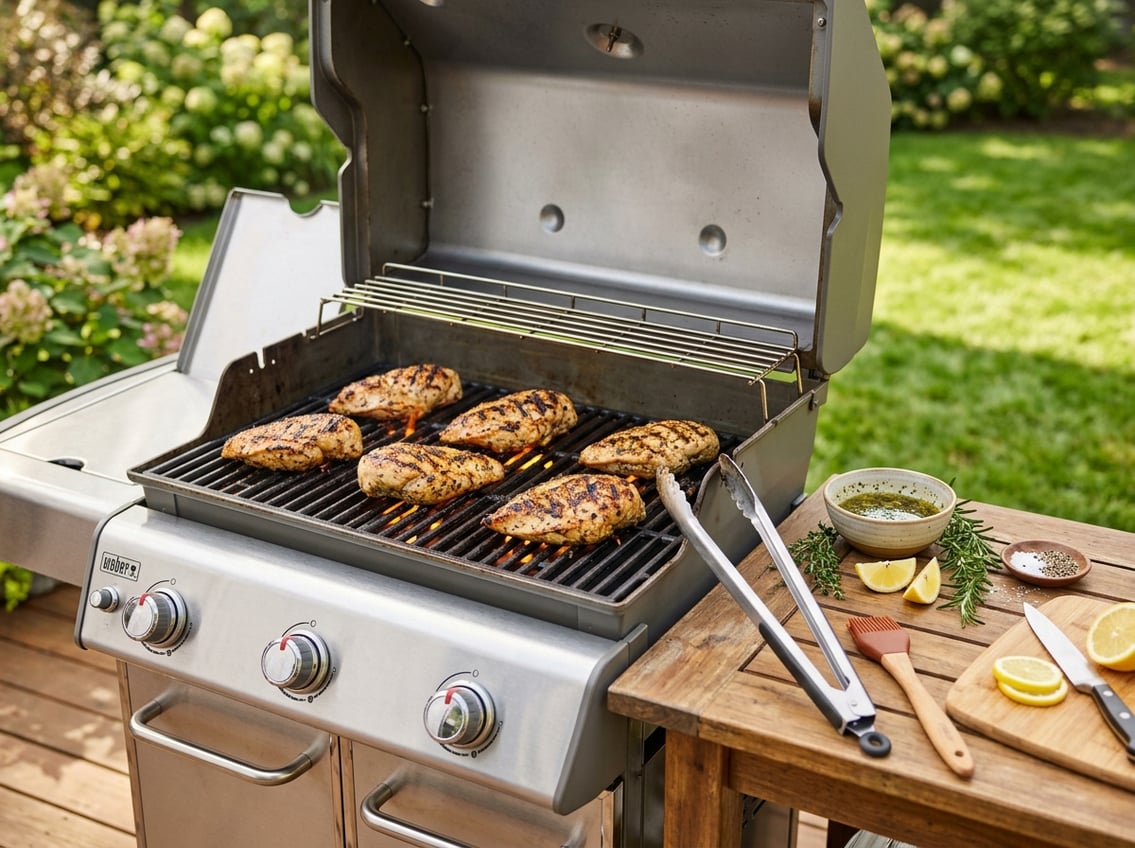
A good setup matters as much as seasoning. If your grill is clean, hot, and arranged with the right heat zones, you can grill chicken breast with better browning and less sticking.
Preheating, Cleaning, and Using a Grill Brush
Preheat the grill with the lid closed for 10 to 15 minutes before you start. Hot grates help the chicken sear instead of glue itself to the metal.
Use a grill brush to clean off old bits of food, then oil the grates lightly if needed. Clean grates improve grill marks and reduce tearing when you flip the chicken.
Direct vs. Two-Zone Heat
Direct heat gives you fast browning, while two-zone heat gives you more control. Start chicken breast over direct heat, then move it to the cooler side if the outside is browning faster than the inside is cooking.
This method works well because the outside gets color and the inside finishes gently.
How to Get Clean Grill Marks Without Sticking
Place the chicken on a hot, clean grate and do not move it too soon. If you try to lift it early, it may tear and lose those clean lines.
Let it cook long enough for the surface proteins to release naturally. This is the easiest way to get neat grill marks and a better crust.
Common Grilling Tips to Avoid Dry Chicken
Use similar-sized pieces, keep the lid closed, and check the temperature early. Do not press down on the chicken, since that pushes out juice.
Move the meat off direct heat if flare-ups start. These small habits help you get juicy grilled chicken breasts.
Serving Ideas and Flavor Variations
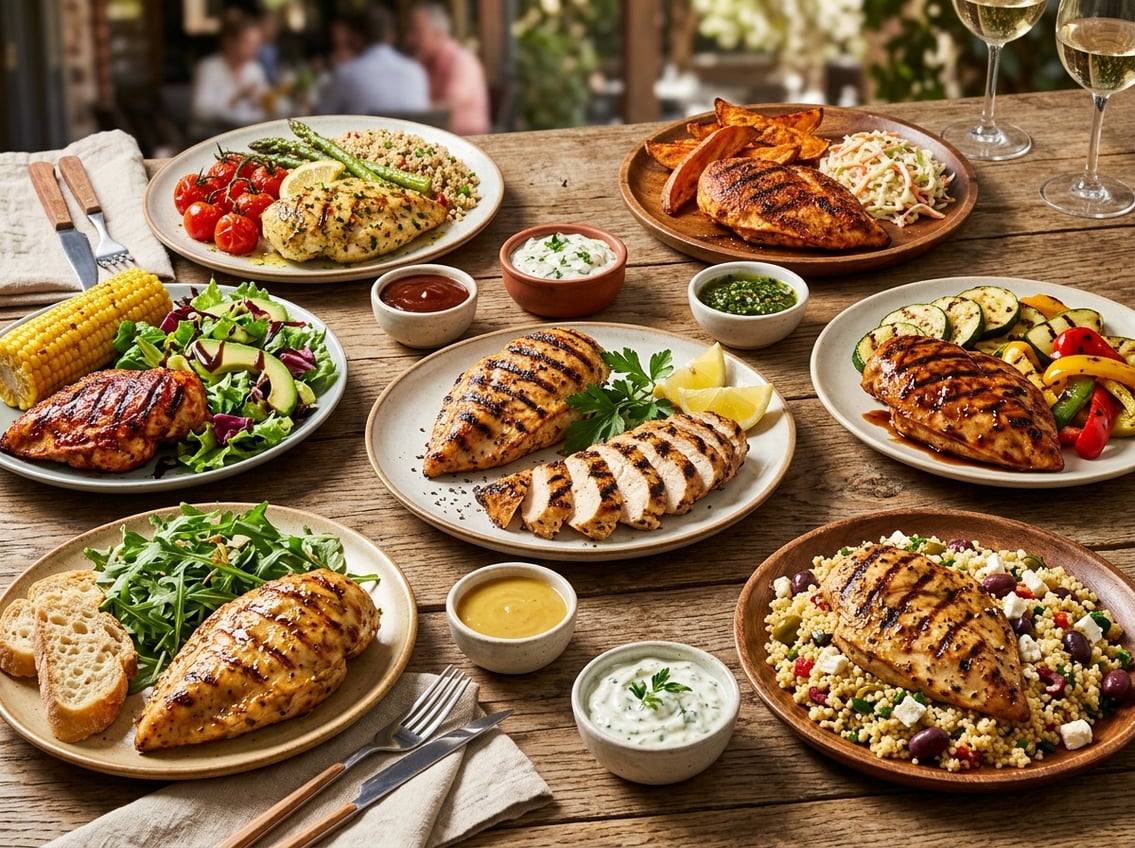
A well-grilled chicken breast works with many sides and sauces. The flavor you choose before grilling can also shape what you serve with it.
What to Serve With Grilled Chicken
Start with easy sides like salad, rice, potatoes, pasta, or vegetables. Grilled chicken breast also fits well in wraps, grain bowls, and sandwiches.
For a fuller plate, pair grilled chicken with something crisp and something starchy. That balance keeps the meal satisfying without hiding the flavor of the chicken.
Easy Flavor Twists Like Cilantro Lime Chicken
A fresh herb and citrus marinade can turn plain chicken into cilantro lime chicken with very little effort. Lime juice, cilantro, garlic, oil, and salt work well together for a bright summer flavor.
You can use the same method for other versions, such as garlic herb, smoky paprika, or lemon pepper. Keep the seasoning simple so the chicken still tastes like chicken, not just marinade.
Simple Summer Sides Such as Grilled Corn
If you cook outside, grilled corn is an easy side that fits almost any chicken meal.
You can grill it on the same grate while the chicken rests. This saves time and adds a little char.
For a basic summer spread, serve best grilled chicken with corn, salad, and a cool sauce on the side.
This gives you a balanced plate without much extra work.


