
When Boiling Chicken Breast: Times, Temps, and Tips
When you boil chicken breast, your goal is simple. You want meat that is fully cooked, moist, and easy to use in salads, soups, tacos, and meal prep.
The safest, most reliable method uses a gentle simmer instead of an aggressive boil. This keeps the meat tender.
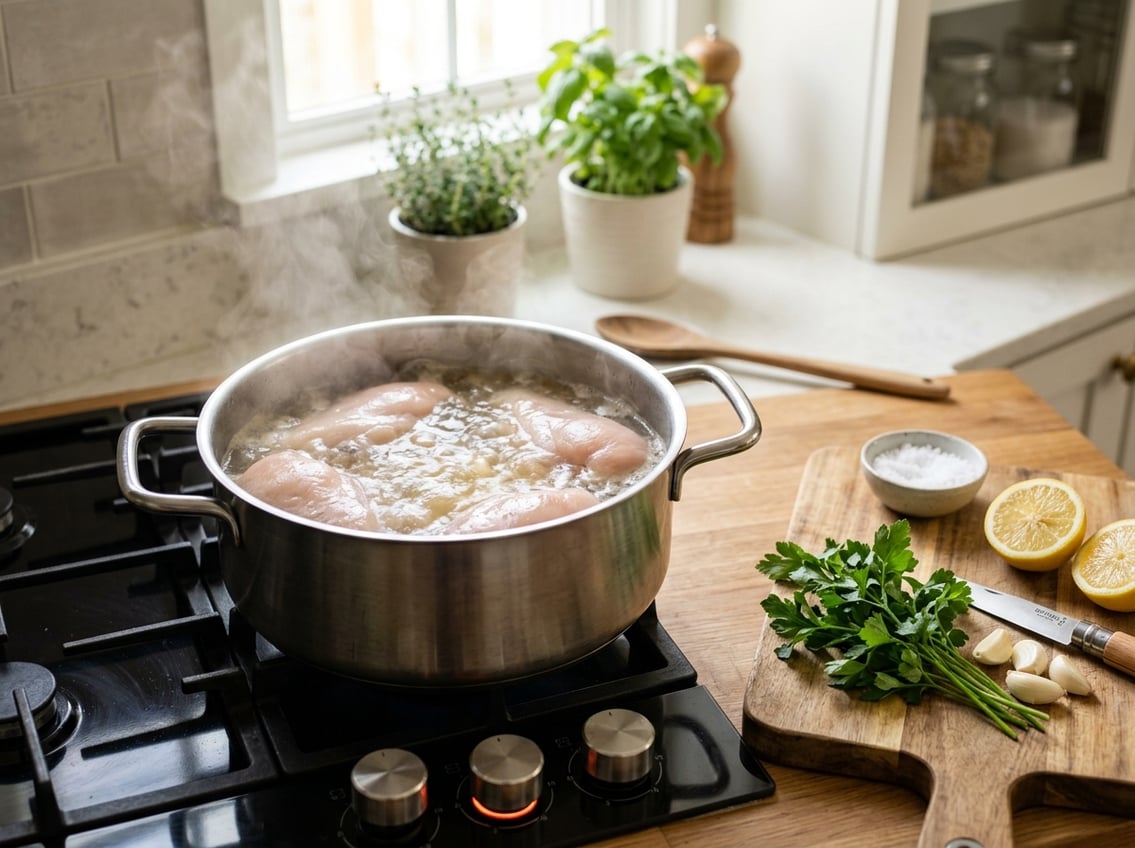
Boil chicken breast until it reaches 165°F in the thickest part. For boneless, skinless breasts, this usually takes about 12 to 15 minutes. Bone-in pieces take longer.
A thermometer confirms safety. This timing gives you a solid starting point.
Boiled chicken breast and poached chicken use similar gentle methods. Gentle simmering helps you avoid dry, stringy texture from too much heat.
Exact Timing and Safe Temperature
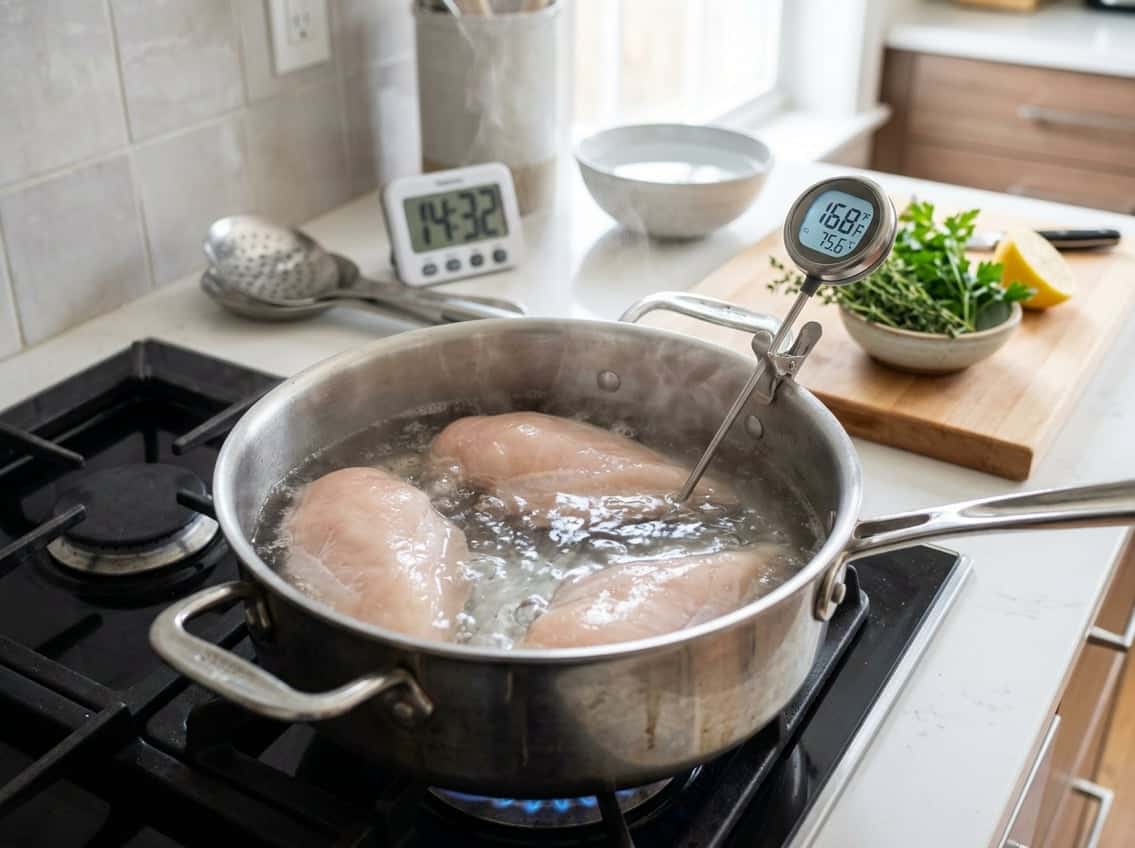
Size, thickness, and bones affect timing. Use time as a guide, but check the center with an instant-read thermometer for safety.
How Long Boneless, Skinless Breasts Take
Boneless, skinless chicken breasts take about 12 to 15 minutes at a gentle simmer. Very thick breasts may need a few more minutes.
Cutting the breasts into smaller pieces makes them cook faster. Smaller pieces can be done in 8 to 10 minutes.
How Long Bone-In Breasts Take
Bone-in chicken breasts usually need about 30 minutes. These pieces also make a richer cooking liquid for more flavorful broth.
Starting with frozen bone-in breasts takes even longer. Always check the temperature instead of relying on the clock.
How to Check Doneness With a Thermometer
Use an instant-read thermometer to check when chicken is done. Insert it into the thickest part, away from the bone, and look for 165°F.
This ensures safety whether you slice, shred, or cool the chicken for later use.
Why Gentle Simmering Works Best
A rolling boil makes chicken tough and stringy. Gentle simmering keeps the meat tender and helps it cook evenly.
You want steady heat, not violent bubbling.
Best Method for Juicy Results
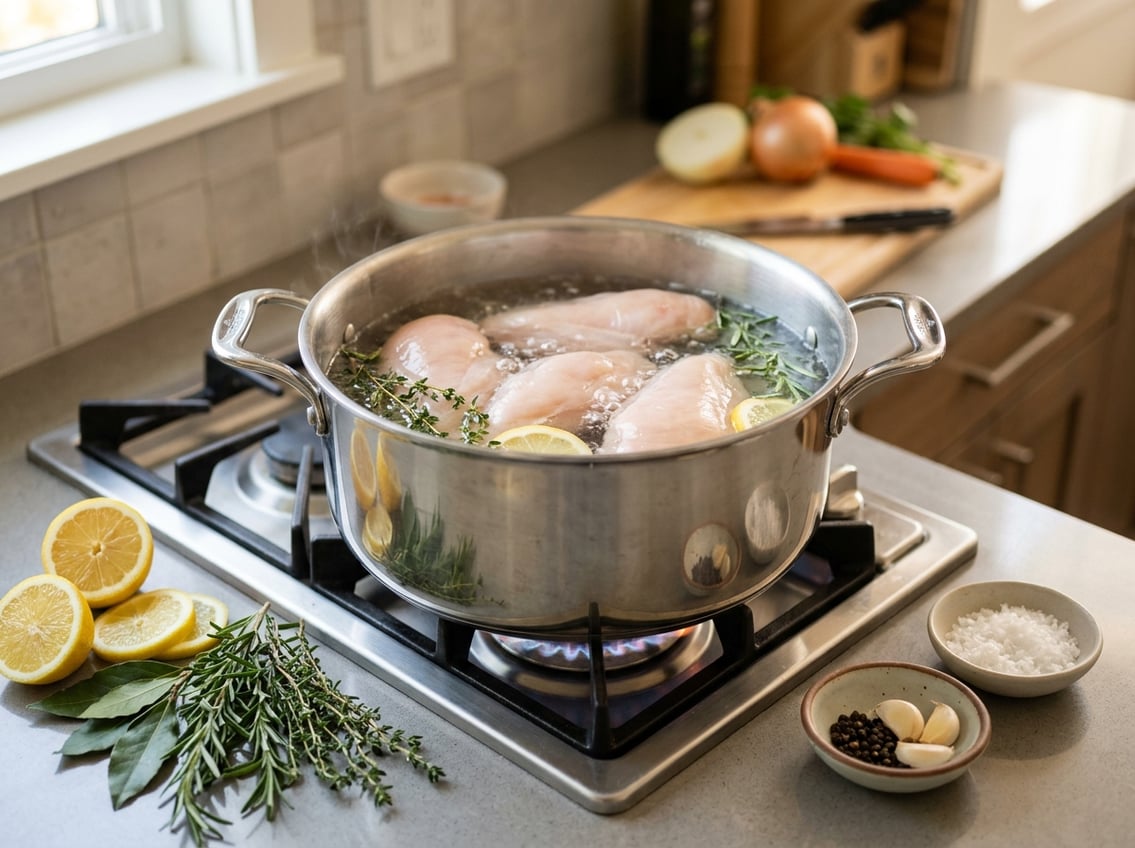
Steady heat, enough liquid, and proper resting time help you get juicy results. Choices like seasoning and when you cut the meat affect the final texture.
Start in Cold Water or Broth
Place the chicken in the pot before heating the liquid. Cover it with cold water or broth.
Starting this way helps the meat cook evenly from edge to center.
Broth adds flavor, while water keeps the chicken neutral for recipes where you add seasoning later.
How Much Liquid and Seasoning
Use enough liquid to cover the chicken breasts by about an inch. Too much water can dilute flavor, while too little may leave some meat exposed.
Add salt, pepper, onion, garlic, bay leaf, or herbs for more flavor. The cooking liquid should support the chicken without overpowering it.
When to Rest, Slice, or Shred
Let the chicken rest for a few minutes after cooking. This helps the juices settle and keeps the meat moist when you cut it.
Wait until the chicken is cool enough to handle before shredding it with two forks or your fingers. For clean slices, cut across the grain after resting.
Common Mistakes That Make Chicken Tough
High heat tightens the meat and pushes out moisture. Overcooking, even by a few minutes, can also make chicken tough.
Pull the chicken as soon as it reaches 165°F. Drain it and let it rest before serving or storing.
Frozen Chicken, Storage, and Leftovers
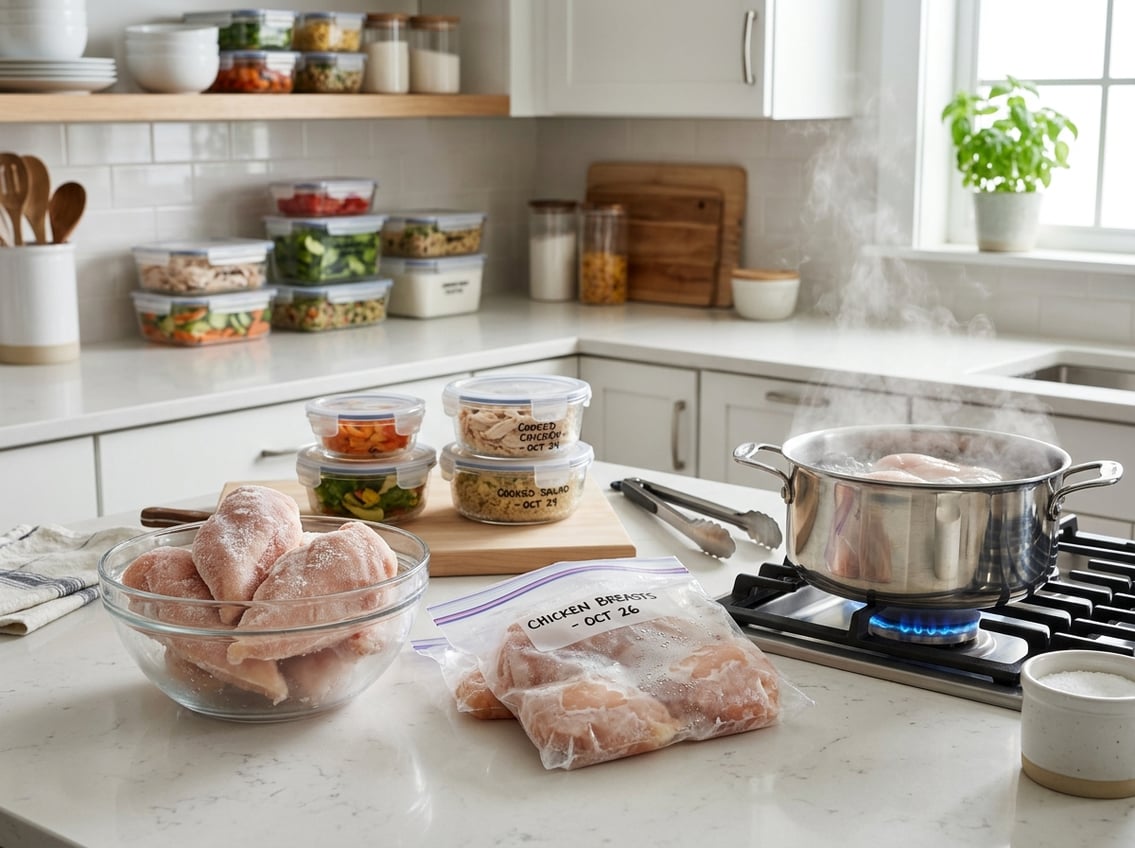
You can boil frozen chicken safely if you allow enough time and confirm the final temperature. After cooking, cool and store it properly for later meals.
Boiling Frozen Chicken Safely
If you boil frozen chicken, make sure it cooks all the way through to 165°F. Increase the cook time for frozen pieces and check doneness with a thermometer.
Thawing first is a better choice when you have time. It gives more even cooking and a shorter wait.
How Timing Changes for Frozen Breasts
Frozen boneless breasts usually need about 18 to 22 minutes. Frozen bone-in breasts can take about 45 minutes.
Thickness, pot size, and heat level all affect how long it takes to boil chicken breast from frozen.
How to Store Boiled Chicken
Cool the chicken completely before storing. Place it in a clean airtight container and refrigerate or freeze it if you want to keep it longer.
Strain and chill the cooking liquid separately if you want to save it for broth.
How Long It Keeps
Boiled chicken keeps in the refrigerator for up to three days and in the freezer for up to two months. Label the container with the date to track freshness.
Freeze the chicken in meal-size portions for best quality. This makes it easier to use only what you need.
Best Ways to Use Cooked Breast Meat
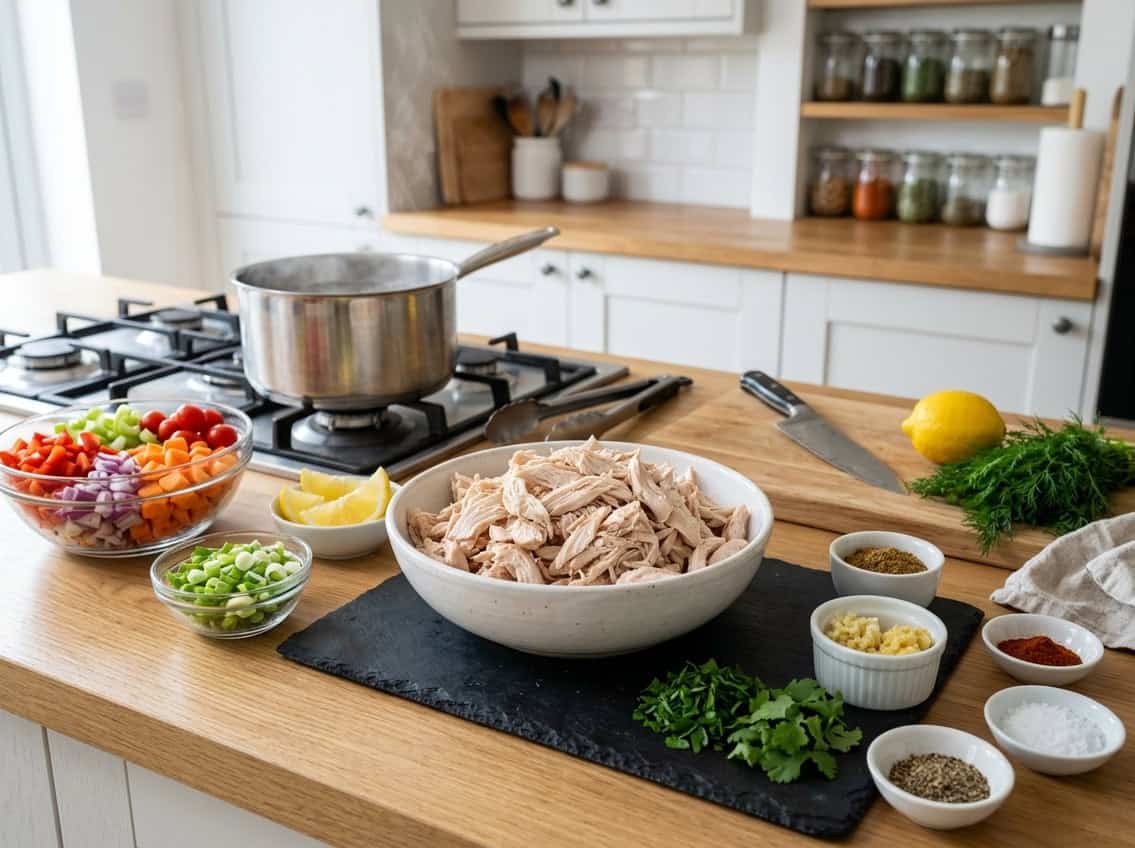
Boiled chicken breast is a versatile prep food. You can use it cold, hot, sliced, chopped, or shredded.
Chicken Salad and Cold Prep
Boiled chicken works well in chicken salad. The mild flavor blends with mayo, yogurt, celery, herbs, or grapes.
It also holds up well in sandwiches and wraps. Chop the meat for a clean texture, or shred it for a softer texture.
Soups, Tacos, and Comfort Food
Shredded chicken fits well in chicken tortilla soup, chicken pot pie, casseroles, and tacos. It soaks up sauce and reheats easily.
The mild flavor makes it useful in dishes with stronger seasoning, since it does not compete with the rest of the recipe.
When to Chop vs. Shred for Different Recipes
Use chopped chicken when you want defined pieces, such as in salads or pot pie.
Use shredded chicken when you want the meat to blend into the dish, such as in soups, tacos, or enchiladas.
Shredded chicken gives you flexibility for most leftover meals.
Boiling chicken breasts provides a practical choice for meal prep and quick weeknight cooking.


