
Chicken Breast or Thigh: Which Should You Choose?
Chicken breast or thigh is a choice you make based on your goal, your budget, and the kind of meal you want on the plate.
Chicken breast is the leaner pick, while chicken thigh gives you more fat, richer flavor, and a more forgiving cook.
If you want lower calories and higher protein per bite, chicken breast usually fits better.
If you want juicier meat, stronger flavor, and easier everyday cooking, chicken thigh is often the better choice.
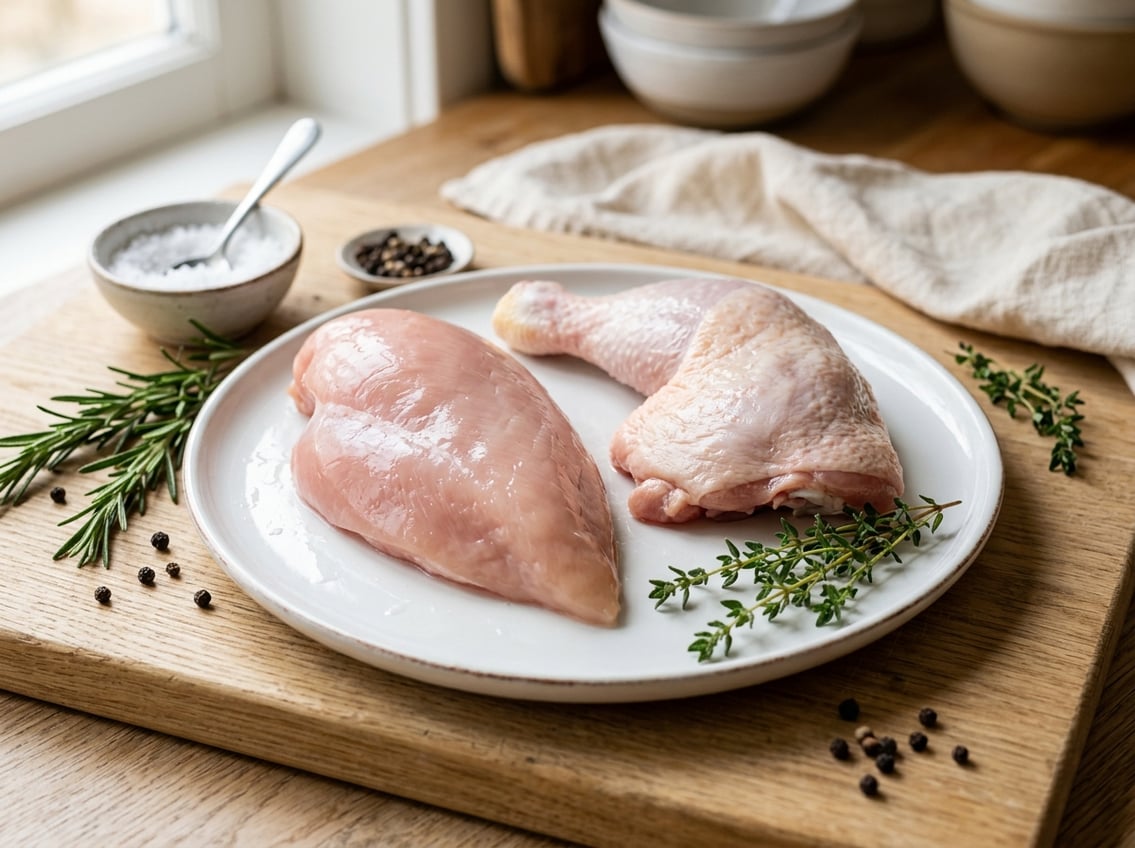
Both cuts can work well in a healthy diet.
The best option depends on whether you care more about lean protein, satiety, taste, or how the food behaves in the pan.
Nutrition Differences
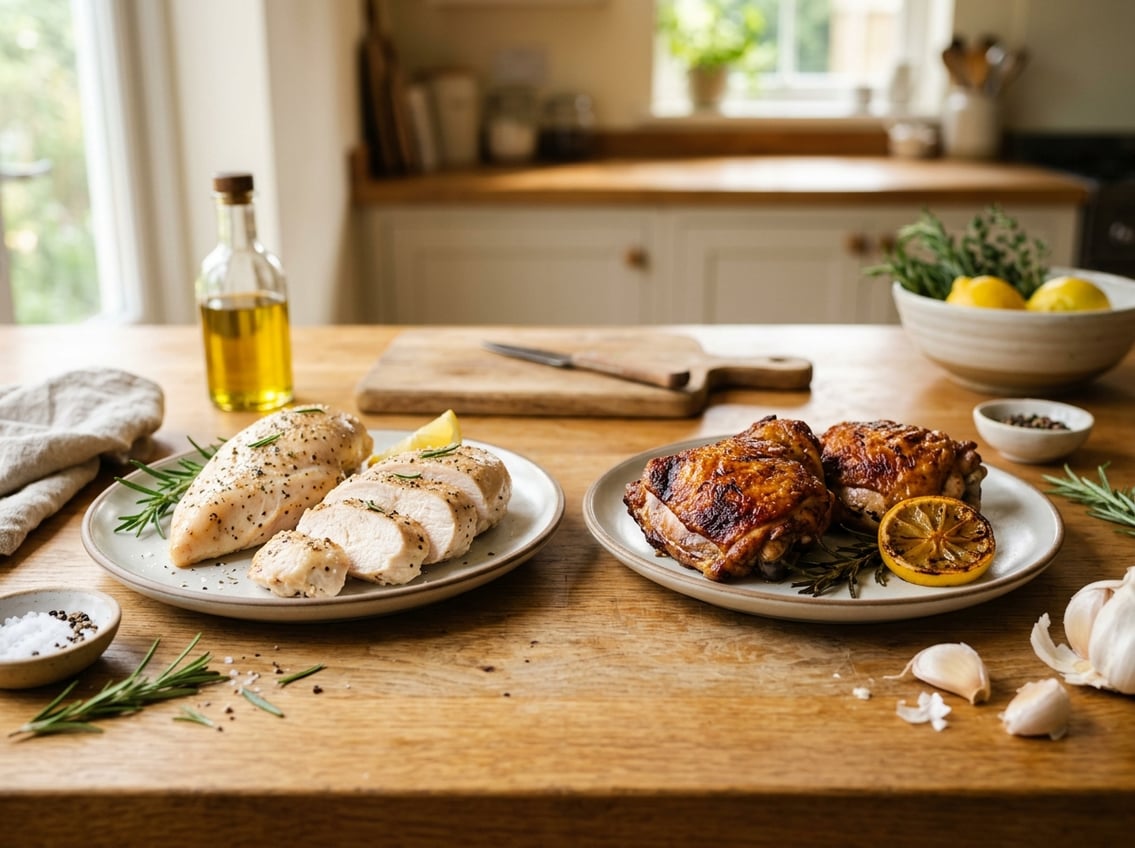
The biggest nutrition gap comes from fat and calories.
Skinless chicken breast is usually the leanest choice, while skinless chicken thigh has more fat and a richer nutrient mix.
That difference can matter a lot if you track calories or macros.
It also affects how full the food feels after a meal.
Calories, Protein, and Fat
A 3-ounce serving of boneless, skinless chicken breast has about 140 calories and 3 grams of fat.
The same serving of boneless, skinless chicken thigh has about 170 calories and 9 grams of fat, according to The Pioneer Woman’s chicken breast vs. chicken thigh guide.
Chicken breast is the more calorie-friendly option.
Protein is still high in both cuts.
Chicken breast usually gives you more protein per calorie, so it is the more efficient pick for lean protein meals.
White Meat vs Dark Meat
Chicken breast is white meat, and chicken thigh is dark meat.
White meat is leaner and milder, while dark meat has more fat and a deeper flavor.
That difference changes both nutrition and cooking behavior.
If you want a lower-fat plate, skinless chicken breast is usually the better fit.
If you want a meal that feels more satisfying and less dry, skinless chicken thigh often works better.
Micronutrients, Myoglobin, and Fullness
Dark meat contains more myoglobin, the pigment that gives chicken thighs their deeper color.
That is part of why chicken thighs look and taste richer than chicken breasts.
The extra fat in chicken thighs can also increase satiety, or the feeling of fullness after eating.
If you want food that keeps you satisfied longer, chicken thighs may help more than very lean chicken breasts.
Which Cut Fits Your Goal
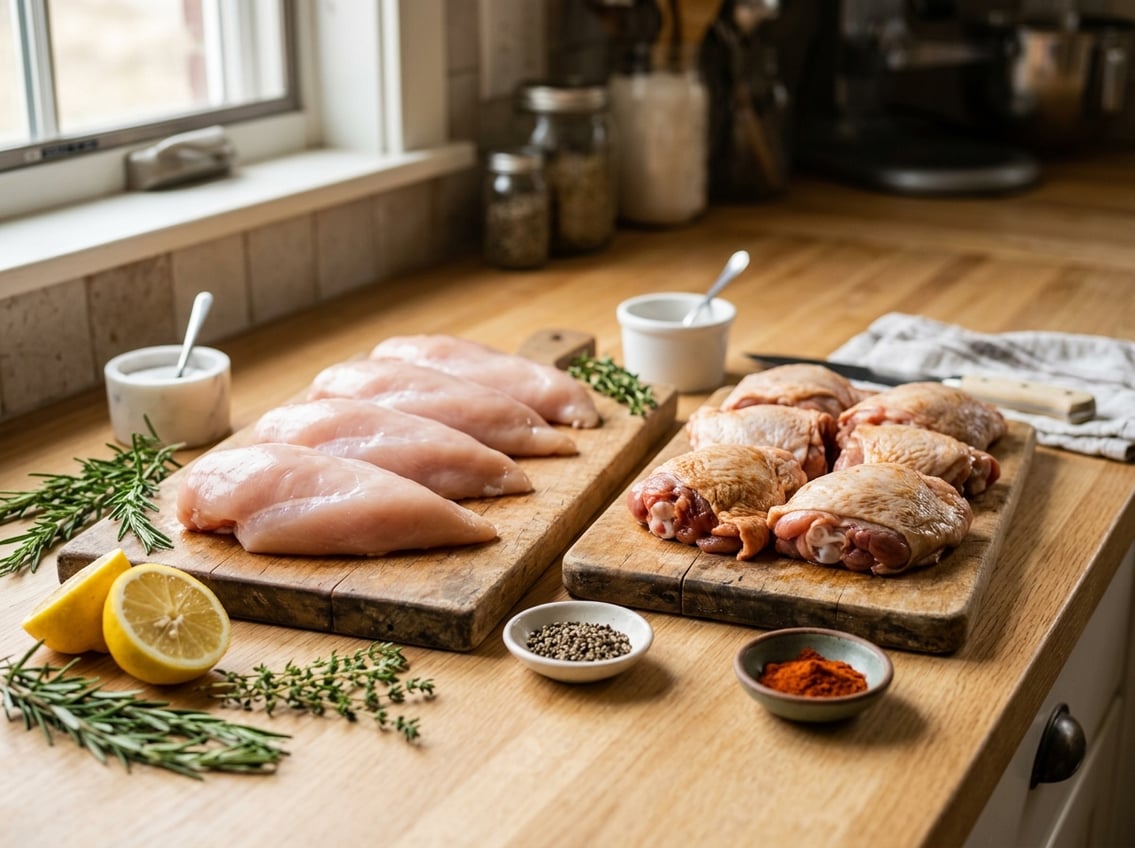
Your best choice depends on what you want from the meal.
Chicken breast is the stronger pick for lower calories and higher protein density, while chicken thighs are often better for flavor, budget flexibility, and easier cooking.
Best for Weight Loss
If your focus is weight loss, skinless chicken breast usually makes the most sense.
It gives you lean protein with fewer calories and less fat, which makes it easier to build a higher-volume meal without pushing calories too high.
That can be useful with salads, rice bowls, wraps, and meal prep plates.
Skinless chicken breast also works well when you want to add sauce or seasoning without changing the calorie count too much.
Best for Muscle Gain
If you want protein for muscle gain, chicken breast is the simpler choice because it packs more protein for fewer calories.
That helps when you want to hit a high daily protein target without eating too much fat.
Chicken thighs still count as a strong protein food.
They may fit better if you need more calories in your day or prefer meals that feel more filling.
Best for Flavor and Everyday Eating
If taste matters most, chicken thighs usually win.
Dark meat has more richness, and many people find it easier to enjoy in simple meals.
Chicken thighs can also be easier on the budget, depending on the store and the sale price.
For everyday cooking, skinless chicken thighs often give you a good mix of flavor, value, and convenience.
Taste, Texture, and Cooking
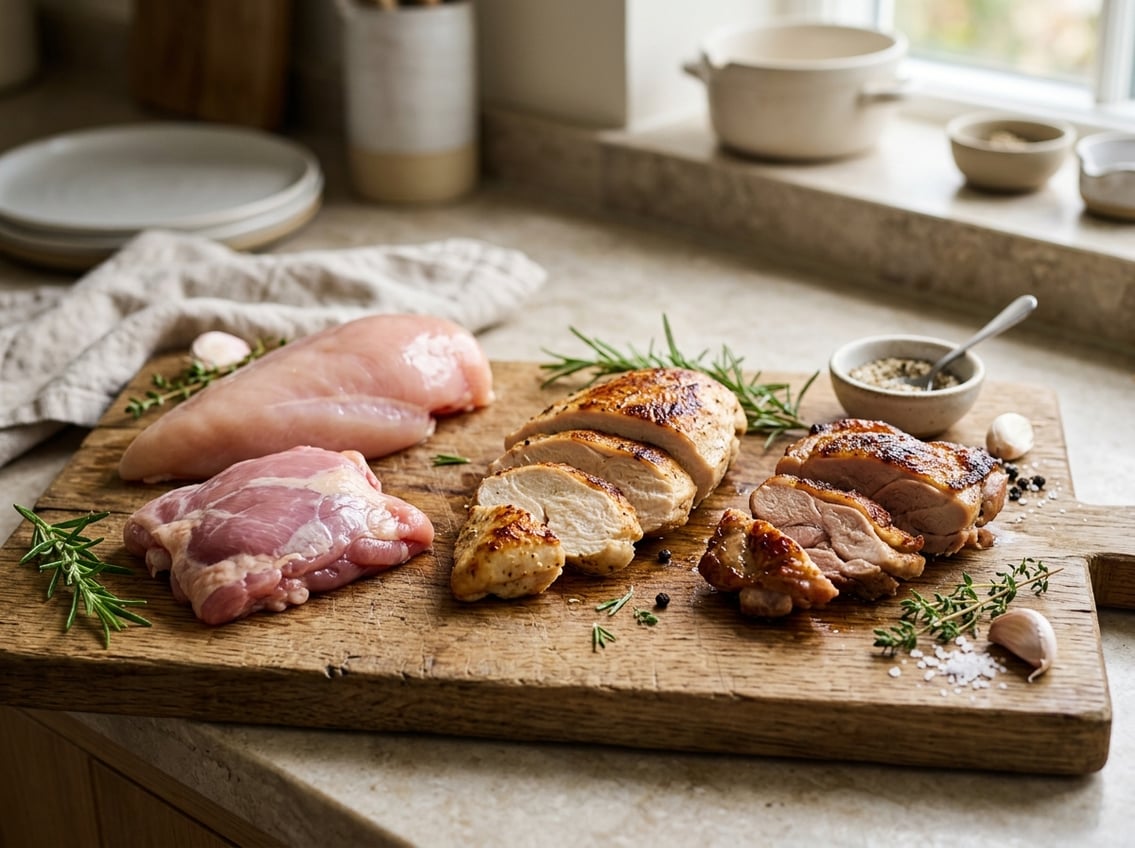
Chicken breasts and chicken thighs behave differently when you cook them.
Breasts are fast and mild, while thighs are richer and more forgiving.
That difference matters whether you are grilling, baking, or roasting.
It affects how much attention you need to give the pan and how likely the meat is to dry out.
Why Breasts Cook Faster
Chicken breast is lean, so it cooks quickly and can dry out if you leave it on the heat too long.
That is why thin cuts, cutlets, and careful timing matter so much with chicken breasts.
If you cook skinless chicken breast, watch the internal temperature closely and avoid overcooking.
Many cooks like it because it is simple and quick, not because it is forgiving.
Why Thighs Stay Juicier
Chicken thigh has more fat, so it tends to stay juicy even when cooked a little longer.
That makes chicken thighs easier to use for weeknight meals when you do not want to worry as much about perfect timing.
According to The Pioneer Woman’s chicken thigh guide, thighs are a forgiving, flavorful cut and are harder to overcook.
That is a big reason many cooks prefer them for busy nights.
How Grilled, Baked, and Roasted Versions Compare
Grilled chicken breast can be great when you want a lean, simple protein.
It works best with careful heat control and a good marinade.
Baked chicken breast is also useful, though it can dry out if you go too far.
Roasted chicken thigh, especially skin-on chicken, usually gives you better browning and a juicier result.
Dark meat holds up especially well in these methods.
How To Choose and Prep

At the store, the labels matter almost as much as the cut.
Boneless, skinless options are usually the easiest for fast meals, while bone-in and skin-on cuts can bring more flavor and moisture.
The way you season and store the meat also changes the final result.
Small buying choices can make prep much easier.
Boneless vs Bone-In and Skinless vs Skin-On
Boneless chicken breast is the easiest for slicing, meal prep, and quick cooking.
Boneless chicken thigh works well for stir-fries, bowls, and recipes where you want juicy meat in smaller pieces.
Bone-in chicken thighs and skin-on chicken can add flavor and help protect the meat during cooking.
Skinless chicken breast and skinless chicken thigh are better when you want a cleaner nutrition profile and less added fat.
Labels, Marinades, and Additives
Check the label for added sodium, broth, or flavor injections.
Those can raise the salt level and change the nutrition facts, especially in pre-seasoned chicken breast or chicken thighs.
A simple marinade can help both cuts, but it matters more with chicken breast because it helps protect against dryness.
Salt, acid, oil, and herbs can all improve taste without adding much effort.
Simple Buying And Meal Prep Recommendations
Keep both chicken breast and chicken thigh on hand for the most flexible protein options during the week.
Use chicken breast for lean protein meals. Choose chicken thighs for dinners where flavor and moisture matter more.
Portion the meat before storing it. Label each package by cut to make it easier to grab the right chicken for grilled, baked, or skillet meals.


