
Where’s the Chicken Breast? How to Find It Fast
If you’re asking where’s the chicken breast, you’ll find it on the front of the bird, on either side of the keel bone.
On a whole chicken, you can see it as the large, rounded white-meat area in the chest.
The breast is the broad meat section between the wings and above the legs.
Once you spot that shape, you can trim, carve, or cook it with much more confidence.
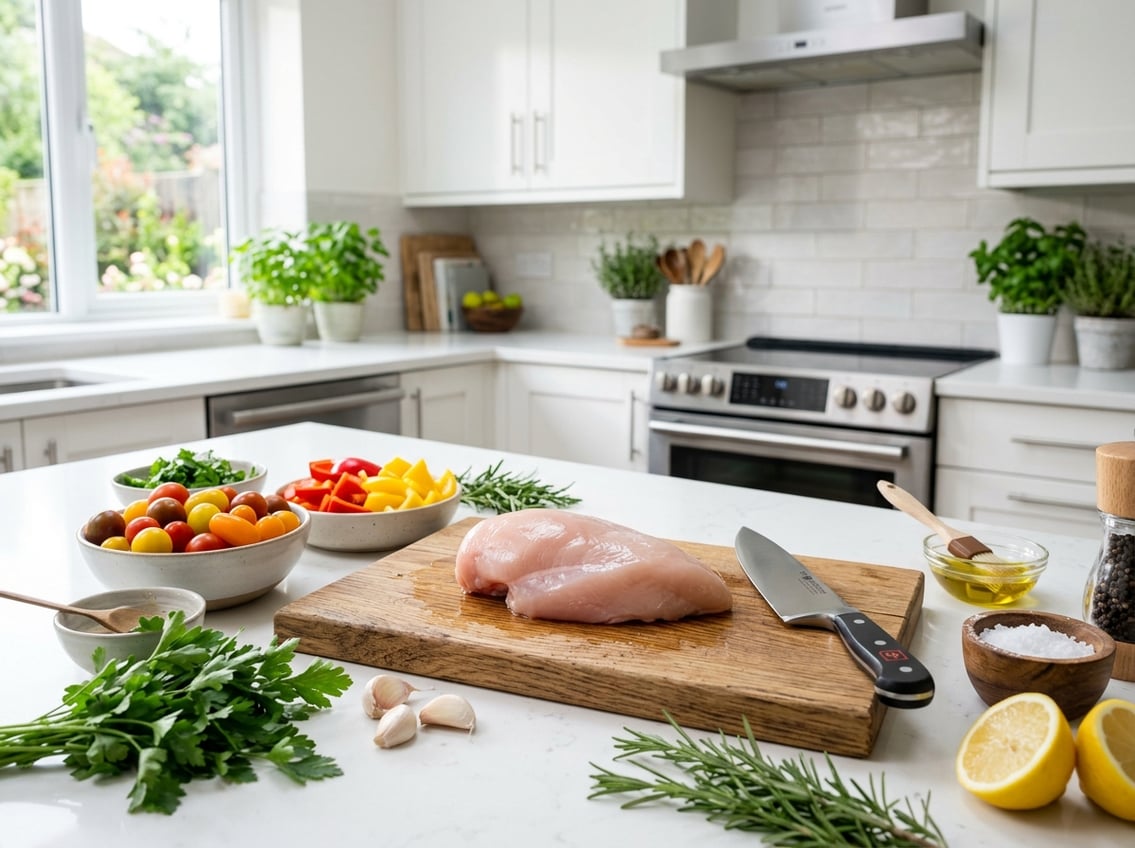
Whether you are breaking down a whole chicken for meal prep or checking a package of chicken parts at the store, the same landmarks help you find the breast fast and keep the meat intact.
How to Identify the Breast on a Whole Chicken
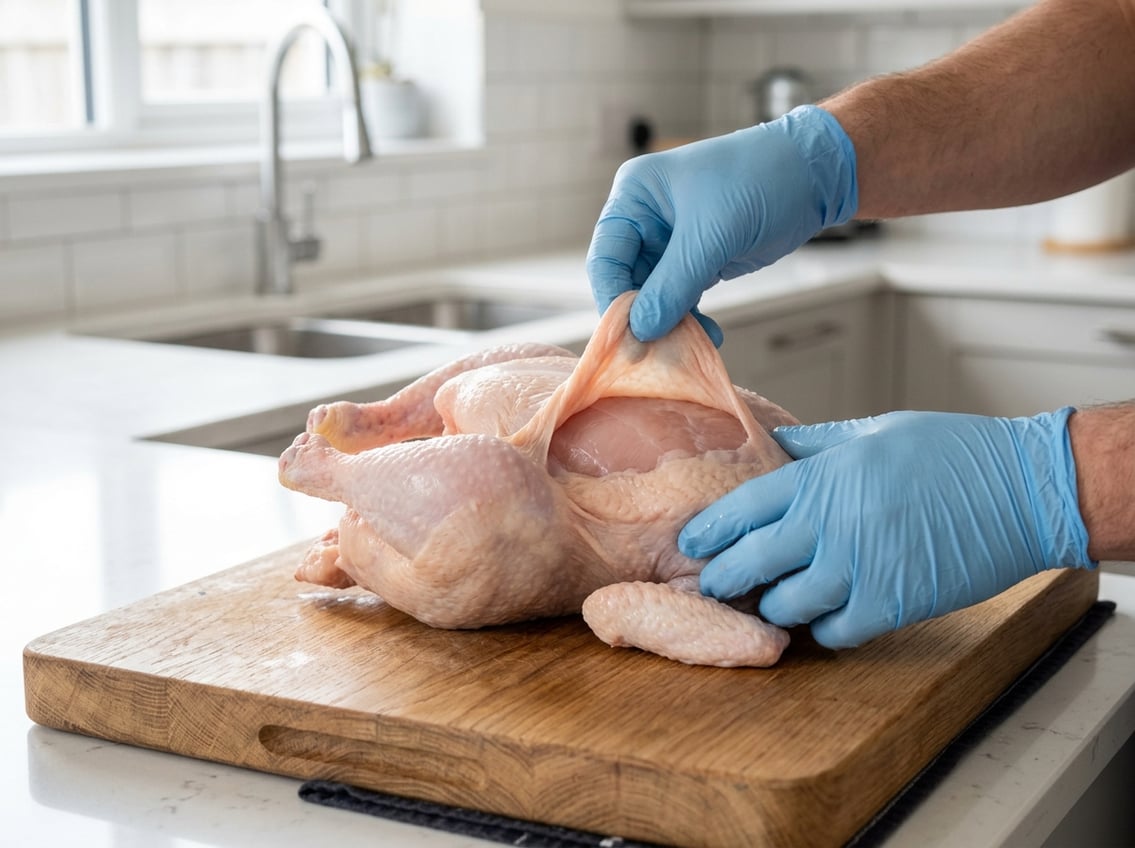
The breast forms the thick, front section of a whole chicken.
It sits on both sides of the center line, above the wings and legs.
Breast-Side Up Positioning
Place the whole chicken breast-side up on a cutting board.
The smooth, rounded side faces you, and the breast forms the broad top half of the bird.
If you turn the chicken over, you’ll see the back and cavity side, which makes the breast harder to spot.
The Chest Area Between the Wings
Look at the chest area between the wings.
That raised section marks where the chicken breast begins and it slopes down toward the ribs.
According to I Like To Dabble, the breast sits on the front part of the bird on either side of the keel bone.
This is the easiest visual cue when you’re holding a whole chicken.
How the Two Breast Halves Are Divided
The keel bone, also called the breastbone, divides the breast into two halves.
Each side contains one breast portion.
On many whole chickens, the two halves look like mirror images with a shallow ridge in the center.
If you press gently, you can feel the firm, meaty shape on both sides of that center bone.
Anatomy Landmarks That Help You Find It
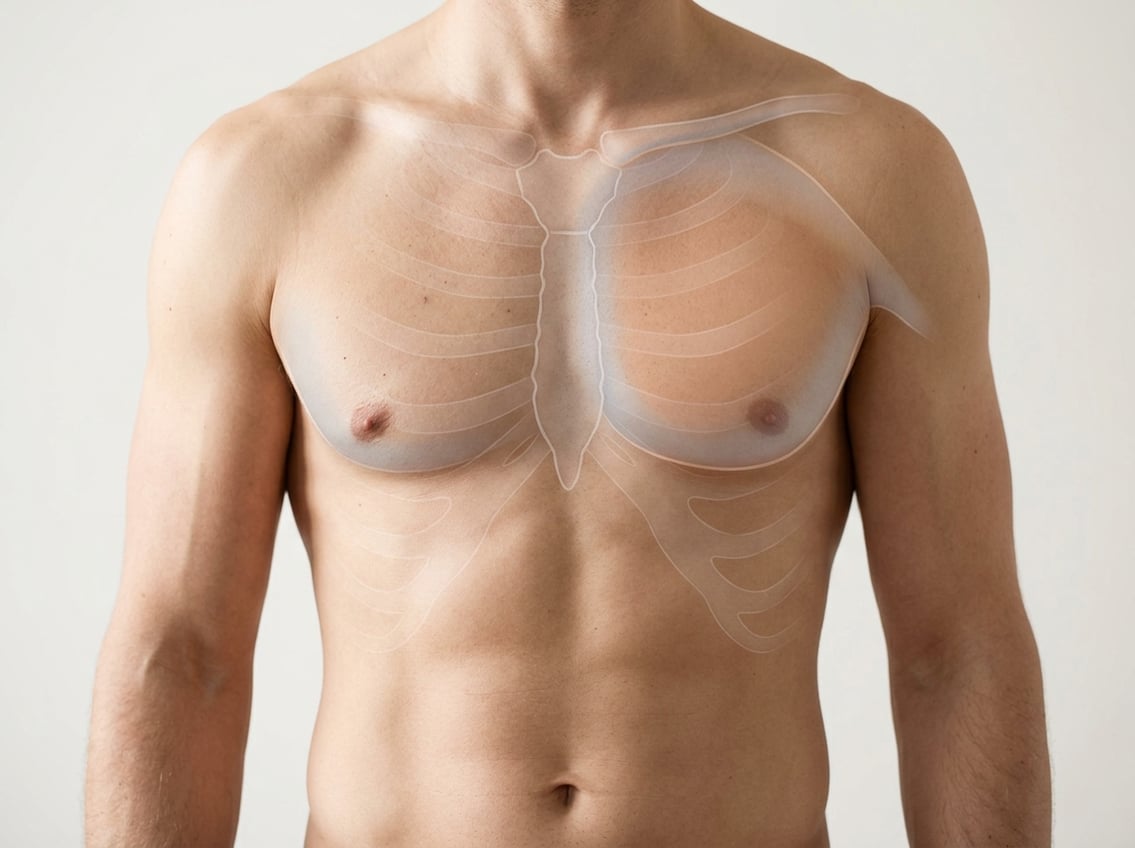
Chicken anatomy gives you three reliable landmarks for finding the breast fast.
The keel bone runs down the center, the wishbone sits near the top, and the main chest muscles form the meat you want to remove.
Keel Bone and Breastbone
The keel bone is the long center bone in the chest.
It divides the chicken breast into left and right halves and gives you a clear line to follow when cutting.
As Chef’s Resource notes, the keel bone runs vertically down the center of the chest.
If you locate that ridge, you can identify the breast with little guesswork.
Wishbone at the Top of the Chest
The wishbone sits near the top front of the chest, just under the neck area.
It helps define the upper edge of the breast.
When you feel for the wishbone, you are checking the highest part of the breast meat before the chest slopes toward the wings.
This is useful when you want to trim the breast cleanly from a whole bird.
Pectoralis Major and Pectoralis Minor
The chicken breast consists mostly of the pectoralis major, with the smaller pectoralis minor underneath.
The pectoralis major is the large outer breast muscle, and the pectoralis minor is the tender inner strip often called the tenderloin.
The breast feels thick and dense compared with the rest of the bird.
Breast meat cooks quickly and can dry out if you overdo it.
Removing the Breast Cleanly and Safely
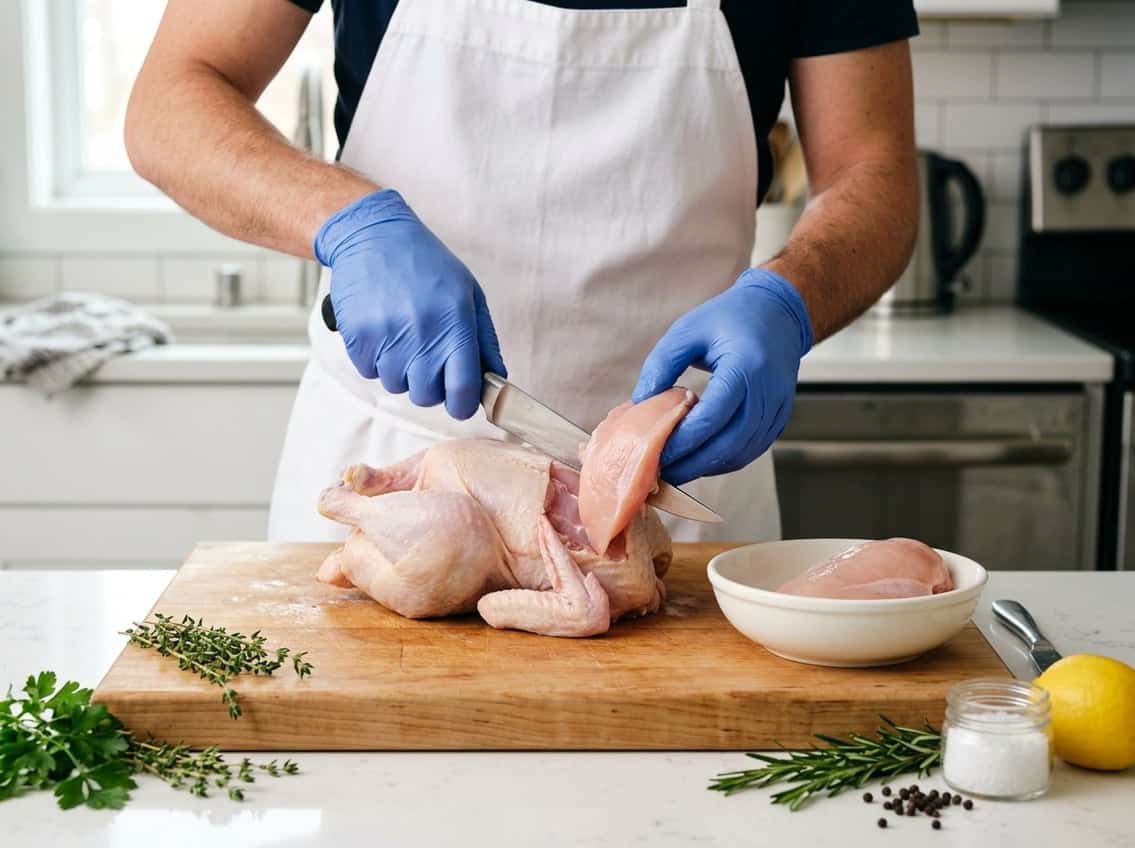
Start with the right tools and a steady cut along the bones.
Follow the keel bone and wishbone closely to keep as much meat as possible.
Tools to Set Out Before You Start
Set out a cutting board, a sharp knife, and kitchen shears.
A towel or paper towel nearby helps you keep a secure grip on the bird.
A stable board helps because raw chicken can slide.
If the board moves, your cut is less precise and less safe.
Cutting Along the Bone Without Tearing the Meat
Start at the top of the breast and make a shallow cut along one side of the keel bone.
Use the tip of the knife to trace the bone, then lift the breast meat away as you go.
If you find the wishbone, work the blade around it instead of forcing it.
According to a step-by-step guide to cutting up a whole chicken, a sharp knife and careful cuts help you separate parts cleanly and save more meat for cooking or stock.
Common Mistakes When Separating the Meat
Cutting too far from the bone leaves usable meat behind and makes the breast uneven.
Tugging hard on the meat before the knife is ready can tear the breast and leave rough edges, which makes later slicing harder.
Best Ways to Cook and Use Breast Meat
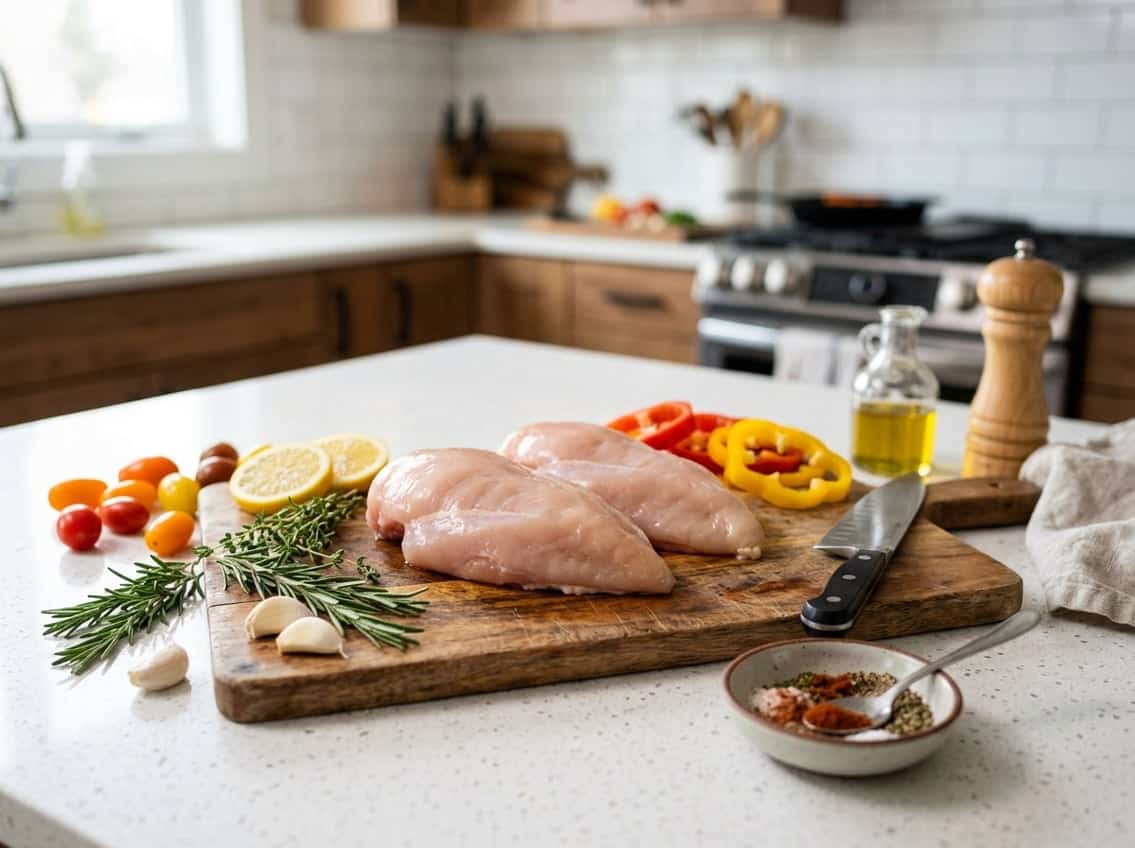
Chicken breast works well in fast weeknight meals because it is lean and versatile.
The main thing to watch is moisture, since breast meat can dry out if it cooks too long.
Cooking Chicken Breast Without Drying It Out
Cook chicken breast just until it reaches a safe internal temperature of 165°F, as the USDA recommends.
Let it rest before slicing so the juices stay in the meat.
Simple seasoning, even thickness, and moderate heat all help.
If the breast is very thick on one end, pound it lightly so it cooks more evenly.
Grilled and Baked Options for Everyday Meals
For grilled chicken, keep the heat steady and avoid constant flipping.
A grilled chicken breast is easiest to manage when you pat it dry and brush it lightly with oil.
For oven meals, baked chicken breast works well with basic seasoning, herbs, and vegetables.
Many home cooks rely on baked chicken breast recipes because they are simple, repeatable, and easy to pair with rice, salad, or roasted potatoes.
Using Bones and Trimmings for Stock
Do not throw away the bones and small trimmings after removing the breast. They add flavor to chicken stock.
Simmer the bones with water, onion, celery, carrots, and herbs for a simple base. You get more value from the same whole chicken and reduce waste in the kitchen.


