
Chicken Breast as Bait for Catfish
Chicken breast can work well for catfish when you want a cheap, easy-to-rig option that stays on the hook. You can fish fresh meat without catching your own bait first.
It is especially useful when you target channel cat in warm water, drifting current seams, or fishing a bottom rig. This bait gives you a natural-looking piece of meat that slowly gives off scent.
If you use the right piece size, hook style, and presentation, chicken breast becomes a practical catfish bait for both bank and boat fishing. Your results improve when you match it to the water, the current, and the size of fish you want.
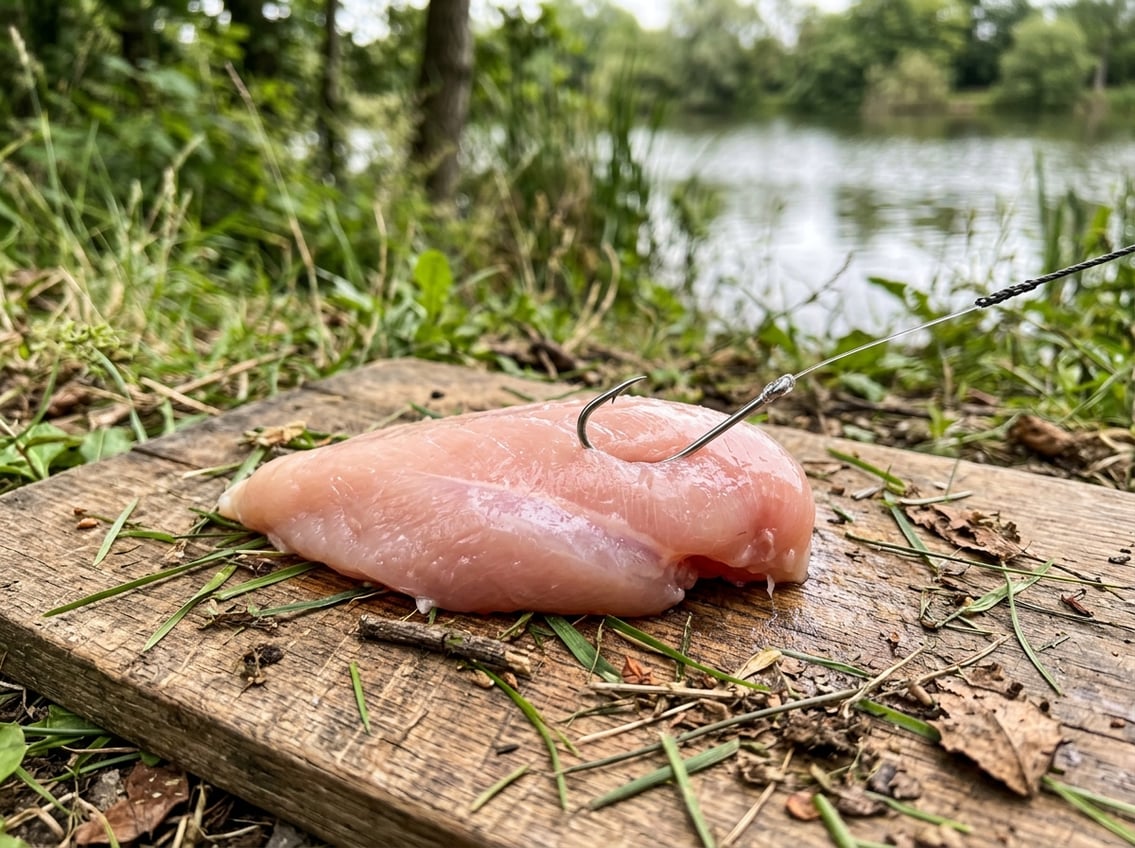
When Chicken Breast Works Best
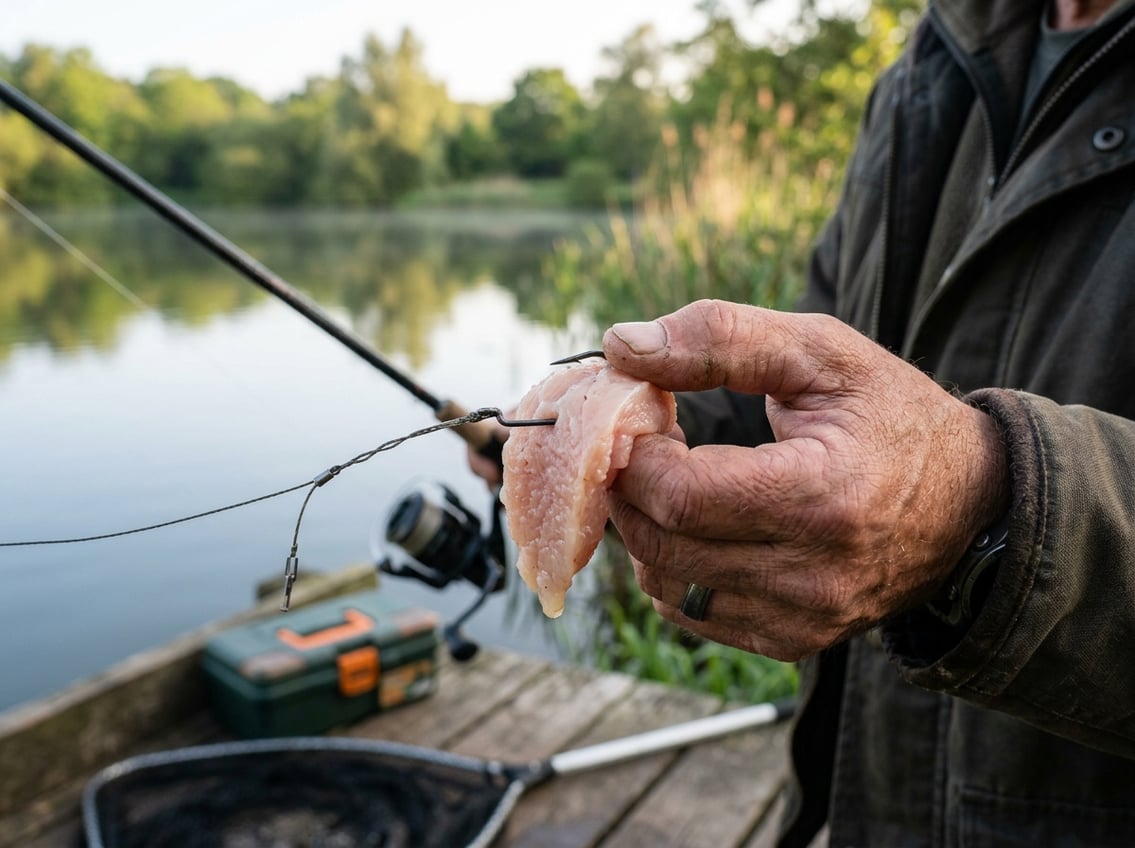
Chicken breast works best when you want an easy-to-find fishing bait that stays intact. Catfish get a solid meat target.
This bait is a strong option for channel cat. You can also catch larger blue catfish when you present it well, especially in moving water or along feeding lanes.
Catfish bite chicken breast most often when they are already keyed in on meat, scent, and drifting food. A clean piece of chicken can be a good substitute when you do not have fresh cut bait.
Why Catfish Respond to Chicken Breast
Catfish are opportunistic feeders. They eat dead or dying meat, and a plain piece of chicken breast gives them a scent and texture that can trigger a strike, especially when the bait moves naturally with the current.
Chicken breast sinks on its own when trimmed well, so it can imitate food drifting along the bottom. This makes it different from many soft baits that need extra weight or constant re-baiting.
Best Species and Sizes to Target
Chicken breast is often best for channel cat and eater-sized fish in rivers, ponds, and lakes. It can still catch bigger fish, including blue catfish, when you use larger chunks and fish the right water.
If you want steady action, target smaller to mid-size catfish in the 1 to 10 pound range. For larger fish, use bigger pieces and fish deeper current breaks, ledges, or tailwater edges.
Chicken Breast vs. Cut Fish and Prepared Baits
Cut bait usually works better when catfish are feeding on fish scent, especially in rivers with shad, skipjack, or other native prey. Prepared baits can also work when you want more smell in still water or when fish are scattered.
Chicken breast is cleaner, easier to store, and often tougher on the hook. It may not outfish fresh cut fish in every spot.
If fish are acting picky, fresh cut bait can be the better choice.
How to Prepare and Rig It
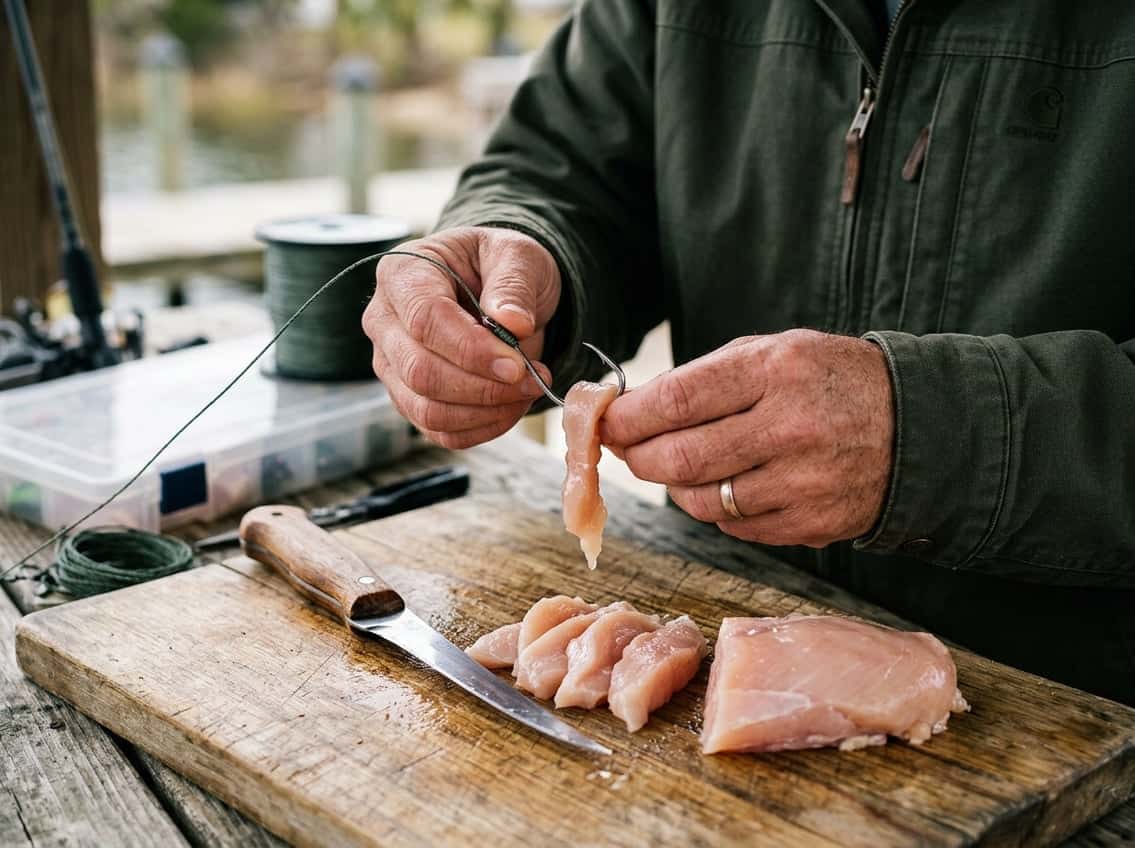
You get good results with chicken bait by starting with simple prep. Cut pieces that stay on the hook, move naturally, and match the size of the fish you want.
A clean cut, the right texture, and a strong hook matter more than heavy seasoning or complicated homemade catfish bait recipes. Keep the setup basic.
Choosing Fresh, Salted, or Marinated Pieces
Fresh chicken breast is the simplest choice, and you can use it straight from the package. Some anglers salt it lightly or marinate it to firm it up, which helps it stay on the hook longer.
If you want a quick homemade catfish bait, cut chicken into bite-sized chunks and let them sit with garlic or another light scent. Use fresh bait for the cleanest presentation.
Use salted or marinated bait when the pieces are too soft or when short strikes keep knocking them off.
Piece Size, Texture, and Keeping Bait on the Hook
For most catfish fishing, cut chicken into pieces about the size of a grape, golf ball, or small cube. Bigger pieces help reduce small bites, while smaller pieces can work better for channel cat in pressured water.
Trim away extra fat and loose tissue. Firm meat stays on the hook better and sinks more predictably.
Best Hook Styles and Simple Rigs
Circle hooks work well for chicken bait because they help with hookups when catfish take the bait and turn away. Kahle hooks also work, especially if you want a little more bite exposure.
A simple slip sinker rig is an easy option for bottom fishing. For drifting, use less weight and let the bait move with the water.
A strong knot and a hook sized to the bait matter more than a fancy setup.
Where and How to Fish It
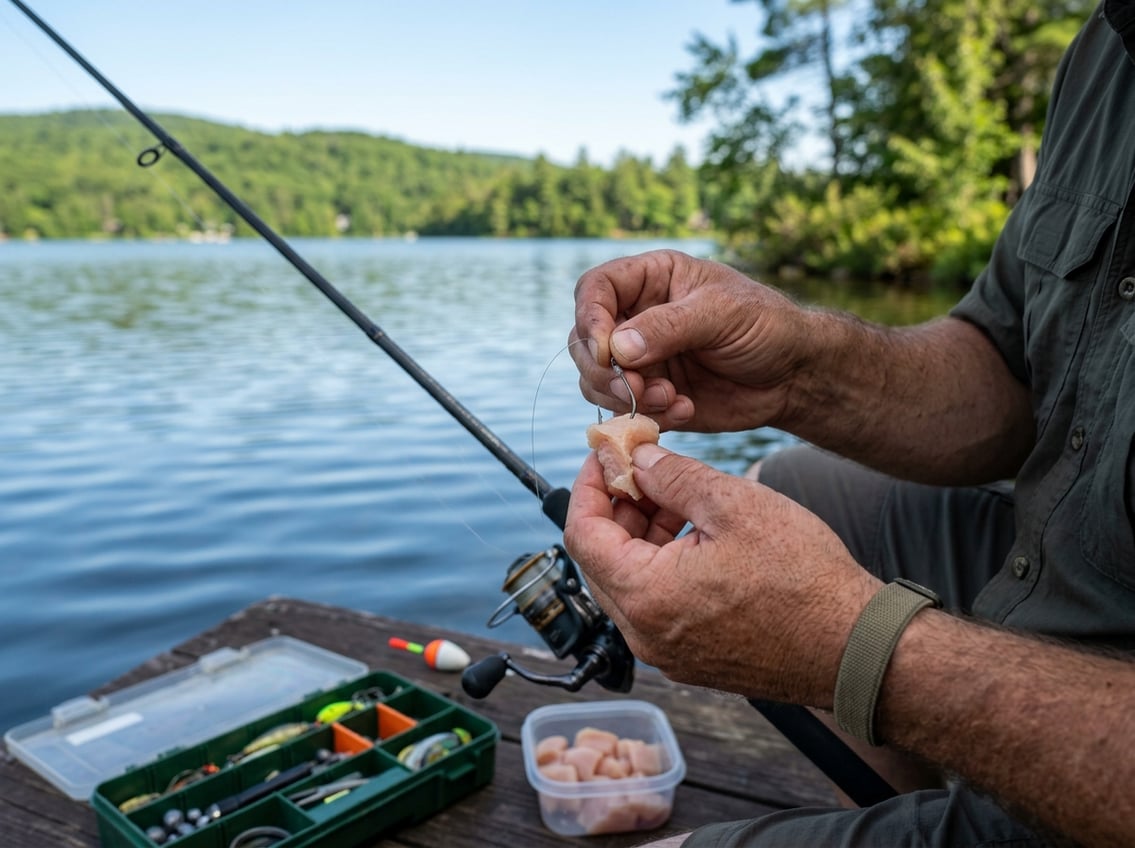
Chicken bait is flexible, so your location and presentation shape the results. You can fish it from shore, from a boat, or on a drifting setup if you keep the bait moving naturally.
Pay close attention to depth, current, and bottom contact. Catfish often feed near drop-offs, seams, and structure where a piece of chicken can drift or rest in the strike zone.
Bank Fishing, Bottom Fishing, and Drifting
From the bank, cast chicken breast near holes, channel edges, or bridge pilings. Let the rig sit on bottom and check it often, since smaller fish can peck at soft bait.
For bottom fishing, use enough weight to hold position without burying the bait in mud. In rivers, drifting works well because the bait covers more water and looks natural.
Water Conditions, Current, and Scent Spread
Light to moderate current helps chicken bait work well because scent spreads and the bait moves in a realistic way. In still water, use a scentier or slightly firmer piece and fish closer to cover or travel routes.
In cleaner water, a neat chunk of chicken can get bites from fish that are looking for easy food. In muddy water, use a stronger scent pattern and place the bait where catfish can find it by feel and smell.
Timing, Placement, and Bite Detection
Early morning, evening, and nighttime often give you the best chances, especially in hot weather. On bright days, fish deeper or in shaded water.
Watch for a slow pull, a steady tap, or a rod tip that loads up and moves off. Catfish do not always hit hard at first, so leave the rod in a holder with the drag set correctly and stay ready.
Mistakes, Trade-Offs, and Smart Adjustments
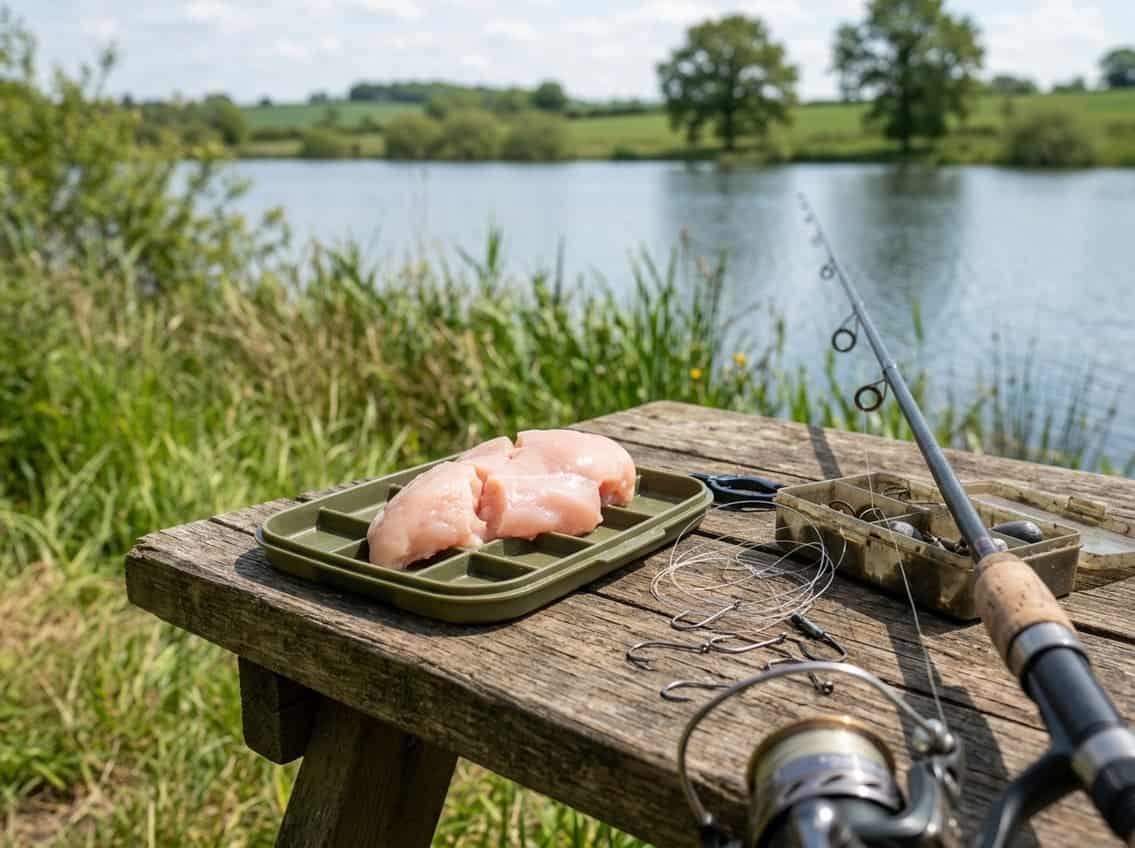
Chicken bait is useful, yet it has limits. The main problems are soft texture, short strikes, and times when stronger natural bait outperforms it.
You can fix many of those issues with small adjustments. When chicken is not producing, change size, hook style, depth, or bait type before you leave the spot.
Why Chicken Gets Short Strikes or Falls Off
Chicken breast can be too soft if it is warm, overhandled, or cut too small. Small catfish may grab the edges and tear it off before you get a solid hookup.
If the bait keeps slipping, make the chunks firmer by salting them, cutting cleaner edges, or using a better hook point. A tighter cast or a smoother drop can also help keep the bait intact.
How It Compares With Chicken Liver and Other Options
Chicken breast is cleaner and tougher than chicken liver, and it is easier to manage in a tackle box or cooler. Liver puts out strong scent, yet it is messy and often falls apart faster.
Compared with other chicken-based bait, breast is more durable and easier to reuse. This makes it a practical choice when you want less mess and more time in the water.
When to Switch to Fresh Fish or Other Baits
Switch to fresh fish or other baits when catfish ignore chicken, when short strikes keep happening, or when the fish focus on local prey.
In many rivers, fresh cut bait often outperforms other options when fish feed on shad or other baitfish.
If you fish a stained pond or a slow river and chicken does not get bites, try fresh fish, stink bait, or another homemade catfish bait that fits the conditions.
Treat chicken as a reliable tool, not the only bait you need.


