
Why Boil Chicken Breast for Juicy, Easy Meals
When you want meals that are simple, flexible, and tender, boiling chicken breast is a great choice. This method gives you cooked chicken you can use right away in salads, soups, casseroles, wraps, and meal prep.
Boiling chicken breast helps you get a lean protein that stays moist and cooks evenly. You can fit it into many recipes with very little effort.
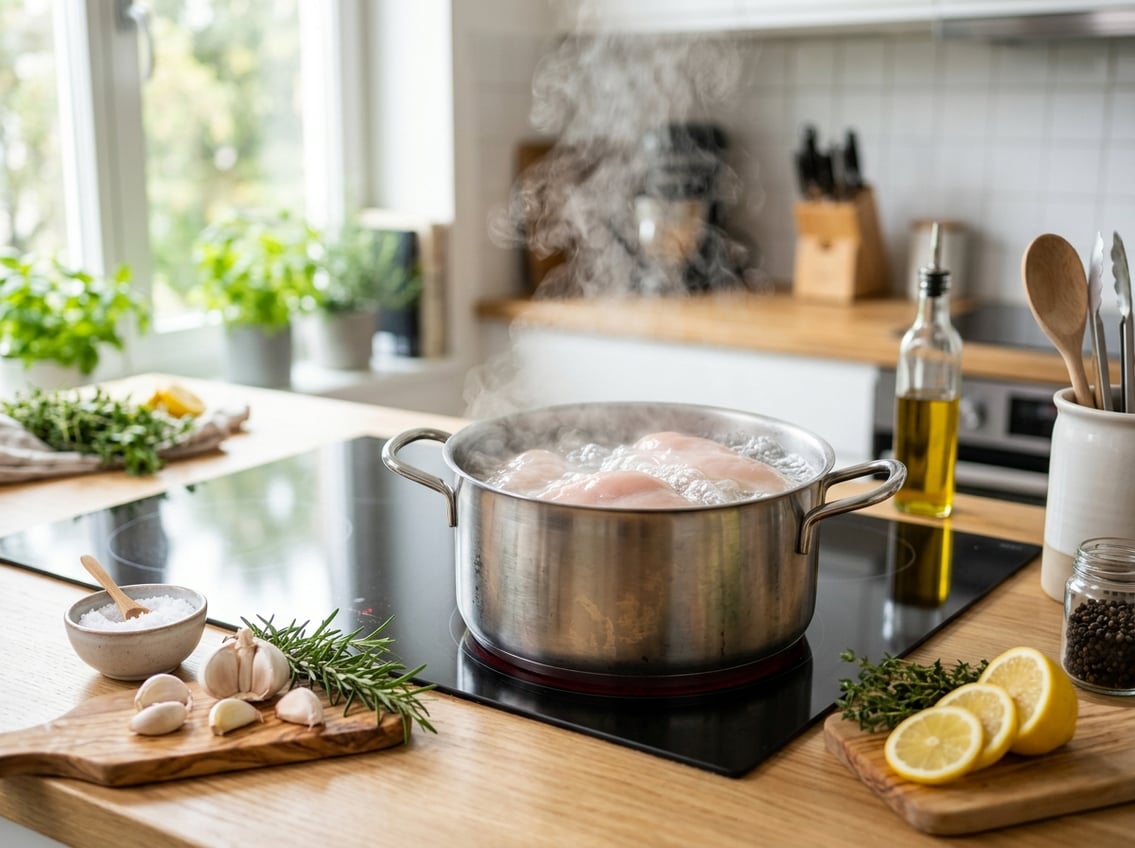
You keep the cooking process simple with just a pot, liquid, and a thermometer. You can make reliable chicken without a long ingredient list or much hands-on work.
What Makes This Method Worth Using
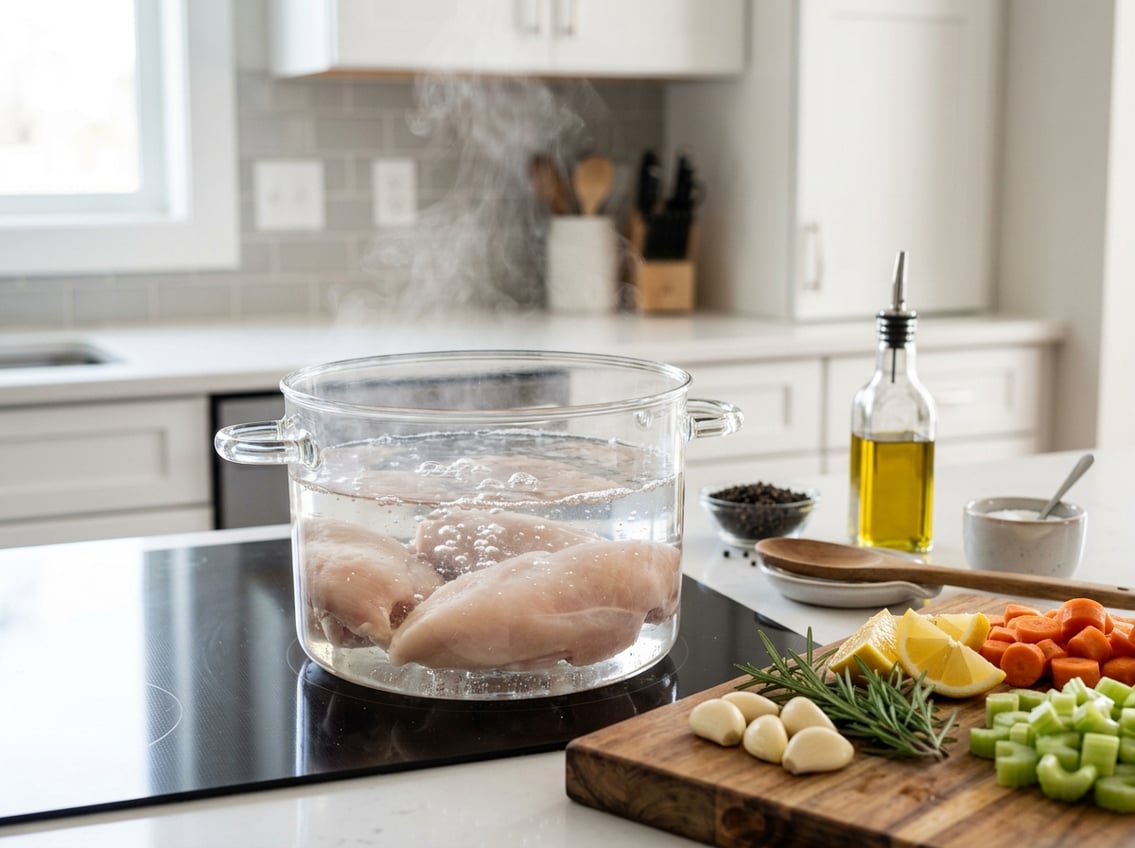
Boiled chicken breasts stay tender when you control the heat. This method is forgiving and gives you a dependable result.
According to Better Homes & Gardens, simmering chicken in liquid helps keep it juicy, especially compared with cooking methods that dry it out faster.
Moisture and Texture Benefits
Chicken breast is lean and can dry out quickly in the oven or on the grill. Gentle cooking in liquid protects the meat from losing too much moisture.
The texture stays softer and is easier to shred or chop. Boiled chicken is a practical choice when you want ready-to-use protein for several meals.
Why Simmering Beats Dry-Heat Cooking
When you boil chicken, you use steady heat to cook the meat through without overdoing it. A simmer keeps the temperature stable and lowers the chance of tough edges or dry spots.
Dry-heat methods can work well for flavor, but they demand more attention. Boiling gives you more room for error and helps when you want a simple weeknight method.
Boiled vs. Poached Chicken
Many people use the terms boiled chicken and poached chicken to mean the same thing. Both methods use hot liquid and gentle heat.
The main difference is how hard the liquid moves. A true boil is more active, while poaching stays just below that point.
For chicken breast, gentle simmering usually gives you the most even result and the best chance at juicy meat.
When It Is the Best Option in the Kitchen
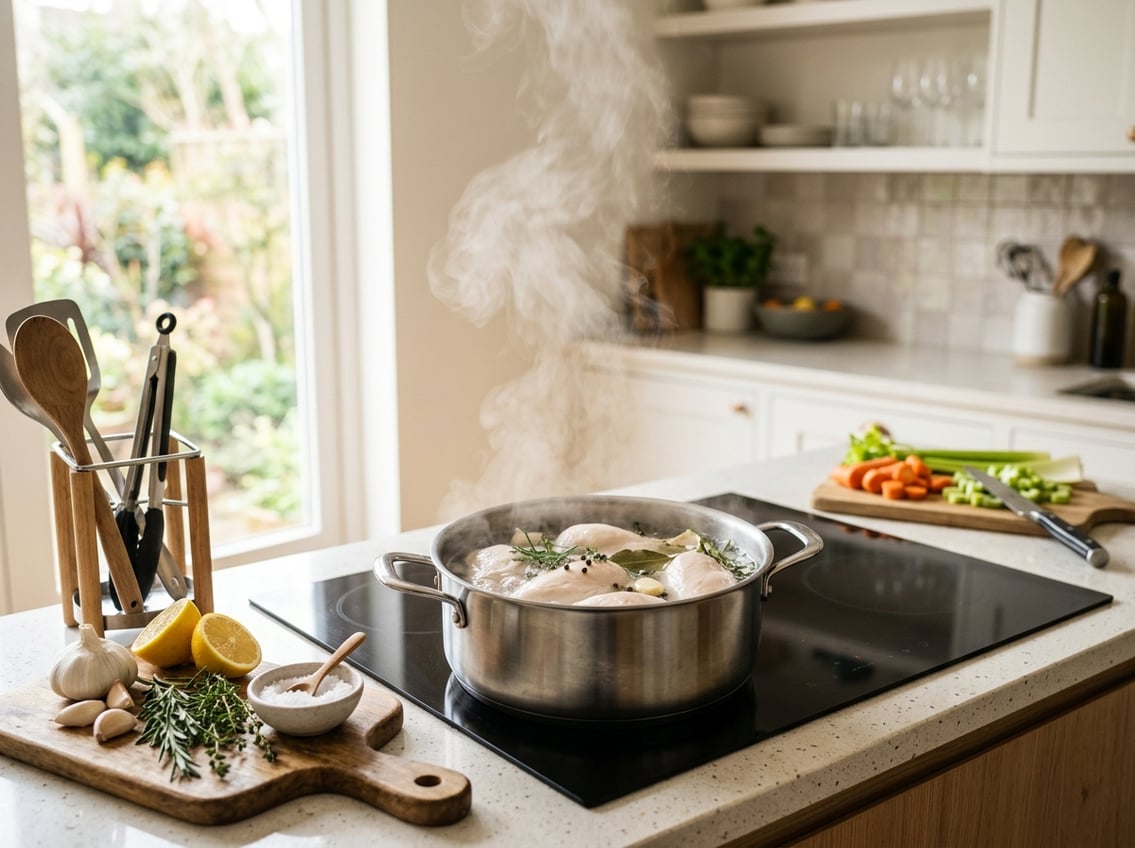
Boil chicken breast when you want a reliable base for several meals. It works well when you need cooked protein ahead of time.
You can change the flavor later with sauces, dressings, or seasonings.
Meal Prep and Batch Cooking
This method fits meal prep because you can cook several pieces at once and store them for later. Properly cooled chicken stays good in the fridge for a few days or in the freezer for longer, as noted by Better Homes & Gardens.
If you buy store-boiled chicken, you usually pay for the same convenience. Cooking it yourself gives you more control over salt, seasoning, and texture.
Best Uses for Shredded or Chopped Meat
Boiled chicken is great for shredded or chopped chicken. Once cooked, it breaks apart easily for chicken salad, tacos, sandwiches, enchiladas, and casseroles.
It also blends well into pasta dishes and rice bowls. The mild flavor lets you season it in many different ways after cooking.
How the Cooking Liquid Becomes Chicken Broth
You can strain and save the liquid left after boiling chicken breast to make chicken broth. This gives you cooked chicken and a flavorful liquid for soups or grains.
If you start with aromatics like onion, celery, garlic, or herbs, you add more flavor to the broth. This method helps you waste less and get more value from your cooking time.
How to Get the Best Results
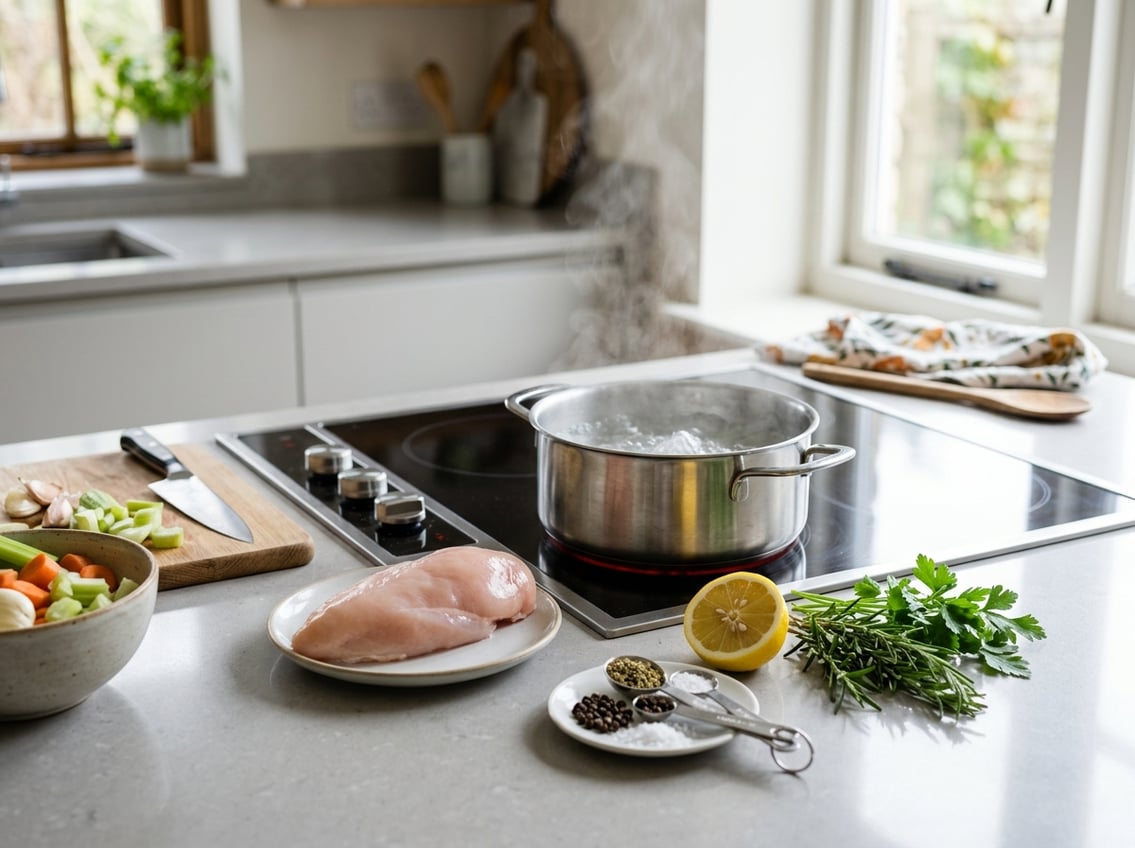
Good results depend on time, temperature, and the cut you use. The size of the pieces matters.
The safest way to tell when the meat is done is to measure the center, not guess by color alone.
How Long Different Cuts Usually Take
How long you boil chicken depends on the cut. Skinless, boneless chicken breasts usually take about 12 to 15 minutes.
Bone-in, skin-on breasts can take about 30 minutes, according to Better Homes & Gardens.
If you cut chicken breast into smaller pieces, the time drops. Smaller chunks cook faster and help when you want quick chopped chicken for salads or bowls.
Use size and thickness as your guide for boiling chicken breasts.
Why You Should Use a Meat Thermometer
Use a meat thermometer every time you boil chicken breasts. The safe internal temperature is 165°F.
A thermometer helps because chicken breast can look cooked before it is fully ready. Checking the thickest part removes guesswork and helps you avoid undercooked or overcooked meat.
What to Know About Frozen Chicken
You may ask, can you boil frozen chicken? Yes, you can, but thawing first usually gives more even cooking.
Better Homes & Gardens notes that frozen chicken takes longer, and you need to increase cooking times.
If you plan to boil frozen chicken breast, expect the process to take longer than with thawed chicken.
Check the thickest part with a thermometer before serving.
Thawing in the refrigerator gives the most even result.


