
When to Shred Chicken Breast for Best Results
You get the best results when you shred chicken breast after it has cooked through, rested briefly, and is still warm enough to pull apart cleanly.
That timing keeps the texture tender instead of dry and stringy.
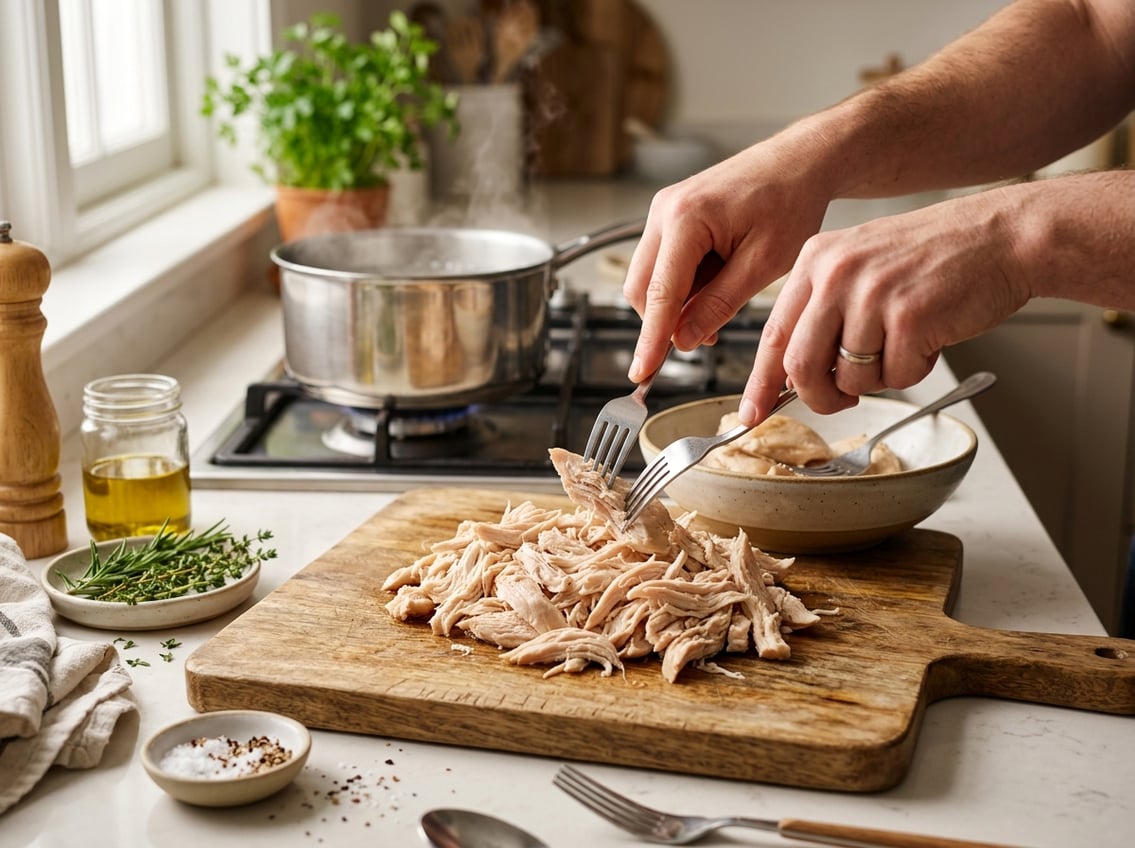
Shred cooked chicken breast when it is warm, rested, and easy to handle, not after it has gone cold.
That gives you softer strands, better moisture, and less effort at the cutting board.
You can shred chicken breast by hand with two forks, with your fingers once it is cool enough, or with a mixer for larger batches.
The best choice depends on the cut, the dish, and the texture you want.
The Ideal Timing for Pulling It Apart
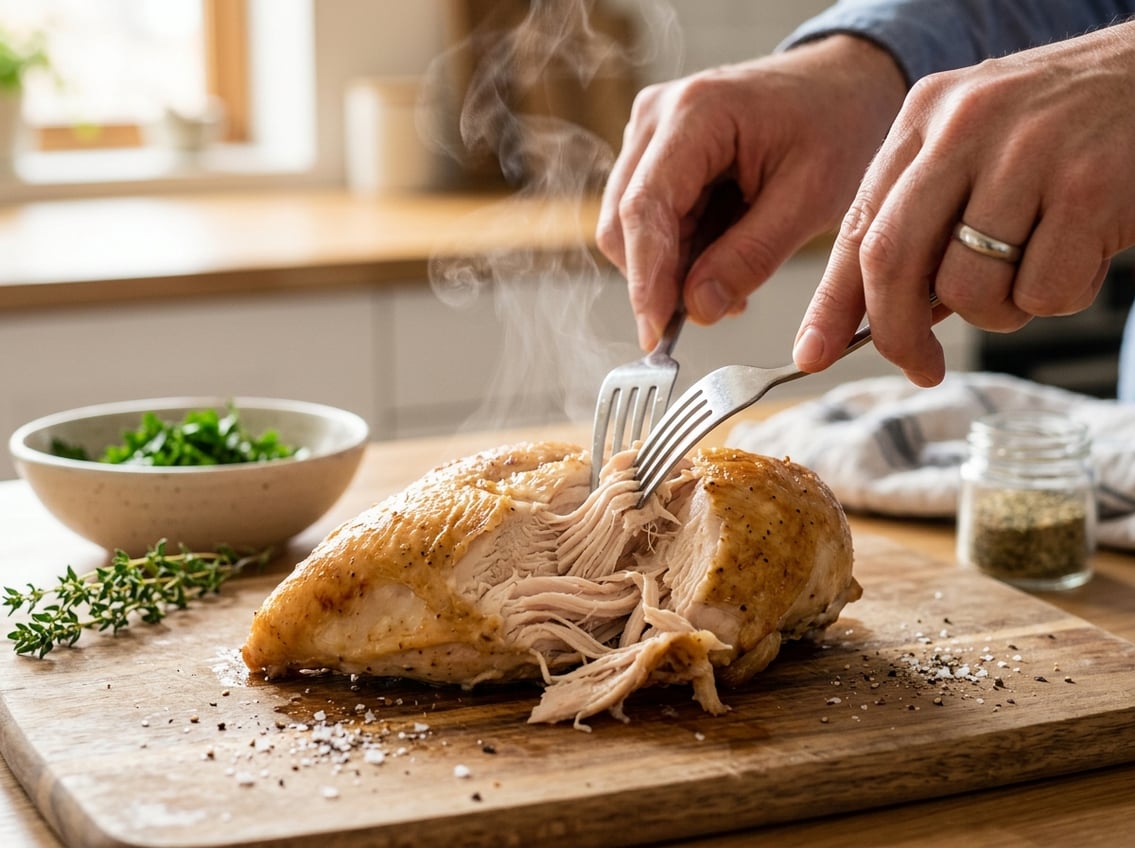
Shred chicken breast after it has finished cooking and rested for a few minutes.
That brief rest helps the juices settle, so the meat stays moist when you pull it apart.
If you wait too long, the chicken becomes firmer and drier.
If you shred it too early, the meat can fall apart unevenly and release more juice onto the board.
Why Warm Chicken Breast Shreds More Easily
Warm meat is softer, so the fibers separate with less force.
Shredded chicken breast usually comes apart more cleanly right after resting than after cooling in the fridge.
A recent guide on shredding chicken breast timing explains that warm chicken is easier to pull apart and helps preserve tenderness.
That same idea appears in many kitchen methods, from poaching to slow cooking.
How Long to Rest Before Shredding
For most boneless chicken breast, rest it for 5 to 10 minutes.
Bigger pieces or thicker cuts may need a little longer before you start shredding.
Keep the meat warm, not steaming hot.
It should feel easy to handle with forks or clean hands without burning your fingers.
When Cooler Chicken Works Better for Texture
Cooler chicken works better when you want neater shreds or more control.
Slightly cooled shredded chicken breast can be easier to portion for meal prep or salads.
If the chicken is fully cold, warm it for a few seconds first.
That gives you a better balance of structure and ease when you shred chicken breast.
Choose the Right Method for the Cut
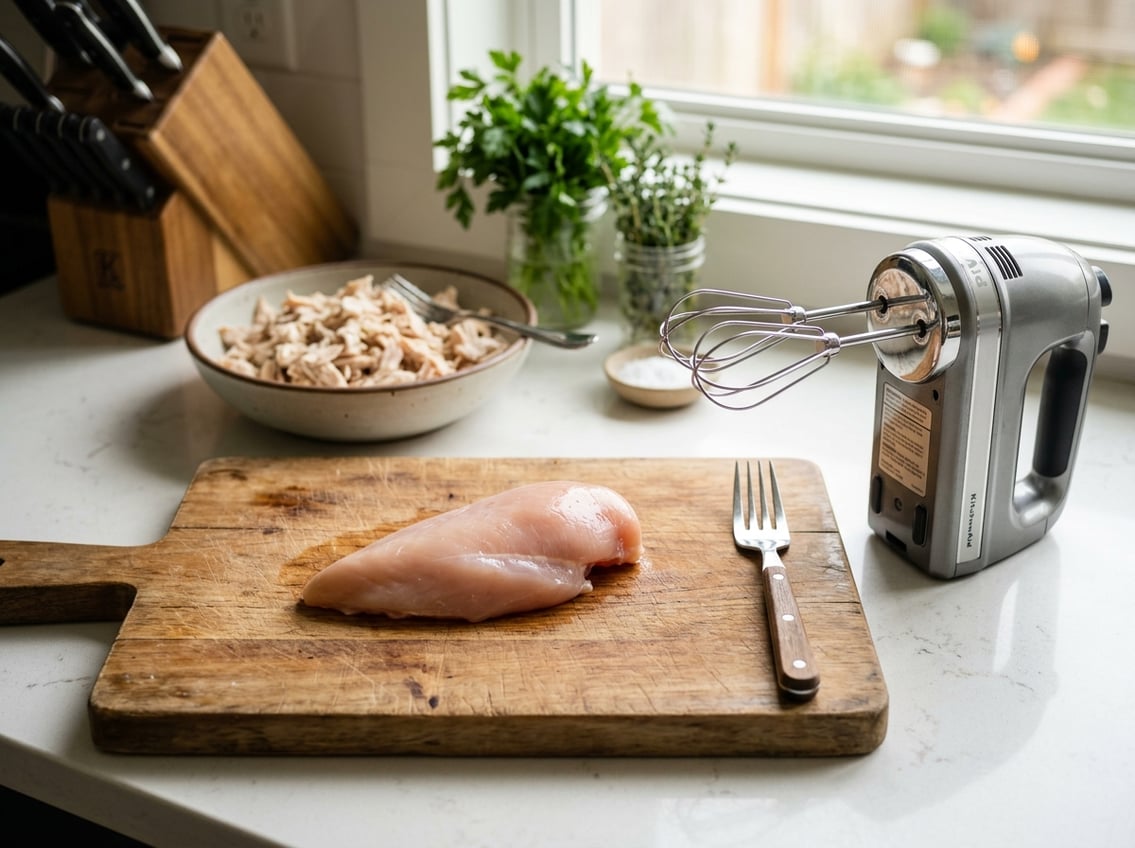
How you shred chicken depends on whether you are working with boneless or bone-in chicken.
The tool you pick also affects how fine or chunky the final texture will be.
For most people, two forks work best.
A mixer is faster for larger batches, while hands give you more control once the chicken has cooled enough to touch.
Two Forks vs Hands vs Mixer
Two forks are the most common method.
Place the meat on a board or in a bowl and pull in opposite directions until it breaks into strands.
Hands work well for cooler chicken and give you chunky, natural pieces.
A stand mixer or hand mixer is faster, especially if you need a lot of shredded chicken at once, as noted by The Daily Meal.
Boneless Chicken for Fast, Even Shreds
Boneless chicken breast shreds quickly and evenly because there is no bone to work around.
That makes it a strong choice when you want smooth, consistent results for tacos, dips, or soups.
Gentle cooking methods help as well.
Poaching, steaming, or slow cooking can keep boneless chicken tender enough to shred without much effort, as described by Chef’s Resource.
Bone-In Chicken and When to Avoid Mixers
Bone-in chicken can be flavorful, yet it takes more time to separate from the bone before shredding.
Remove the meat first, then shred it by hand.
Avoid mixers with bone-in chicken.
Small bone fragments can be missed, and the mixing action can break the meat unevenly.
Match the Texture to the Dish
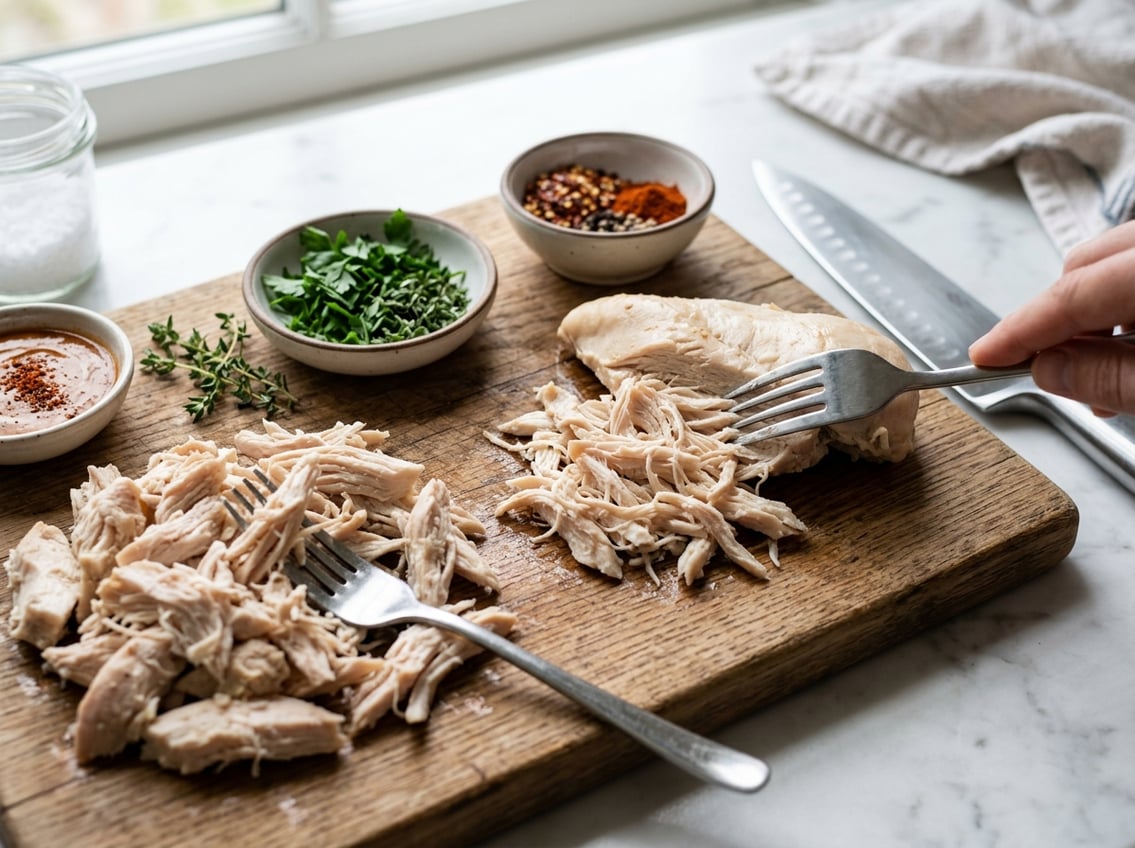
The right texture depends on the recipe.
Fine shreds blend into creamy dishes, while chunkier pieces hold up better in hearty meals.
Think about how you will use the chicken before shredding.
The best texture for pulled chicken is not always the best for casseroles or sandwiches.
Fine Shreds for Chicken Enchiladas and Buffalo Chicken Dip
Use fine shredded chicken for chicken enchiladas and buffalo chicken dip.
Smaller strands mix better with sauce, cheese, and seasonings, so every bite has even flavor.
Fine shreds also help the filling stay compact inside tortillas or dip mixtures.
That makes the dish easier to scoop, roll, and serve.
Chunkier Pieces for Chicken Sandwiches and Chicken Chili
Chunkier pulled chicken works well for chicken sandwiches and chicken chili.
Bigger pieces give you a more substantial bite and keep the filling from turning mushy.
This texture also holds up when the chicken sits in sauce or broth.
That matters in hearty chicken recipes where the meat should stay visible and distinct.
Balanced Texture for Chicken Noodle Casserole and Other Chicken Recipes
Chicken noodle casserole does best with a middle-ground texture.
You want pieces small enough to mix well, yet large enough to keep some bite.
Many chicken recipes work this way, especially soups, pot pies, and pasta bakes.
If you are unsure, aim for medium shreds, since they adapt well to many uses.
Storage and Make-Ahead Tips
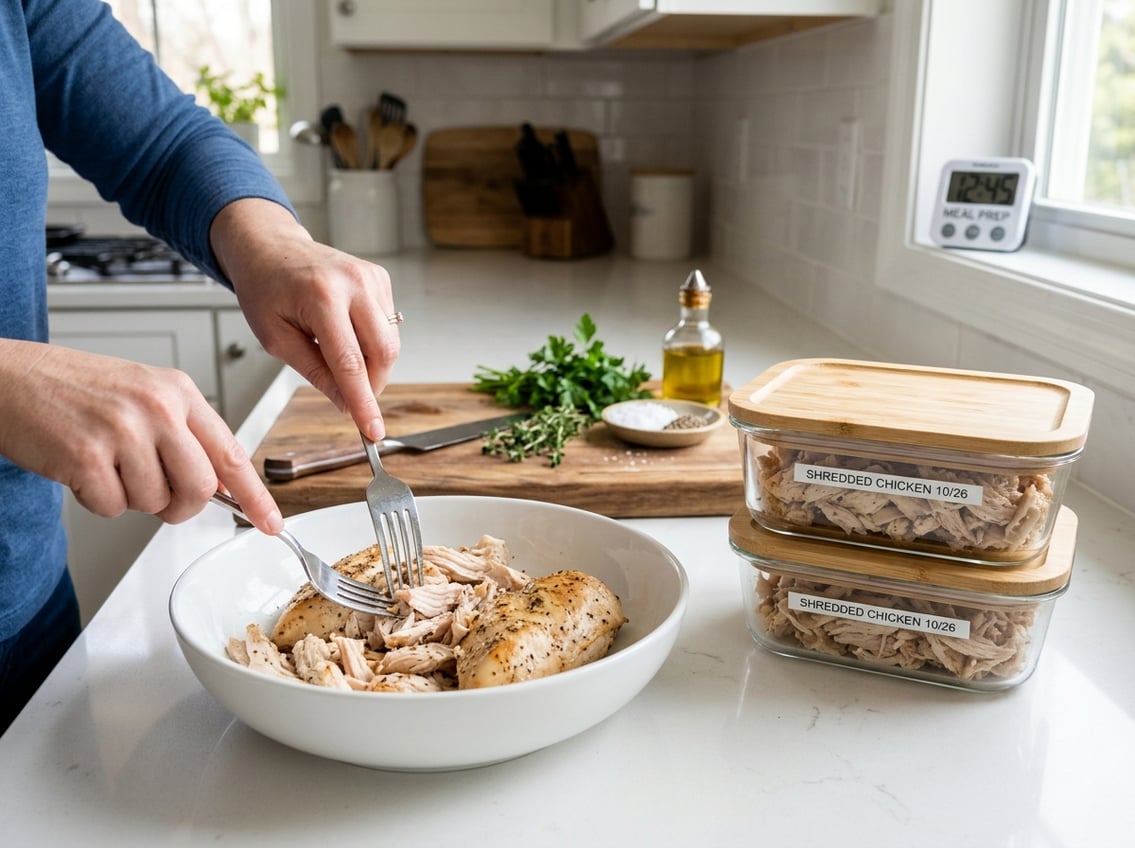
If you meal prep often, learn how to store shredded chicken safely.
Proper cooling, sealing, and reheating keep the texture and flavor in better shape.
You can shred cooked chicken ahead of time, then store it in portions for quick meals.
That makes weeknight cooking faster and cuts down on waste.
How to Store Shredded Chicken Safely
Let the chicken cool before packing it away.
Store shredded chicken in airtight containers or sealed bags, and move it to the refrigerator within two hours of cooking.
If you will use the chicken later in the week, portion it into smaller containers.
That makes reheating easier and reduces how often you open the full batch.
Refrigerator and Freezer Timeframes
In the refrigerator, shredded chicken usually keeps well for 3 to 4 days.
For longer storage, freeze it in airtight freezer bags or containers.
A helpful storage note from The Wooden Skillet supports using shredded chicken as a versatile make-ahead ingredient.
Frozen shredded chicken is often best used within about 3 months for quality.
How to Reheat Without Drying It Out
Add a little liquid, such as broth, sauce, or a small splash of water, to shredded chicken before reheating. Cover it while warming to help trap moisture.
Use low heat when possible. Warm it on the stove or in the microwave and stop as soon as it is heated through so the meat stays tender.


