
Can There Be Bones in Chicken Breast? What to Know
You may wonder if chicken breast can contain bones. The answer is yes, depending on the cut and how processors handled it.
A standard boneless chicken breast should not contain a full bone. A bone-in chicken breast is sold with the breastbone attached.
For safe cooking, know which cut you bought. Small bone fragments can still turn up in a boneless piece, even when the package says boneless.
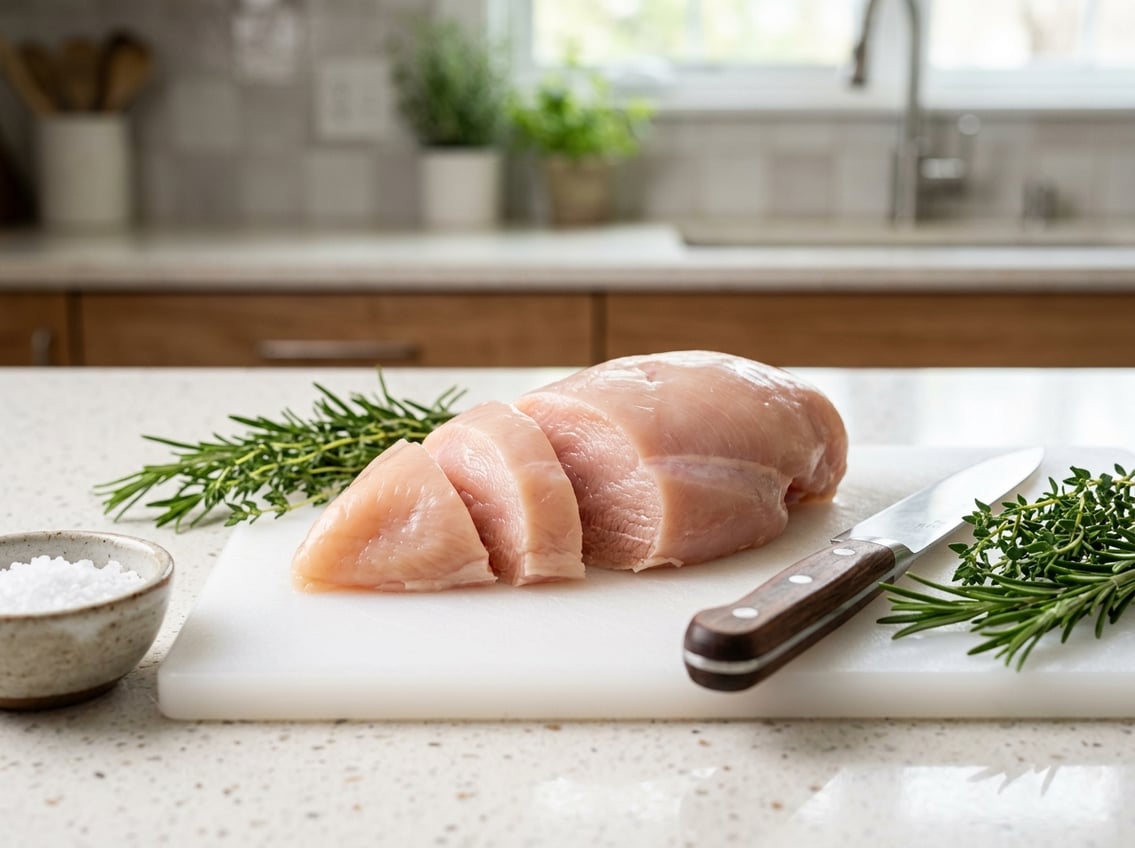
Chicken breast is popular because it is a lean protein with mild flavor and many uses in weeknight meals. Many people in the United States choose it for roasting, grilling, pan-searing, or dishes like chicken parmesan.
What you find in the breast depends on the cut, the trimming, and the processing step. Knowing the difference helps you avoid surprises.
When Bones Are Normal and When They Are Not
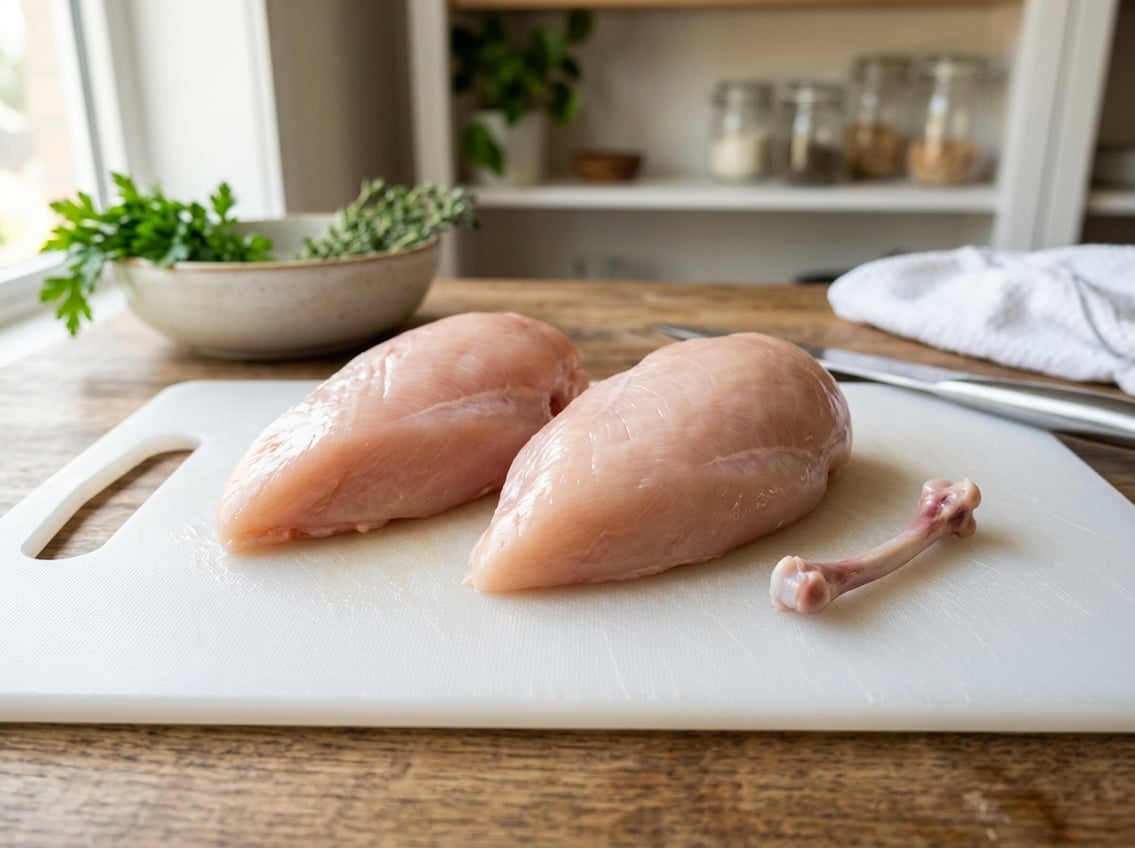
Bone-in chicken breast and boneless chicken breast are not the same product. A bone-in piece contains the breastbone, while a boneless piece should not contain a whole bone, though tiny leftovers can rarely appear.
What Bone-In Cuts Usually Contain
Bone-in chicken breast includes the breastbone and may also include some rib or cartilage areas, depending on how processors cut it. Some packages are labeled skin-on chicken breast, which means the skin is left on as well.
If you buy bone-in chicken breasts, the bone is part of the cut and can add flavor during cooking. Many cooks prefer it for roasting because the bone can help the meat stay juicy.
Why Boneless Pieces Can Still Have Small Fragments
Processors remove the main bone from boneless chicken breast, yet small bone fragments can still remain after processing. This can happen if the deboning process misses a tiny piece or if trimming is not complete, as Cookindocs notes.
These fragments are usually small, not a full chicken breast bone. They can matter because they may feel sharp when you bite into the meat.
How Labels Like Fillet, Split Breast, and Rib Meat Affect Expectations
Labels change what you should expect. A split breast is often a bone-in cut, while fillet usually means a boneless piece.
Rib meat means some meat from the rib area may still be attached, so you may see a different texture or a small edge of bone near the trim. Reading the full label helps you tell whether you are buying a plain breast meat portion or a cut that may include bone.
Chicken Anatomy Behind the Breast Cut
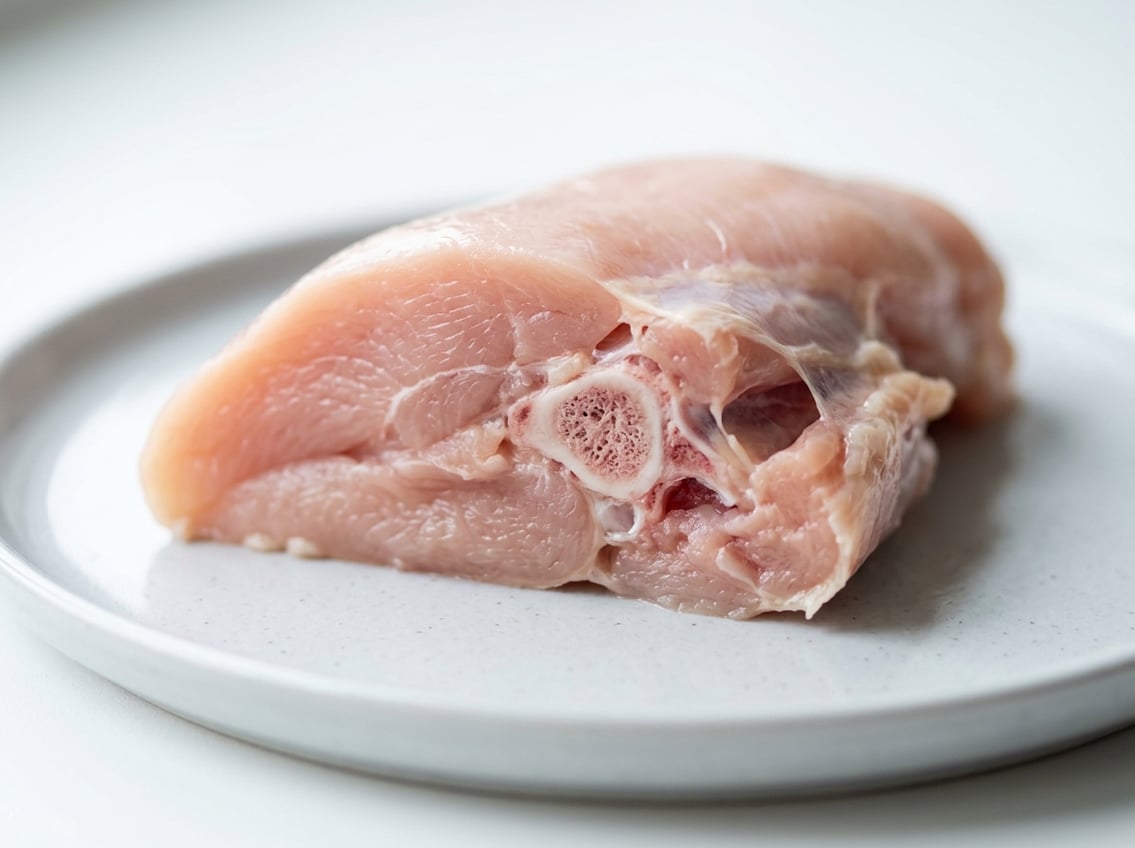
Chicken anatomy explains why the breast is usually boneless after processing, yet bone can still show up in some cuts. The breast sits over the front of the bird, close to the sternum, keel bone, rib cage, and nearby small structures.
Where the Breast Meat Sits on the Bird
The breast meat comes mainly from the pectoralis major, with the smaller pectoralis minor beneath it. Koch Foods explains that the tender meat sits on either side of the breastbone, under the larger breast muscle.
That placement is why breast meat is large, lean, and easy to separate. Careful trimming is needed to remove the bone cleanly.
The Role of the Sternum and Keel Bone
The breastbone is also called the sternum or keel bone. In a bone-in chicken breast, this central bone remains attached because processors do not fully separate the cut from the chest structure.
When workers debone the breast, they aim to remove the sternum and leave the meat intact. If the cut is not trimmed cleanly, a small ridge or fragment can stay behind near the center line.
Other Structures That May Be Encountered During Prep
During prep, you may also find the wishbone or small rib sections near the breast. The Canadian poultry cuts guide notes that a breast can be portioned in different ways, including cuts made after removing the wishbone or by splitting the breastbone.
A piece sold as breast meat may still have a trace of rib cage attachment or other small structural bits if it was cut for convenience rather than precision.
How Processing and Prep Affect Bone Risk

Processing affects whether you find a bone in boneless chicken breast. Most risk comes from trimming and cutting, not from the meat itself.
What Happens During the Deboning Process
Workers or machines separate the meat from the bone during deboning. If the cut is rushed or the equipment is aggressive, small bone fragments can remain in the meat.
In modern poultry processing, bone fragments are a known quality issue. USDA materials state that boneless poultry products should be free of bones and other defects.
Mechanical handling can also create sharper fragments, especially near dense areas like the rib cage.
Where Bone Fragments Are Most Likely to Be Missed
Small fragments are more likely near the breastbone, rib cage, and wishbone area. These spots have edges and connectors that can break away during cutting.
Carefully trimmed boneless chicken breast has lower risk, yet it is not zero. If you see a hard white spot or feel a sharp point, treat it as a possible fragment.
How to Check Chicken Before and After Cooking
Check the chicken before cooking by running your fingers over the surface and looking at the center seam and edges. If you find a hard piece, remove it with clean tweezers or a knife tip.
Check again after cooking, especially if you are slicing the meat for serving. Heat will not make a bone fragment disappear, and it may become easier to notice once the meat is cut.
Safety, Cooking, and Best Uses

Bone presence changes both safety and cooking time. It also affects which recipes work best, since bone-in and boneless cuts behave differently in the pan or oven.
Food Safety Concerns and Who Should Be Extra Careful
Small bone fragments can be a choking hazard, especially for children, older adults, and anyone who eats quickly. They can also damage teeth or cut the mouth.
If you find a fragment in a boneless piece, remove it before cooking or serving. If you are shopping for someone with chewing issues, a carefully trimmed boneless chicken breast is the safer choice.
How Bone-In and Boneless Cuts Cook Differently
Bone-in chicken breast usually takes longer to cook than boneless chicken breast. The bone changes heat flow, so the center often needs more time to reach a safe internal temperature.
Boneless pieces cook faster and are easier to portion. They are useful when you want a quick meal, while bone-in cuts suit slower roasting and recipes where added moisture matters.
Best Dish Types for Each Option
Use boneless chicken breast for fast meals, salads, stir-fries, and sandwiches. Choose it when you want even slices or a simple lean protein for meal prep.
Choose bone-in chicken breast for roasting and baked dinners. Skin-on chicken breast also works well for these meals.
You can use bone-in pieces for dishes like chicken parmesan if you prefer to remove the meat from the bone first.


