
How Long to Bake Chicken Breast at Every Temperature
How long to bake chicken breast is usually the first question you ask when you want a meal that is safe, juicy, and simple. Timing depends on oven temperature, whether the breast is boneless or bone-in, and how thick the pieces are.
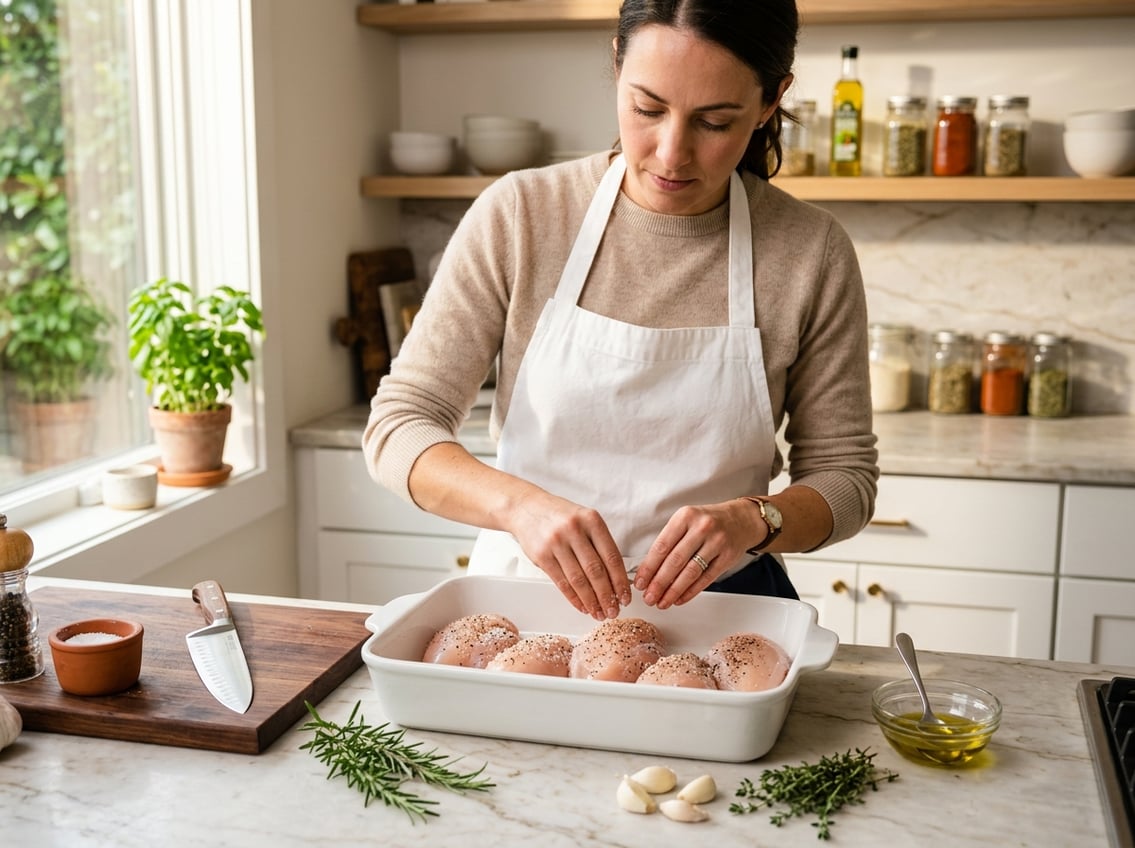
For most boneless, skinless chicken breasts, bake them at 375°F for about 25 to 30 minutes and check that the center reaches 165°F. This rule gives you a reliable starting point, and you can adjust it for thicker cuts or hotter ovens.
Start with even sizing, proper seasoning, and a thermometer. When you handle those three parts well, you get better texture and less guesswork.
Bake Times by Temperature and Cut
The main factor in how long to bake chicken is the cut you use and the oven temperature you choose. Boneless breasts cook faster, while bone-in chicken breast usually needs more time and may need a small temperature adjustment near the end.
For a quick reference, how long to bake chicken depends on part size, cut, and oven heat. For chicken breasts, thickness matters just as much as weight.
Boneless, Skinless Timing at 375°F, 400°F, and 425°F
For boneless, skinless chicken breasts, use these general time ranges:
- 375°F: 25 to 30 minutes
- 400°F: 22 to 26 minutes
- 425°F: 18 to 22 minutes
These numbers work best for average-sized breasts around 6 to 8 ounces. Larger pieces need extra time and should be checked with a thermometer.
At higher heat, you get faster cooking and more browning. At 375°F, you get a little more margin for even cooking, which is why many cooks prefer it for baking chicken breasts.
Bone-In Chicken Breast Timing and Adjustments
Bone-in chicken breast takes longer because the bone slows heat movement. Bake bone-in breasts for 35 to 45 minutes at 375°F, then check the thickest part near the bone.
If the outside browns too fast, loosely cover it with foil near the end of cooking. That helps the meat finish without burning the skin.
Bone-in pieces often stay a little juicier, since the bone helps moderate heat. Always verify doneness with a thermometer, since size and oven accuracy can change the timing.
How Chicken Breast Sizes Affect Oven Time
Chicken breast sizes affect oven time more than many people expect. A thin breast may finish several minutes earlier than a thick one, even at the same temperature.
If your breasts are larger than 8 ounces, start checking early. If they are small or pounded to an even thickness, they may finish sooner than the standard time range.
The thicker the chicken breast, the longer the bake time. Even pieces cook more evenly, so you avoid dry edges and an undercooked center.
How to Get Juicy Results Every Time
Juicy chicken starts before the pan goes into the oven. Good prep, the right final temperature, and a short rest after baking all help keep moisture in the meat.
If you want a dependable baked chicken breast recipe result, focus on even seasoning and careful temperature control. Small steps make a visible difference in the final texture.
How to Prep and Season for Even Cooking
Pat the chicken dry, then brush or rub it with a little oil. This helps the seasoning stick and supports better browning on the outside.
Season both sides with salt, pepper, and any spices you like. Garlic powder, onion powder, paprika, lemon pepper, and Italian seasoning all work well for a simple how to bake chicken breast method.
Arrange the breasts in a single layer with space between them. If they overlap, they steam instead of bake evenly.
When to Use a Thermometer and What Temperature to Target
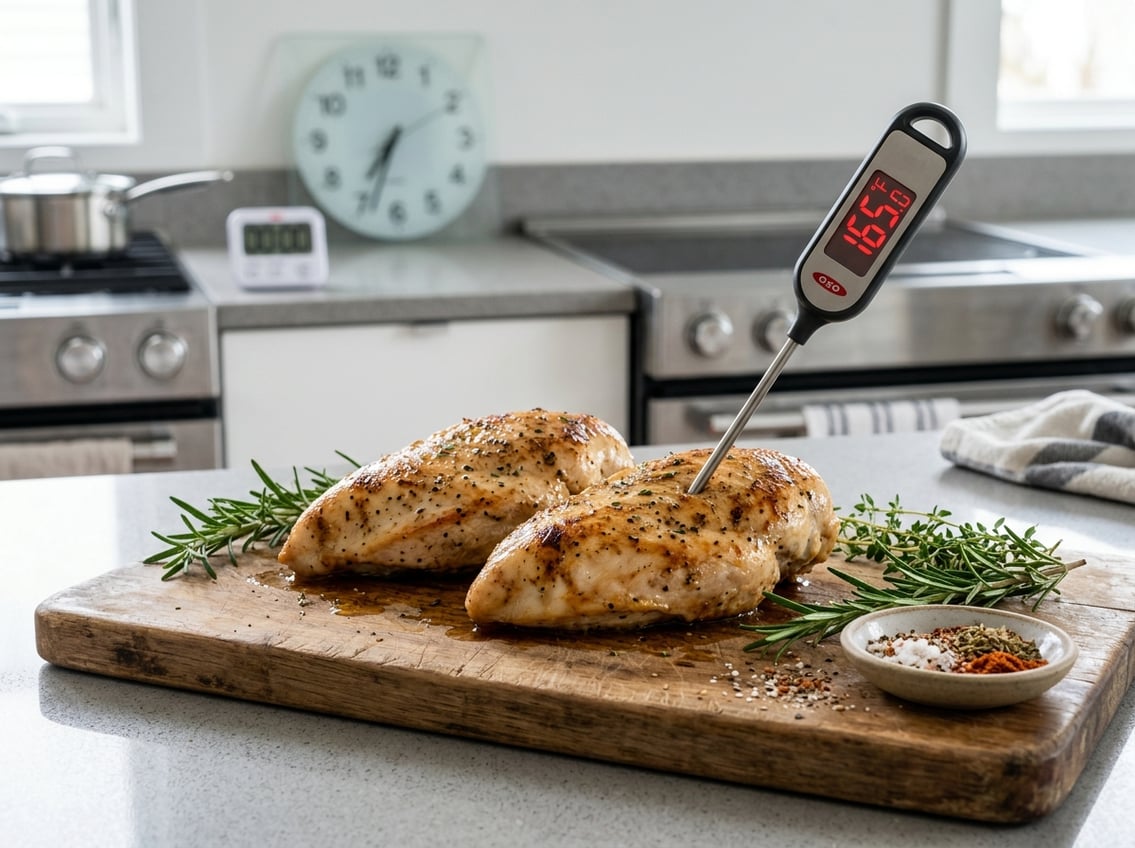
Use a thermometer to know when your chicken is done. Insert it into the thickest part of the breast, away from the pan and bone.
Target 165°F in the center. That is the safe finished temperature for baked chicken breast.
Do not rely on color alone. Chicken can look done before the middle reaches a safe temperature, especially with larger or bone-in pieces.
Why Resting Matters Before Slicing
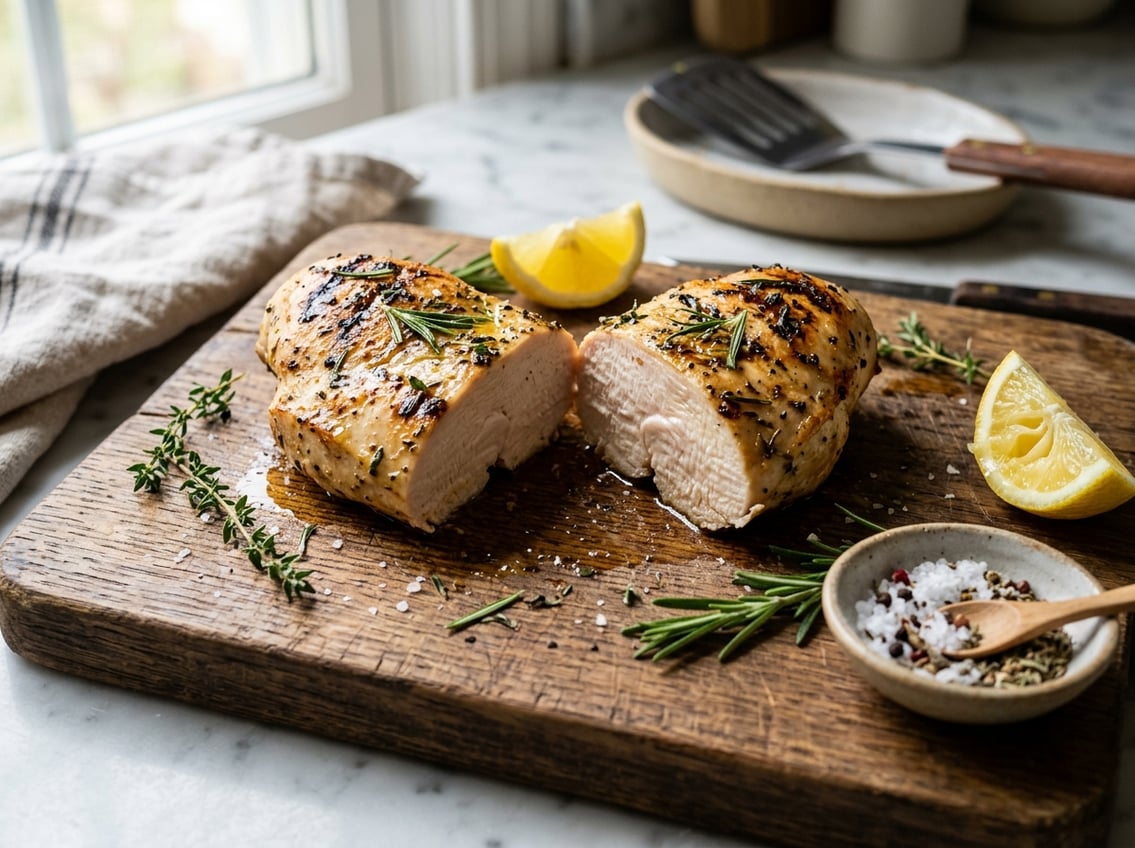
Rest the chicken for about 5 to 10 minutes after baking. This gives the juices time to settle back into the meat instead of running out onto the cutting board.
If you slice too soon, the chicken often seems drier than it really is. Resting helps the texture stay tender and keeps the bite more even.
For meal prep, rest first, then slice or cube. That keeps your baked chicken breast better for salads, rice bowls, and sandwiches.
Troubleshooting, Storage, and Serving Ideas
If your chicken turns out dry, too much heat, too much time in the oven, or breasts that were uneven in size probably caused it. If it is undercooked, the center likely needed more time or a more accurate thermometer check.
A good baked chicken breast recipe also works well for leftovers, since chicken breast stores and reheats cleanly when you handle it the right way. The goal is to keep moisture in while avoiding extra cooking.
Why Chicken Breast Turns Out Dry or Undercooked
Dry chicken usually means the breast stayed in the oven too long or cooked at too high a heat for its thickness. Very lean meat has little fat to protect it, so even a few extra minutes can change the texture.
Undercooked chicken often comes from thick pieces that were pulled too early. If the center is below 165°F, return it to the oven and check again in a few minutes.
Uneven thickness is another common problem. Lightly pounding the thicker end helps the whole breast cook at the same pace.
How to Store and Reheat Without Losing Moisture
Cool cooked chicken for a short time, then store it in an airtight container in the refrigerator. Use it within 3 to 4 days for the best quality.
To reheat, add a small splash of broth or water and cover the chicken so it does not dry out. Warm it gently in the oven or microwave just until heated through.
For freezing, wrap portions tightly and remove as much air as possible. That helps protect the texture for later meals.
Best Ways to Use Leftovers in Chicken Salad and Other Meals
Leftover baked chicken breast works well in chicken salad, pasta, wraps, quesadillas, and grain bowls.
Its mild flavor fits many seasonings and sauces.
Dice or shred the meat after it cools for chicken salad.
Mix it with mayo or Greek yogurt, celery, herbs, and a little lemon juice for a simple lunch.
Add slices to soups, baked potatoes, and tacos.
When you bake extra chicken on purpose, you save time on later meals.


