
Where Do You Cook Chicken Breast? Best Methods by Kitchen Setup
You cook chicken breast in the place that fits the result you want. Your best option may be the oven for even cooking, the stovetop for speed, the grill for smoky flavor, or gentle simmering for shredding and meal prep.
If you want a reliable chicken breast recipe, focus on cooking it to 165°F, avoiding overcooking, and matching the method to the cut and your kitchen setup. This approach gives you a better chance of getting tender or juicy chicken breast without guesswork.
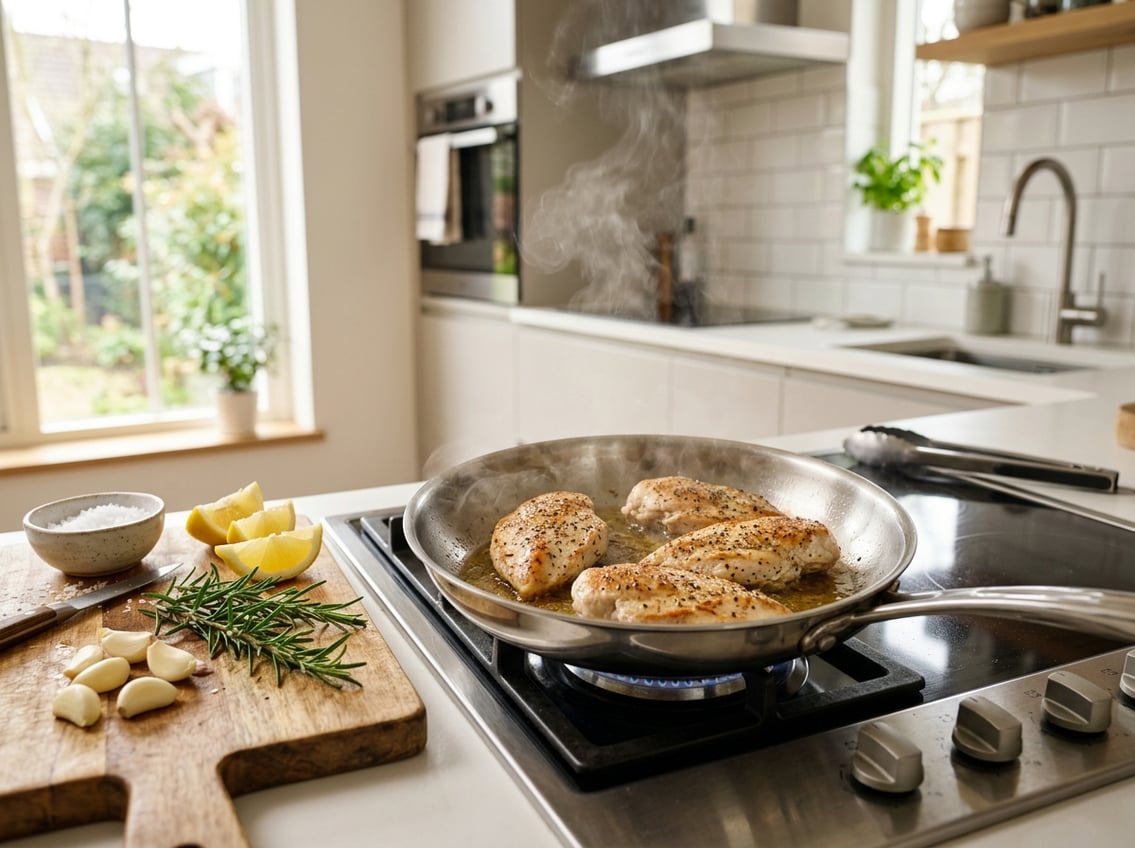
When you ask where to cook chicken breast, your answer depends on your equipment and meal plan. A skillet gives you fast browning, the oven gives you more even heat, and the grill adds char.
If you want extra guidance on the basics, this how to cook chicken breast guide for beginners covers simple prep, seasoning, and doneness checks.
Best Place to Cook Chicken Breast Based on the Result You Want
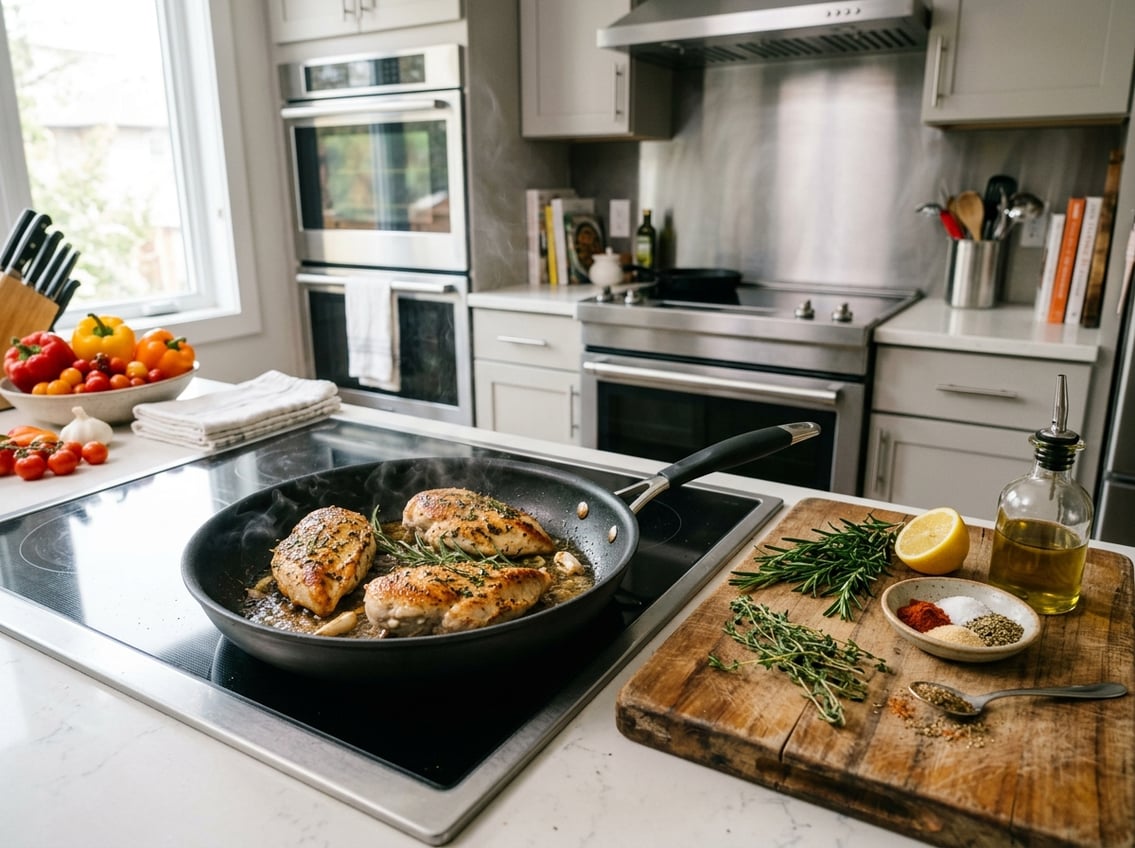
Choose the place that supports your goal. Use the oven for baked chicken breast with little effort.
If you need dinner fast, use a skillet. Grill chicken breast outside for a smoky finish.
For soft meat to shred, poach chicken breast in gentle water.
Use the Oven for Hands-Off, Even Cooking
The oven provides steady heat and less active monitoring. You can bake chicken breast evenly, especially when the pieces are close in size.
This method works well for juicy chicken breast with simple seasoning or for recipes built around herbs, garlic, or lemon.
Use the Stovetop for Fast Weeknight Meals
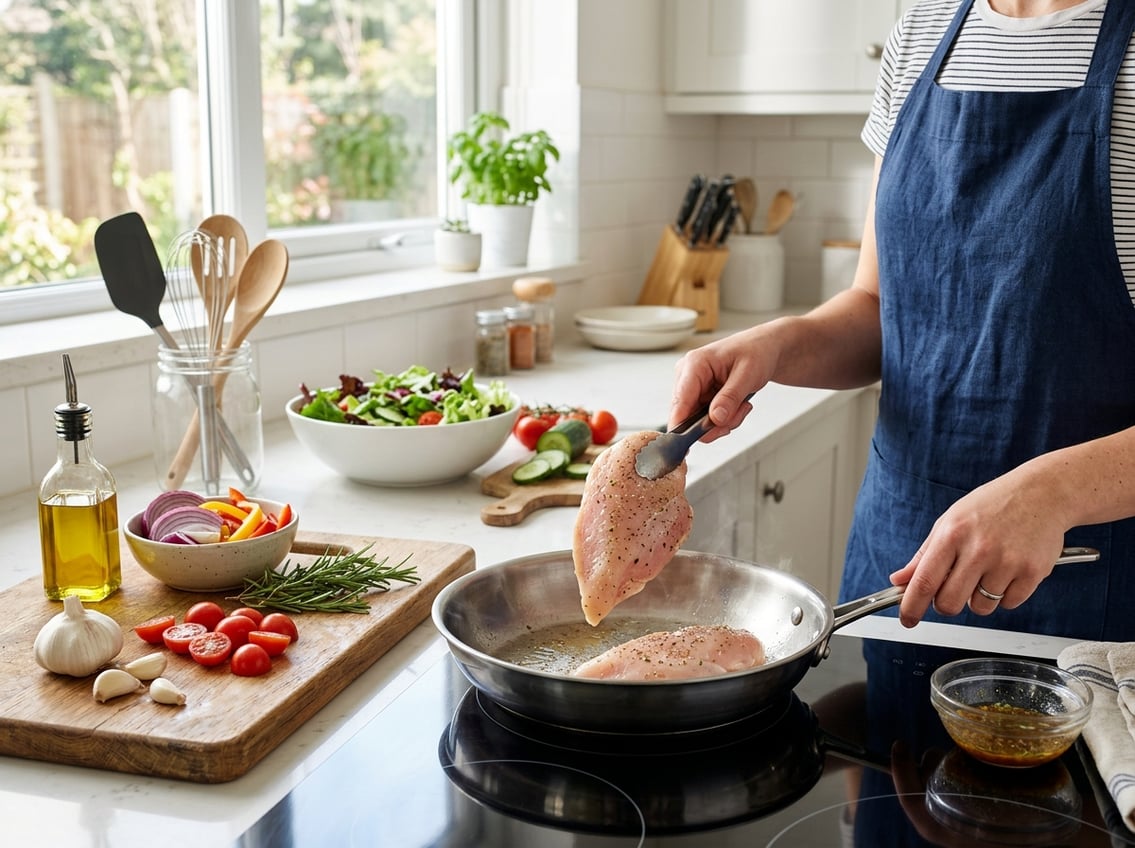
A skillet gives you speed and browning in one pan. You can cook chicken breast quickly over medium-high heat, making it practical for skillet recipes.
This method also gives you better control if you want to finish with sauce.
Use the Grill for Smoky Flavor and Char
Grilling chicken breast gives you a firmer exterior and a light smoky taste. You get visible grill marks and a straightforward cookout meal.
Keep the heat moderate so the outside does not char before the center cooks through.
Use Gentle Simmering for Shredding and Meal Prep
Poaching uses gentle simmering liquid to keep the meat soft. You can use this method for salads, bowls, tacos, and shredded fillings.
Poached chicken also works well when you want plain meat that can take on other flavors later.
How to Choose the Right Method for the Cut
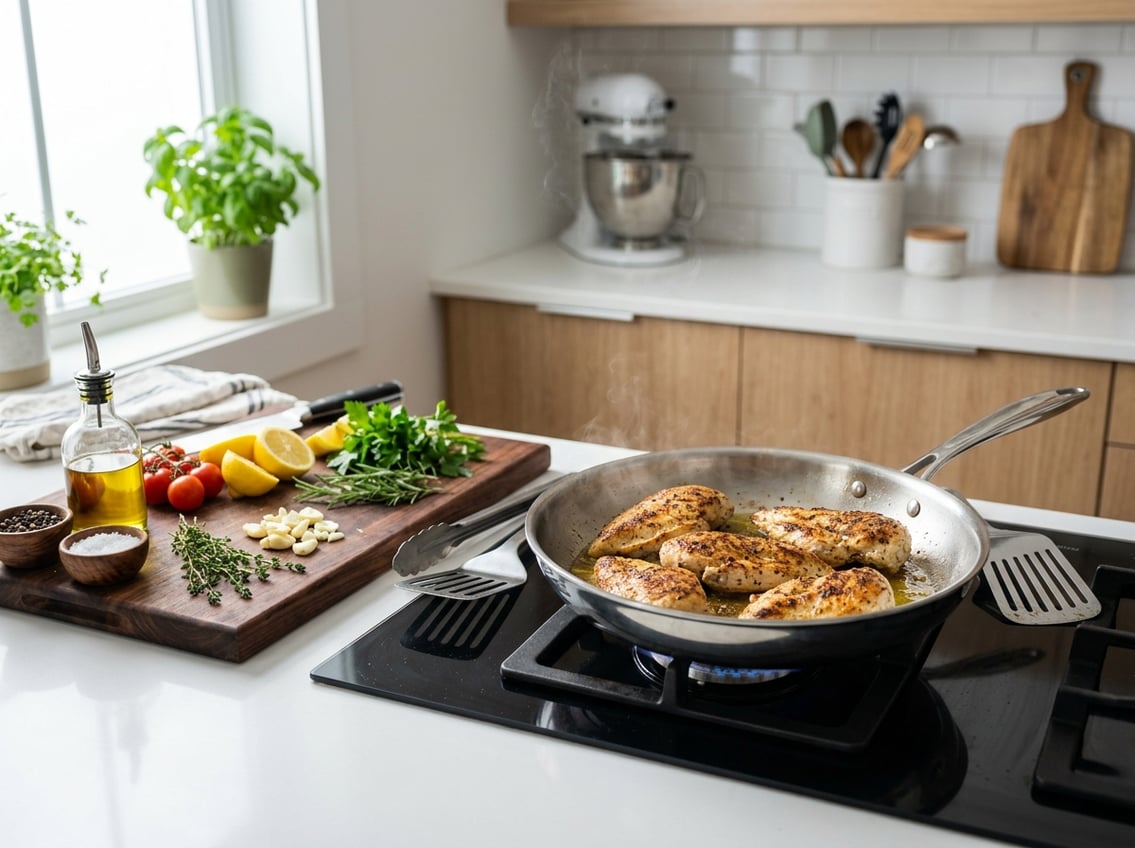
The cut affects cooking speed and moisture. Boneless pieces cook faster, while bone-in pieces need more time and give you more flavor.
Skin can help protect the meat from drying out.
Boneless Skinless Breasts for Speed and Versatility
Boneless chicken breast is the easiest choice for fast meals. You can use them in the oven, skillet, grill, and poaching pot because they cook quickly and slice cleanly.
If you want tender chicken breasts for salads, wraps, or meal prep, this is the most flexible cut.
Bone-In Breasts for More Flavor and Moisture
Bone-in chicken breast cooks a little slower, but that extra time improves flavor. The bone helps the meat stay moist, especially in the oven or on the grill.
This cut is a good match when you want a classic roast-style meal or a richer finish.
When Skinless Chicken Breast Needs Extra Protection From Drying Out
Skinless chicken breast lacks the fat barrier that holds moisture. Watch temperature closely, use even thickness, and avoid overcooking.
Brining, marinating, or adding a light coating of oil helps keep the meat more forgiving.
Method-by-Method Cooking Times and Temperatures
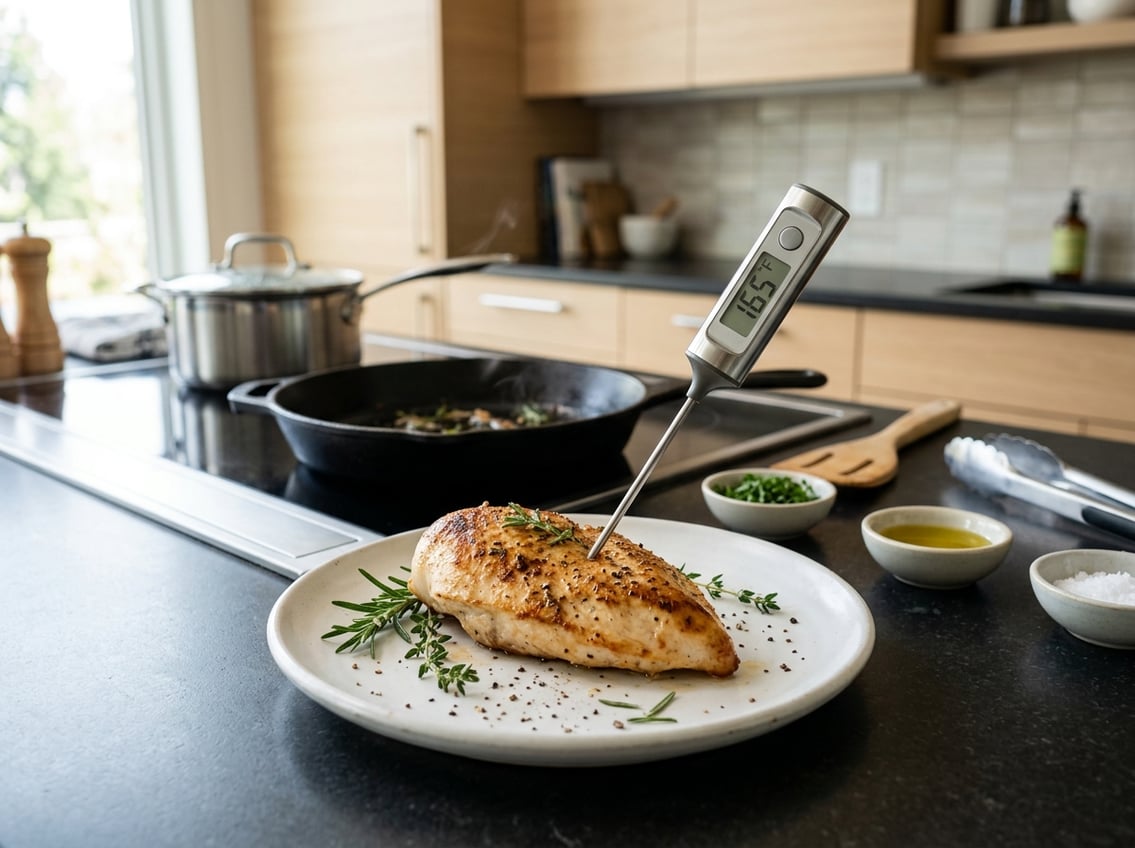
Cook chicken to a safe internal temperature of 165°F. Cooking time changes based on thickness, heat level, and your method.
A thermometer helps you avoid dry meat.
How to Bake Chicken Breast Without Drying It Out
Bake chicken breast at 375°F to 400°F in the oven. Most boneless pieces need about 20 to 25 minutes, while thicker pieces may need longer.
Check the center with a thermometer instead of trusting time alone.
Pat the chicken dry, season it well, and use a lightly oiled baking dish. This helps when you are baking chicken breast for leftovers or for later meals.
How to Grill Chicken Breasts Over Medium Heat
Preheat the grill to medium heat and oil the grates lightly. Grill chicken breasts for about 6 to 7 minutes per side, depending on thickness, until the center reaches 165°F.
Keep the lid closed much of the time so the heat stays steady.
If you want stronger grill marks without burning, move thicker pieces to a cooler area after browning the outside. This helps you get grilled chicken breast that cooks more evenly.
How to Broil Chicken Breasts for Quick Browning
Broiling gives you fast surface color. Place chicken breasts a few inches from the broiler and watch them closely, because they brown very fast.
This works well for thin pieces or for finishing a mostly cooked chicken breast with a crisp top.
Use a thermometer rather than color alone. A thin coating of oil helps the surface brown more evenly.
How to Poach Chicken for Salads, Bowls, and Shredding
Place chicken breast in gently simmering liquid, not a hard boil. Poach until it reaches 165°F, which often takes about 15 to 20 minutes depending on size.
This method keeps the meat soft and easy to shred.
Poached chicken works well in cold salads, grain bowls, soups, and sandwiches. You can also use it as a base for a meal later in the week.
Common Mistakes, Recovery Tips, and Easy Meal Ideas
Most problems come from uneven thickness, too much heat, or cutting the chicken too soon. Use even pieces, rest the meat after cooking, and slice it the right way.
How to Avoid Overcooking and Uneven Thickness
Pound thick spots so the breast cooks at the same rate from end to end. This helps for both boneless and bone-in pieces with uneven shape.
Let the chicken rest for a few minutes before cutting so the juices can settle.
A meat thermometer gives you the clearest sign of doneness. It is more reliable than guessing by color, especially in high-heat recipes.
What to Do if the Chicken Turns Out Dry
If your chicken is dry, slice it thin and serve it with sauce, broth, or dressing. Dry chicken can still work in soups, casseroles, and shredded fillings.
You can also chop it into smaller pieces and mix it with mayo, yogurt, or vinaigrette.
A quick pan sauce or salsa can help if you need to serve it right away. That is often enough to make overcooked chicken more usable.
Ways to Use Leftovers in Salads, Sandwiches, and Skillets
Leftover chicken breast works well in salads, wraps, and grain bowls. You can add it to chicken skillet recipes with vegetables, pasta, or rice for a fast second meal.
If you are building a weekly plan, cook once and use the chicken in different recipes. For more ready-made meal ideas, check a roundup like 26 chicken dinners you can make in 30 minutes to turn cooked chicken into a quick dinner.


