
Should Chicken Breast Be Pink? What Color Really Means
Should chicken breast be pink? Sometimes the color alone tells you very little.
A chicken breast can look slightly pink and still be safe to eat if it has reached the right internal temperature. A piece that looks pale can still be undercooked.
The safest answer is to check temperature, not color. A meat thermometer tells you whether the chicken breast is actually done.
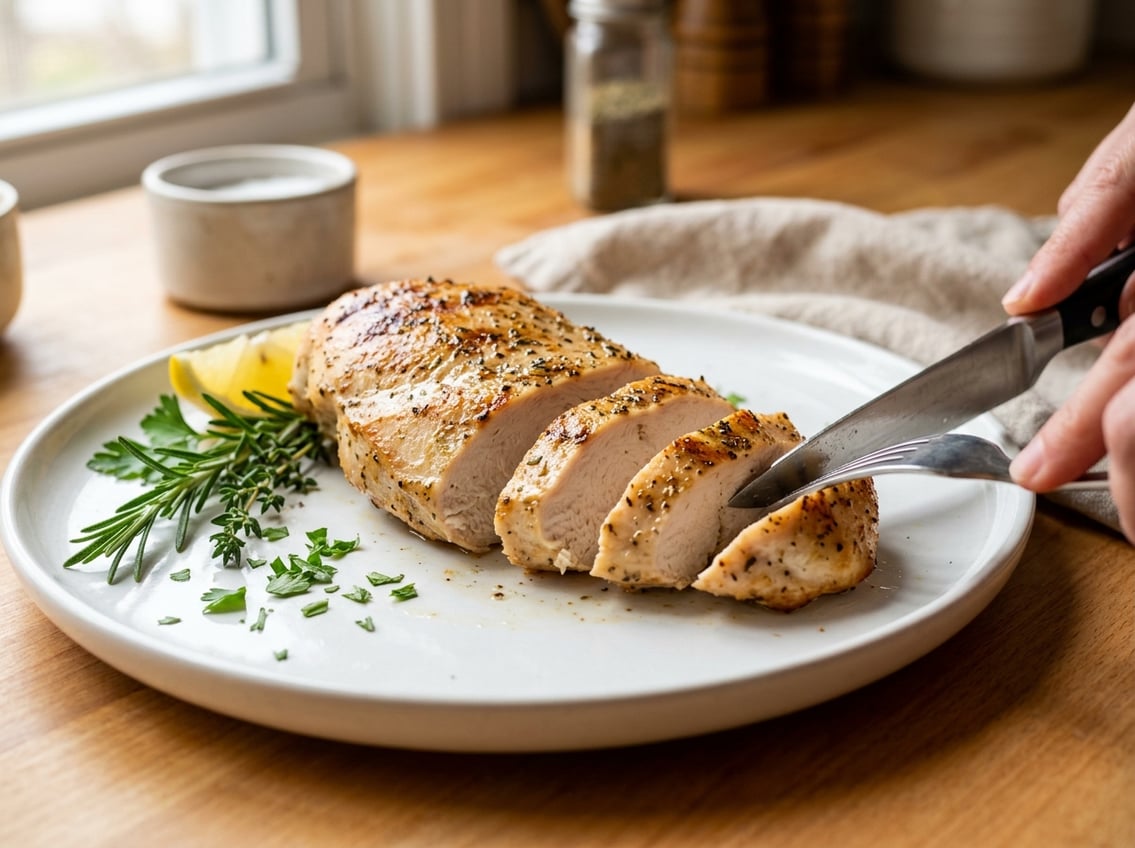
Chicken can carry harmful bacteria when it is raw or undercooked. SELF notes in its guide that color can be misleading, so you need a more reliable check before you serve it.
If you cook chicken breast often, learning what pink color really means can help you avoid both food safety mistakes and dry meat.
What Actually Determines Safety
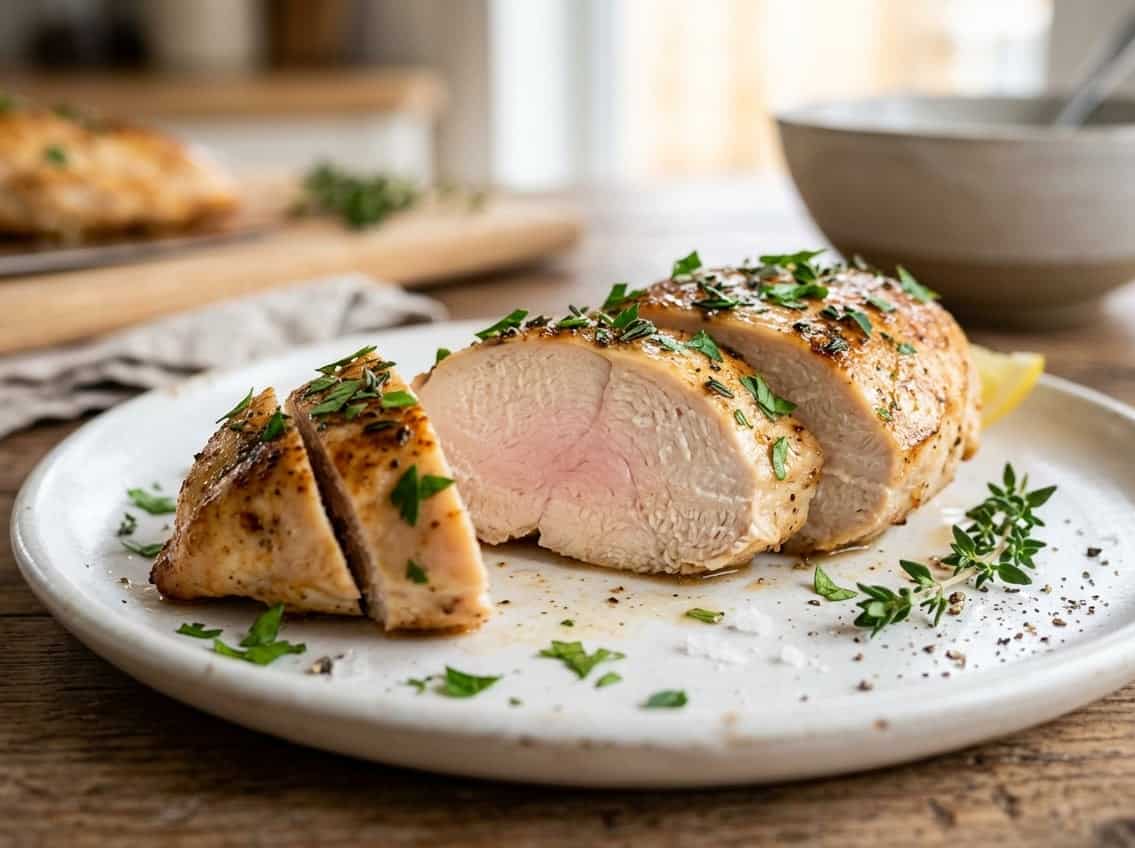
Heat determines safety, not appearance. You make chicken breast safe by cooking the thickest part to 165°F, which kills harmful bacteria.
Color can help you notice patterns, but you should never use it as your only test. Whether pink chicken is safe to eat depends on temperature and texture, not just color.
Why Internal Temperature Matters More Than Color
A meat thermometer gives you the most dependable way to check chicken. SELF explains that checking the deepest part of the meat provides a direct measure of doneness instead of guessing from color.
Chicken breast should reach 165°F in the center. That rule is much more useful than asking whether the meat looks white, tan, or a little pink.
How to Use a Meat Thermometer Correctly
Insert the meat thermometer into the thickest part of the chicken breast, not near the edge or touching the pan. If the breast is uneven, check more than one spot.
For thinner pieces, the center still matters most. If you cook bone-in chicken, make sure the thermometer reads 165°F near the bone and in the thickest section.
When Pink Chicken Is Safe to Eat
Pink chicken can be safe when it has reached 165°F and feels firm, not wet or squishy. Whether pink chicken is safe to eat is a temperature question first.
If the center is hot enough and the juices run clear, a faint pink tint may come from natural pigments or cooking conditions rather than undercooking.
Why Cooked Meat Can Still Look Pink
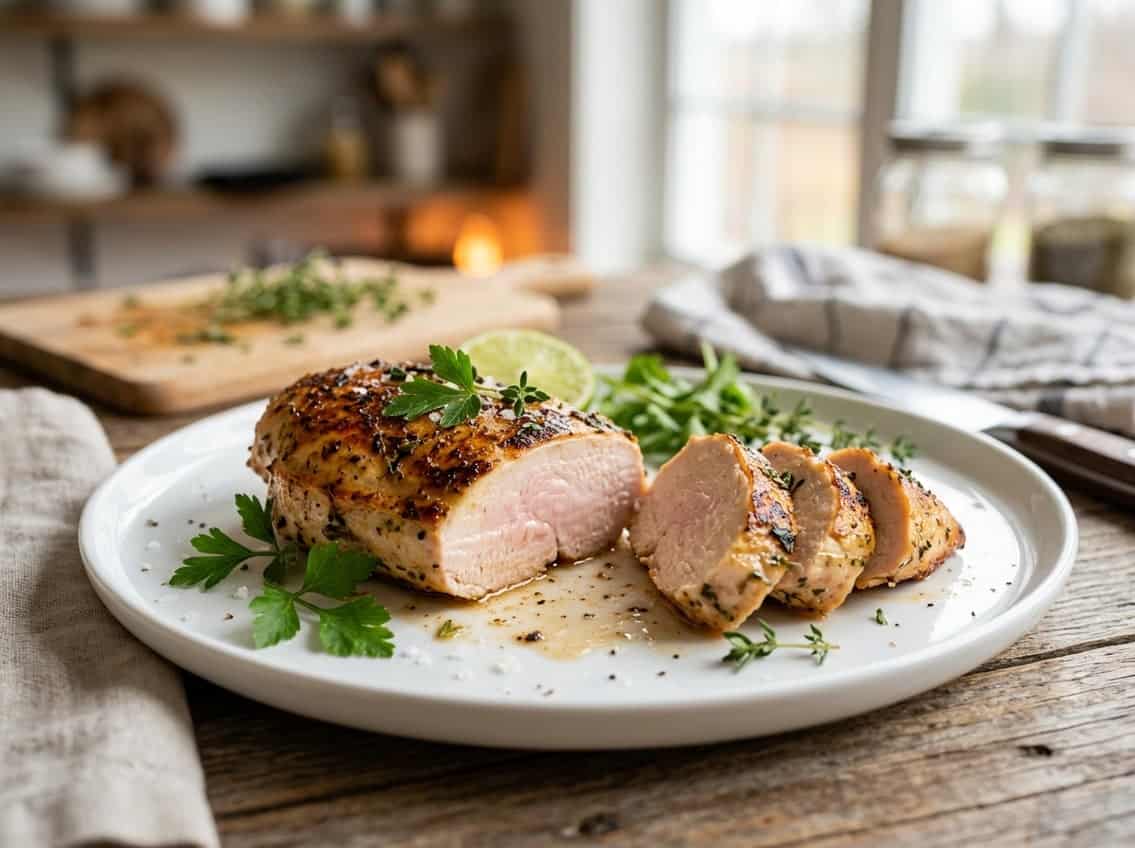
Cooked chicken can stay pink for several reasons, and many of them are normal. The color can come from muscle pigments, the cut of meat, or the way you store or cook the chicken.
A pink chicken breast does not always mean the meat is unsafe. You need to know which pink shades are normal and which ones point to a real problem.
Myoglobin and Natural Pigment Changes
Chicken contains less myoglobin than red meat, yet some pigment can still remain after cooking. That pigment can make cooked poultry look slightly pink in spots or streaks.
SELF notes that color can vary by age, feed, and cooking conditions. Some pink tones are caused by natural changes rather than undercooking.
Pink Near the Bone in Bone-In Cuts
Pink near the bone is common in bone-in chicken. Bones and marrow can affect color during cooking, especially in younger birds or frozen pieces.
If the meat near the bone is hot enough and reaches 165°F, the pink color alone does not mean it is unsafe. A thermometer gives you a clear answer.
How Freezing, Smoking, and Brining Affect Color
Freezing can change the way bone-in chicken looks after thawing. Smoking can also tint the meat and skin, while brining can affect how juices and pigment move through the breast.
These methods can leave pink chicken looking more colorful than plain roasted chicken breast, even when the meat is fully cooked.
When Pink Color Signals a Real Problem
Some pink is normal, yet certain signs point to trouble. If the texture is soft and wet, the center looks raw, or the meat feels cool, you may be dealing with undercooked chicken.
Foodborne illness can come from chicken that has not reached a safe temperature. Campylobacter is one of the common bacteria linked to poultry, according to SELF.
Signs of Undercooked Chicken Beyond Appearance
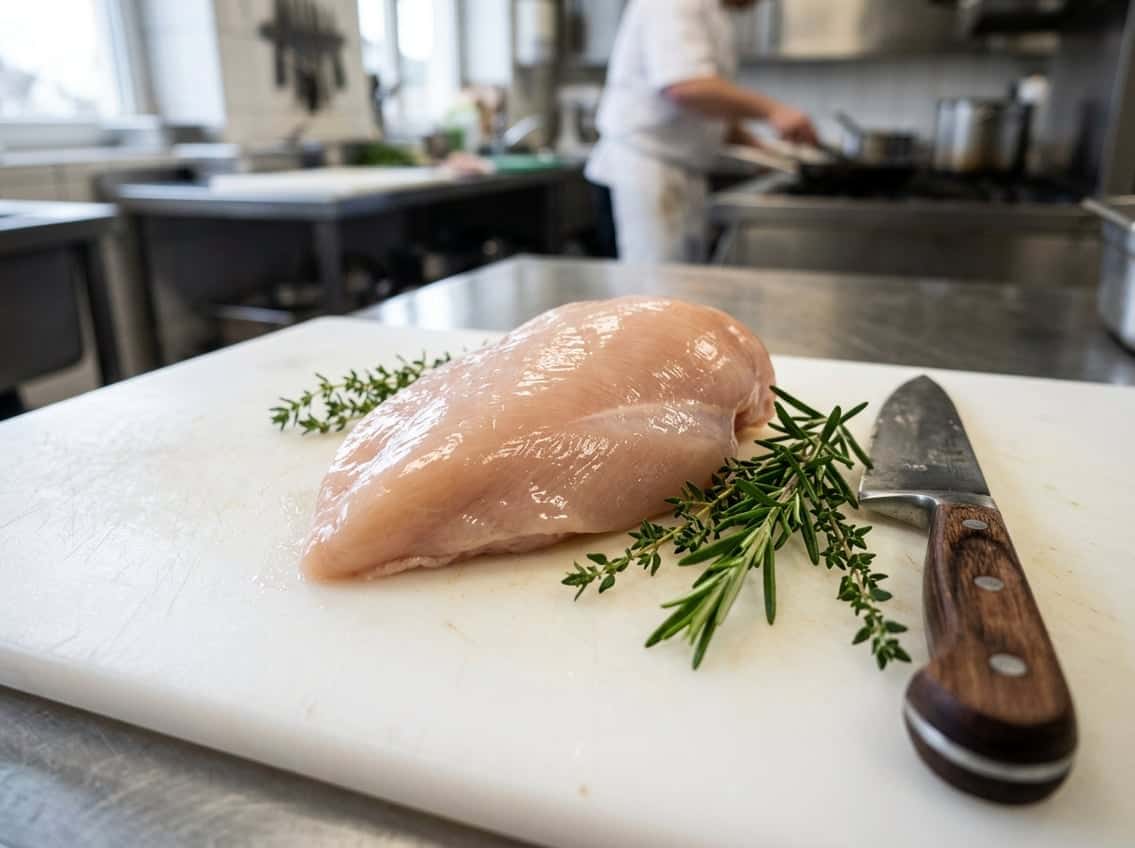
Check more than color. Raw chicken usually feels slick, soft, and glossy, while cooked chicken feels firmer and springs back when pressed.
If the center still looks translucent or gelatinous, the meat is not ready, even if the outside looks browned.
Food Safety Risks Including Campylobacter
Undercooked poultry can carry bacteria such as Salmonella and Campylobacter. These bacteria can cause diarrhea, fever, stomach cramps, and other symptoms that make you quite sick.
You need heat, time, and a reliable temperature check to make sure chicken is safe.
What to Do If the Center Still Looks Raw
Return the chicken to the heat right away. Cook until the thickest part reaches 165°F, then check again after a short rest.
If you already sliced it open and the center looks raw, do not rely on the browned outside to mean it is done. Cook it longer until the center is no longer cool or translucent.
Best Practices for Cooking Chicken Breast Confidently
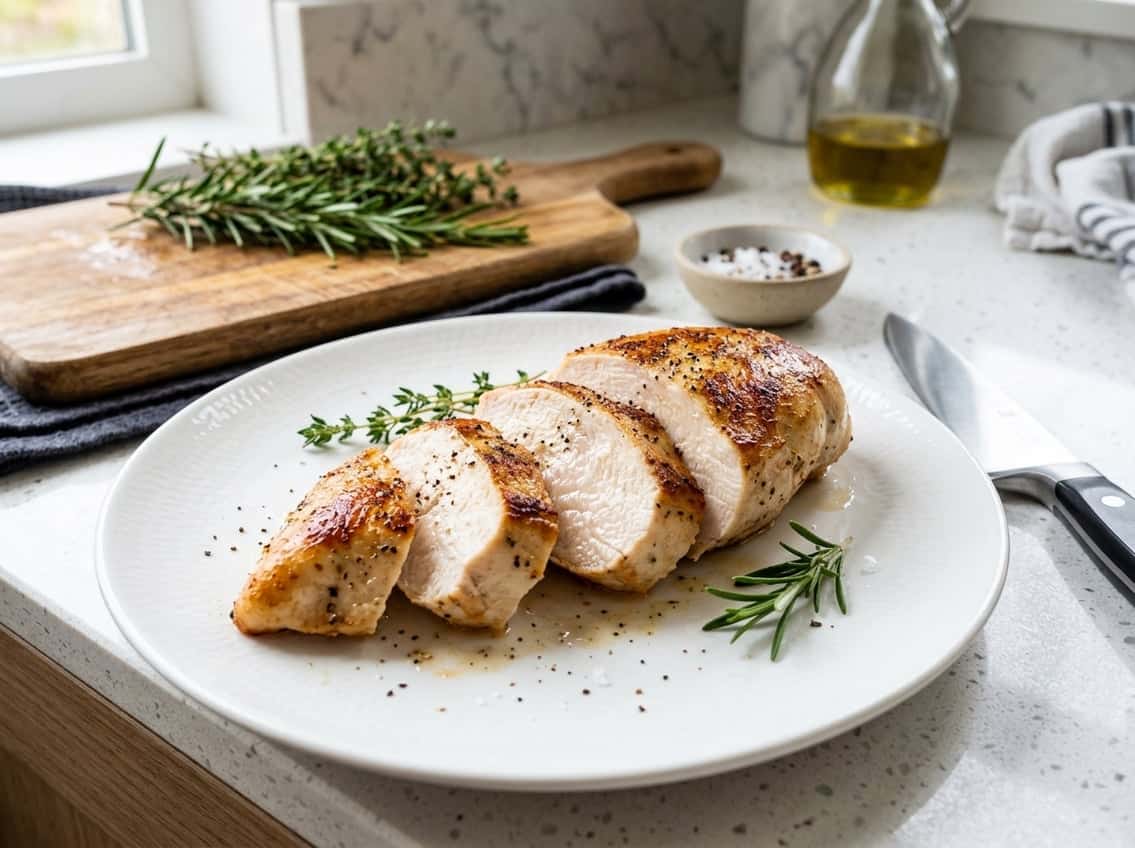
You get better results when you check temperature in the right place, let the meat rest, and avoid guessing based on color.
A reliable routine helps you avoid dry meat and reduces the chance of serving a pink chicken breast that is not fully cooked.
Where to Check Temperature in Thick and Thin Breasts
For thick chicken breasts, aim for the center of the widest part. For thin breasts, place the thermometer in the thickest spot available, since that is where undercooking usually hides.
If the breast is uneven, check more than once. A single reading from a thin edge can give you a false sense of safety.
How Resting Changes Juices and Texture
After cooking, let chicken rest for a few minutes before cutting. Resting helps the juices settle, so the meat stays moist instead of running dry onto the plate.
The texture also firms slightly during rest, which makes it easier to judge whether the chicken is fully cooked.
Common Mistakes That Lead to Overcooking or Guessing
Do not cook chicken only by time, since breast size varies a lot.
Do not cut into it too early just to check, since that can let juices escape and dry the meat out.
A few common habits cause trouble.
People often rely on color alone.
Some set the heat too high.
Others check temperature near the pan instead of the center.
Some pull the chicken off the heat before it reaches 165°F.
If you use a meat thermometer every time, you can cook chicken breast with more confidence and less guesswork.


