
Is It Ok to Boil Chicken Breast? Safe, Tender Results
Boiling chicken breast is a safe and practical method when you want moist, ready-to-use chicken with little effort. If you follow the right timing and check the final temperature, you can make tender, fully cooked chicken breast that works well for salads, soups, and meal prep.
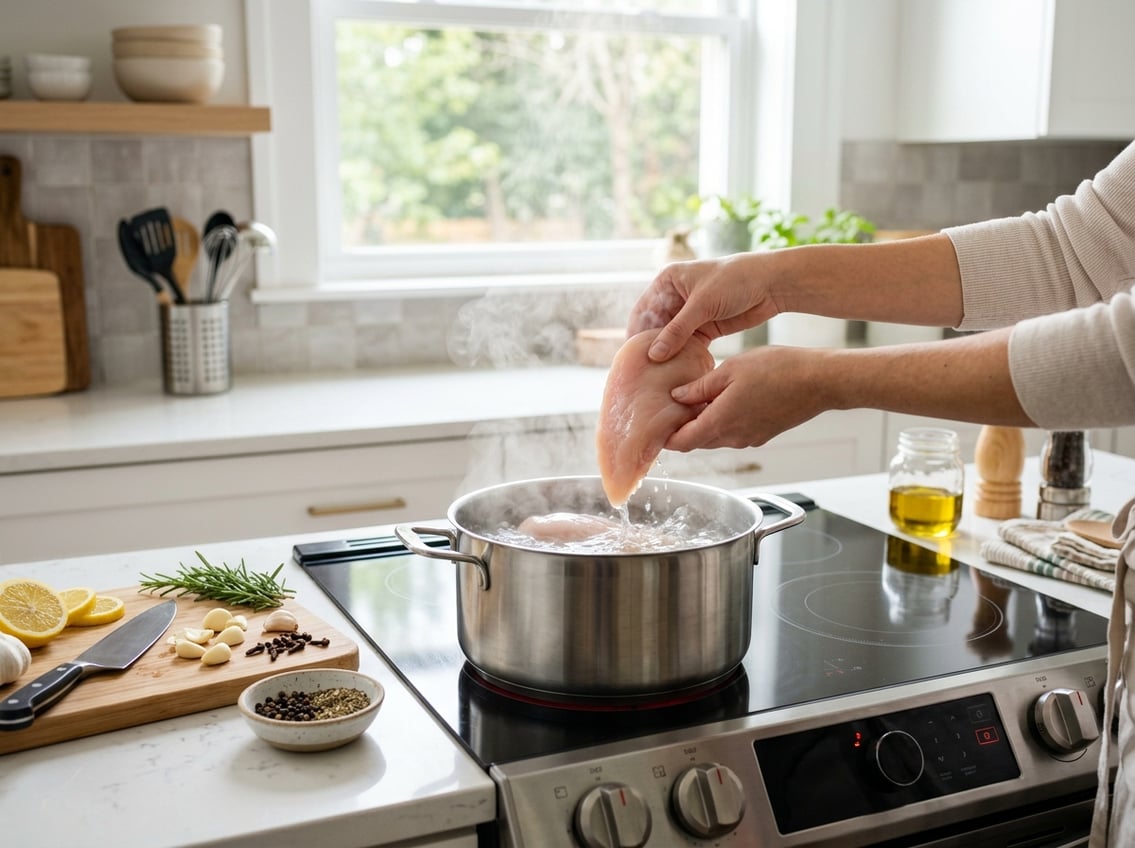
Do not cook it too hard or too long. Mild simmering, enough liquid to cover the meat, and a thermometer give you better results than a rolling boil.
Boiling and poaching often mean the same thing, which matters because gentle heat helps chicken stay more moist. If you do it well, boiled chicken breast can be plain in the best way, staying versatile for many meals.
When This Method Makes Sense
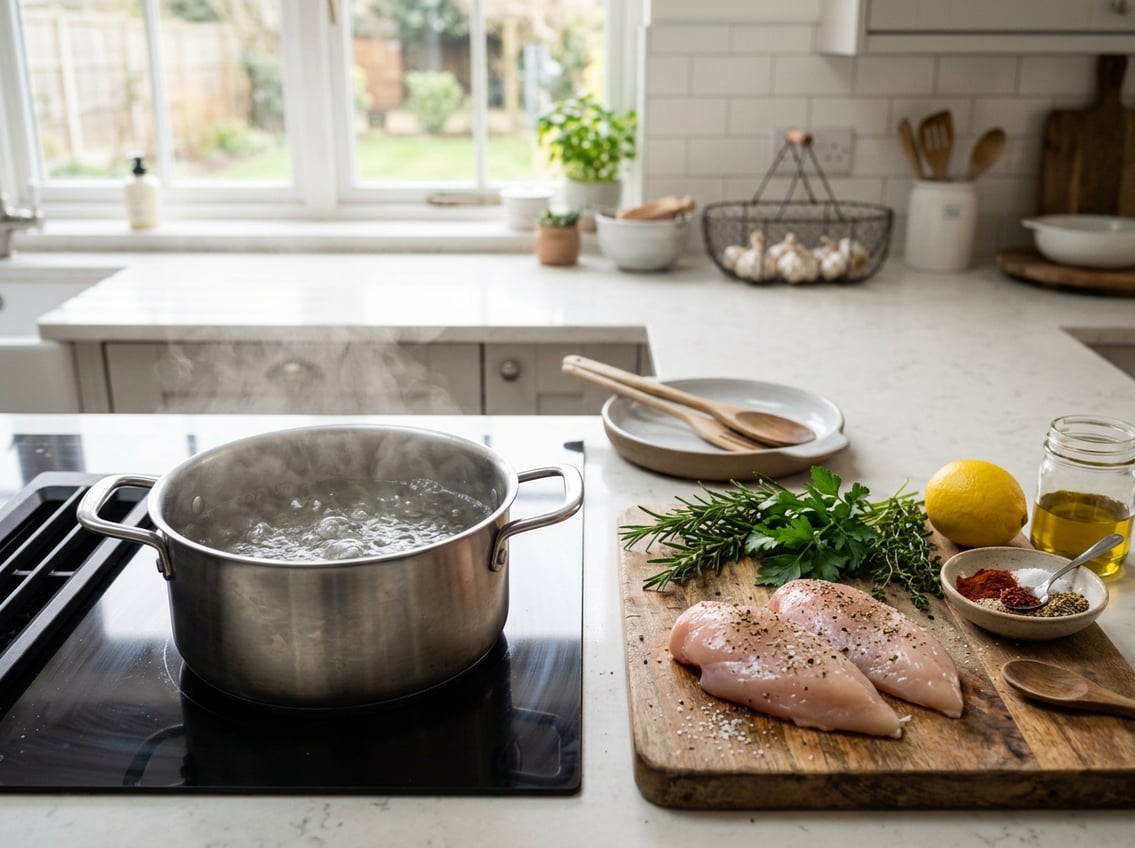
Choose boiled chicken when you want cooked chicken that you can season later or mix into other dishes. This method works especially well when you plan to shred, chop, or fold the meat into a recipe with sauce or dressing.
Boiled chicken suits simple meal prep because you can cook it in one pot and portion it easily. Better Homes & Gardens recommends it for soups, salads, casseroles, and other recipes where you want moist, cooked meat.
Best Uses for Moist, Cooked Chicken
Boiled chicken breast works well for:
- shredded chicken for tacos or sandwiches
- chicken salad
- chicken pot pie
- chicken chili
- soup or noodle bowls
- quick meal prep bowls
If you want chicken that is easy to flavor later, this method gives you a neutral base for sauces, spices, and dressings.
Boiling vs. Roasting, Baking, and Poaching
Roasting and baking give you more browned flavor, especially with skin-on chicken. These dry-heat methods can dry out lean breast meat more easily if you miss the timing.
Poaching is very close to boiling in practical use. Better Homes & Gardens says the terms often describe the same gentle cooking style, and that gentler heat helps the meat stay tender.
When It Is Not the Best Option
Boiling is not the best choice if you want crisp skin or a browned exterior. It is also not ideal when you want a roasted flavor as the main feature of the dish.
If your goal is a dinner plate with stronger color and texture, baked chicken breast or another dry-heat method may fit better. An Instant Pot chicken style can also work when you want fast, tender meat with a different texture.
How to Cook It Without Drying It Out
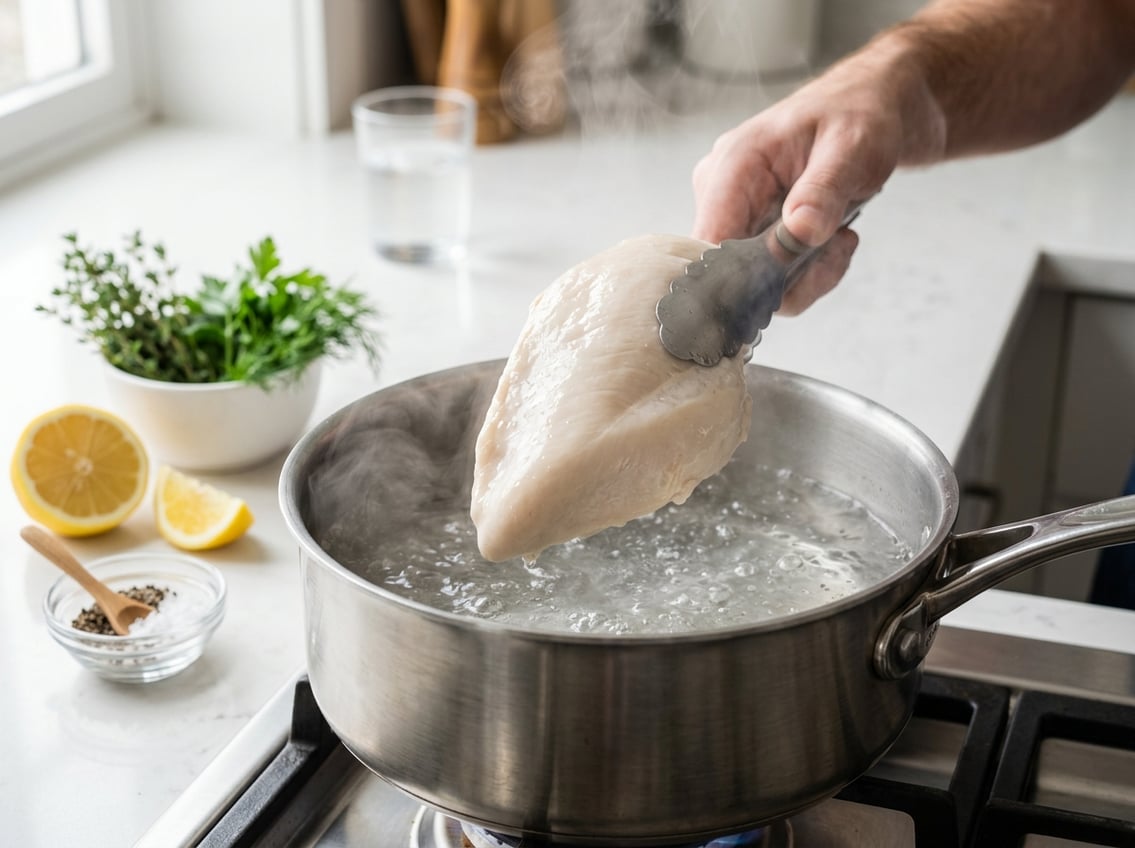
Keep the heat gentle and stop cooking at the right time to avoid drying out chicken breasts. Aim for a steady simmer, not an aggressive boil.
The cut, liquid, and seasoning all matter. Bone-in pieces cook longer and stay juicier, while boneless pieces cook faster and need closer attention.
How to Boil Chicken Breasts Step by Step
-
Place the chicken in a pot or deep skillet in a single layer.
-
Add enough liquid to cover the chicken by about 1 inch.
-
Bring the liquid to a boil, then reduce it to a simmer.
-
Cover and cook until the chicken reaches 165°F.
-
Remove it from the liquid and let it rest before slicing or shredding.
Better Homes & Gardens recommends about 12 to 15 minutes for skinless, boneless chicken breast halves.
Water vs. Chicken Broth or Chicken Stock
Use water when you want a clean flavor base. If you want more taste, use chicken broth or chicken stock.
Broth and stock add more savory depth to the meat and the cooking liquid. You can use the strained liquid for soup, rice, or gravy.
Seasoning and Aromatics for Better Flavor
Simple additions can make a big difference. Try using:
- salt
- black pepper
- garlic
- onion
- celery
- carrot
- bay leaf
- parsley
- lemon slices
Keep the seasoning light if you plan to use the chicken in several recipes. The meat will still taste balanced after you add sauces, dressings, or spices later.
How to Shred Chicken Easily
Let the chicken rest for a few minutes, then shred it while it is still warm. Two forks work well, and a stand mixer can speed things up for larger batches, as Better Homes & Gardens notes.
If the meat seems stringy or dry, you may have cooked it too long. Tender chicken breasts should pull apart with little effort.
Timing, Temperature, and Frozen Chicken
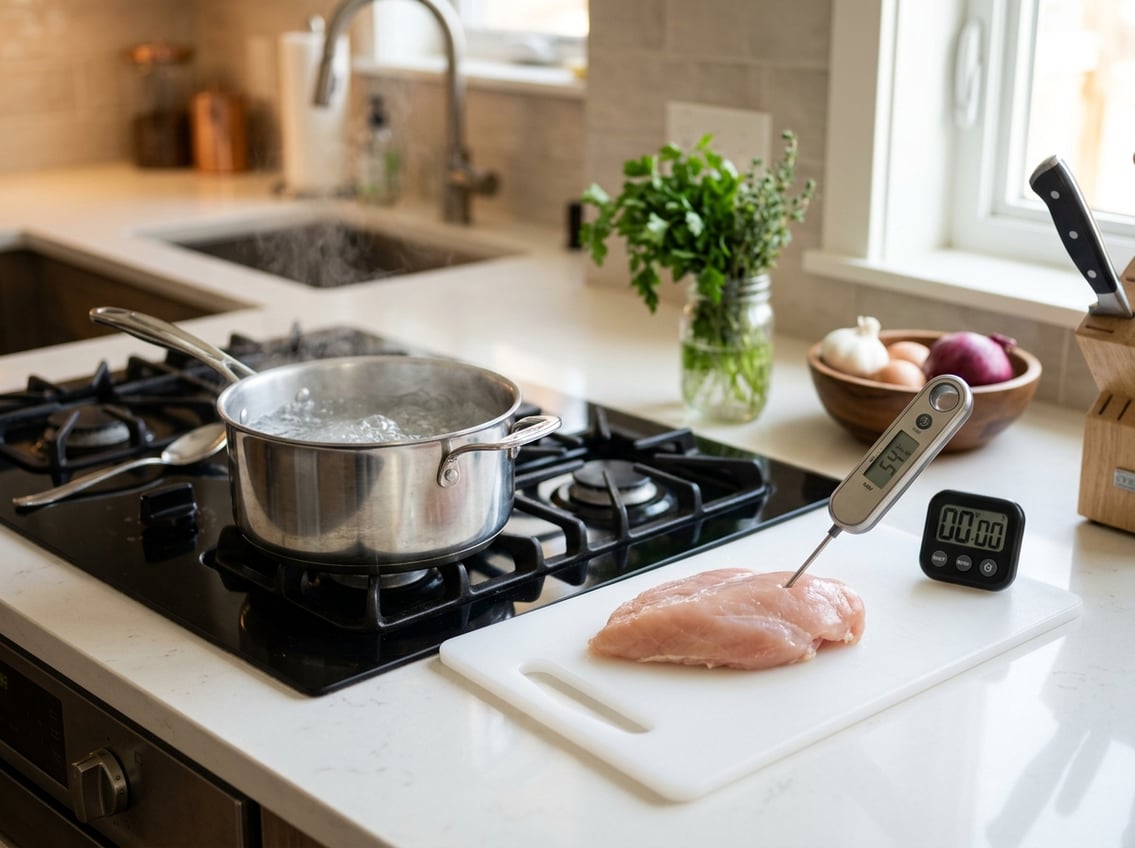
Cooking time depends on size, thickness, and whether the chicken is frozen. Use time as a guide, then confirm doneness with temperature.
The safest finish line is 165°F in the thickest part of the meat.
How Long to Boil Chicken Breast by Size and Type
A useful timing guide:
| Chicken type | Approximate time |
|---|---|
| Boneless, skinless chicken breast halves | 12 to 15 minutes |
| Boneless breasts cut into 2-inch pieces | 8 to 10 minutes |
| Bone-in, skin-on chicken breasts | About 30 minutes |
| Frozen boneless, skinless chicken breasts | About 18 to 22 minutes |
| Frozen bone-in, skin-on chicken breasts | About 45 minutes |
These numbers line up with Better Homes & Gardens, which recommends checking the internal temperature instead of relying on time alone.
Internal Temperature and Doneness Checks
Use an instant-read thermometer in the thickest part of the breast. The chicken is done at 165°F.
If you do not have a thermometer, cut into the thickest part and check that the meat is opaque and the juices run clear. Temperature is still the better test, since color alone can be misleading.
Boiling Frozen Chicken Safely
You can boil frozen chicken, as long as it reaches 165°F before serving. The cooking time will be longer, and you should keep the heat at a gentle simmer.
Many cooks prefer thawing first for more even results. Better Homes & Gardens notes that frozen chicken takes longer and should be checked carefully with a thermometer.
Storage, Meal Prep, and Leftover Ideas
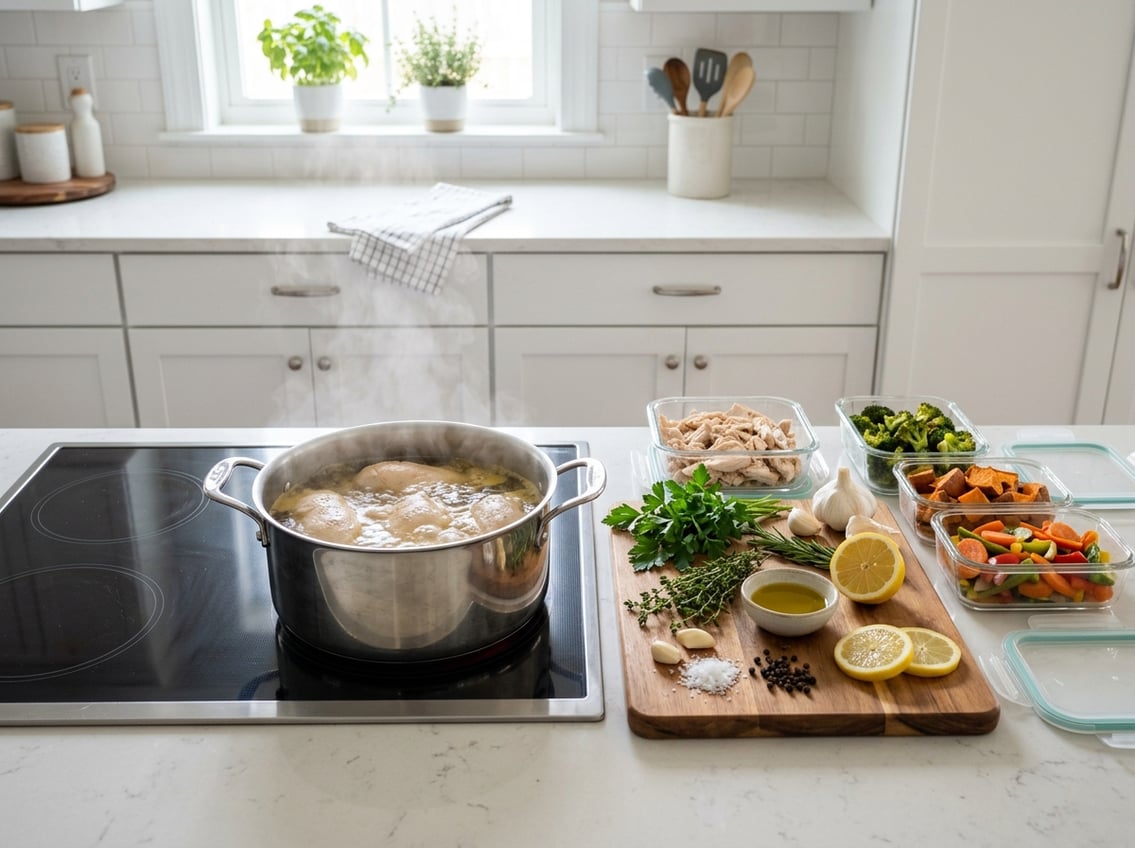
Boiled chicken stores well, which makes it useful for planned meals during the week. Cool it quickly and pack it into a clean container.
Once chilled, you can slice, shred, or dice the meat. This makes it easy to use in several meals without extra cooking.
How to Store Boiled Chicken Properly
Let the chicken cool completely before storing it. Place it in an airtight container and refrigerate it.
If you want to save the cooking liquid, strain it first and store it in its own container. This gives you a base for soups or rice later.
How Long It Keeps in the Fridge or Freezer
Better Homes & Gardens recommends refrigerating boiled chicken for up to three days or freezing it for up to two months.
For safe leftovers, do not leave cooked food at room temperature for more than two hours. The University of Nebraska-Lincoln reminds you to keep cooked foods out of the danger zone.
Easy Ways to Use It in Meals
You can use boiled chicken as a base for:
- chicken salad
- chicken pot pie
Try adding it to chicken chili, wraps, and sandwiches.
It also works well in soups, stews, and pasta dishes.
Add boiled chicken to meal prep bowls with rice, beans, vegetables, or greens.
For a weeknight shortcut, shred cooked chicken to make meals faster to assemble.


