
Will Chicken Breast Defrost in 5 Hours? Safe Timing
Will chicken breast defrost in 5 hours? In many cases, yes, a single boneless piece can thaw in that time, especially if you use cold water or a small, flat package.
The exact timing depends on the size of the breast, how it was packaged, and the method you use.
If you want the safest answer, thaw chicken breast in the refrigerator when you have time. Use cold water thawing when you need it sooner.
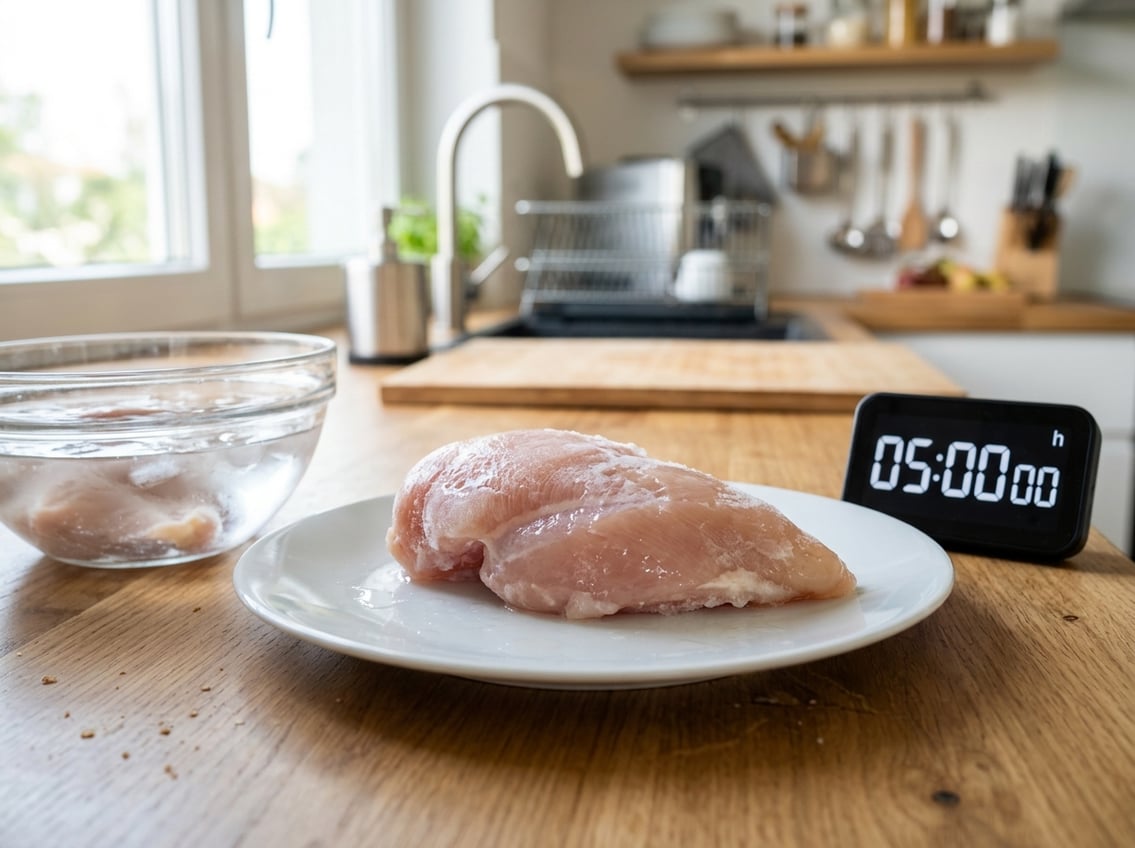
A 5-hour window can be enough to defrost chicken breast in some situations, but it is not a sure thing for every package.
Thick pieces, tightly frozen blocks, and refrigerator thawing all take longer than many people expect.
If you are trying to defrost chicken breasts for dinner, match the thawing method to the amount of time you have.
That keeps thawing chicken both practical and safe.
The Short Answer on the 5-Hour Window
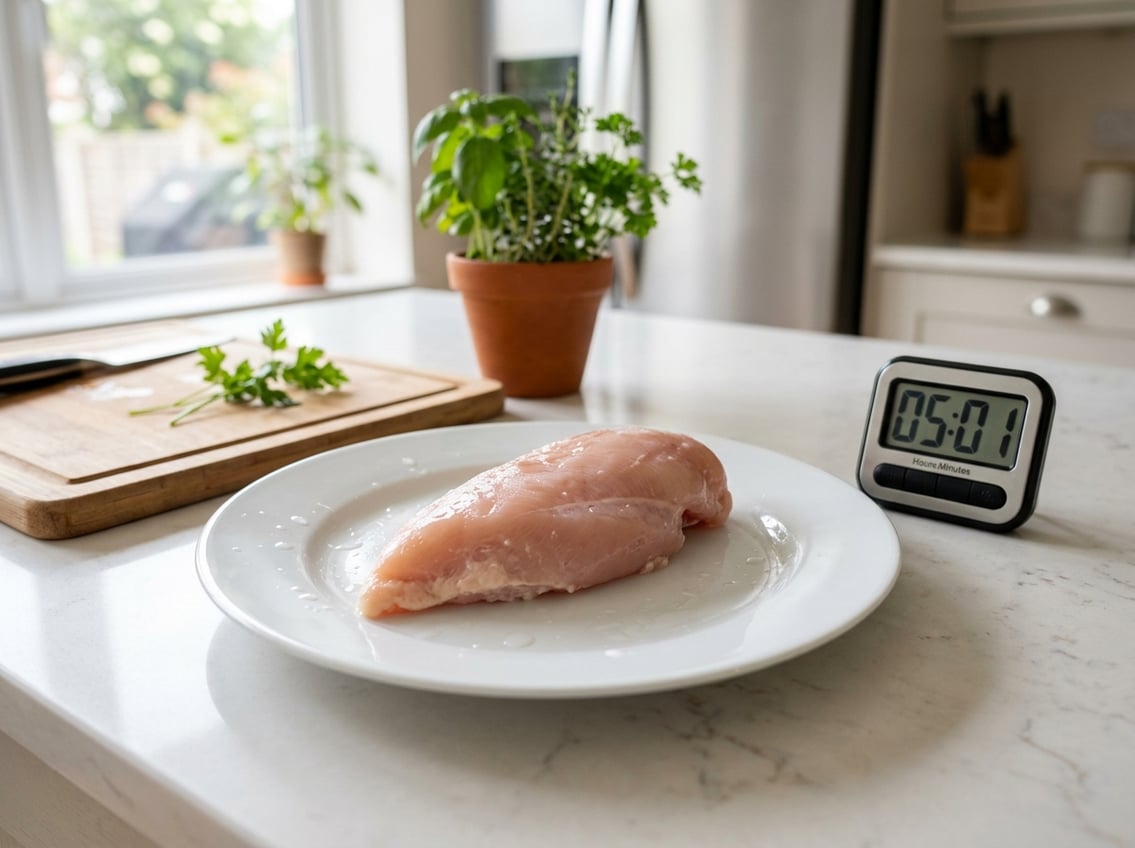
A 5-hour window may be enough to defrost chicken breast, especially for one small or medium boneless piece.
It is less reliable for a package of chicken breasts that are stacked together or frozen into a solid block.
A chicken breast defrosting guide says a single chicken breast may take about 5 to 8 hours in the fridge, while multiple pieces often need much longer.
Cold water thawing is faster and can bring the time down to around 1 to 2 hours for many pieces, as noted in a tested cold-water method.
When 5 Hours Can Be Enough
Five hours can work when the breast is:
- single, not stacked with other pieces
- boneless and not unusually thick
- placed in a cold water bath in a leak-proof bag
- spread flat rather than frozen into a tight clump
A small breast may also be mostly thawed after 5 hours in the refrigerator, though it may still have an icy center.
What Makes It Take Longer or Shorter
Thickness matters more than weight alone.
A thick breast takes longer than a thin one, even if both weigh the same.
Packaging also matters.
A flat, sealed package thaws faster than a dense frozen block because heat reaches the center more easily.
Why Room-Temperature Thawing Is Not Recommended
Leaving chicken at room temperature is not a safe thawing method.
The outer layer can warm into the bacterial danger zone long before the center thaws, which is why USDA-style food safety guidance favors refrigerator, cold water, or microwave thawing.
Room temperature can make chicken seem ready faster, but it raises the risk of foodborne illness.
Safest Ways to Thaw Chicken Breast
The best way to defrost chicken depends on your schedule.
Refrigerator thawing gives you the best safety and quality.
Cold water thawing works when you need speed.
Microwave thawing is useful only when you plan to cook right away.
Refrigerator Thawing for Best Safety and Quality
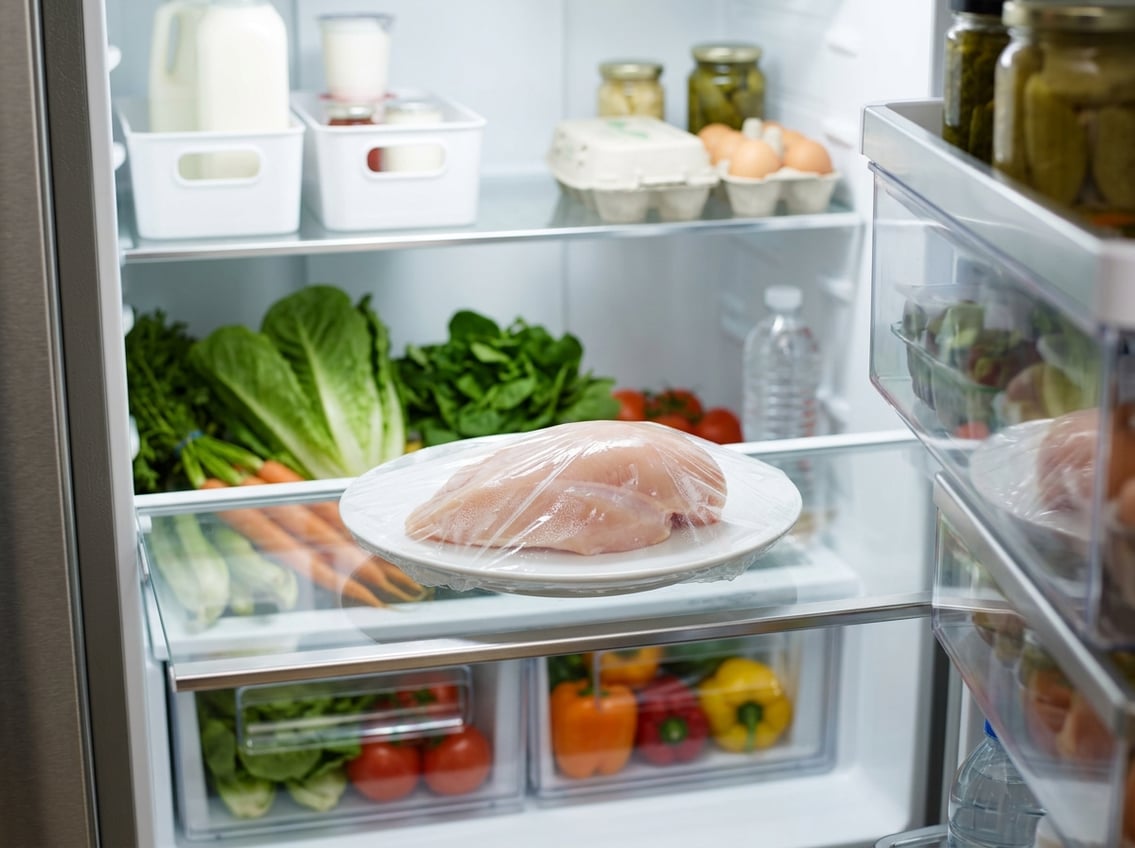
Refrigerator thawing is the best way to defrost chicken when you can plan ahead.
Place the chicken in a dish or on a plate on a lower shelf so any drips stay contained.
This method keeps the meat at a safe temperature and helps preserve texture.
A USDA-style thawing guide notes that refrigeration is the easiest and safest choice, though it often takes overnight or longer.
Cold Water Thawing for Faster Results
Cold water thawing is the fastest safe option for many home kitchens.
Keep the chicken in leak-proof packaging, submerge it in cold water, and change the water every 30 minutes.
This method can defrost chicken breasts in about 1 to 2 hours, depending on thickness.
Keep the water cold the whole time, since warm water can push the outside of the meat into unsafe temperatures.
Microwave Thawing as a Last-Minute Option
Microwave thawing works when time is tight, but you need to watch it closely.
Use the defrost setting, check often, and cook the chicken immediately after thawing.
Microwaves can start to cook the edges while the center is still frozen.
This method is best for emergencies, not for routine meal prep.
Timing Guidelines by Size and Packaging
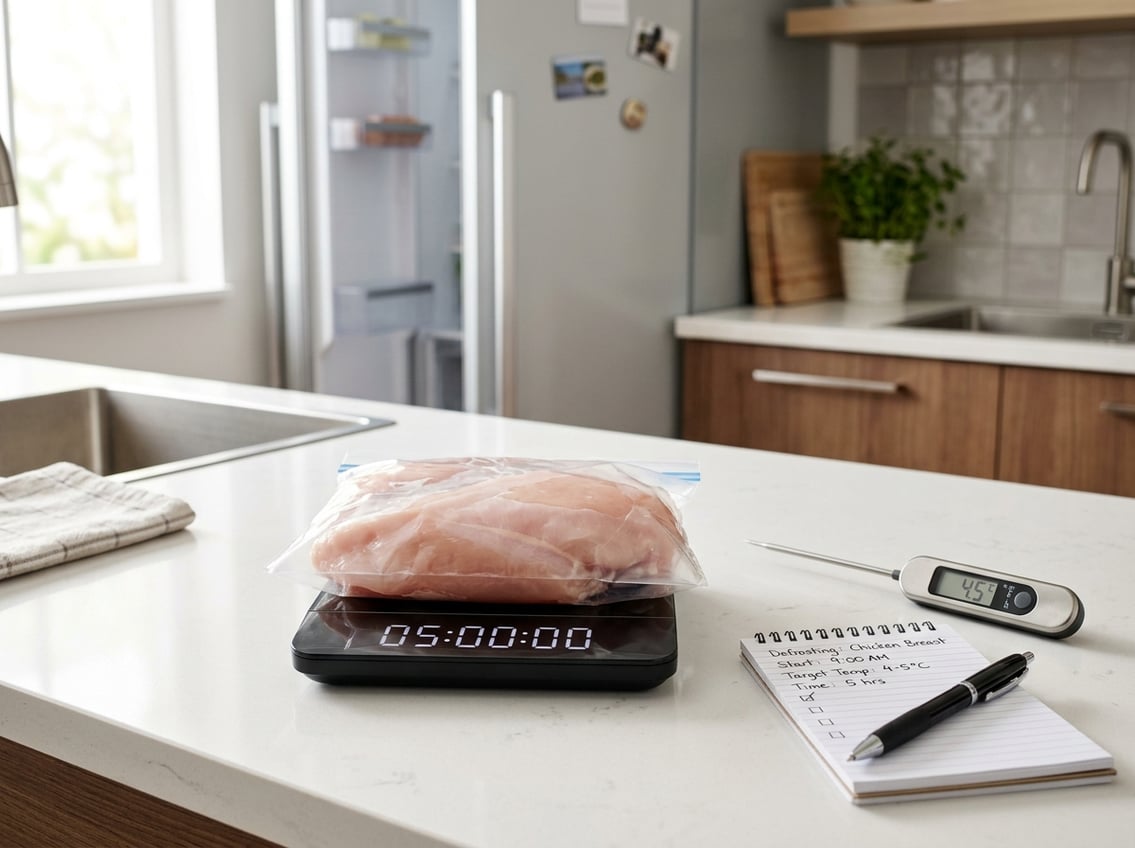
The size of the breast and the way it is packed can change thawing time a lot.
A thin, single piece may be ready within your 5-hour window, while a larger or tightly packed amount may need much more time.
Single Boneless Breast Versus Multiple Pieces
A single boneless breast usually thaws faster than several breasts piled together.
One piece has more surface area exposed to cold air, fridge air, or water, so the center reaches a safe thaw faster.
If you are thawing two or more breasts together, separate them if you can.
Pieces that are stuck together often need extra time even in cold water.
Flat-Packed Chicken Versus Frozen Solid Blocks
Flat-packed chicken thaws faster because the cold center is closer to the outer edges.
A frozen solid block holds its cold core much longer.
If the package was frozen flat, your chance of defrosting chicken breasts within 5 hours goes up.
If the package is thick and bulky, plan for longer than 5 hours even with cold water thawing.
How to Tell When the Center Is Fully Thawed
Check the thickest part with clean fingers or a fork.
The meat should feel soft throughout, with no hard icy spots.
If the center still feels stiff or crunchy, keep thawing.
A partially frozen center can cook unevenly, which can affect both safety and texture.
Food Safety Rules After Thawing
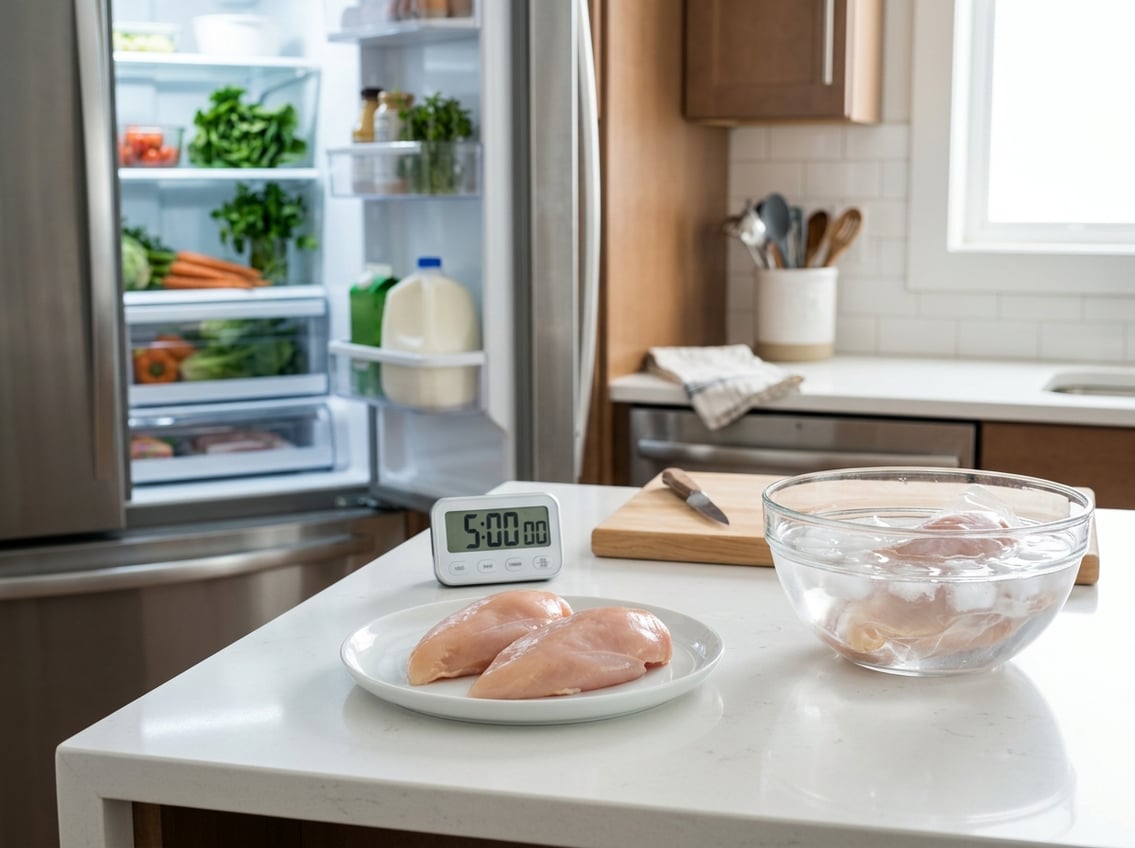
Once you thaw chicken, the clock changes.
Your next step depends on how you thawed it, because refrigerator thawing, cold water thawing, and microwave thawing each have different safety rules.
When to Cook Immediately
Cook chicken right away if you used cold water thawing or microwave thawing.
Both methods can leave parts of the meat warm enough for bacteria growth if you let them sit.
Refrigerator-thawed chicken gives you more flexibility.
It can stay cold while you finish meal prep, as long as it remains refrigerated.
When Refreezing Is Still Acceptable
If you thawed chicken in the refrigerator, you can refreeze it before cooking as long as it stayed cold the whole time.
Quality may drop a little, but it remains safe in most cases.
Chicken thawed in cold water or the microwave should be cooked first before refreezing.
That step helps reduce food safety risk after thawing chicken.
How to Prevent Leaks and Cross-Contamination
Place a plate, tray, or bowl under the chicken to catch drips.
Keep raw chicken away from ready-to-eat foods, cutting boards, and utensils that you use for salads or bread.
Wash your hands, counters, and tools after handling defrosted chicken.
A clean thawing setup lowers the chance of spreading bacteria around your kitchen.


