
When Cooking Chicken Breast in the Oven: Time and Temp
When you cook chicken breast in the oven, use a steady oven temperature, a clear time range, and a meat thermometer for the best results.
You can keep oven baked chicken breast tender if you keep the pieces even, avoid overbaking, and let the meat rest before slicing.
The simplest rule is this: bake chicken breast hot enough to cook it through fast, then pull it at the right internal temperature so it finishes juicy instead of dry.
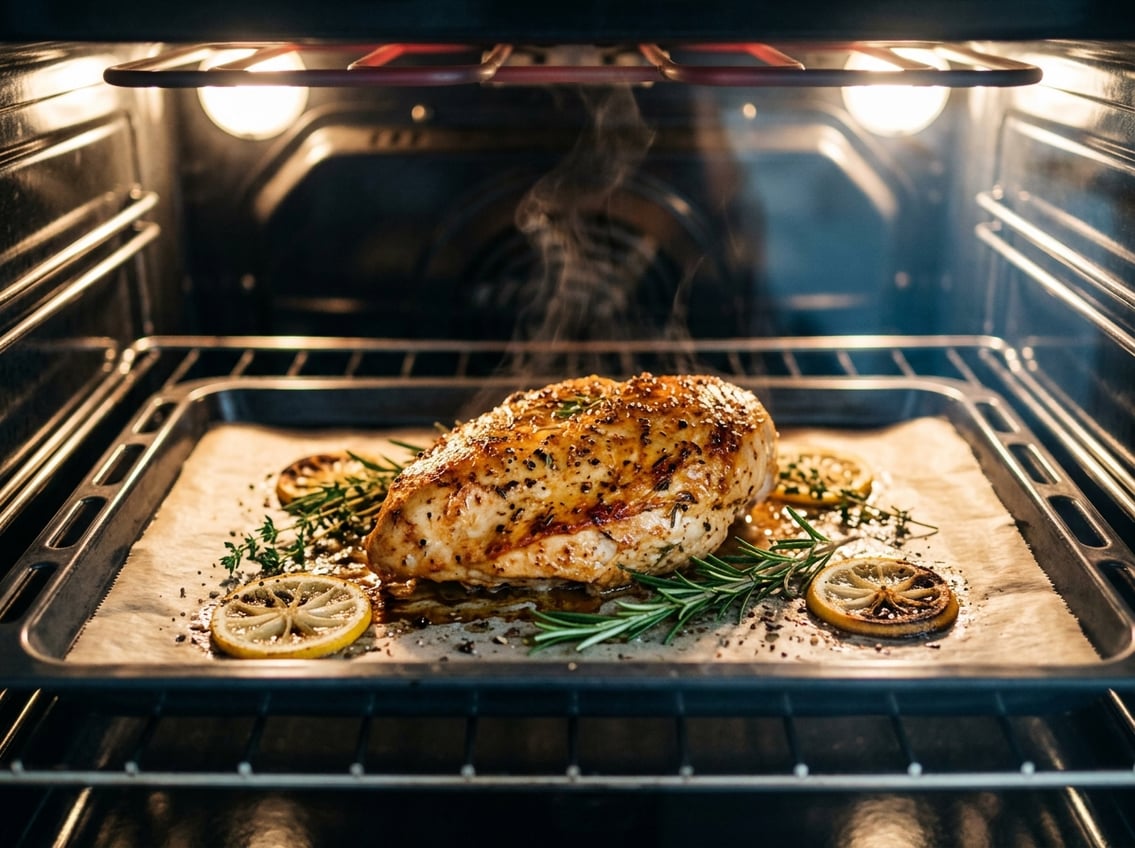
A basic chicken breast recipe does not need many ingredients.
Olive oil, salt, pepper, and a few spices can turn simple baked chicken into an easy weeknight meal.
If you bake chicken breast the right way, you can use the same method for salads, sandwiches, tacos, and meal prep.
The same approach works when you need to bake chicken breasts in batches.
Best Oven Temperature and Bake Time
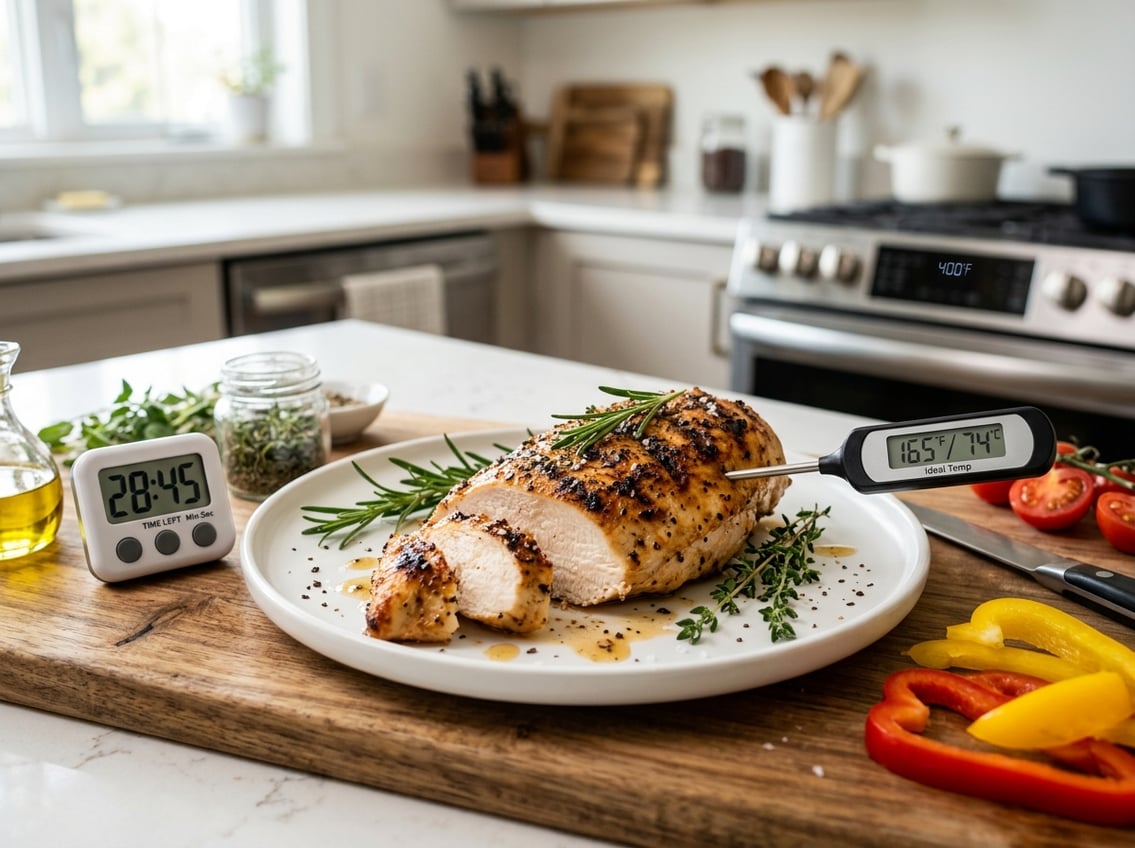
How long you bake chicken breast depends on thickness, oven heat, and whether the pieces are boneless and skinless.
Aim for a hot enough oven to cook the meat quickly and reach a safe center temperature.
A meat thermometer gives you more accuracy than the clock alone.
An instant-read thermometer helps you stop cooking at the right moment.
How Long Different Sizes Usually Take
Thin chicken breasts may take about 15 to 18 minutes at 400°F.
Average boneless pieces often take about 20 to 25 minutes, while larger breasts can take closer to 25 to 30 minutes.
A thicker piece may need a few extra minutes, and smaller ones may finish sooner.
If you pound the chicken to an even thickness, you can predict the bake time more easily.
375°F vs 400°F vs 425°F
At 375°F, chicken cooks a little more gently, and many recipes use this temperature for baked chicken breast.
Martha Stewart’s baking method for juicy chicken breasts uses 375°F and checks for 160°F in the thickest part.
At 400°F, you get a balance of speed and even cooking.
At 425°F, the chicken cooks faster and can brown more quickly, which works well if the pieces are thin.
When It Is Done in the Center
Chicken is done when the thickest part reaches 165°F for safe eating.
Many cooks pull chicken a little before that, around 160°F, then let carryover heat finish the job while it rests.
Place the thermometer into the thickest part without touching the pan.
That gives you the most reliable reading and avoids guessing.
Prep Steps That Keep It Juicy
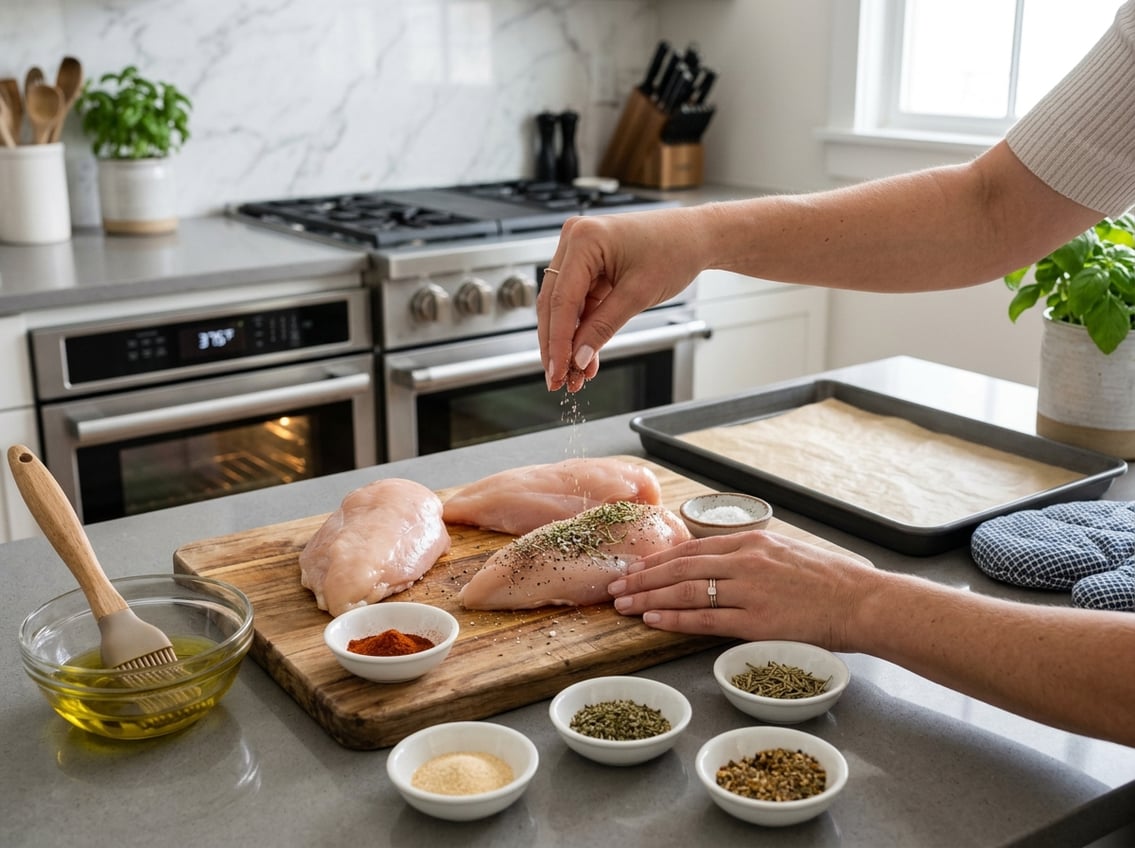
Juicy results start before the chicken goes into the oven.
The size of the pieces, the amount of oil, and the way you space them all affect how well the recipe turns out.
Use simple, direct prep to protect moisture.
That makes oven baked chicken breast easier to repeat.
Choosing Boneless Skinless Pieces
Boneless skinless chicken breast is the most common choice for weeknight baking.
These pieces cook quickly, which helps reduce the chance of drying out.
Pick pieces that are similar in size if you can.
Even thickness helps the chicken cook at the same pace.
Seasoning With Oil and Simple Spices
Coat the chicken with olive oil first, then add salt, pepper, garlic powder, paprika, or other simple spices.
The oil helps the seasoning stick and supports browning.
For simple baked chicken, you do not need a heavy marinade.
A light coating of oil and seasoning is often enough.
Spacing, Covering, and Resting
Leave space between the pieces so heat can move around them.
If you crowd the pan, the chicken steams instead of browning.
Covering the dish for part of the bake can help hold moisture, especially for thicker pieces.
After baking, rest the chicken for 5 to 10 minutes before slicing so the juices stay in the meat.
Common Mistakes and Easy Fixes
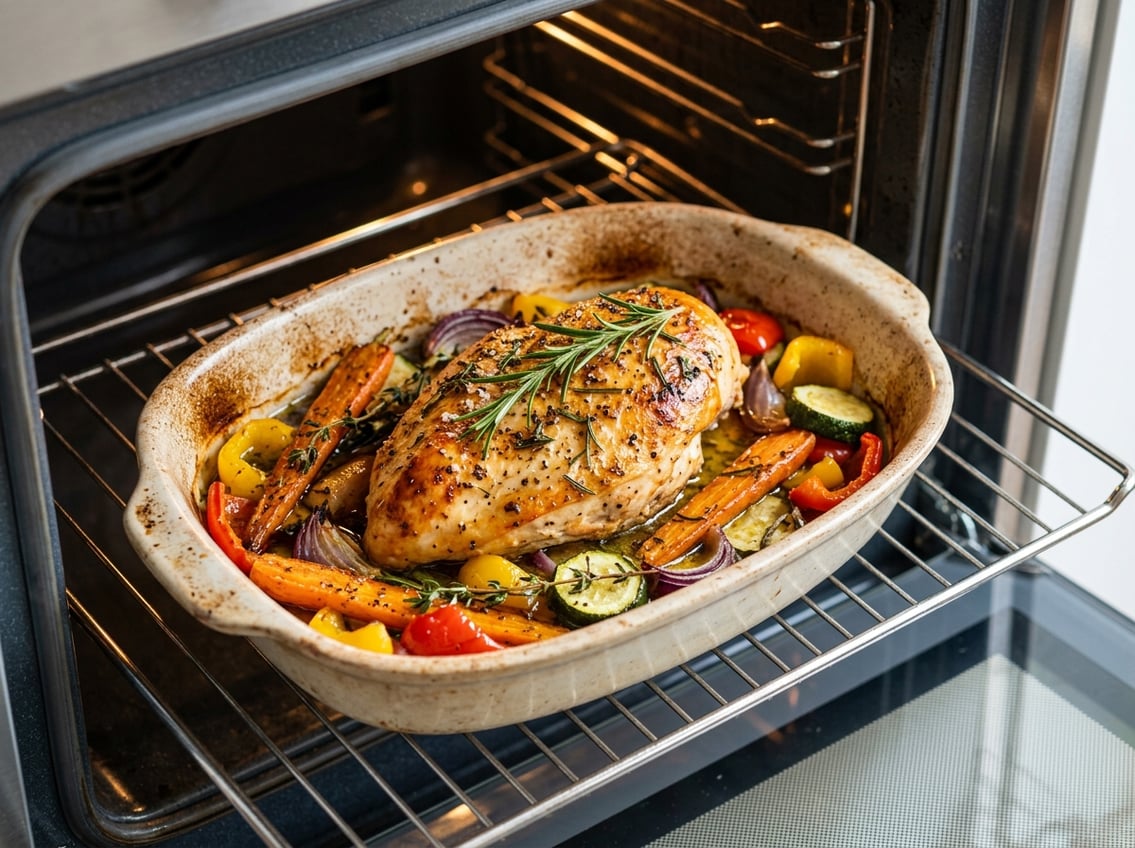
Dry chicken usually comes from a few predictable mistakes, and each one has a simple fix.
The main issues are too much heat, uneven thickness, and guessing instead of measuring.
If you want better results, focus on control.
Small changes make a big difference in juicy baked chicken.
Why Chicken Breast Dries Out
Chicken breast has very little fat, so it dries out quickly if it stays in the oven too long.
High heat for too long is the most common cause.
Another problem is uneven thickness.
A thick end can stay underdone while the thin end overcooks.
How to Check Without Guessing
Use an instant-read thermometer or meat thermometer every time if you can.
According to Martha Stewart’s guide to how to bake chicken breasts, check the thickest part directly for the safest and juiciest results.
Look for 160°F to 165°F in the center, depending on when you plan to rest it.
The number matters more than the color of the meat.
What to Do if It Overcooks
If the chicken is already dry, slice it thin and serve it with sauce, broth, or pan juices.
You can also chop it for soup, tacos, or salads where moisture comes from other ingredients.
Serving, Storing, and Reheating
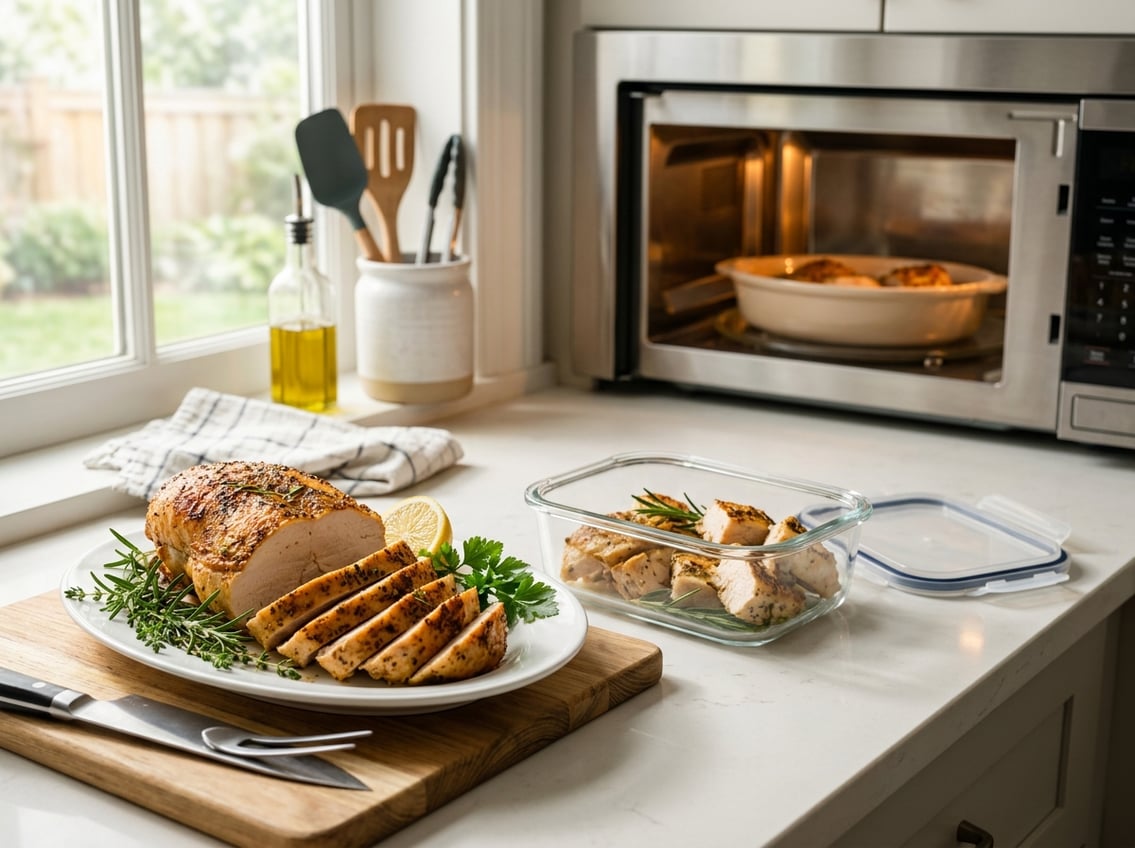
Oven baked chicken breast works with many sides, from vegetables to starches.
It also stores well, which makes it a practical choice for lunches and meal prep.
Leftover chicken is easiest to use when you keep it sealed, chilled, and reheat it gently.
That helps the texture stay closer to the original.
What to Serve Alongside It
Mashed potatoes are a classic side because they pair well with simple chicken seasoning.
Rice, roasted vegetables, green beans, pasta, and salad also work well.
If you want a fuller meal, use the chicken in bowls, wraps, or sandwiches.
The mild flavor fits many dishes.
How to Store Baked Chicken
Let baked chicken cool a bit first, then place it in an airtight container.
Store it in the refrigerator within 2 hours of cooking.
Leftover baked chicken usually keeps for 3 to 4 days in the fridge.
If you want to keep it longer, freeze it in portions.
Best Ways to Reheat Leftovers
The oven keeps chicken texture steady when you reheat it. Cover the chicken with foil and warm it at a lower temperature until it reaches 165°F inside.
You can also use the microwave to reheat chicken in short bursts if you need it quickly. Add a little broth or sauce to limit dryness.


