
What Does Chicken Breast With Ribs Mean? Label Guide
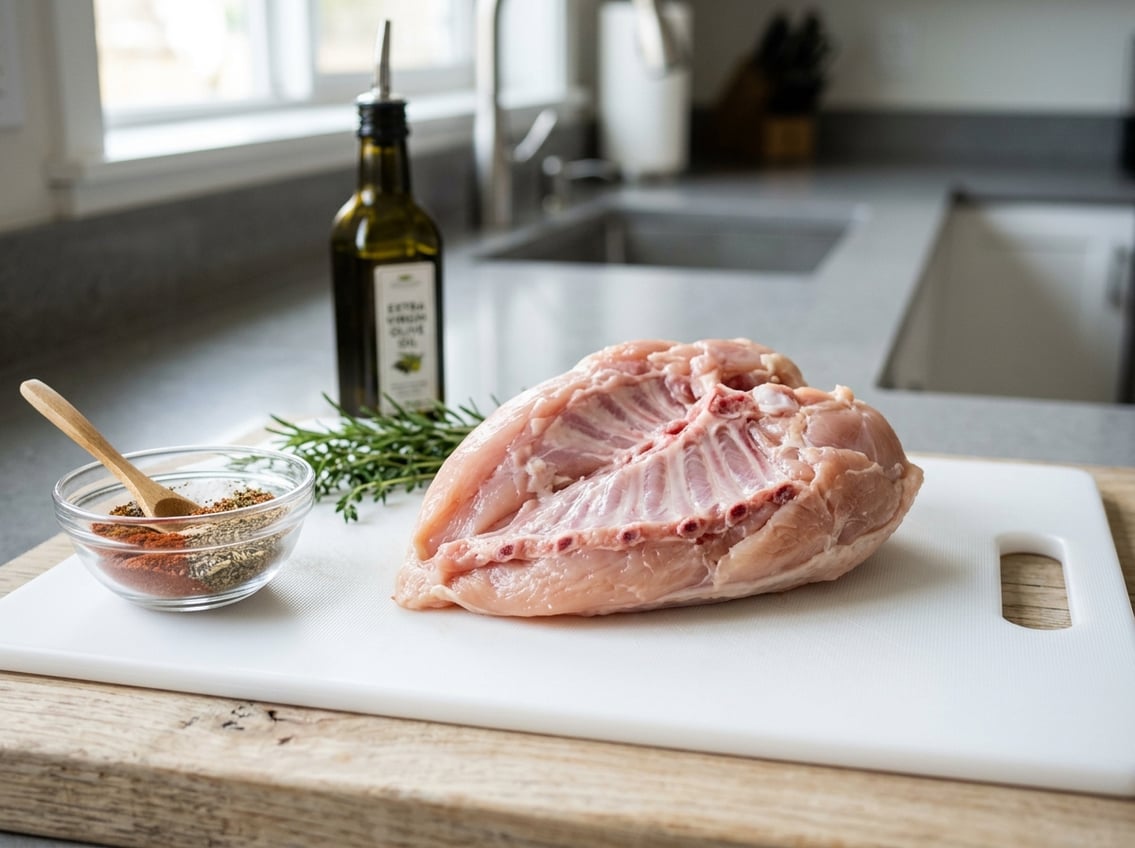
What does chicken breast with ribs mean on a package? The breast meat still includes a small amount of meat from the rib area, usually attached near the breastbone.
You are not buying a different species or a mystery cut. The breast was trimmed a little less cleanly than a fully boneless, skinless breast.
The label can change the flavor, texture, nutrition, and cooking behavior of the chicken you bring home.
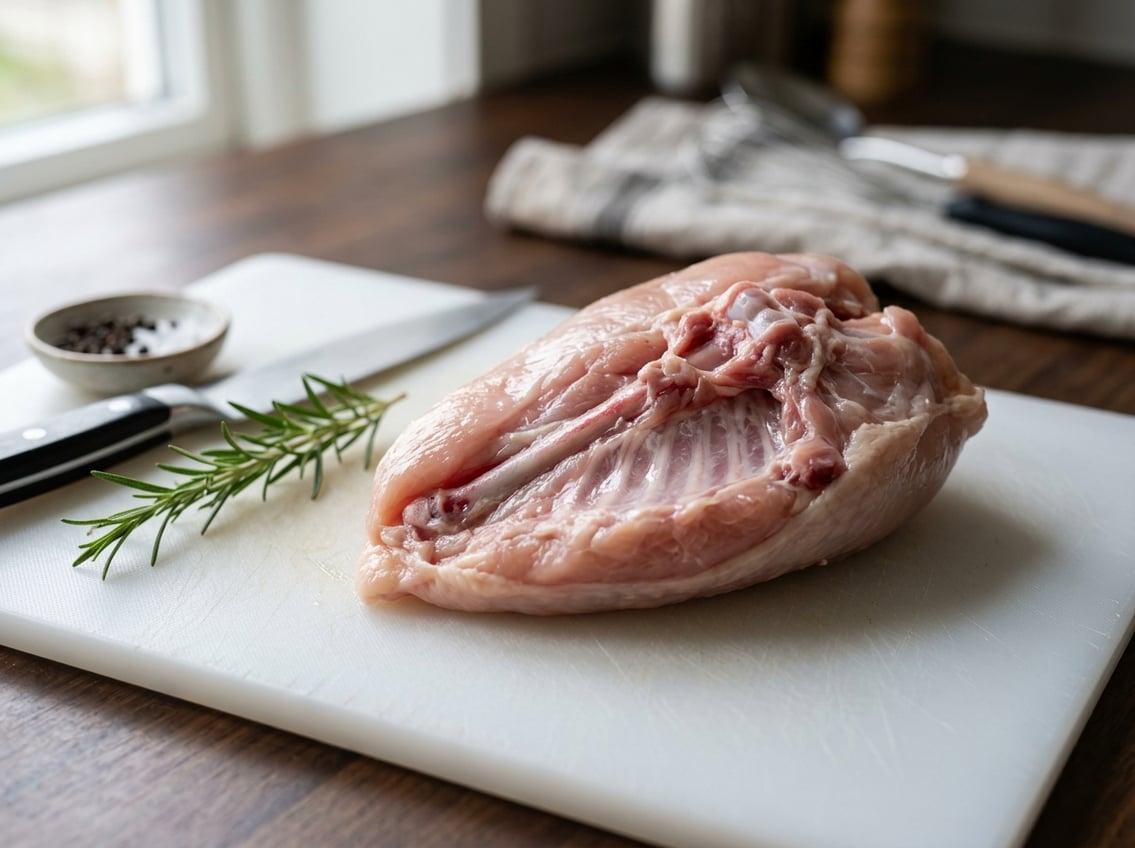
In U.S. retail packaging, this label appears commonly and meets USDA labeling rules. It helps you tell the difference between a standard breast and one that still carries a bit of rib meat, cartilage, or closely attached tissue.
What the Label Refers To
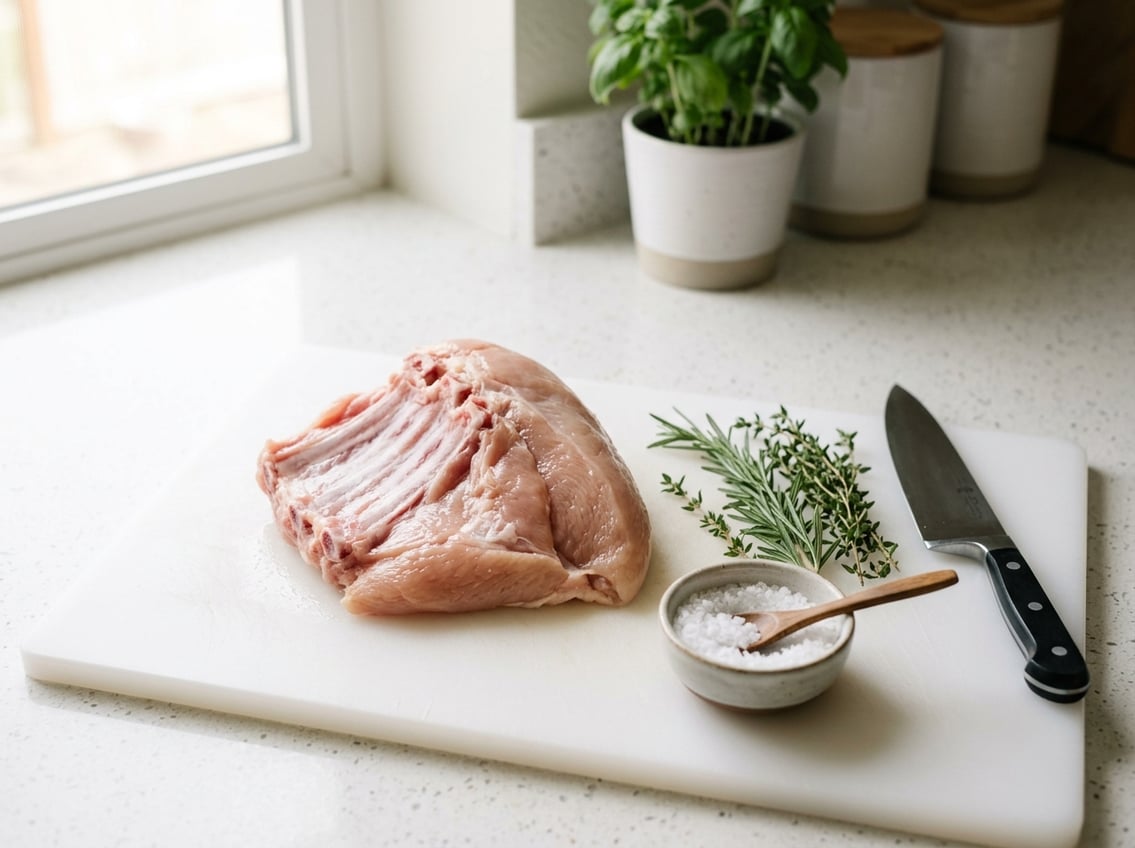
The phrase chicken breast with rib meat means the breast has not been trimmed down to breast muscle alone. A small portion of meat from the rib area remains attached, which is why the label is more specific than plain chicken breast.
As noted in Chef’s Resource, this extra tissue can affect flavor, moisture, and price.
Where Rib Meat Sits on the Bird
Rib meat sits close to the breastbone and rib cage. During chicken cuts and processing, that area can keep some attached muscle from the rib side, along with small amounts of cartilage or tissue near the ribs.
It is not the same as thigh meat or wing meat. It is still a breast-centered product, just with some adjacent meat left on it.
How It Differs From Boneless Skinless Breast
A boneless skinless breast is trimmed more closely. It removes skin, visible fat, and most attached pieces, so the meat is leaner and more uniform.
A breast with rib meat may look a little less even. It can also have slightly more flavor and moisture because of the extra tissue.
Rib Meat, Rib Bones, and Cartilage Explained
Rib meat is the soft meat attached near the ribs. Rib bones are the hard structure underneath that area, and cartilage is the flexible connective tissue that can remain after trimming.
You may see small white or firm bits near the edge of the breast. Those bits are often cartilage or connective tissue, not a sign that the chicken is spoiled.
How It Changes Flavor, Nutrition, and Value
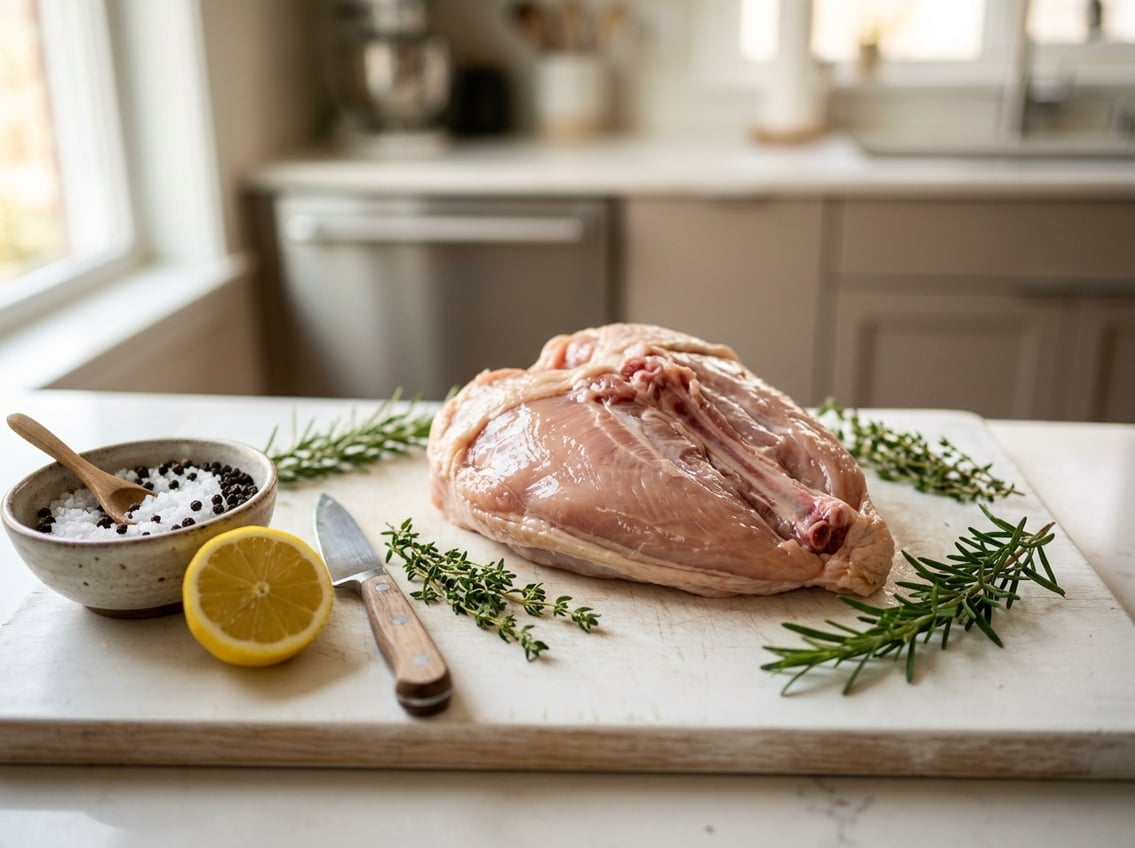
A little rib meat can change how the chicken tastes and cooks. The effect is usually modest, yet it can make the breast seem a little richer than a very lean, fully trimmed cut.
Why It Can Taste Juicier and More Savory
Rib meat often sits closer to bone and has a bit more fat and connective tissue than the center of the breast. That can add a stronger chicken flavor and a juicier bite after cooking.
Some cooks prefer it for pan cooking or roasting. The extra tissue can help the meat stay less dry than an ultra-trimmed breast.
Lean Protein and Small Nutrition Differences
Chicken breast is still a lean protein source, even with rib meat attached. The main difference is usually a small rise in fat and calories compared with a plain boneless, skinless breast.
If you track macros closely, check the nutrition label instead of guessing.
Why It May Show Up at a Different Price
Retail price can shift because of trimming, yield, and packaging decisions. A breast with rib meat may be sold as a value cut in some stores, while in others it costs about the same as a more closely trimmed breast.
Price per pound matters more than the package label alone. If you want the leanest and most uniform option, compare the cuts directly.
How to Buy, Prep, and Cook It Well
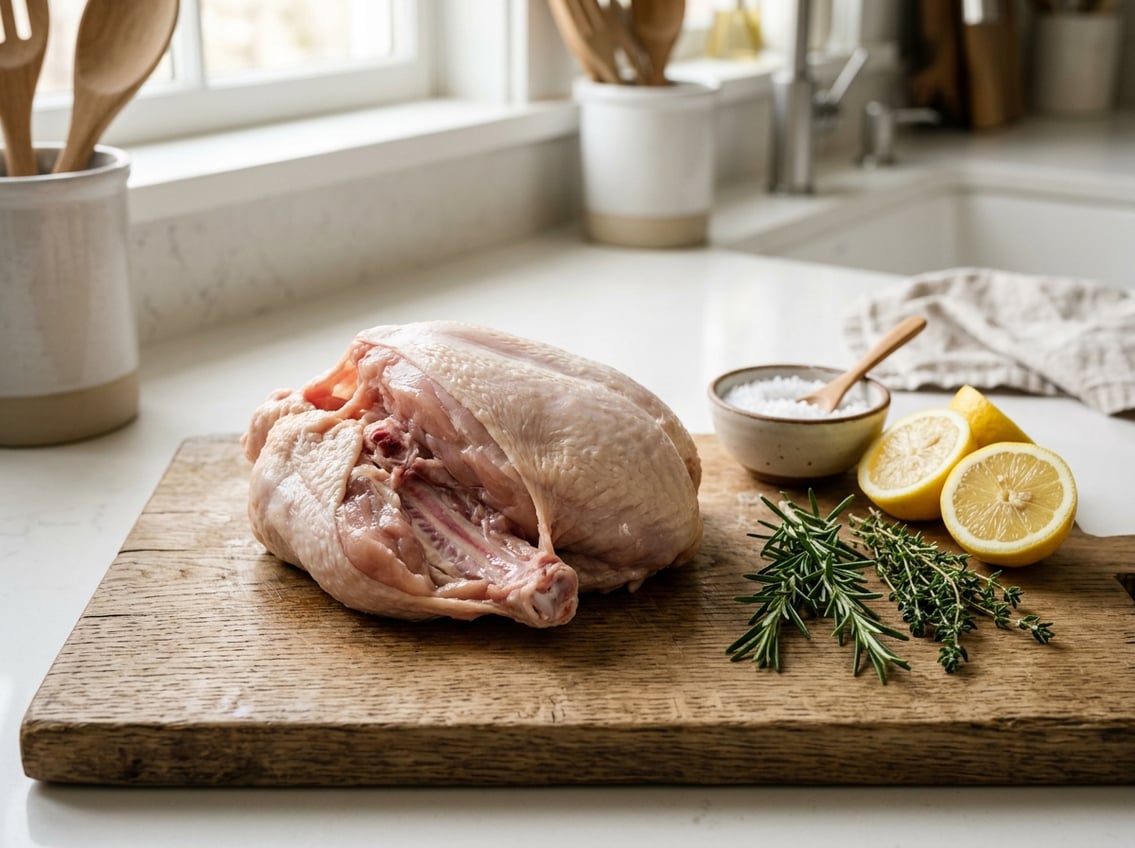
Look for a package that lists the cut clearly and has little liquid pooling inside. Small amounts of cartilage or rib bone remnants are normal, and you can trim them if needed before cooking.
What to Look for in the Package
Choose chicken that looks firm, pale pink, and cold to the touch if you are buying from a case. The label should clearly say chicken breast with rib meat if that is the product you want.
Check the sell-by date and the package seal. Avoid packages with torn plastic, excess air, or strong off odors.
Trimming for Even Thickness
If one side of the breast is thicker because of attached rib meat, you can trim it with a sharp knife. You can also pound the thickest part gently so the whole piece cooks more evenly.
Even thickness helps with browning and reduces the chance that one end dries out while the other end is still undercooked.
Cooking Chicken Breast Safely Without Drying It Out
Use a meat thermometer when cooking chicken breast. The safe internal temperature is 165°F in the thickest part.
Start checking near the end of the expected cooking times, since extra rib meat can make the shape uneven. For more control, cook at moderate heat and rest the meat for a few minutes before slicing.
Why It Appears in Retail and Processed Foods
Poultry processors design their systems to move large volumes of chicken efficiently. Leaving a little rib meat attached can improve yield, reduce waste, and create a product that is still close to a standard breast.
How Poultry Processing Leaves Rib Meat Attached
During trimming, processors may leave small strips of meat near the ribs instead of removing every bit. That decision can save labor and increase the amount of saleable chicken from each bird.
As explained in Chef’s Resource, this is not unusual and does not automatically mean lower quality.
When It Shows Up in Chicken Nuggets and Similar Products
Chicken breast with rib meat can appear in processed chicken products, especially when the goal is consistency and cost control. It may be used in nuggets, frozen entrées, and breaded items where the chicken is cut, shaped, or mixed before packaging.
You may also see chicken rib meat listed as an ingredient in some processed chicken products. In those cases, the label tells you the product is not made from a single, untouched breast.
What It Signals About Quality and Convenience
The label usually signals convenience more than quality.
It tells you the product contains mostly breast meat, with a small amount of rib-area meat attached.
If you want a very lean, uniform cut for meal prep, plain boneless skinless breast may fit better.
If you want a little more flavor and do not mind trimming, chicken breast with rib meat can be a practical choice.


