
How Do You Get Chicken Breast Tender? Best Methods
You get chicken breast tender by using a few simple moves. Even thickness, short prep that adds moisture, and gentle cooking all help keep the meat juicy.
Those steps reduce the chance of dry, chewy meat. They make the final result more tender and flavorful.
The fastest improvements often come before the chicken ever hits the pan. If you know how to tenderize chicken breast, you can use a meat mallet, cut across the grain, or use a light brine or marinade to improve texture and flavor.
Start With the Fastest Ways to Improve Texture
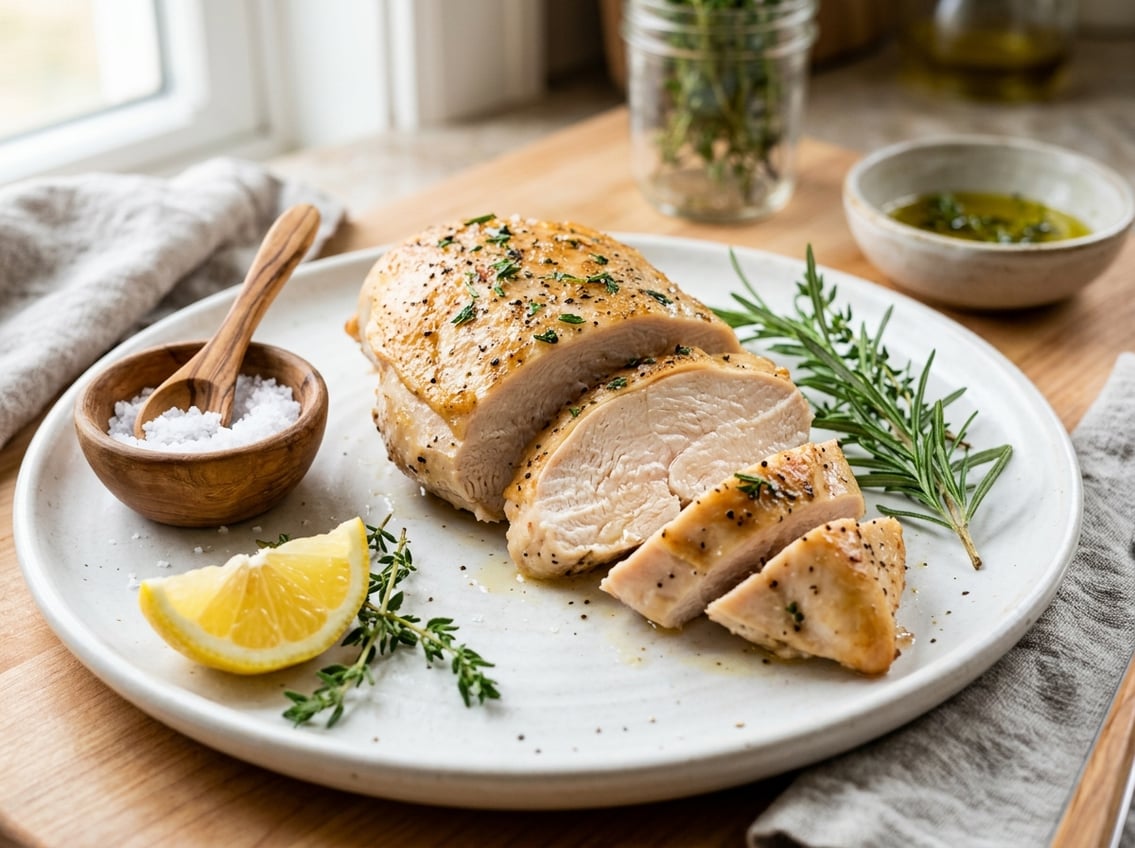
If you want tender chicken breasts quickly, start with the cut and shape of the meat. Small changes in size and direction can make a big difference in how you chew the finished chicken.
These methods help you avoid uneven cooking, which is a common reason chicken turns dry.
Pound to an Even Thickness
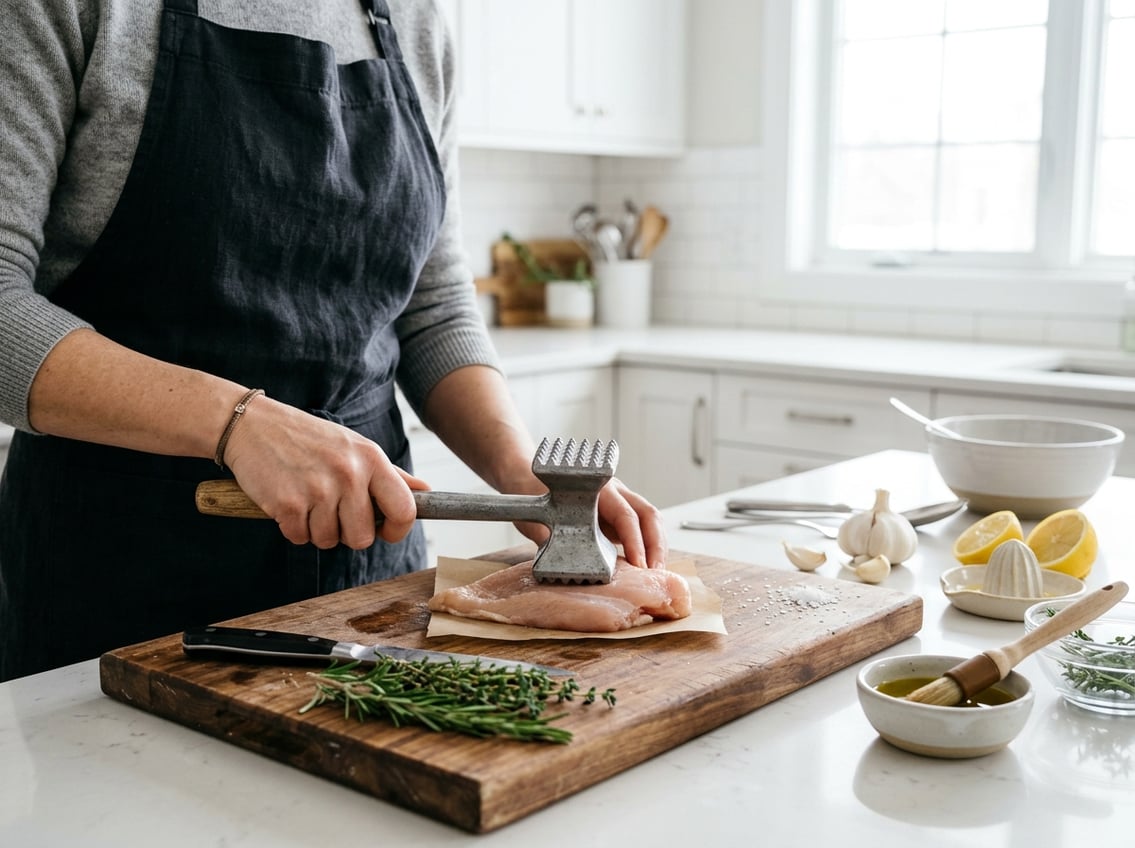
Flatten the thickest parts of the breast with a meat mallet or the heel of your hand. Make the chicken an even thickness so the thin end does not dry out before the thick end cooks.
This simple step improves cook time and gives you more consistent results. You can grill, pan-cook, or bake with better outcomes.
Slice Against the Grain
Muscle fibers in chicken breast run in a direction, and cutting across those fibers shortens them. Each bite becomes easier to chew and the texture turns out more tender, as noted in Allrecipes’ guide on tender chicken.
If you slice against the grain after cooking, you still get a softer feel. It will not fix overcooked meat, but it can help make good chicken even better.
Butterfly Thick Pieces for Faster, Even Cooking
Butterflying means cutting a thick breast open like a book. You create a thinner, more even piece that cooks faster and stays more tender.
This method helps when the breast is large or uneven. It also gives you a better surface for seasoning.
Use Moisture-Boosting Prep Before Cooking
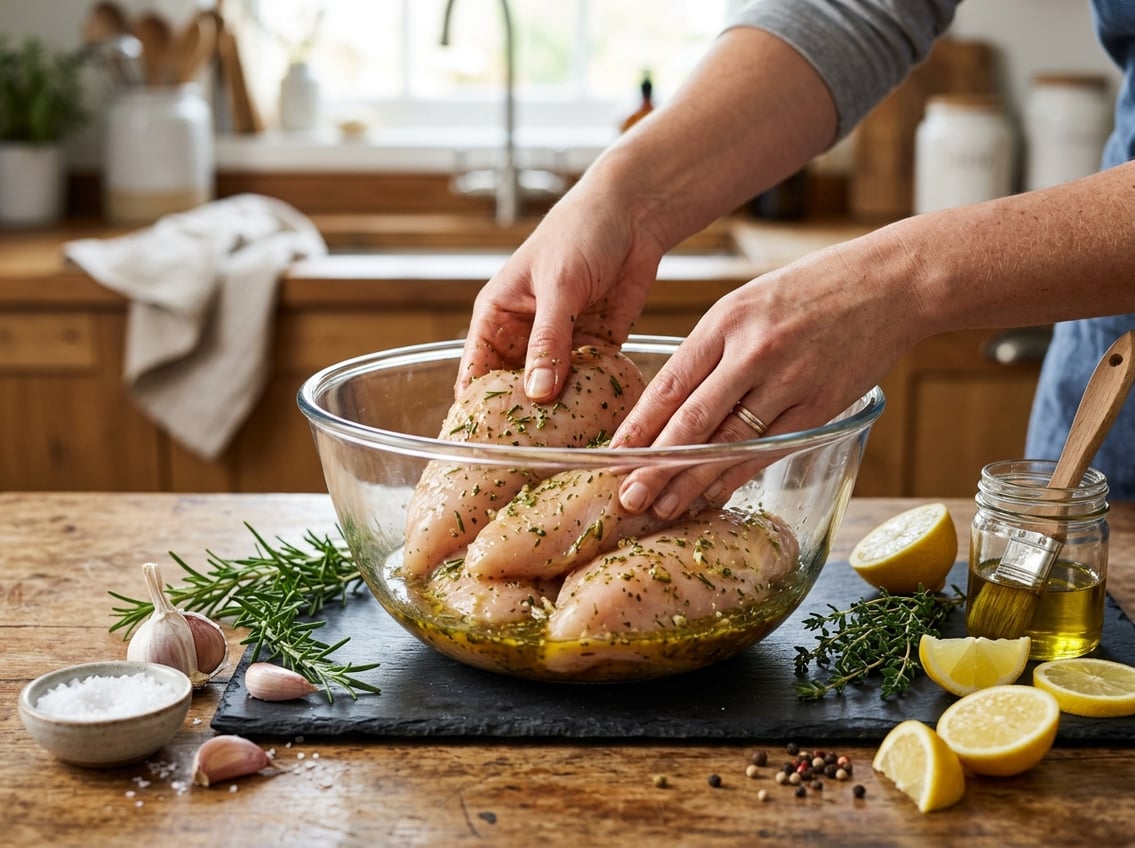
Moisture-focused prep can help you get a juicy chicken breast with better flavor. Brines and marinades work in different ways, so the best choice depends on how much time you have and how you plan to cook.
Use the right amount of salt, acid, and time to avoid over-tenderizing. The goal is to improve the meat without making it mushy.
When to Brine for Juicier Meat
A brine is a saltwater soak that helps chicken hold on to more moisture during cooking. You can use a short brine before roasting, pan-cooking, or grilling.
A simple saltwater mix for a short period is often enough for boneless breasts. This keeps the flavor mild and the texture juicy.
How Marinades Tenderize and Add Flavor
Marinating chicken breast adds flavor and can improve texture when the marinade includes salt, acid, yogurt, or other dairy ingredients. As noted in Flavory Cooking’s chicken breast guide, tenderizing helps the meat absorb seasoning better.
A marinade works well for thinner cuts or quick recipes. You get both flavor and some texture help.
How Long to Soak Without Ruining the Texture
Do not leave chicken in a strong acid marinade too long. Too much time can make the surface dry or stringy.
For most home cooking, a few hours is enough. Use enough time to season the meat, but not so much that the texture starts to break down.
Cook It Gently So It Stays Tender
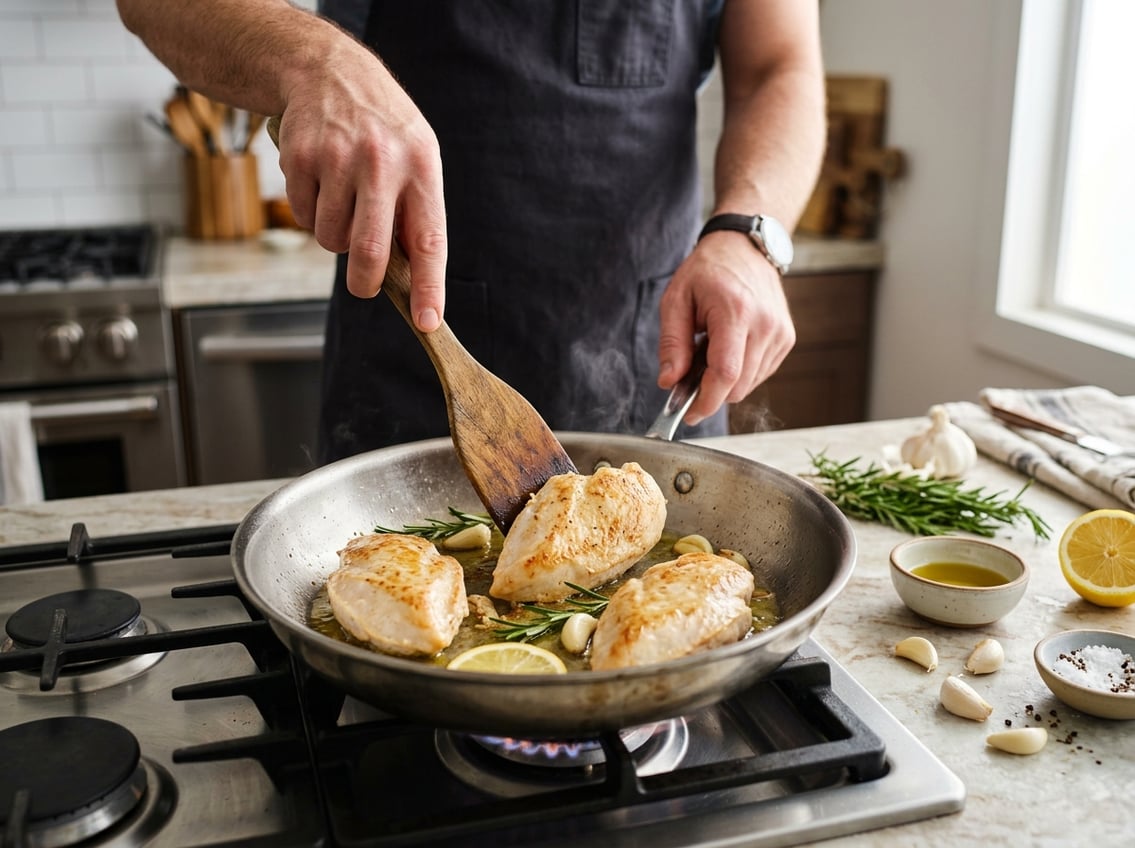
Gentle heat matters just as much as prep. When you cook chicken breast with controlled heat and the right finish, you keep it from drying out.
Cook it through without pushing out too much moisture. Use moderate heat, watch the timing, and rest the meat before slicing.
Pan Cooking With a Covered Finish
Start the chicken in a hot skillet to build color. Lower the heat and cover the pan to finish cooking.
The lid traps heat and steam, which keeps the meat more moist. This method works well for thinner breasts or breasts you already pounded even.
Baking Without Drying It Out
Baking chicken breast can be a good choice if you want steady heat and less hands-on work. Use a moderate oven temperature and avoid cooking far past done.
A little oil or sauce can help protect the surface during baking. Choose a baking dish that holds a bit of moisture and avoid overcrowding the pan.
How to Check Doneness and Rest the Meat
Use a thermometer if you can. Guessing often leads to overcooking.
Pull the chicken when it reaches a safe internal temperature. Let the chicken rest before cutting.
Resting gives the juices time to settle back into the meat. That wait can make the difference between dry slices and a tender chicken breast that stays moist on the plate.


