
How Long Can Chicken Breast Be Frozen? Safety and Quality
People often ask how long chicken breast can be frozen for safety and quality. In a home freezer kept at 0°F or below, chicken breast stays safe for a long time, but its texture, flavor, and moisture change over time.
If you package it well, raw chicken breast keeps good quality for up to 9 to 12 months, while cooked chicken breast is best used within about 4 to 6 months. Chicken breast that stays frozen continuously may remain safe after these periods, but the eating quality often drops.
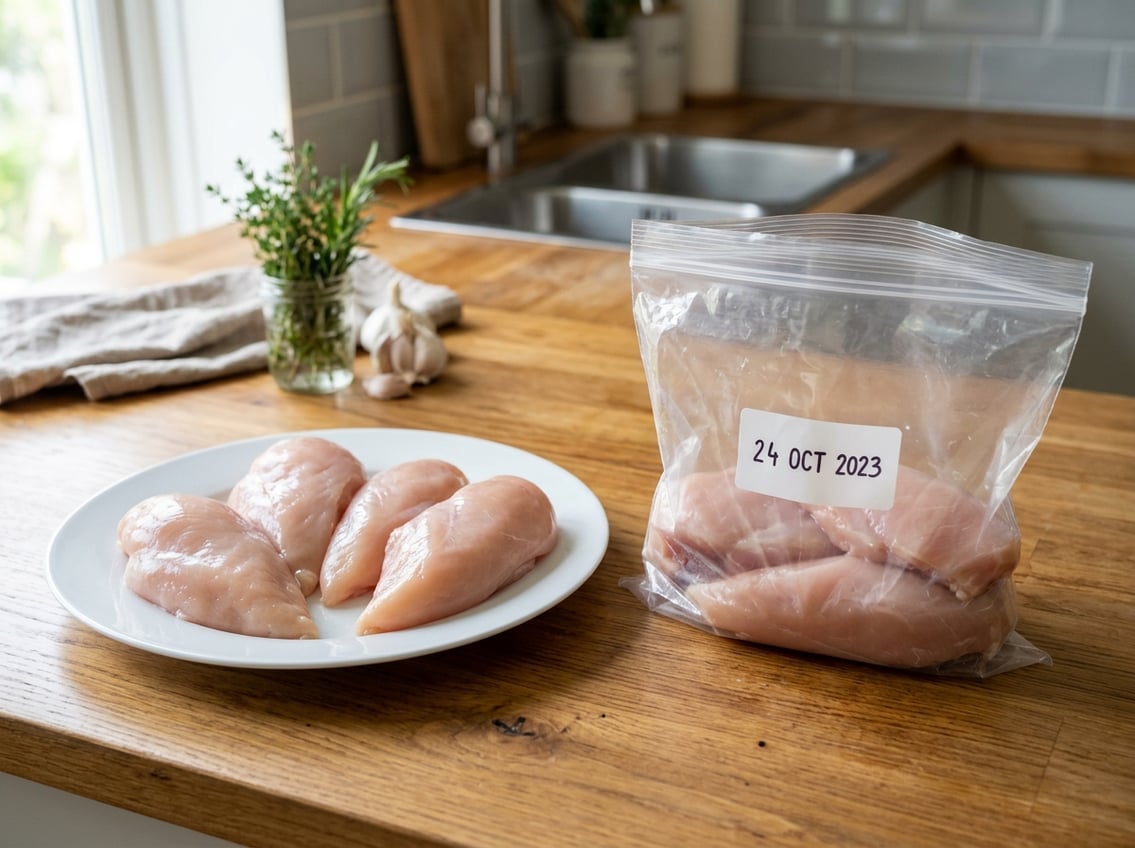
Freezing slows bacterial growth, but it does not kill all bacteria. Safe handling, tight packaging, and steady freezer temperature matter just as much as freezer time.
Recommended Freezer Timelines
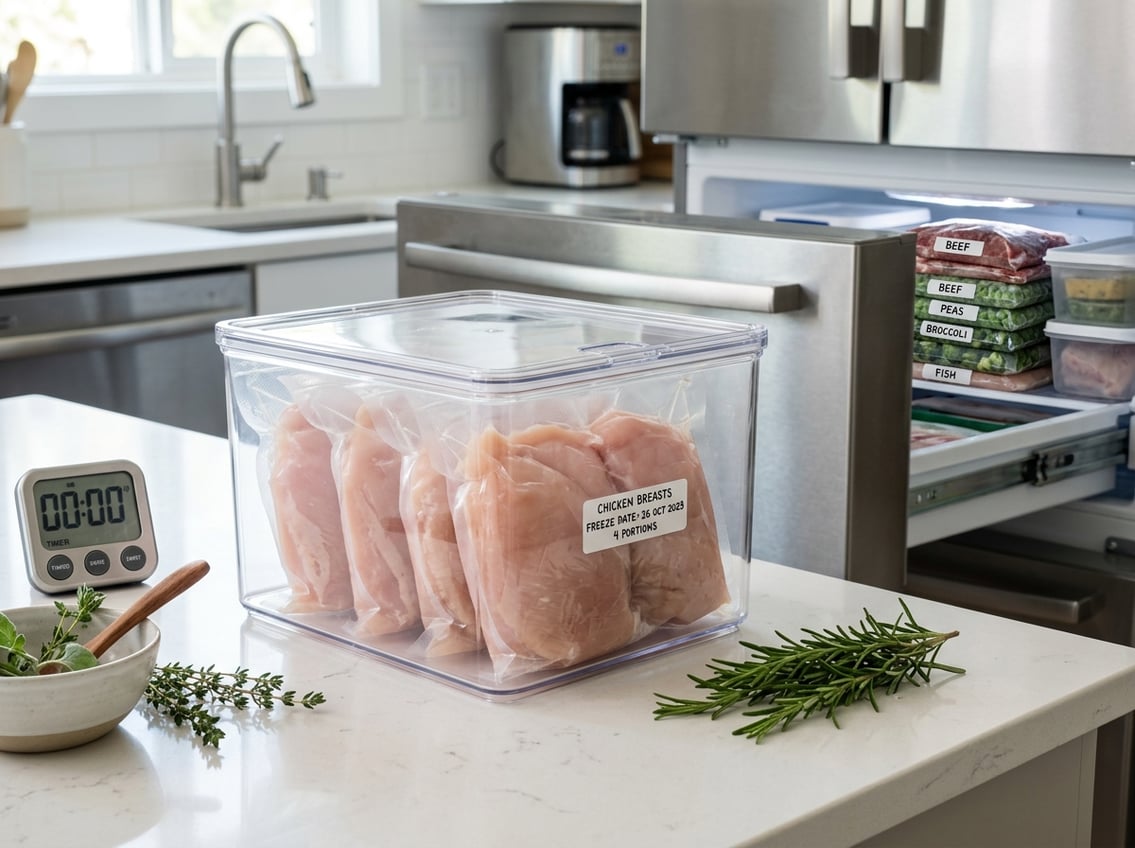
The best freezer timeline depends on whether you freeze raw or cooked chicken breast. USDA guidance and food safety references agree that frozen chicken stays safe for a long time, while quality drops gradually as storage time increases.
Best-Quality Window for Raw Chicken Breast
Raw chicken breast keeps its best quality for about 9 to 12 months in a freezer at 0°F (-18°C) or below. If you want the best texture and flavor, use it closer to the earlier end of that range.
If you freeze fresh chicken and pack it well, it usually keeps quality longer. Chicken near its sell-by date or handled poorly before freezing can lose quality sooner.
How Long Cooked Portions Keep Their Quality
Cooked chicken breast keeps good quality for about 4 to 6 months in the freezer. After that, it may still be safe if frozen continuously, but it can become dry or less flavorful.
For leftovers, smaller portions help because you can thaw only what you need and keep the rest sealed until use.
Safety, Texture, Flavor, and Moisture Loss
Freezer time affects quality more than safety. At proper freezing temperatures, chicken does not spoil the same way it would in the refrigerator, but ice crystals and air exposure can dry it out and damage texture.
What Affects Storage Life in the Freezer
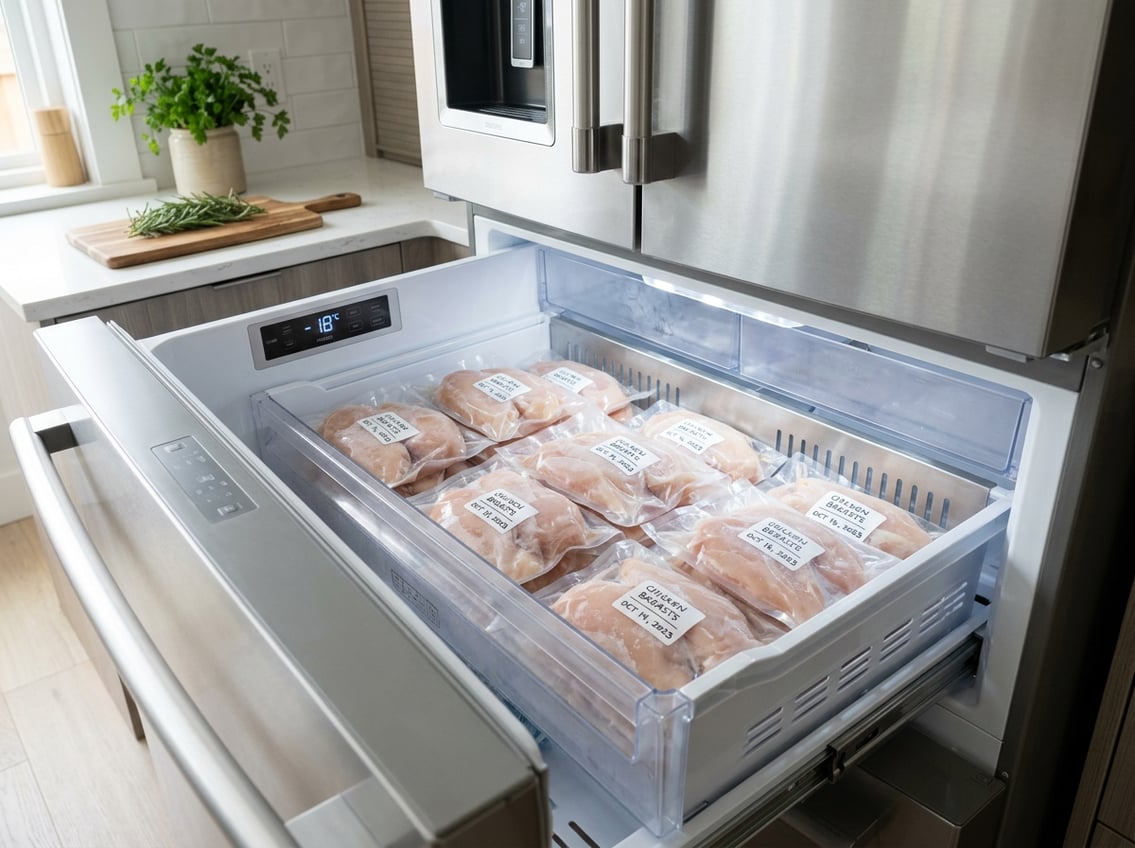
Packaging, freezer steadiness, and the chicken’s condition before freezing all affect storage life. Good freezing habits help you prevent freezer burn and keep both raw and cooked portions in better shape.
Packaging, Air Exposure, and Moisture Loss
Air exposure is the main enemy of frozen quality. Poor packaging lets moisture escape and causes freezer burn, which leads to dry spots, tough texture, and dull flavor.
Tight wrapping, freezer bags with the air pressed out, or vacuum sealing help reduce damage. This matters whether you freeze chicken breast in single pieces or family packs.
Freezer Temperature and Door Openings
Keep chicken frozen at 0°F (-18°C) or below. Repeated door openings can warm the air inside the freezer, and small temperature swings slowly hurt quality.
A full freezer holds temperature better than a nearly empty one. If your freezer runs warm, use chicken sooner.
Why Chicken Quality Before Freezing Matters
Freezing does not improve poor chicken. If the meat was already old, damaged, or handled badly before freezing, the final result will not be as good.
Always freeze chicken before it reaches a questionable stage. This applies to both small and large batches.
Best Practices for Freezing Chicken Breast
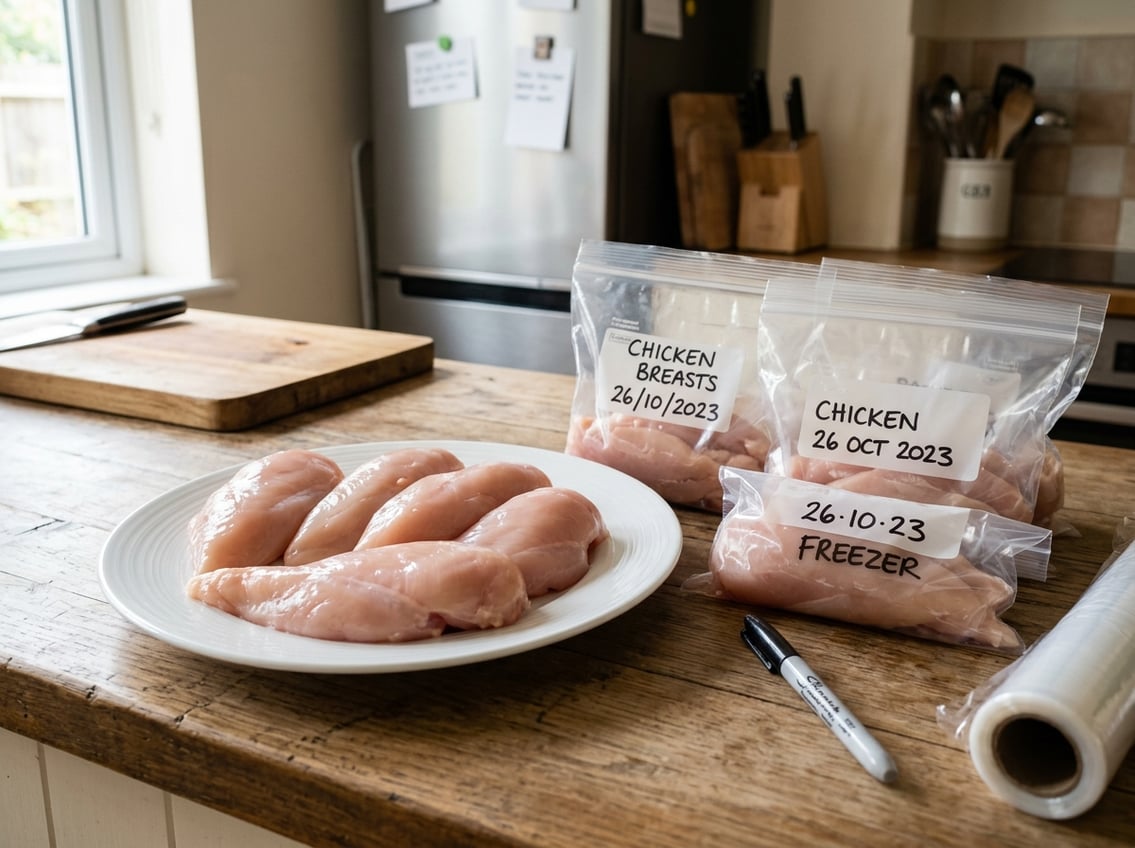
Good freezing habits make chicken easier to use later and help it stay in better shape. Small changes in prep can make a clear difference in flavor and texture.
Portioning and Labeling for Easier Use
Split chicken into meal-sized portions before freezing. You do not need to thaw more than you plan to cook.
Label each package with the date and whether it is raw or cooked. This step helps you use the oldest food first.
How to Wrap Chicken to Reduce Freezer Burn
Pat the chicken dry before wrapping if needed. Wrap it tightly in plastic wrap, foil, or freezer paper, then place it in a freezer bag or airtight container.
Press out as much air as possible before sealing. This helps prevent freezer burn.
Freezing Raw vs. Cooked Chicken Breast
Freezing raw chicken gives you a longer quality window, and the meat usually stays more flexible for future recipes. Freezing cooked chicken saves time later, but the texture can dry out more quickly.
Freeze raw chicken for plain meal prep. Freeze cooked chicken breast when you want fast leftovers, soups, casseroles, or sandwich filling.
Thawing and Refreezing Without Risk
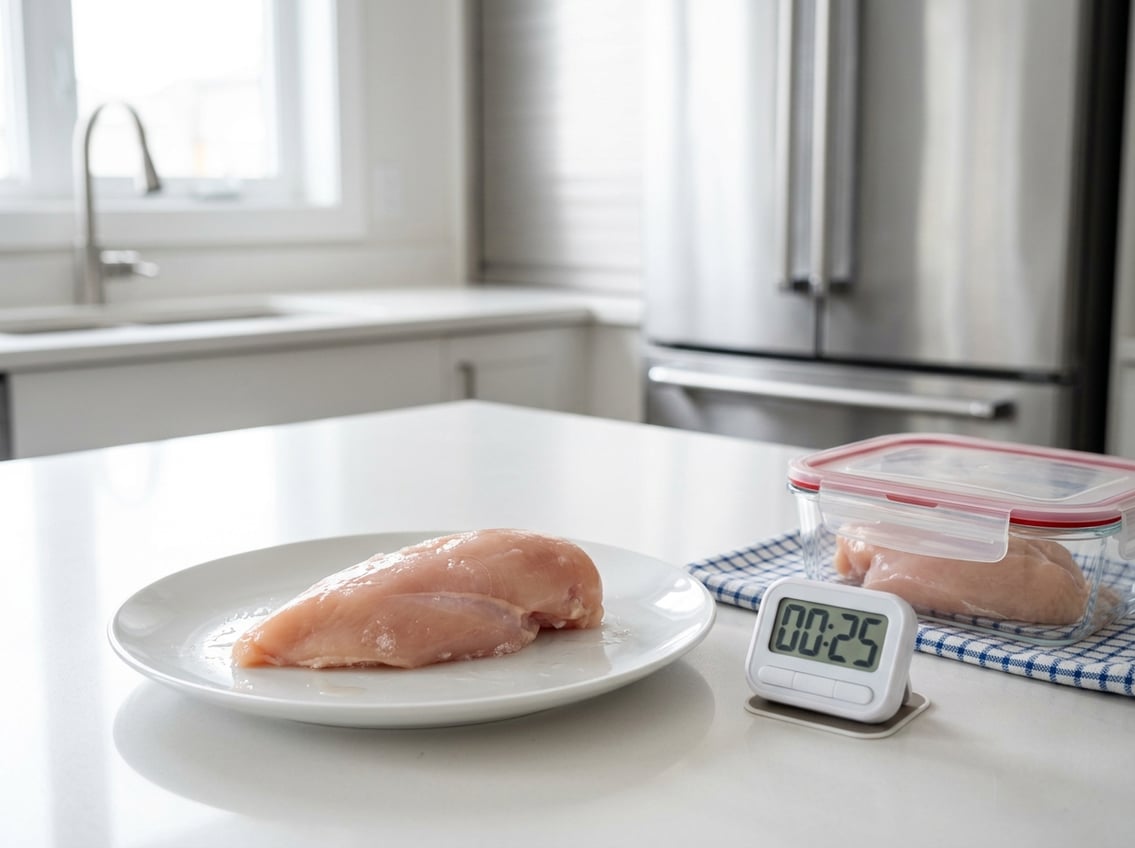
Safe thawing keeps frozen chicken breast from spending too long in the temperature danger zone. The safest methods are the refrigerator, cold water, and the microwave.
Safe Thawing Methods for Frozen Chicken Breast
The refrigerator is the best choice when you have time to thaw frozen chicken breast. Cold water thawing works faster if the chicken stays sealed in a leak-proof bag and you change the water often.
Microwave thawing is also safe, but you should cook the chicken soon after. Use a food thermometer to make sure chicken reaches 165°F.
Why You Should Never Thaw Chicken at Room Temperature
Never thaw chicken at room temperature. The outer layers can warm up too much while the center is still frozen, giving bacteria a chance to grow.
That risk is the same for raw and cooked chicken. If chicken has been left out for too long, do not refreeze it.
When Refreezing Chicken Breast Is and Is Not Advisable
You can usually refreeze chicken breasts if you thawed them in the refrigerator and kept them cold the whole time.
Quality may drop a little, but safety is usually not the issue.
Do not refreeze chicken if you thawed it on the counter or let it sit in warm water too long.
If you cooked thawed chicken first, you can refreeze it more easily, especially if you cooled it quickly and packed it well.


