
Can Chicken Breast Be Pink and Cooked? Safety Explained
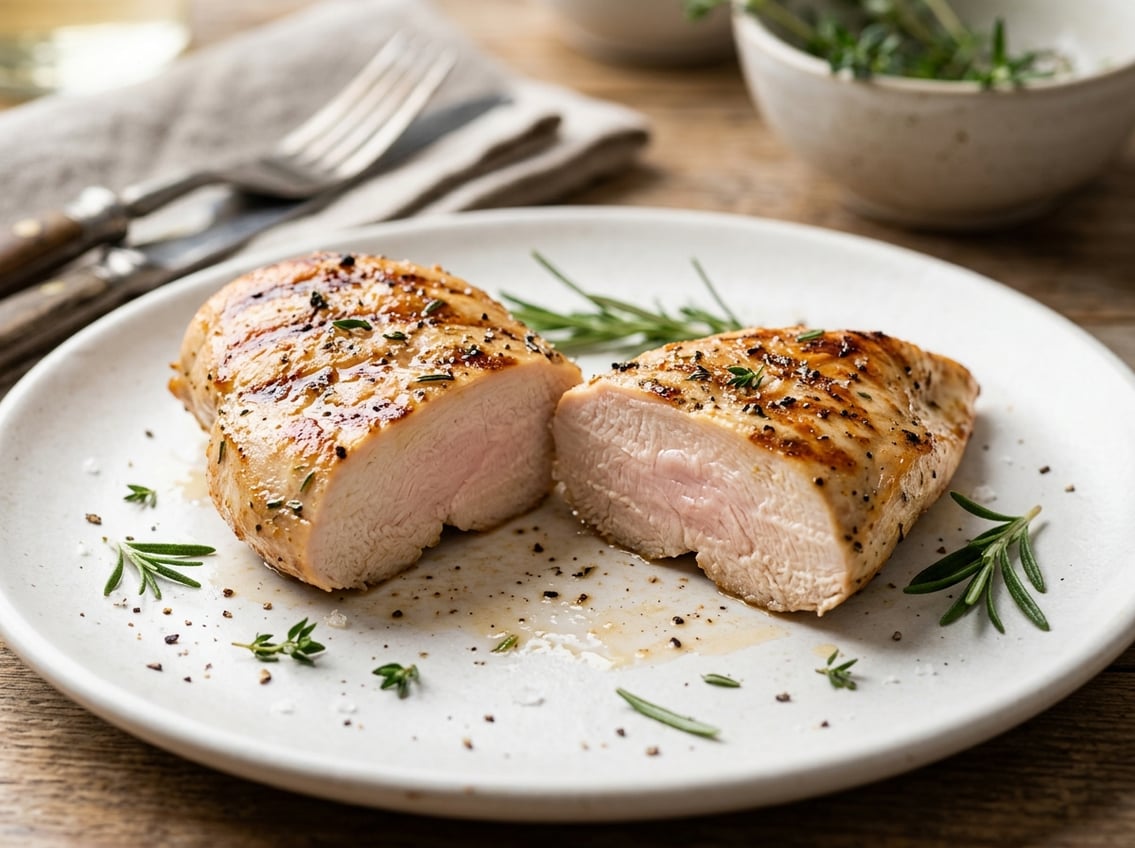
Chicken breast can be pink and still be cooked. Pink color alone does not prove the chicken is unsafe, because doneness depends on internal temperature, not color.
A chicken breast is safe when it reaches 165°F, or 74°C, at the thickest part. If it reaches that temperature, it can still look faintly pink and still be fully cooked.
The real risk is undercooked chicken, not pink color by itself. The safest habit is to check with a thermometer instead of guessing by appearance.
What Actually Makes Chicken Safe to Eat
Heat kills harmful bacteria in chicken, not the color of the meat. That is why a thermometer matters more than color, juice, or firmness.
Foodborne germs such as salmonella and campylobacter are the main concern with poultry. Proper heat makes chicken safe even if some pink remains.
Why Temperature Matters More Than Color
Color changes can be misleading. Chicken can turn white or brown before the center reaches a safe temperature, especially in thick pieces.
Experts recommend using a meat thermometer instead of relying on sight. A chicken breast can look done and still be unsafe in the middle, or it can stay pink and still be fully safe.
The Safe Internal Temperature for Chicken Breast
Chicken is safe when it reaches 165°F, or 74°C, at the thickest part. Take the temperature at the thickest part of the breast, not near the surface or touching bone.
If the chicken reaches that temperature, it is safe to eat right away. If it is below that point, cook it until it reaches 165°F, or 74°C.
How to Use a Meat Thermometer Correctly
Insert the probe into the thickest part of the chicken breast. Avoid touching bone, because bone can give you a false reading.
Check the temperature in more than one spot if the breast is large or uneven. For a quick reference on safe doneness and color confusion, see this guide on what if cooked chicken is pink and whether it is safe to eat.
Why Chicken Breast Can Still Look Pink
Pink color in cooked chicken often comes from normal chemistry, not from raw meat. The color can come from natural pigments, cooking conditions, or the way the bird was handled before it reached your kitchen.
A pink chicken breast can look alarming, yet still be safe if it reached the right temperature. The details below explain the most common reasons that happen.
Myoglobin and Hemoglobin in Cooked Poultry
Myoglobin is a pigment in muscle tissue that can leave meat with a pink tint after cooking. Hemoglobin, which is found in blood, can also affect color if small amounts remain in tissue.
These pigments do not automatically mean the meat is raw. Heat can change the color without removing every trace of pink.
Pink Near Bone and Other Normal Color Changes
You may see pink near bone in a cooked breast, especially near the center or in thicker areas. Bones can slow heat transfer, so the meat next to them may hold color longer.
The area may look different from the rest of the meat, even when the whole piece has reached 165°F, or 74°C.
How Acidic Marinades and Cooking Method Affect Color
Acidic marinades can change how meat looks after cooking. Ingredients like lemon juice, vinegar, or yogurt can affect surface color and texture.
Cooking method matters too. Roasting, smoking, grilling, and slow cooking can all leave chicken looking pink in different ways, even when the temperature is safe. For more detail on this, see the explanation of why cooked chicken can be pink and still safe to eat.
How to Tell Harmless Pinkness From a Real Problem
Pink color needs context. Texture, juices, and temperature give you a much better read on safety than color alone.
If you see pink chicken, look for other signs before deciding whether it needs more cooking. A firm texture and proper temperature matter more than a pale blush.
Texture, Juices, and Other Secondary Clues
Cooked chicken should feel firm, not soft and slippery. If you cut into it, the meat should not look glossy and raw in the center.
Many cooks also look for juices running clear, but that clue is only secondary. Clear juices can support your judgment, yet they do not replace a thermometer.
When Pink Color Signals More Cooking Is Needed
Pink can point to a problem when the meat is still translucent, wet, or jelly-like in the center. That is more likely to mean undercooked chicken.
If the thickest part is below 165°F, or 74°C, cook it longer. If the texture stays raw-looking even after resting, keep heating it until the temperature is safe.
What to Know About Carryover Cooking
Carryover cooking means the temperature can rise a little after you take the chicken off the heat.
The outside heats up more than the center and then moves heat inward.
Pull the chicken only when the thermometer shows it has reached the safe range.
Let it rest briefly so the heat finishes evening out.
For a quick safety check, this note on whether pink chicken is safe to eat gives the same 165°F rule.


