
When Is Chicken Breast Done? What Temperature to Use
When is chicken breast done and what temperature should you use? This question keeps your dinner safe and your meat juicy.
The short answer is simple. You want chicken breast to reach an internal temperature of 165°F, checked with an instant-read thermometer in the thickest part.
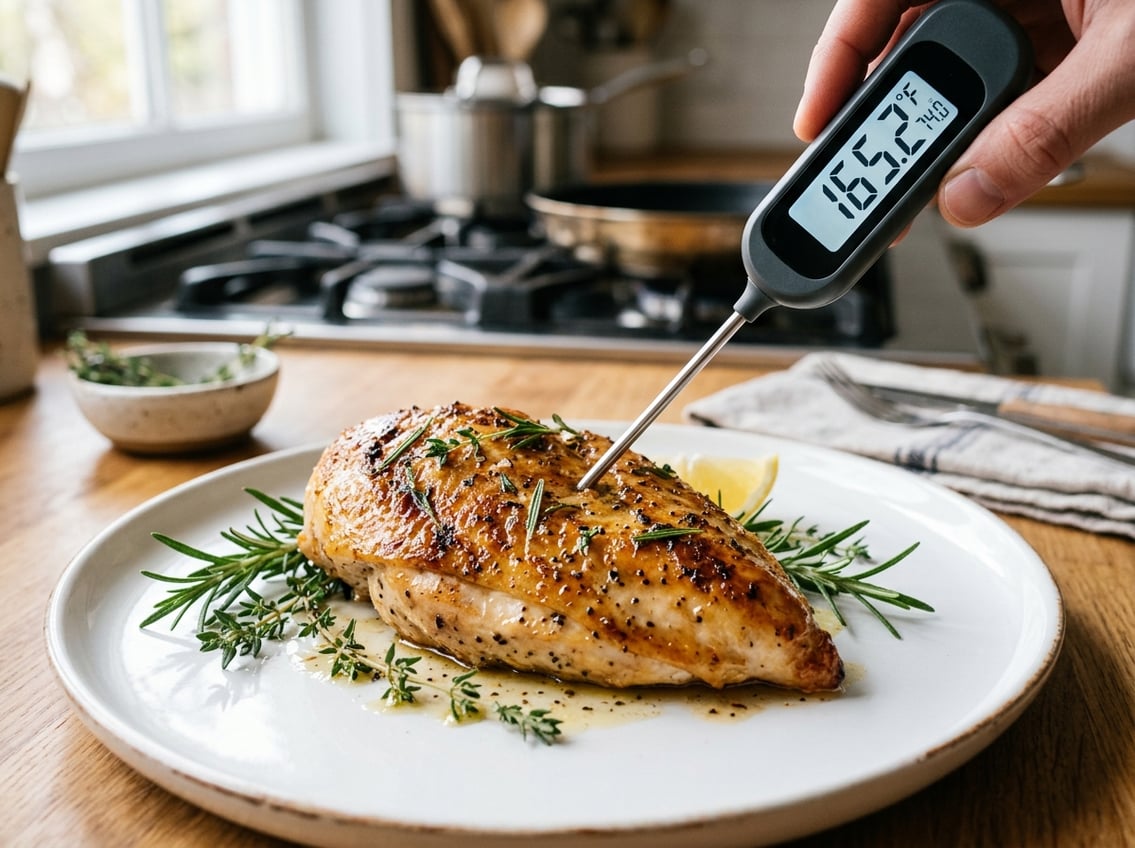
Cooks across the U.S. use that number as the standard safe benchmark for chicken. It is the most reliable way to avoid undercooking and helps you stop at the right moment, before the lean meat turns dry or tough.
The Exact Temperature That Signals Doneness
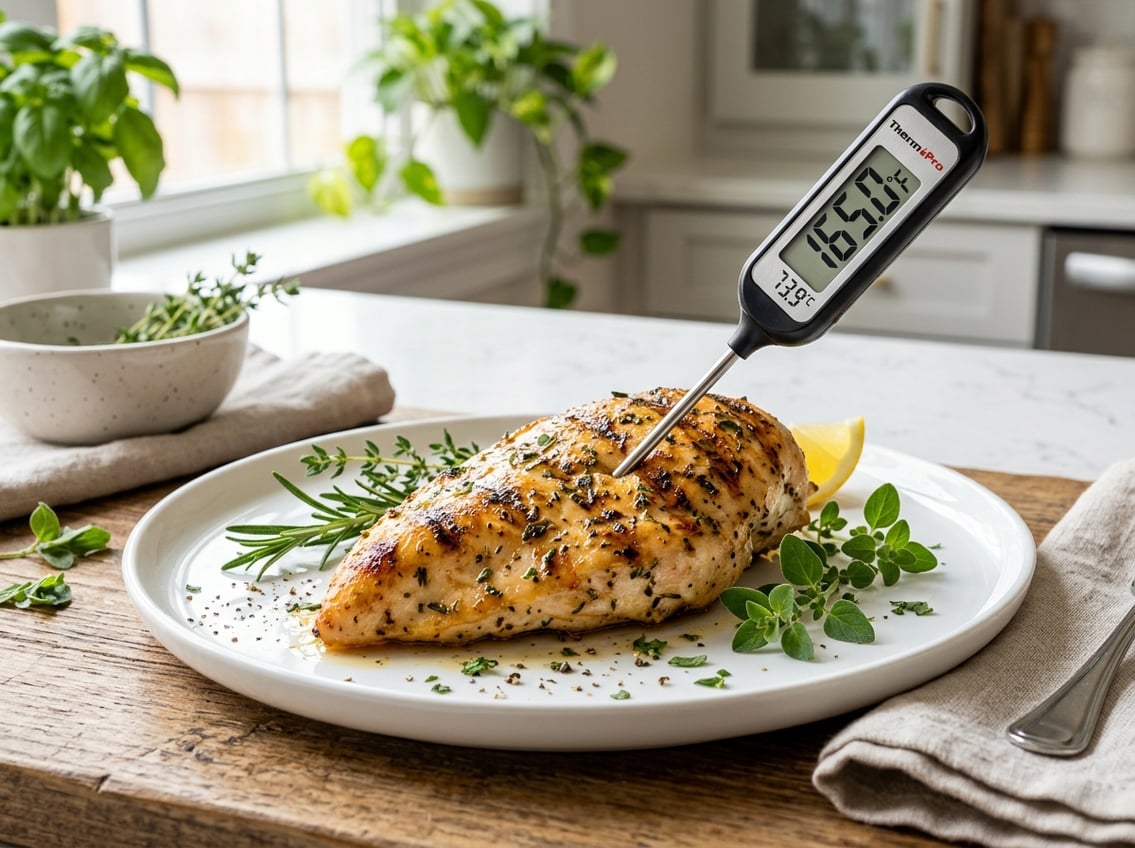
A reliable instant-read thermometer removes the guesswork from chicken breast. Color, texture, and juices can help, but temperature tells you if the meat has reached a safe level and still has a chance to stay juicy.
Why 165°F Is the Safe Benchmark
Chicken breast is done when the center reaches 165°F. That temperature is the standard food-safety target for poultry.
Most guides and recipe developers use this number, including Allrecipes and Food Network.
At 165°F, the meat is safe to eat and fully cooked through. This is especially important for breast meat, since it is lean and can look cooked before the center is actually ready.
When to Pull Chicken Breast Off the Heat
You do not always need to wait until the thermometer reads 165°F in the pan or oven. Many cooks pull chicken breast at about 155°F to 160°F, then let it rest so the temperature finishes climbing.
That approach can give you more juicy chicken with less risk of overcooking. The exact pull point depends on thickness, cooking method, and how hot the pan or oven is.
How Carryover Cooking Affects Final Temperature
Carryover cooking happens when you remove chicken from heat and the temperature keeps rising. The outer layers stay hot and continue to warm the center for a few minutes.
A small breast may rise only a few degrees, while a thicker piece can rise more. If you pull chicken early, use the resting time to bring it to the safe mark without pushing it far past it.
How to Check Chicken Breast Correctly
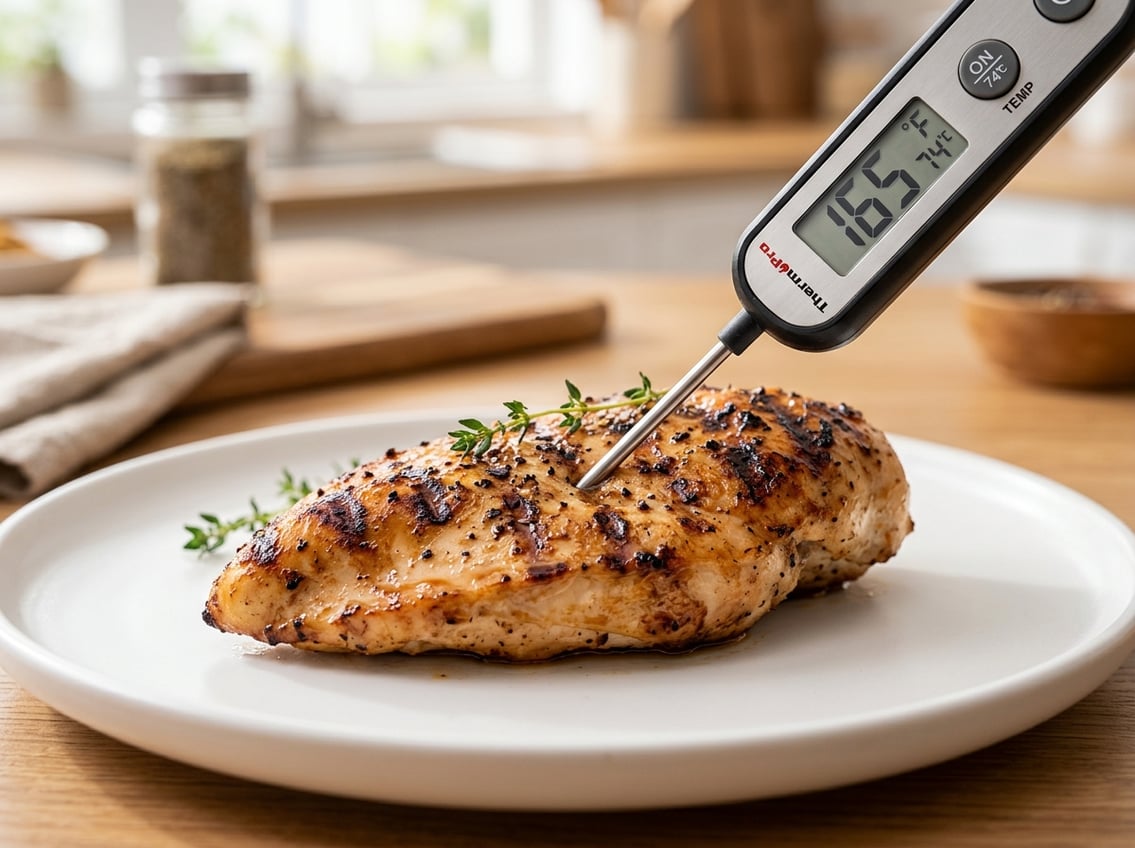
A thermometer only works well if you place it in the right spot. A quick visual check can support your reading, yet the thermometer should make the final call every time.
Where to Insert the Thermometer
Insert the instant-read thermometer into the thickest part of the breast. Aim for the center of the meat, not the top surface and not the very edge.
If the breast is uneven, check the thickest section first. That is the part most likely to stay undercooked.
How to Avoid False Readings Near Bone or Thin Ends
Do not let the thermometer touch bone, because bone can give you a higher reading than the meat itself. Thin tips can also heat faster than the rest of the breast and make the whole piece seem done too soon.
If the breast is bone-in, place the probe into the thickest meat away from the bone. For boneless breasts, check more than one spot if the shape is uneven.
What Doneness Looks Like Beyond Color
Cooked chicken breast should look opaque and feel firm, not mushy. Clear juices and a white or very light pink interior can support the thermometer reading, as noted by guides like wikiHow.
Color alone is not enough. Some chicken can look white before it is fully cooked, and some safe chicken may still show a faint pink tint near the bone.
How to Keep the Meat Tender Instead of Dry
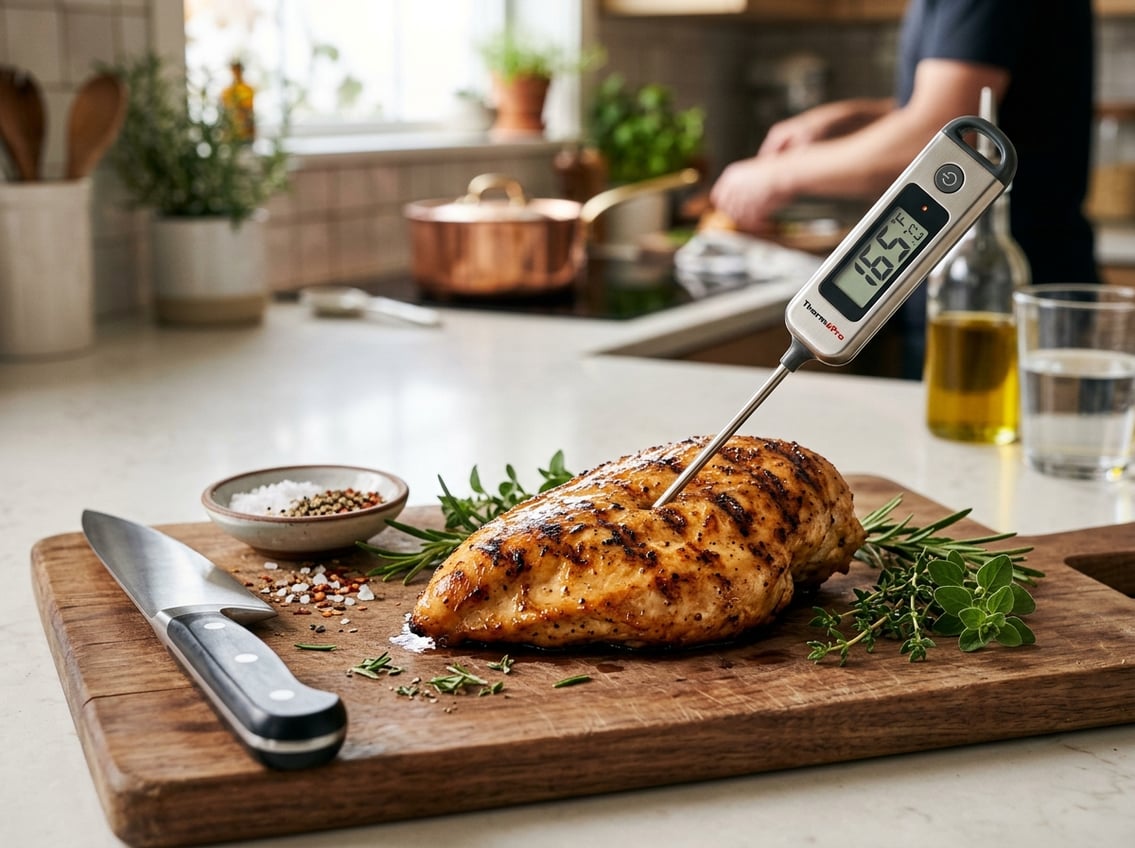
Chicken breast dries out fast because it is low in fat. You get the best texture when you use strong heat for a short time, rest the meat after cooking, and add moisture before it ever hits the pan.
Best Oven Temperatures for Boneless and Bone-In Breasts
For boneless, skinless breasts, higher oven heat often works best. A range of 400°F to 450°F can help the outside cook quickly while the inside stays moist, which matches advice from Allrecipes and similar cooking guides.
Bone-in breasts can handle a little more time because the bone helps slow the heat. The same safe final temperature applies, so you should not rely on timing alone.
Why Resting Matters After Cooking
Resting gives the juices time to settle back into the meat. If you cut right away, more moisture runs out onto the cutting board.
A short rest of 5 to 10 minutes is usually enough for chicken breast. Cover it loosely with foil so the surface stays warm without steaming the crust soft.
Simple Prep Steps That Improve Moisture
Brining or marinating can help you get more juicy chicken. Salt helps the meat hold moisture, while acidic ingredients like lemon juice or vinegar can improve flavor and texture, as noted by Allrecipes.
Even basic steps help. Try even thickness, a light coat of oil, and a steady cooking temperature so the outside does not dry out before the center is done.
How Breast Doneness Compares With Other Chicken Cuts
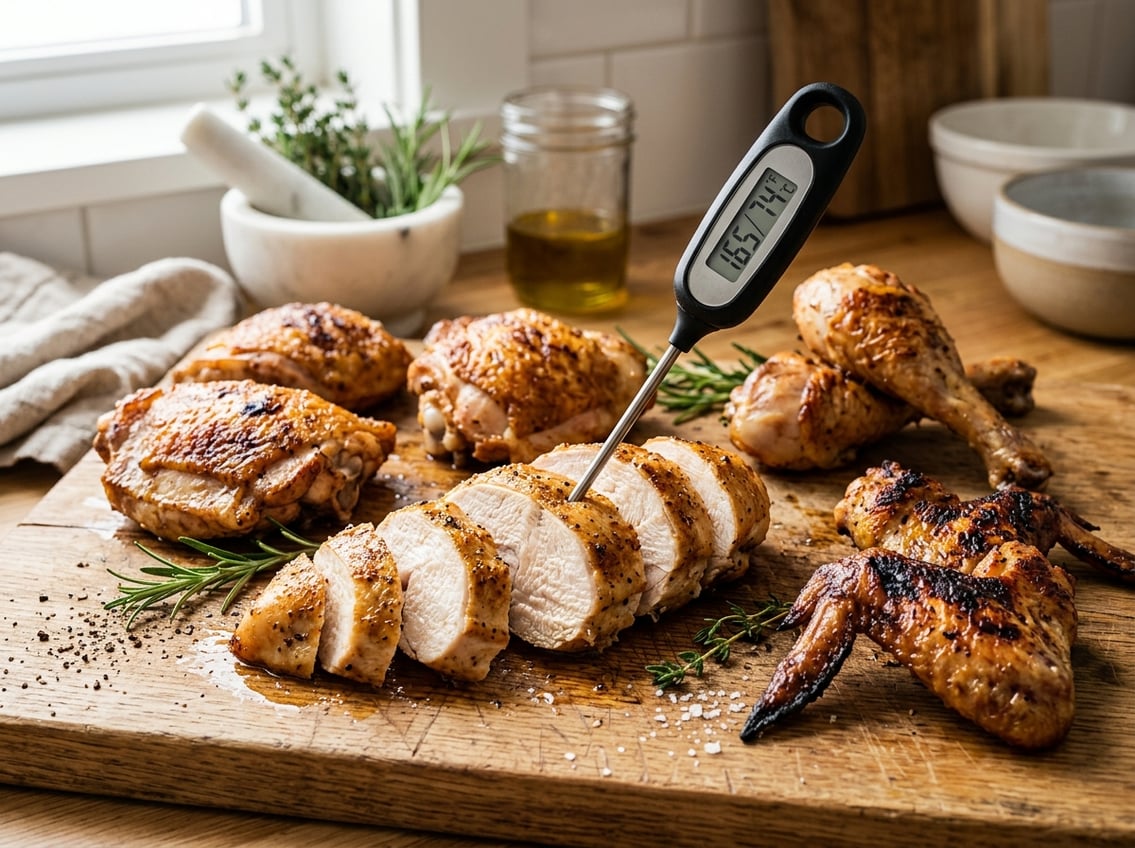
Chicken breast and darker cuts do not cook the same way. The safe final temperature is similar, yet thighs and drumsticks often need more time because they have more connective tissue and fat.
Why Thighs and Drumsticks Often Cook Higher
Thighs and drumsticks can stay tender at a higher finished temperature than breast meat. Their extra fat and connective tissue break down during longer cooking, which makes them more forgiving.
That is why you may see recipes that cook dark meat well past the point where breast meat would already be dry. The target for safety stays the same, yet texture improves with a longer cook.
What Changes When Roasting a Whole Chicken
When you roast a whole chicken, each cut finishes at a different pace. The breast often reaches 165°F sooner than the thighs, so you may need to monitor multiple spots.
A whole bird is done when the thickest parts of the breast and thigh both reach safe temperatures. Checking only one area can leave you with either dry breast meat or undercooked dark meat.
How Sous Vide Chicken Fits Into Temperature Guidance
sous vide chicken uses the same safety principles, but the cook time and target temperature work together.
When you cook meat in a controlled water bath, you can hold it at a lower temperature for longer and still make it safe.
This method changes the texture more than roasting or pan-cooking.
Your final goal is safe chicken that reaches the right internal temperature for the method you use.


