
Why Does Chicken Breast Taste Weird? Common Causes
You may notice why does chicken breast taste weird comes up most often when the meat seems dry, rubbery, or has a faint off note.
In many cases, the taste issue connects to cooking method, storage, or the bird itself, not just seasoning.
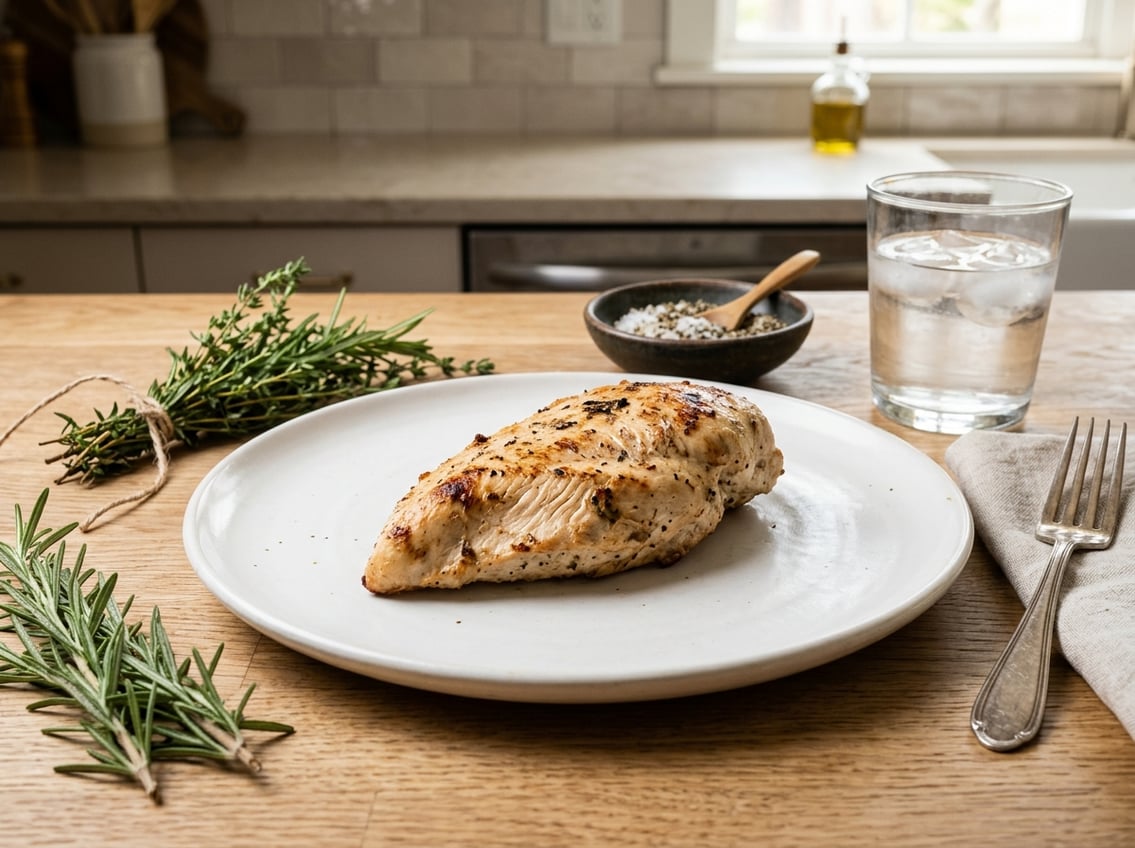
A weird taste in chicken usually points to texture problems, processing changes, or freshness issues.
If the flavor is mild but the meat feels tough, that signals a cooking or quality issue.
If the smell is sharp or unpleasant, food safety becomes the main concern.
Chicken breast is lean, so it shows defects more clearly than darker cuts.
That is why off-flavors in chicken are easier to notice in boneless, skinless breasts than in thighs or legs.
What the Off Taste Usually Means
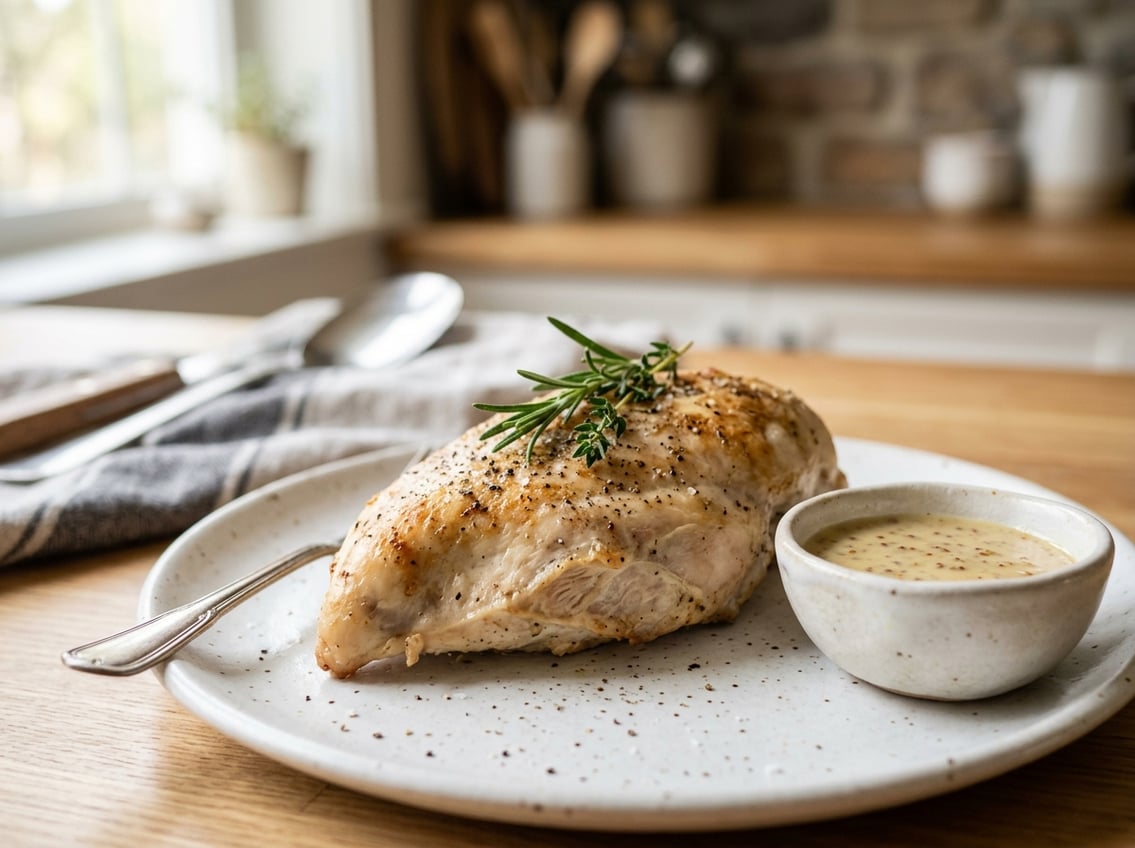
A weird chicken taste often matches the texture you feel first.
Rubbery meat, strange odors, and sour or metallic notes each point to different causes, from overcooking chicken to spoilage or a condition called woody breast.
Rubbery, Stringy, or Dry Texture
If the breast feels rubbery or stringy, you likely used too much heat or a low-quality breast with dense muscle fibers.
Boneless, skinless breasts dry out fast, so even a short cooking mistake can make them taste bland and tough.
Woody breast can also create a hard, chewy bite.
That condition is linked to rapid muscle growth and often comes up in modern chicken quality discussions, including reports on changing taste in chicken from tatnuckmeatandsea.com.
Metallic, Chemical, or Sour Notes
A metallic taste can result from oxidation, blood left in the meat, or storage problems.
Chemical notes may come from processing solutions or from meat that picked up odors in the fridge.
Sour flavor is more serious.
If the taste is sharp, bitter, or unpleasant in a way that seems wrong for cooked chicken, it may no longer be safe to eat.
When an Odd Smell Signals Spoilage
Smell matters as much as taste.
Chicken that smells like ammonia, sulfur, or rotten eggs should be thrown out.
If the meat smells off before cooking, do not try to season it away.
Heat will not fix spoiled chicken, and it can still make you sick.
Why Chicken Breast Quality Has Changed
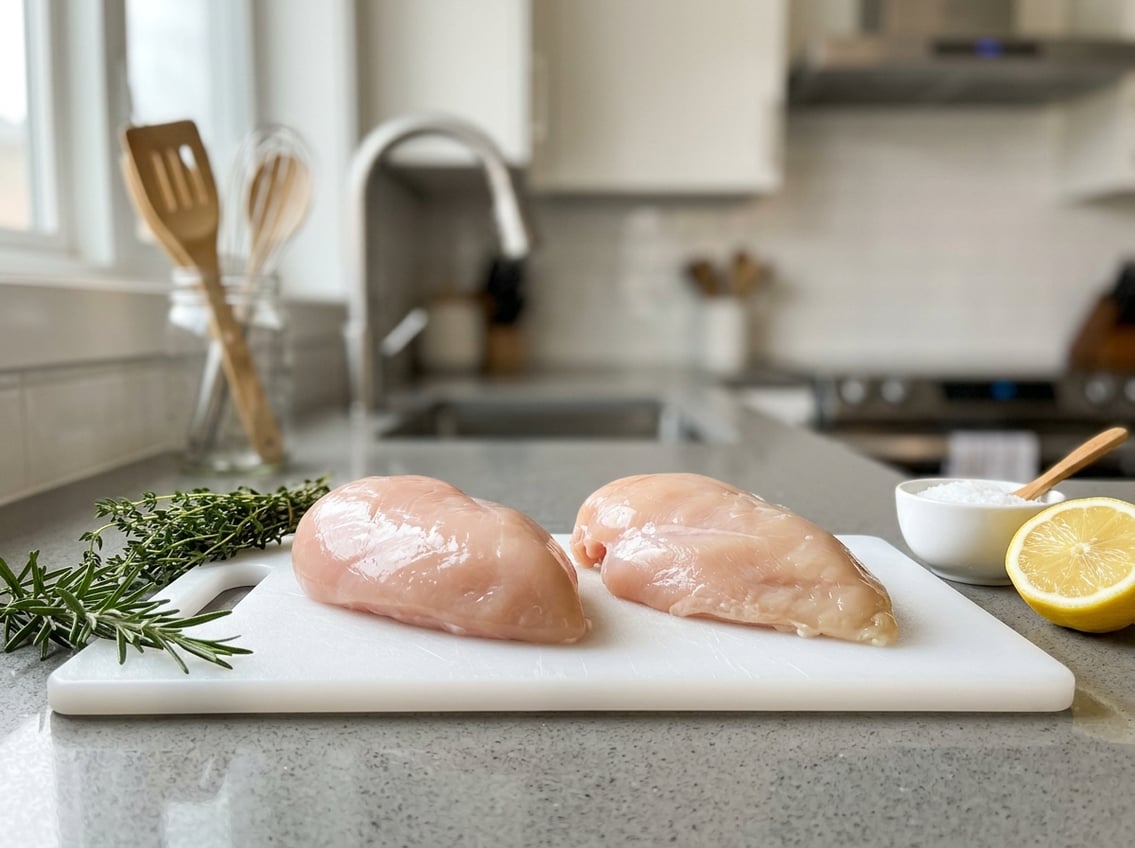
Modern chicken breast can taste different because birds are bred and processed for speed, size, and shelf life.
That can affect flavor, texture, and how much moisture stays in the meat.
Fast growth, feed choices, and processing methods all play a role in off-flavors in chicken.
Fast-Growth Breeding and Woody Breast
Producers breed fast-growing birds to reach market weight sooner, which helps production but can affect muscle structure.
That speed is tied to woody breast, a quality issue that makes the meat dense, tough, and less pleasant to eat.
Some reports describe this as chicken that feels firm, stringy, or unusually dry.
Modern broilers grow much faster than older generations of chickens, which changes the meat you cook today.
Feed, Processing, and Added Solutions
Commercial chicken often eats a corn- and soybean-based diet.
That keeps the product uniform, though it may produce a milder taste than birds with a more varied diet.
Processing can also change flavor.
Some products are injected or treated with added solutions, and water-chilling can dilute taste.
These steps may make chicken look consistent, while also making the flavor less distinct.
How Free-Range and Pasture-Raised Birds Differ
Free-range chicken and pasture-raised chicken often live with more room to move and may have more varied diets.
That can change texture and flavor, though labels do not guarantee a better-tasting bird every time.
These chickens may taste richer or less bland because they develop differently.
The difference comes from a mix of diet, movement, and breed choice.
Storage, Handling, and Food Safety Risks
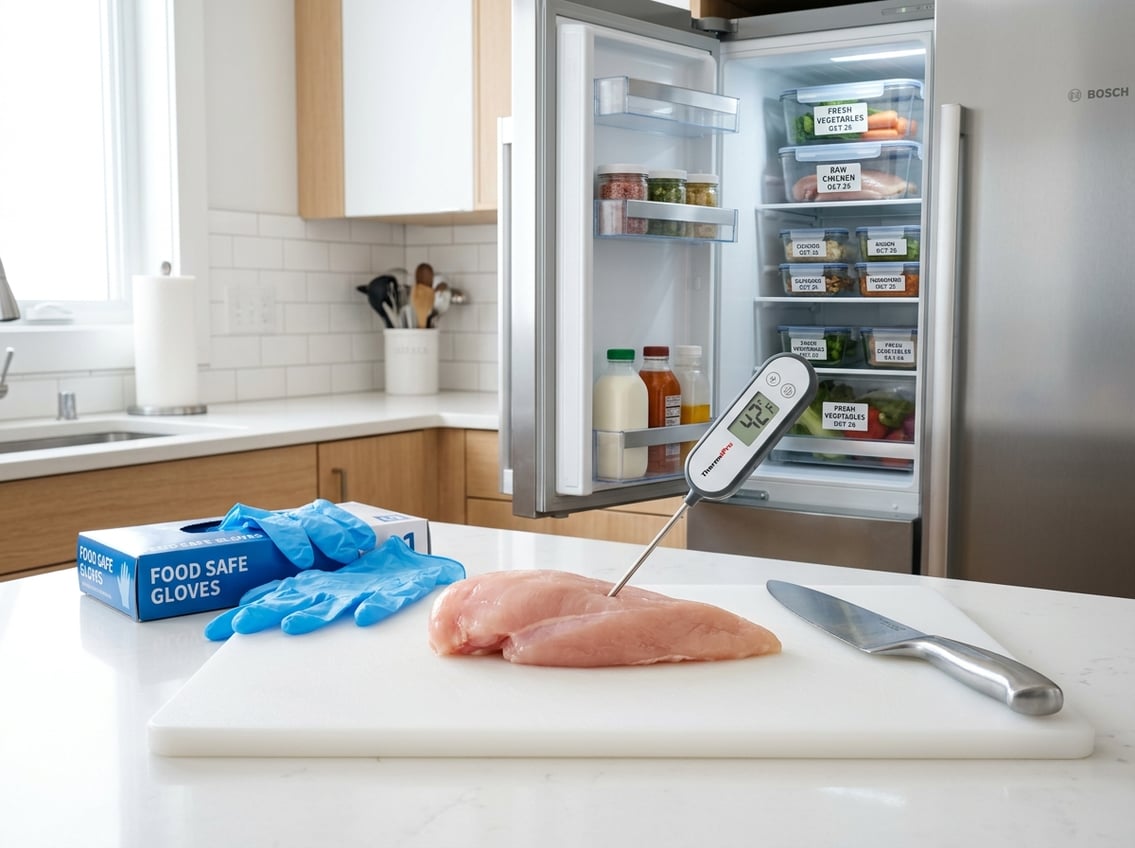
A weird taste in chicken can come from the kitchen, not the farm.
Warm storage, poor packaging, and dirty prep surfaces can change flavor and raise safety risks at the same time.
Cross-contamination also matters, because bacteria can spread from raw chicken to other foods and tools.
Temperature Abuse and Oxidation
If chicken sits too long above safe refrigeration temperature, it can develop stale or off flavors.
Fat and proteins can oxidize, which may create a metallic or cardboard-like taste.
Keep raw chicken cold and cook or freeze it promptly.
A package that has been warm for too long should not be trusted, even if it still looks normal.
Cross-Contamination in the Kitchen
Raw chicken juice can spread bacteria to cutting boards, knives, towels, and counters.
The USDA’s poultry safety guidance stresses handwashing and clean surfaces, and notes that cross-contamination is common during meal prep in its safe poultry handling guide.
Use separate tools for raw and cooked food.
Clean and sanitize any surface that touched raw chicken.
Pathogens to Know: Salmonella and Campylobacter
Two major bacteria linked to poultry are salmonella and campylobacter.
They may not always change taste, but they can cause serious illness.
If chicken tastes strange and also seems slimy, sour, or unusually pungent, treat it as unsafe.
Taste is not a reliable test for whether chicken is safe to eat.
How to Buy and Cook Chicken Breast for Better Flavor
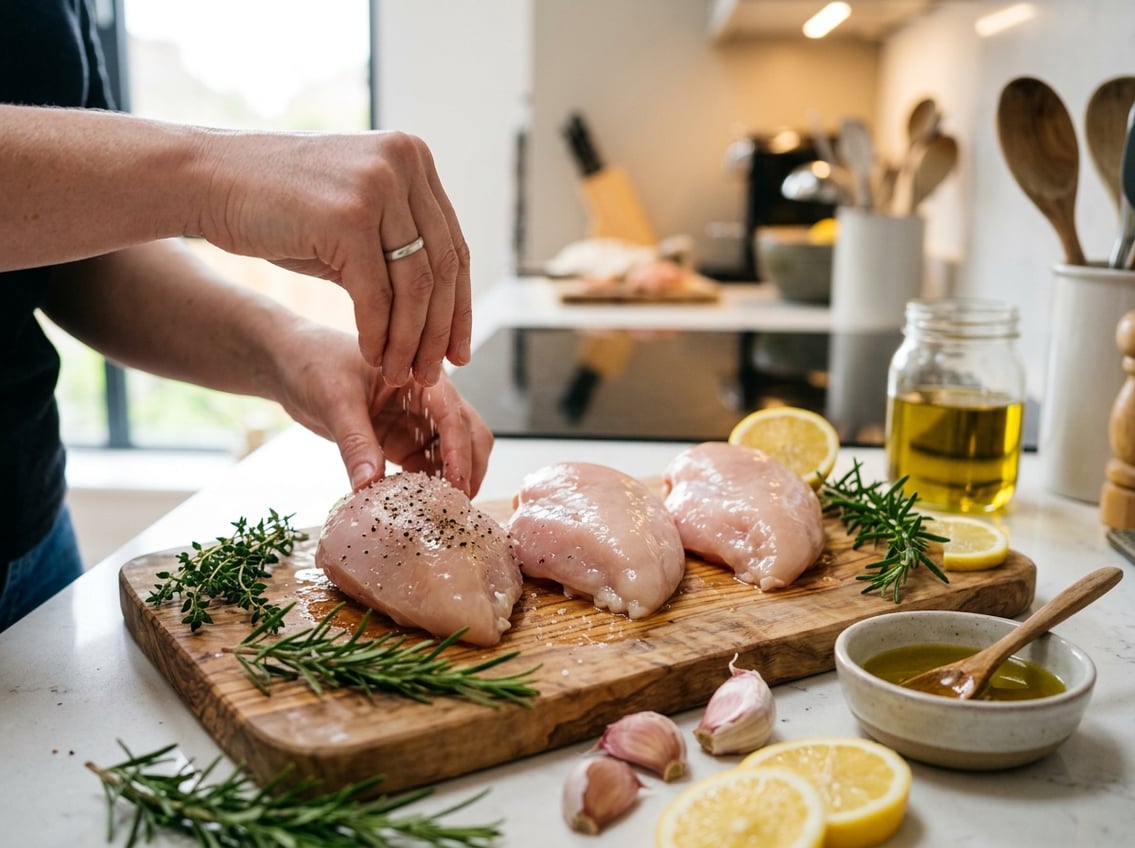
Better chicken starts at the store and ends with careful cooking.
The goal is not only more flavor, it is better texture and less chance of overcooking chicken.
A little attention to labels, packaging, and internal temperature makes a big difference.
What to Look for at the Store
Choose chicken that looks firm, pink, and well chilled.
Avoid packages with excess liquid, torn wrapping, or a sour smell.
If you want more flavor, try free-range chicken or pasture-raised chicken from a trusted grocer, butcher, or local farm.
Those options often cost more, yet they may give you a better baseline flavor than standard mass-market breast meat.
How to Avoid Dry, Bland Results
Salt the chicken before cooking if you have time.
A short brine or dry seasoning helps the lean breast hold moisture and taste less flat.
Cook at moderate heat and avoid pushing the meat too far past done.
Overcooking chicken is one of the main reasons breast meat turns dry and chalky.
Using a Meat Thermometer for Better Texture
A meat thermometer removes guesswork.
Cook chicken breast to 165°F in the thickest part. Let it rest before slicing.
That small rest helps juices stay in the meat instead of running out onto the plate.
Temperature control matters more than cooking by color alone.


