
Why Should You Flatten Chicken Breast for Better Results
Flattening chicken breast gives you more control over how it cooks. You should flatten chicken breast before many recipes because it helps the meat cook at the same pace from end to end, which reduces dry edges and underdone centers.
If you want juicier, more even, and more predictable results, flattening chicken breast is one of the simplest prep steps you can use.
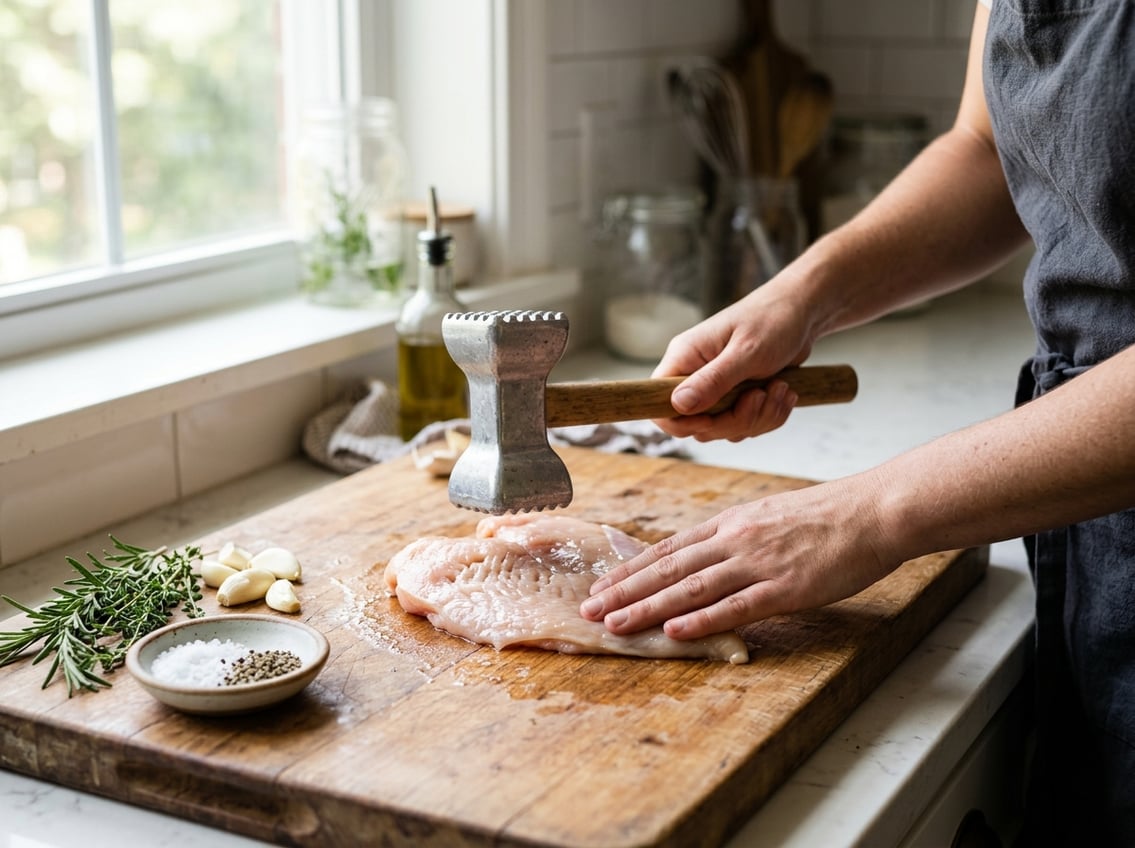
This matters most when you cook chicken in a hot skillet, oven, or grill. Small differences in thickness can change the final result fast.
A quick flattening step can also help seasoning, breading, and browning work better.
What Flattening Changes in Cooking
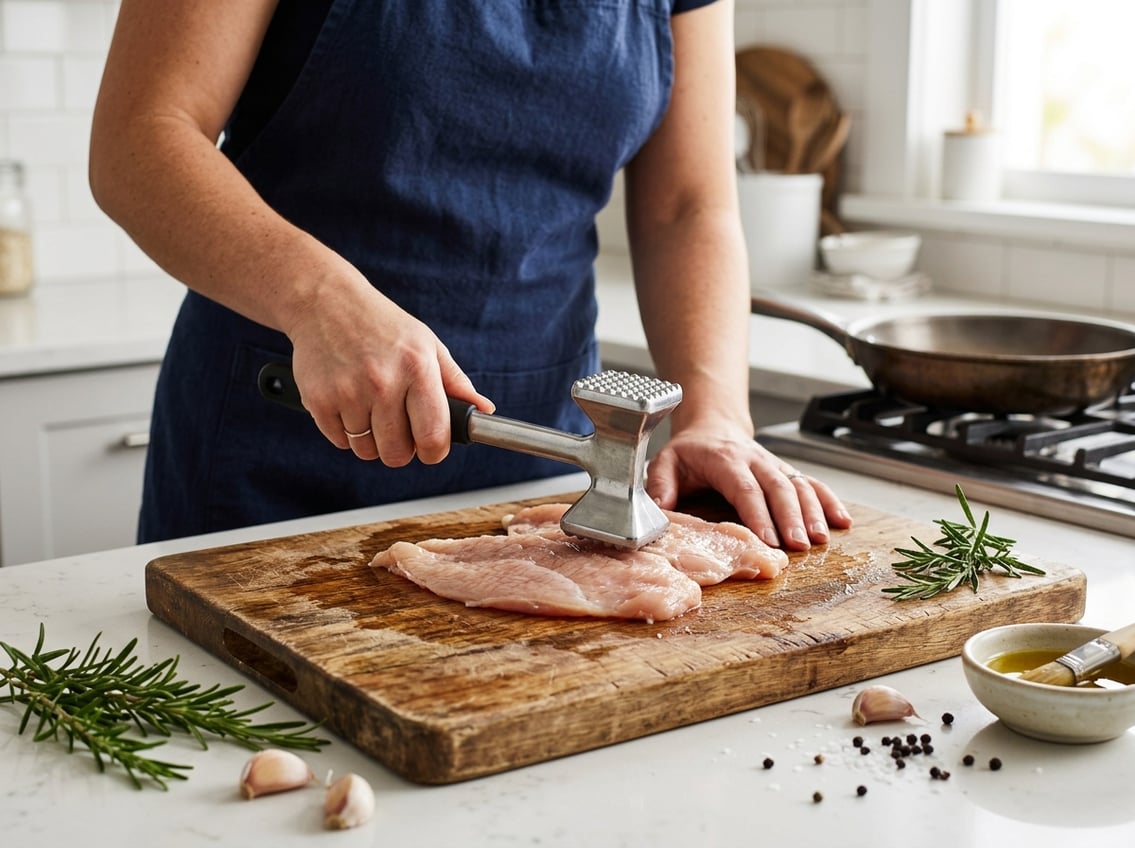
Flattened chicken breast cooks in a more even shape, which makes the result easier to control. It also helps you get a better crust and more consistent seasoning on the surface.
When you flatten chicken breast, you change both the cooking speed and the way heat moves through the meat.
Creates Even Thickness for More Reliable Doneness
A regular breast is usually thicker on one end and thinner on the other. That shape makes it hard to cook both ends at the same rate.
Flattening chicken breast creates a more even thickness, so the whole piece reaches doneness at a similar time. According to Cook Answers, this reduces the chance of one dry end and one undercooked end.
Shortens Cooking Time Without Drying the Meat
Thinner chicken cooks faster, so you spend less time waiting for the center to finish. That shorter cook time can help keep the outside from overcooking in a hot pan or oven.
The key is to flatten chicken breast just enough to speed cooking, not so much that the meat turns paper-thin. A moderate flattening gives you quicker results and better moisture.
Improves Browning, Texture, and Seasoning Coverage
A flatter piece of chicken has more even contact with the pan, grill, or breading. That improves browning and gives you a more even color on the outside.
It also helps salt, spices, marinade, and breading spread across the meat more evenly. The result is a more balanced bite with better texture from edge to edge.
How to Flatten Chicken Properly
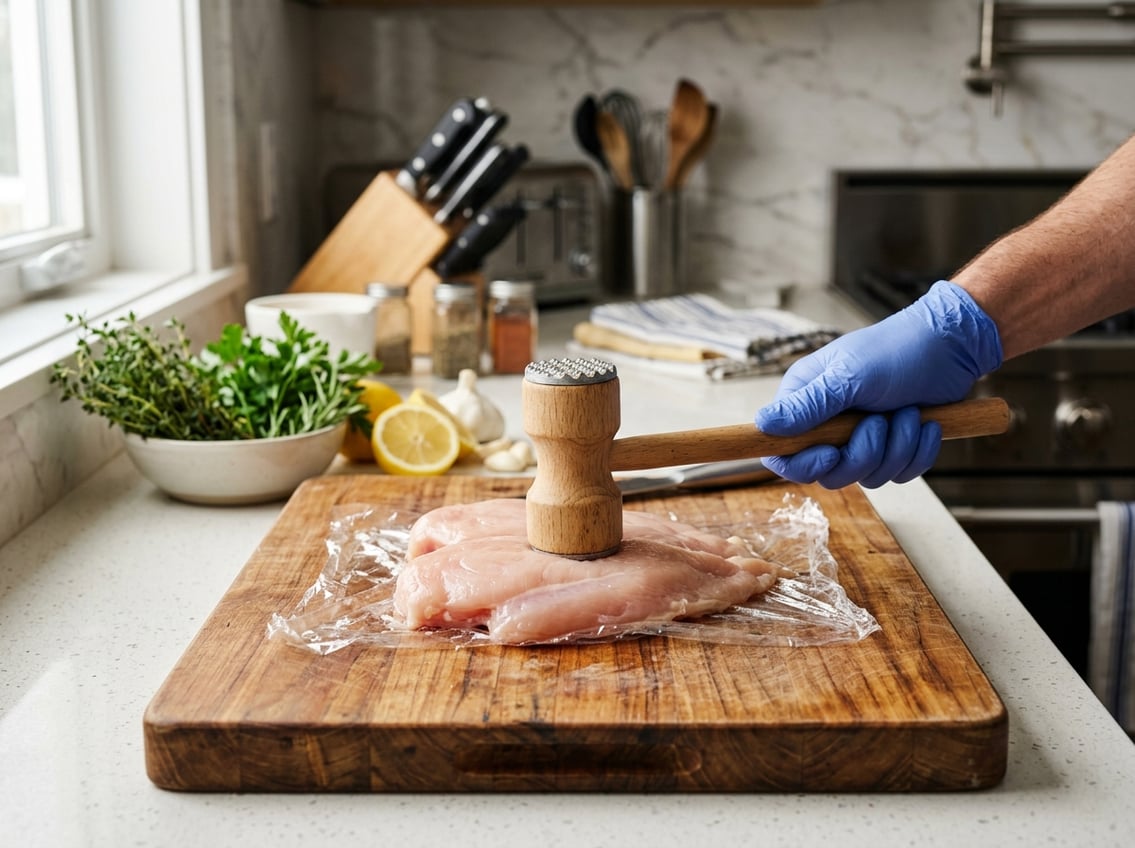
You do not need special tools to flatten chicken well. You need a steady method, gentle pressure, and a way to keep the meat from tearing.
A meat mallet works best for most home cooks. Butterflying can help if the breast is very thick.
When to Butterfly Before Pounding
Butterflying means slicing the breast horizontally so you can open it like a book. This is a good first step when the chicken is large or uneven.
After butterflying, light pounding helps even out thick spots without forcing the meat too far. If you want thin cutlets for quick cooking, this method saves time and gives you better control.
How to Use a Meat Mallet Without Tearing the Meat
To use a meat mallet, place the chicken between plastic wrap or in a resealable bag first. Then use the flat side of the mallet and start at the thickest area.
Use controlled taps and move outward as the meat spreads. A meat mallet works best when you use steady pressure instead of hard strikes, which can tear the chicken or make the edges too thin.
Best Thickness for Cutlets and Everyday Cooking
For many recipes, a thickness of about 1/4 to 1/2 inch works well. That range cooks quickly while still holding moisture and shape.
For breaded dishes or pan-fried cutlets, aim for even thickness rather than extreme thinness. That gives you a tender result that is still easy to handle.
When This Technique Makes the Biggest Difference
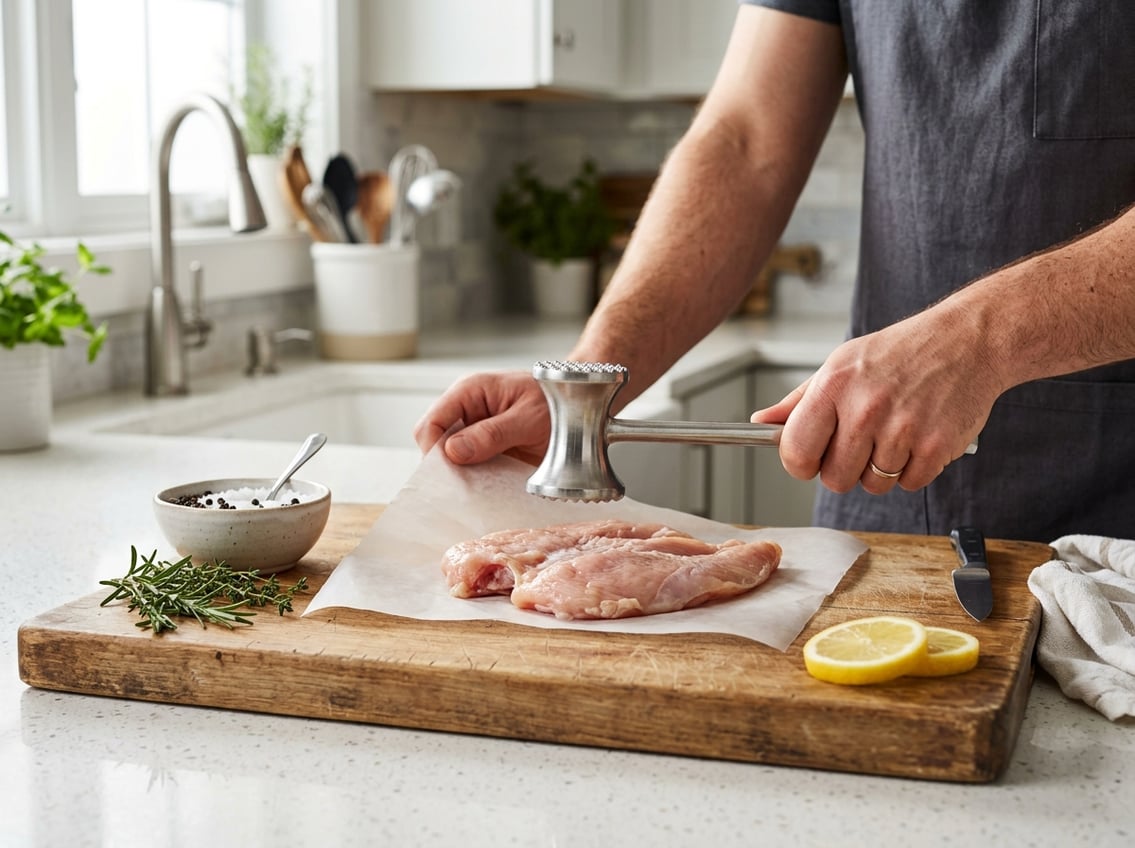
Flattening matters most when your recipe depends on even cooking and a good surface finish. It is especially useful in dishes where the chicken needs to brown well and stay juicy.
You will notice the biggest difference in quick-cook methods and breaded recipes.
Best for Baking, Pan-Searing, and Grilling
A flattened chicken breast cooks more evenly in the oven, where dry edges can form before the center is done. It also helps in a skillet, where even thickness improves browning.
On the grill, a flatter piece reduces the risk of one part overcooking while another part is still raw. That makes the process easier to control.
Why It Works Well for Breaded Dishes Like Chicken Parmesan
Breaded dishes need even contact with flour, egg, and crumbs. A flatter cutlet gives you that contact across the whole surface, which helps the coating stick better and brown more evenly.
That is one reason to flatten chicken breast before chicken parmesan or similar dishes. You get a cleaner shape, more even cooking, and a better texture under the crust.
When You Can Skip This Step
You can skip flattening when the recipe calls for slow cooking, shredding, or small pieces.
Whole-breast roasting also works if you watch the temperature and resting time.
If the chicken already has an even thickness, flattening may not help much.
This step matters most when the breast is thick, uneven, or meant to cook fast.


