
Why Would Chicken Breast Be Tough? Causes and Fixes
Why would chicken breast be tough? In most cases, heat, moisture loss, or the chicken itself are to blame.
Chicken breast is lean and can go from tender to dry and chewy very fast if you miss the right temperature or cooking method.
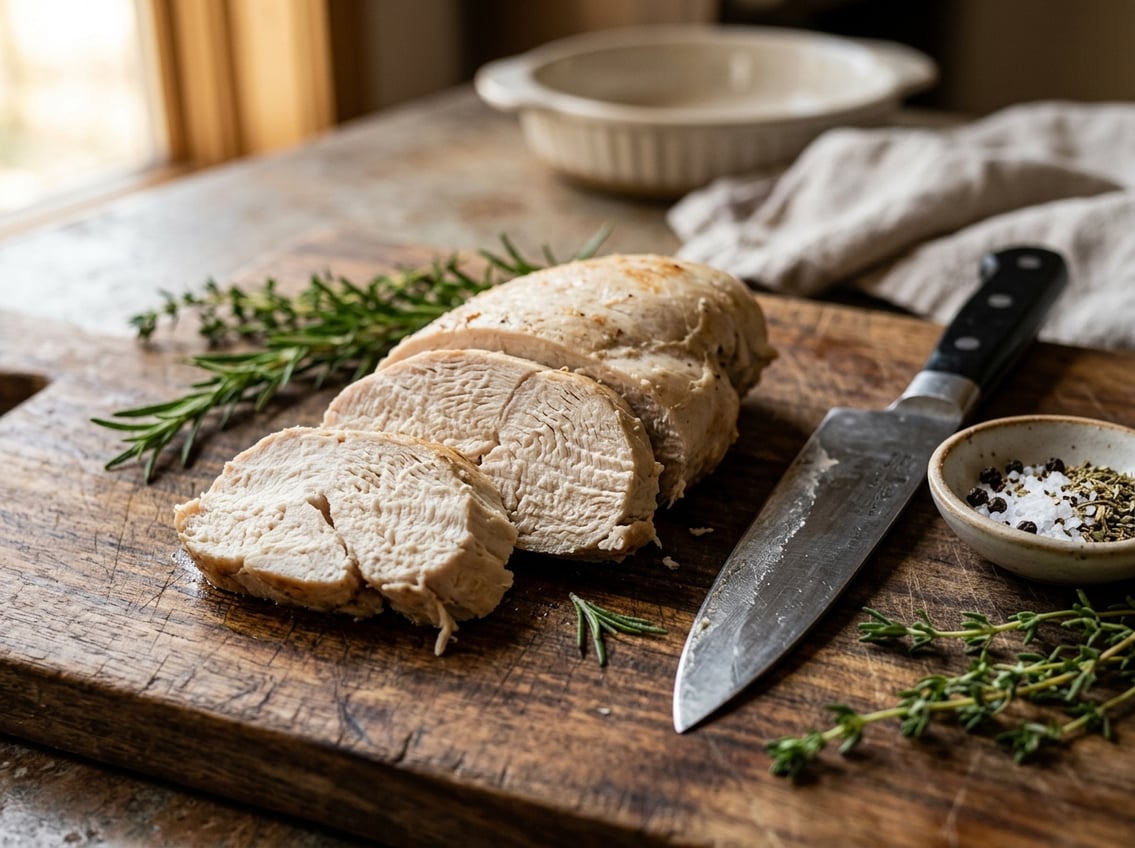
If you want juicy chicken breast, control heat, keep moisture in the meat, and stop cooking before it goes past tender.
A meat thermometer, even thickness, and a short rest after cooking all help.
Tough chicken breast does not always mean you did something badly.
Sometimes the cut itself is less forgiving, or the bird has a texture issue before it ever reaches your pan.
Once you know the cause, finding the fix is much easier.
What Usually Makes Chicken Breast Turn Tough
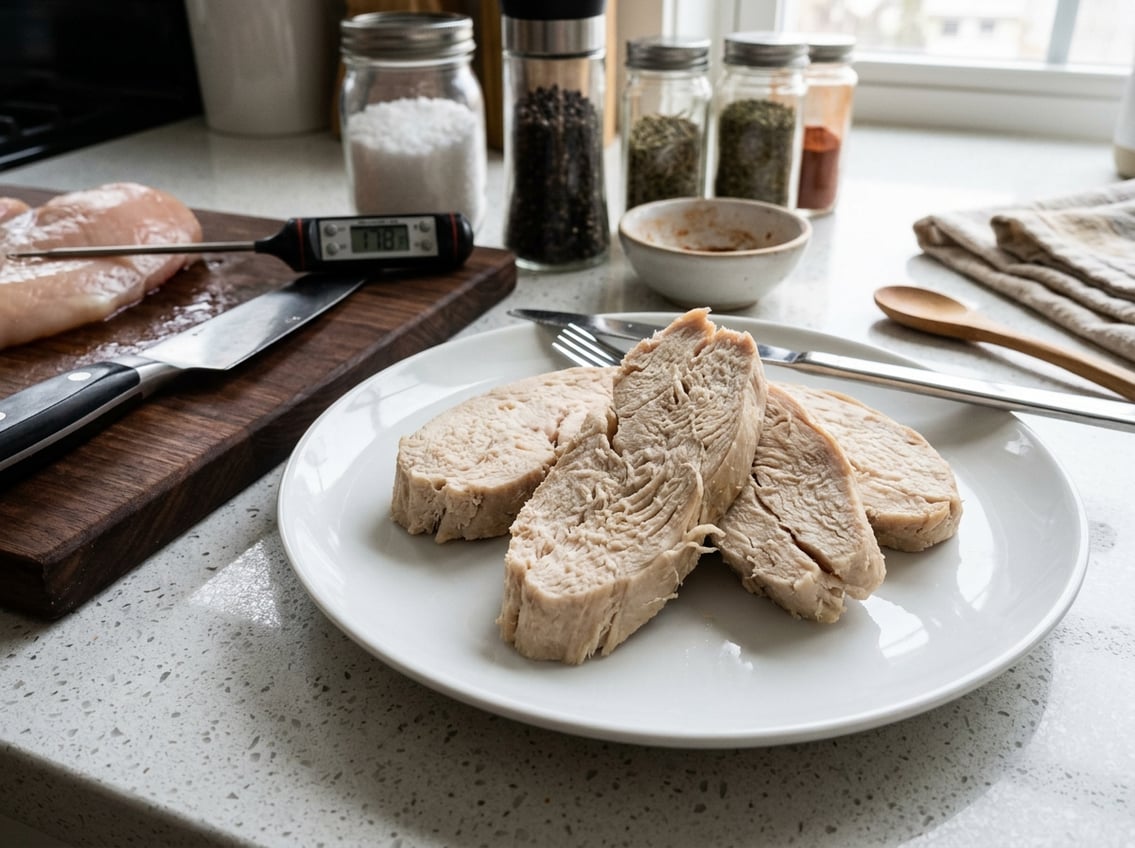
Most tough chicken breast problems start during cooking, not after.
The big issues are too much heat, not enough moisture, and pieces that cook unevenly.
Overcooking and Moisture Loss
Overcooking chicken is the most common reason chicken breast turns dry and tough.
Lean meat loses moisture quickly, so the protein tightens and squeezes out juices once it stays on heat too long.
Pull chicken breast from the heat as soon as it reaches a safe temperature and let it rest.
A short rest helps the juices settle back into the meat instead of spilling out on the cutting board.
Undercooking and Rubbery Texture
Undercooked chicken breast can feel rubbery or unpleasant, even if it does not seem dry.
It has not set properly, so the texture stays dense and springy.
A thermometer gives you a clear reading and helps you cook chicken breast to the right point.
High Heat
Very high heat can make the outside of chicken breast tighten before the center is done.
This often leads to a dry outer layer and a less tender middle.
Gentler heat gives you more control.
Many home cooks get better results when they use medium heat, especially with thinner boneless pieces.
Even Thickness and Uneven Cooking
Chicken breasts are often thicker at one end than the other.
That shape causes uneven cooking, so the thin part dries out before the thick part is ready.
Pounding or butterflying the meat helps create even thickness.
This makes the whole piece cook at the same pace and improves the chance of a juicy chicken breast.
How to Keep the Meat Tender During Prep and Cooking
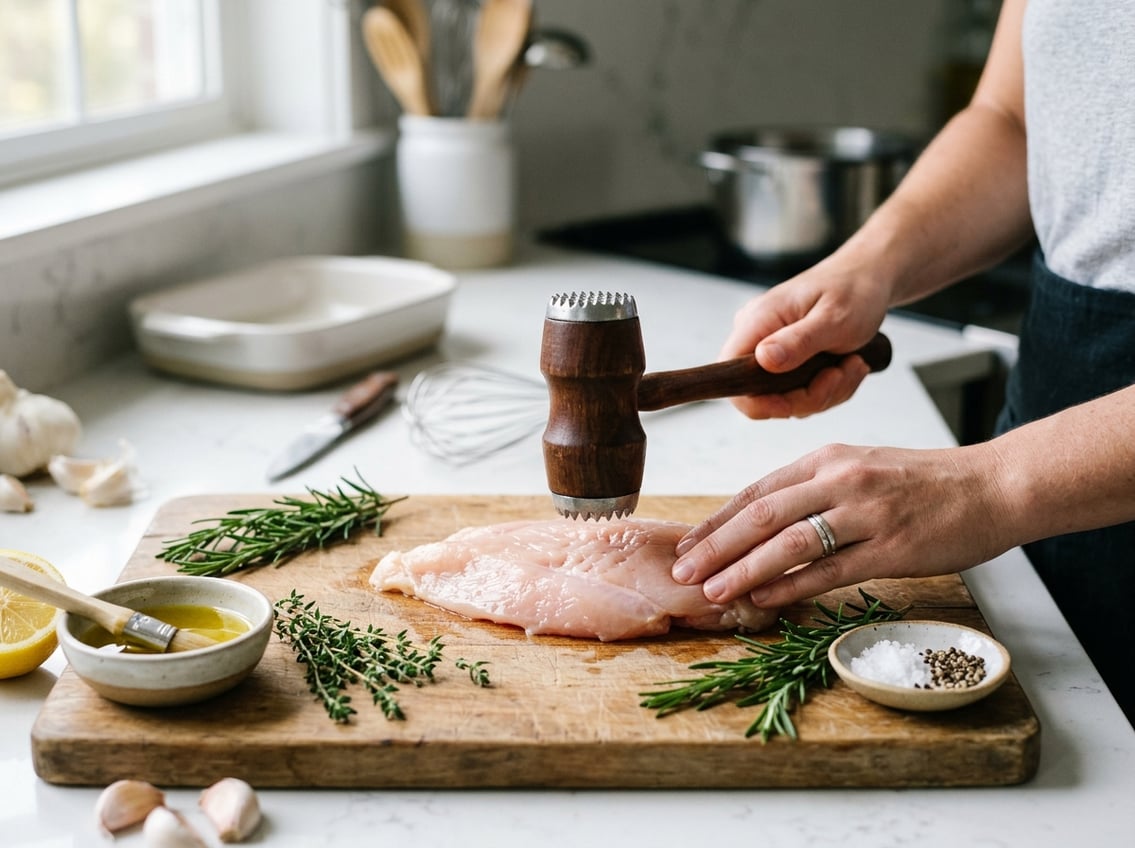
Simple prep steps can make chicken breast much easier to cook well.
The goal is to help the meat retain moisture, cook evenly, and stay within a narrow temperature range.
Use a Meat Thermometer and Account for Carryover Cooking
A meat thermometer is the most reliable way to avoid dry chicken.
The USDA recommends cooking chicken to 165°F, and a thermometer helps you stop at the right moment.
Carryover cooking matters too.
Chicken keeps cooking for a few minutes after it leaves the heat, so pulling it a little early can help you land on a juicy chicken breast.
Dry Brining to Improve Moisture Retention
Dry brining means salting the chicken before cooking and letting it rest.
This can help the meat hold onto moisture and season more evenly.
A few hours is enough, and overnight works well too.
This simple step can improve texture without adding extra ingredients.
Marinating Chicken Without Overdoing Acid
Marinating chicken breast can help tenderize chicken and add flavor.
A good marinade often uses oil, herbs, and a small amount of acid, such as lemon juice or vinegar, as noted by Cook Night.
Keep acidic marinades balanced.
Too much acid or too much time in the marinade can make the outside mushy while the inside stays uneven.
Pounding Chicken for Faster, More Even Results
Pounding chicken breast to an even thickness helps it cook more evenly.
It also shortens the cooking time, which lowers the risk of dry, tough chicken breast.
Use light, even pressure.
The goal is to tenderize chicken breast and flatten the thick end, not to tear the meat.
When the Problem Is the Chicken Itself
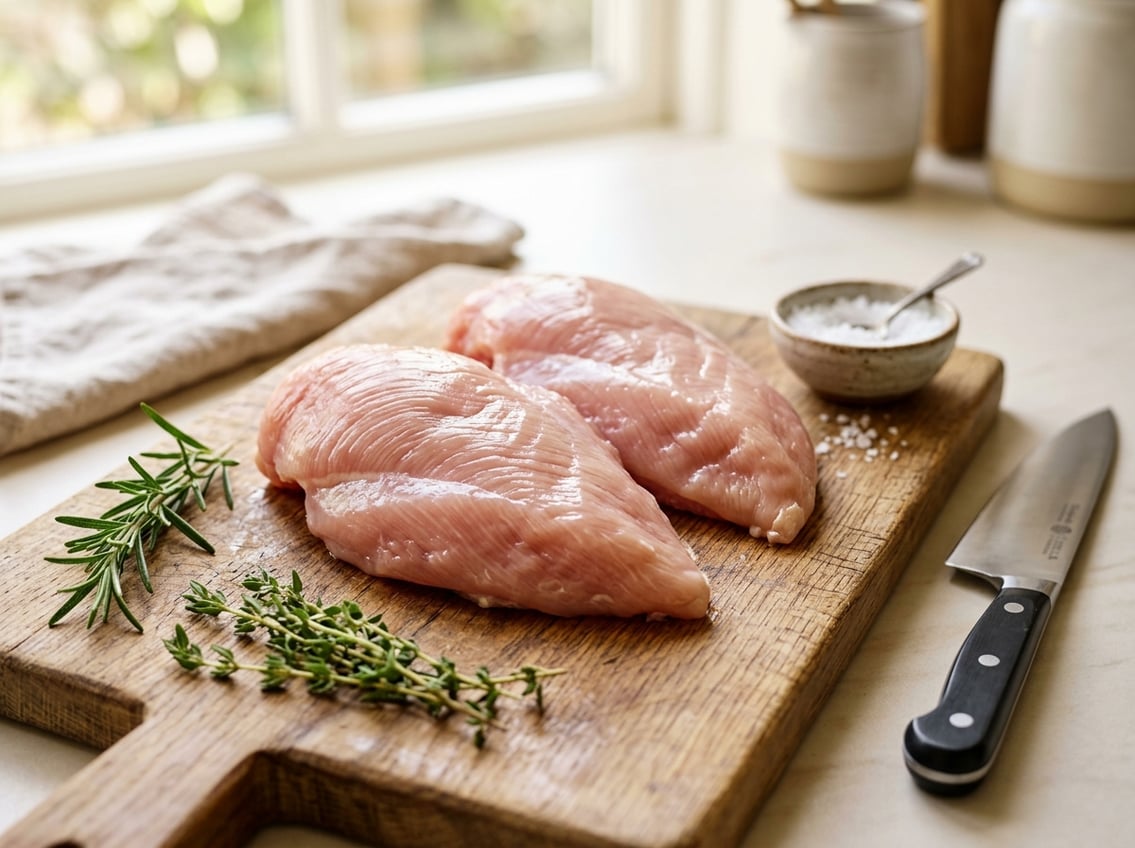
Sometimes the texture problem starts before you cook.
If you do everything right and the meat still eats badly, the cut or the bird may be the issue.
How to Spot Woody Breast Syndrome
Woody breast syndrome can make chicken breast feel hard, dense, or springy.
The meat may look normal at first, yet feel unusually firm when you press it.
If one breast seems much tougher than the rest, woody breast may be the reason.
That piece can stay chewy even with careful cooking, so it may not give you the tender result you want.
Why Poor Quality Chicken Cooks Worse
Poor quality chicken breast often has less consistent texture and more moisture loss during cooking.
Production, handling, and storage all play a role in how the meat performs in your pan.
The same recipe can give you very different results from one package to the next.
As explained in a recent guide on tough chicken, the issue can come from the bird, not only the method.
What Air-Chilled and Organic Chicken Change
Air-chilled chicken is cooled with air instead of water, which can affect texture and moisture.
Some cooks prefer it because the meat can taste cleaner and cook with better browning.
Organic chicken does not guarantee a tender chicken breast, yet it may reflect different production standards.
Neither label fixes every texture issue, though both can be worth trying if you often buy low-quality chicken breast.
How to Improve Texture if It Is Already Tough
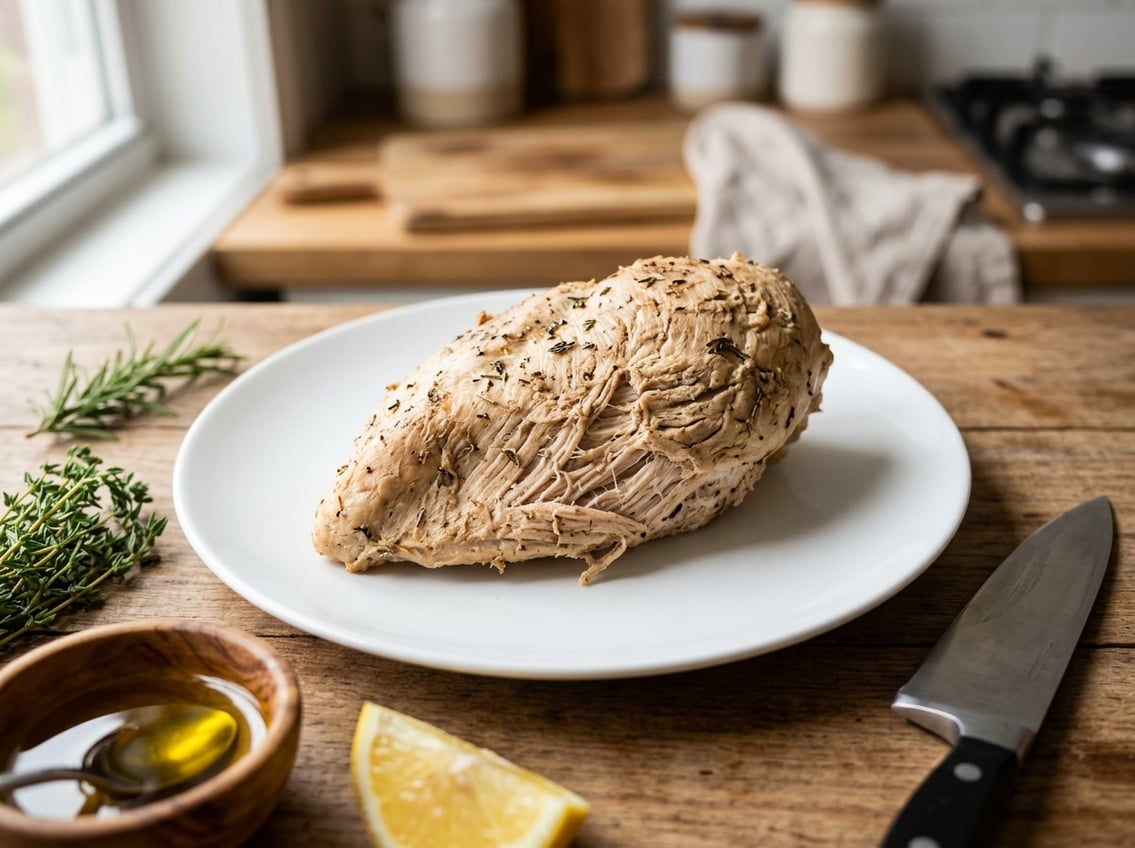
If your chicken is already tough, change how you serve it.
Some methods can soften the eating experience, even if they do not fully restore the original texture.
Best Ways to Fix Tough Chicken After Cooking
You can slice the meat thinly across the grain, warm it in sauce, or shred it for another dish.
These methods help reduce the feeling of toughness and make the bite easier.
Adding moisture is useful too.
Broth, pan juices, gravy, or a creamy sauce can help a tough chicken breast seem much more tender.
When Slicing, Sauce, or Shredding Helps Most
Slicing works best when the chicken is only a little dry.
Sauce helps when the meat is firm but still has some moisture left.
Shredding works well for tacos, soup, salads, and casseroles.
Once the chicken is broken into small pieces, the texture matters less and the flavor carries more of the dish.
When It Is Better to Start Over
If the chicken feels very dry, stringy, or firm all the way through, you may not have enough left to rescue.
Starting over can save your meal and your time.
For your next batch, focus on even thickness and use a thermometer.
Cook the chicken over gentle heat to get tender chicken breasts.


