
Chicken Breast Like Rotisserie at Home
You can make chicken breast like rotisserie at home with a few reliable steps. Season it well, add moisture before cooking, and use oven heat in a way that browns the outside without drying out the meat.
The goal is to recreate the same savory flavor, golden color, and juicy bite you expect from rotisserie chicken.
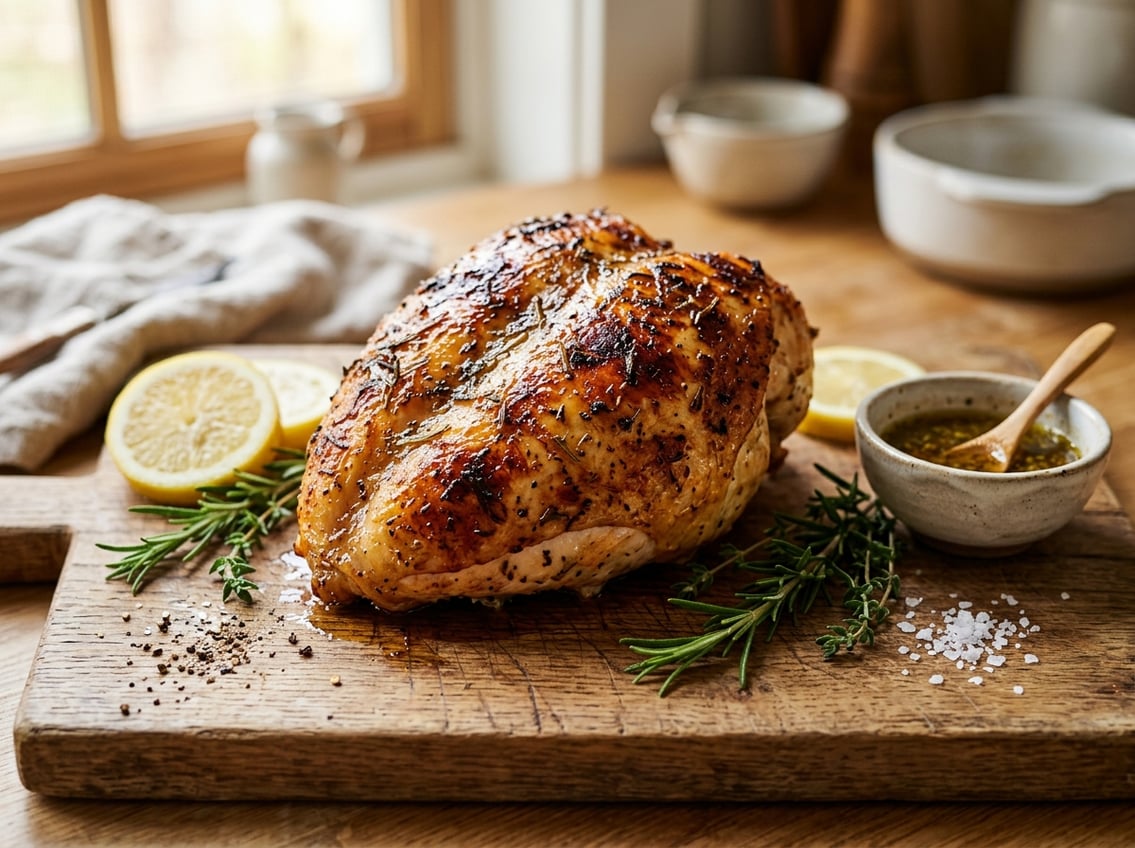
Focus on moisture retention, a balanced seasoning blend, and careful oven timing. You can make rotisserie-style chicken breast that tastes close to baked rotisserie chicken from a deli case.
Chicken breast is lean, so it dries out faster than a whole bird. Rotisserie chicken keeps more moisture because the skin and fat help baste the meat as it cooks.
Your home version needs a few smart swaps to create the same result.
What Creates That Rotisserie-Style Taste
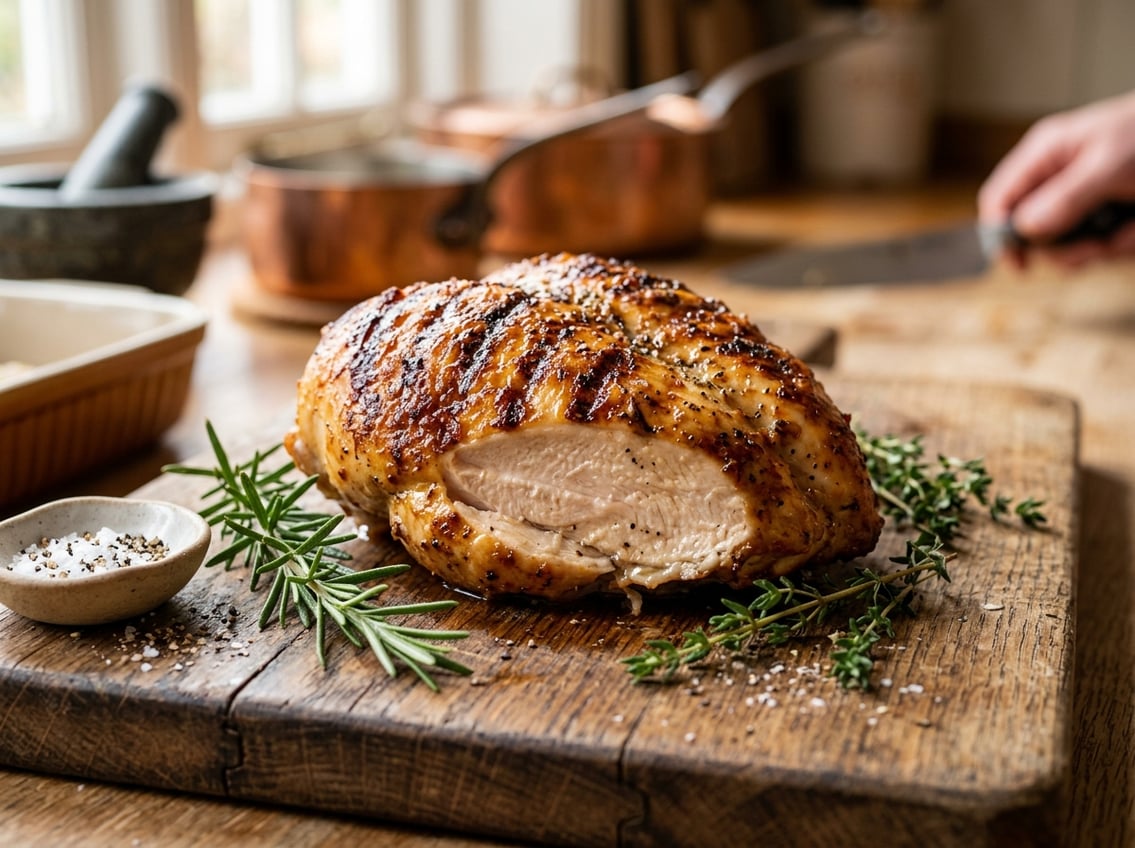
Rotisserie flavor comes from a mix of savory seasoning, steady heat, and browning on the surface. When you make rotisserie-style chicken at home, aim for a crust that tastes salty, garlicky, lightly smoky, and a little sweet.
The Core Rotisserie Flavor Profile
A classic rotisserie taste usually includes garlic, onion, paprika, herbs, salt, and black pepper. A small amount of brown sugar helps the surface caramelize, which adds a roasted flavor.
Smoked paprika gives the meat a deeper color and a mild smoky note.
Why Chicken Breast Needs Extra Moisture Support
Chicken breast does not have the fat that helps a whole chicken stay moist during rotisserie cooking. That is why a brine, oil, or marinade matters.
These steps help protect the meat while it cooks and make the texture closer to juicy chicken instead of dry, plain baked poultry.
How Seasoning and Browning Work Together
Seasoning brings the flavor, while browning builds the taste you notice in the first bite. Dry skin or a dry surface browns better than a wet one, so moisture control matters.
As the outside turns golden, the spices toast and the flavor becomes closer to rotisserie chicken breast.
How to Prep Chicken Breast for the Best Results
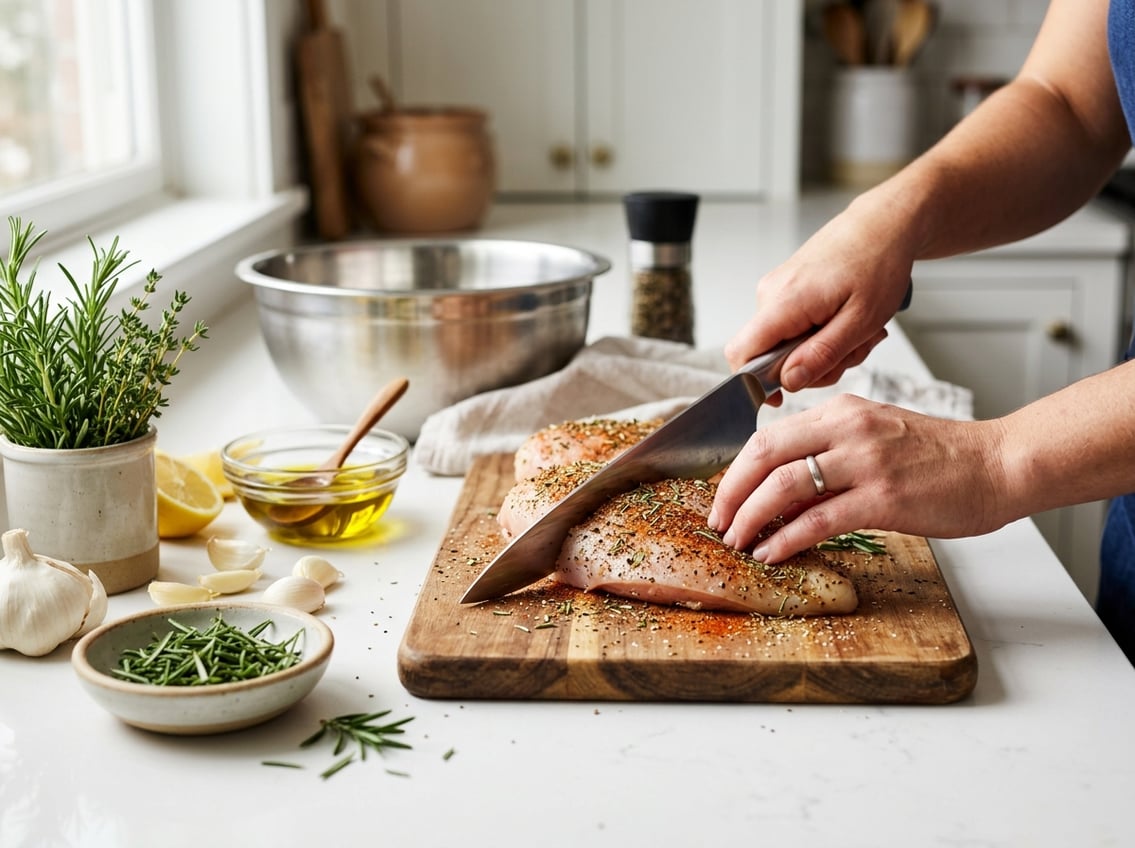
Good prep gives you better moisture, better browning, and better flavor. A simple seasoning blend can do a lot, especially when you start with evenly sized chicken breast pieces and the right amount of salt.
When to Use Brining
Use brining when you want the most protection against dryness. A short saltwater brine helps the meat hold onto moisture, which is useful for thick chicken breasts or when you plan to bake at a higher temperature.
Even a short brine can make the finished chicken more juicy.
Building a Rotisserie Chicken Seasoning Blend
A solid rotisserie chicken seasoning usually starts with paprika, smoked paprika, garlic powder, onion powder, thyme, black pepper, and a little brown sugar. Keep the salt level moderate if you brined the chicken.
If you want a stronger roasted color, increase the paprika slightly rather than adding more sugar.
How to Apply Oil, Rubs, and Marinades
Pat the chicken breast dry, then coat it lightly with oil. This helps the seasoning stick and promotes browning in the oven.
Rub the spice blend evenly over the surface, or mix the spices into a light marinade if you want a softer, more even flavor. Avoid heavy coatings that can block browning.
Best Oven Method for Juicy, Even Cooking
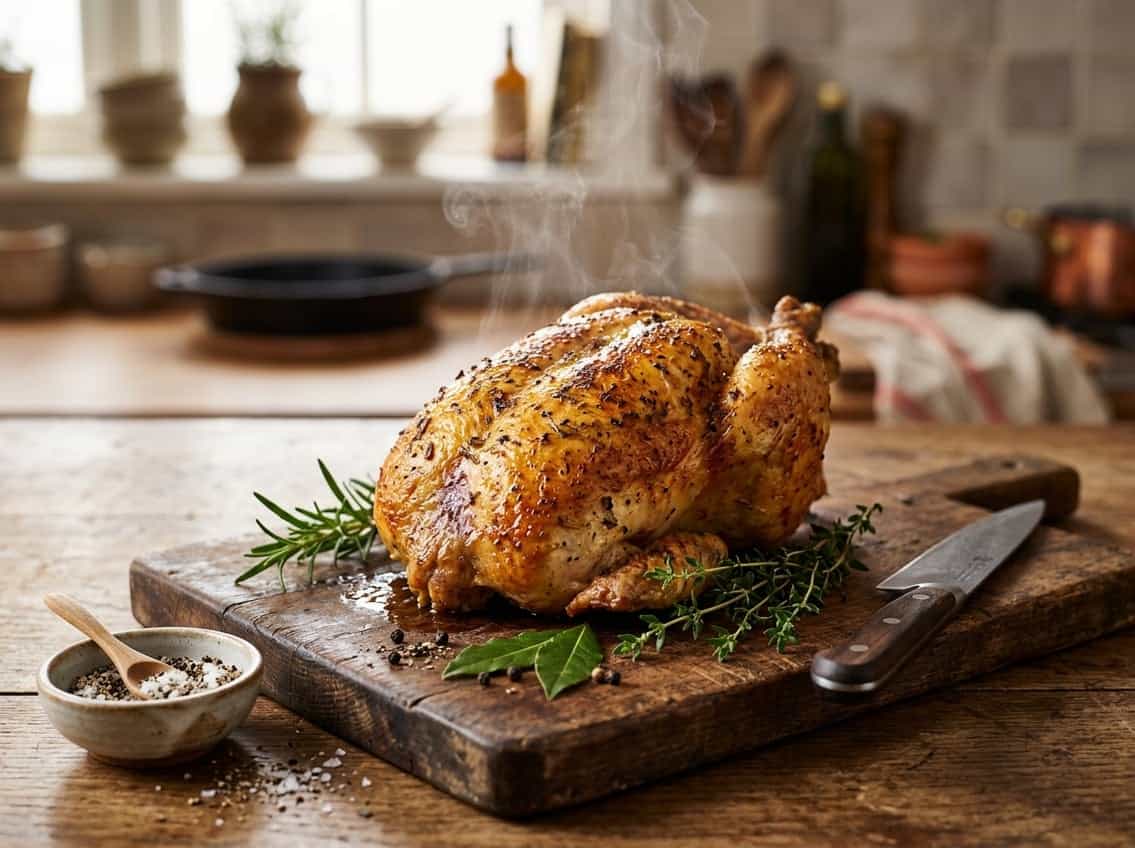
The oven is the easiest way to make rotisserie-style chicken breast at home. Use steady heat, give room for air to move, and let the chicken rest after baking so the juices stay in the meat.
Why a Baking Rack Improves Texture
A baking rack lifts the chicken breast above the pan so hot air can circulate around it. That helps the underside cook more evenly and keeps the bottom from getting soggy.
It also gives you a surface closer to the all-around heat effect you expect from baked rotisserie chicken.
Recommended Oven Temperature and Timing
A temperature around 400°F to 425°F works well for boneless chicken breast, depending on thickness. Thinner pieces cook faster, while thicker pieces need more time.
Many home cooks pull chicken around 160°F and let carryover heat finish it to a safe temperature.
How to Rest and Slice Without Losing Juices
Let the chicken rest for 5 to 10 minutes before slicing. This gives the juices time to settle back into the meat instead of running out onto the board.
Slice across the grain with a sharp knife, and keep the cuts even so each piece stays tender.
Serving Ideas and Easy Meal Pairings
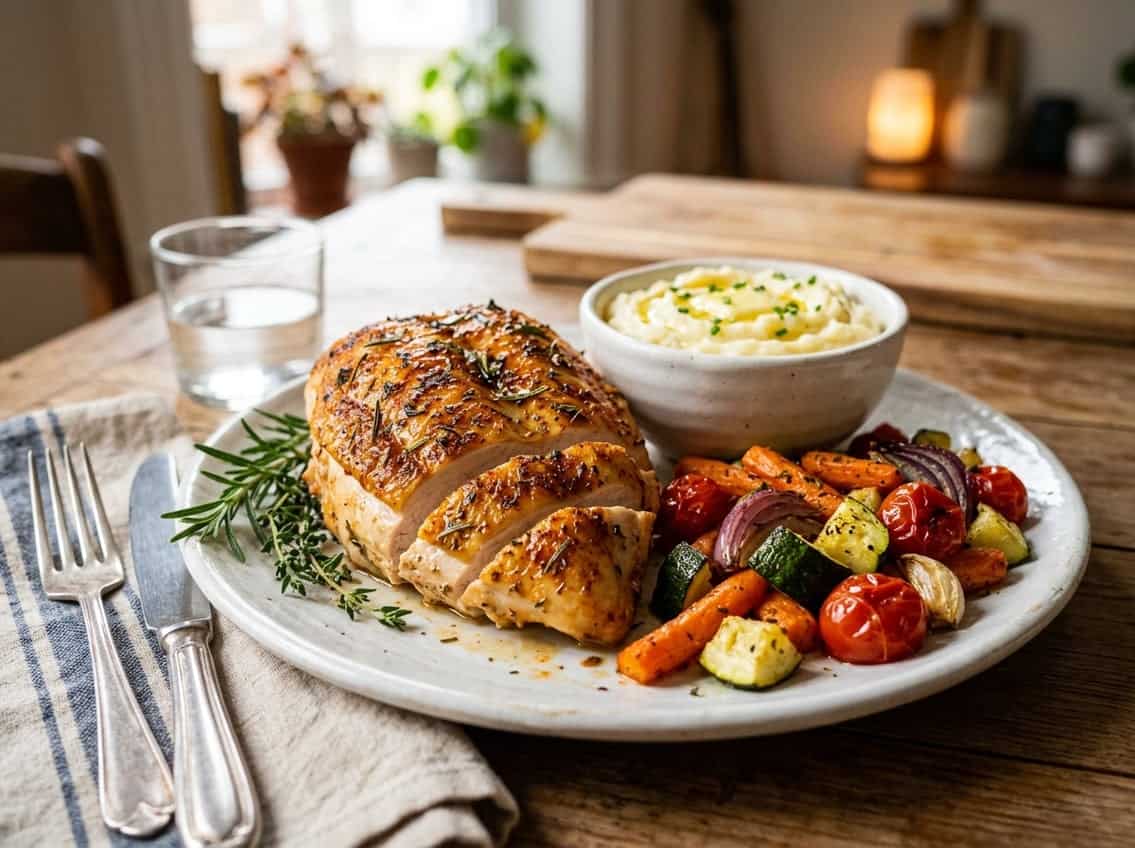
Rotisserie-style chicken breast fits into simple weeknight meals and meal prep. The mild savory flavor pairs well with classic sides and also works in salads, sandwiches, and bowls.
Best Side Dishes for a Rotisserie-Style Dinner
Serve your chicken breast with mashed potatoes, seasonal vegetables, rice, or roasted carrots. Green beans, broccoli, and Brussels sprouts all work well because they balance the rich seasoning.
If you want a more complete dinner, add a simple pan gravy or a spoonful of pan juices on the side.
Ways to Use Leftovers in Other Meals
You can easily repurpose leftover rotisserie chicken breast. Slice it for wraps or cube it for soup.
Shred it for quesadillas or pasta. Add it to recipes that use rotisserie chicken to make weeknight cooking faster.


