
Why Does Chicken Breast Have Carbs? Explained Clearly
Why does chicken breast have carbs is a common question because chicken is usually treated as a zero-carb food.
Plain skinless chicken breast has almost no carbs, and any carbs you see usually come from preparation, labeling rules, or added ingredients.
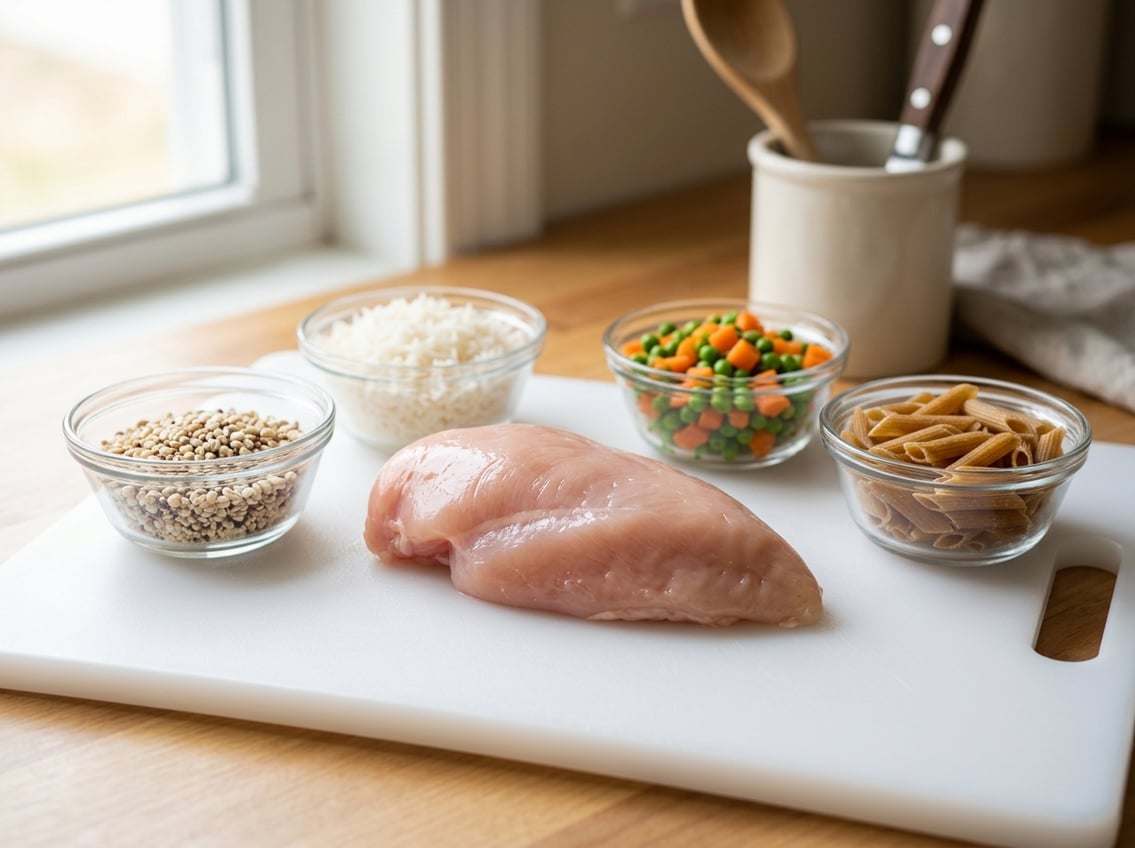
If you track chicken breast nutrition for keto, weight loss, or macro goals, that matters.
Chicken breast macros are mostly protein with very little fat, so you can log it accurately once you know what to look for.
The Short Answer on Carbs in Plain Chicken Breast
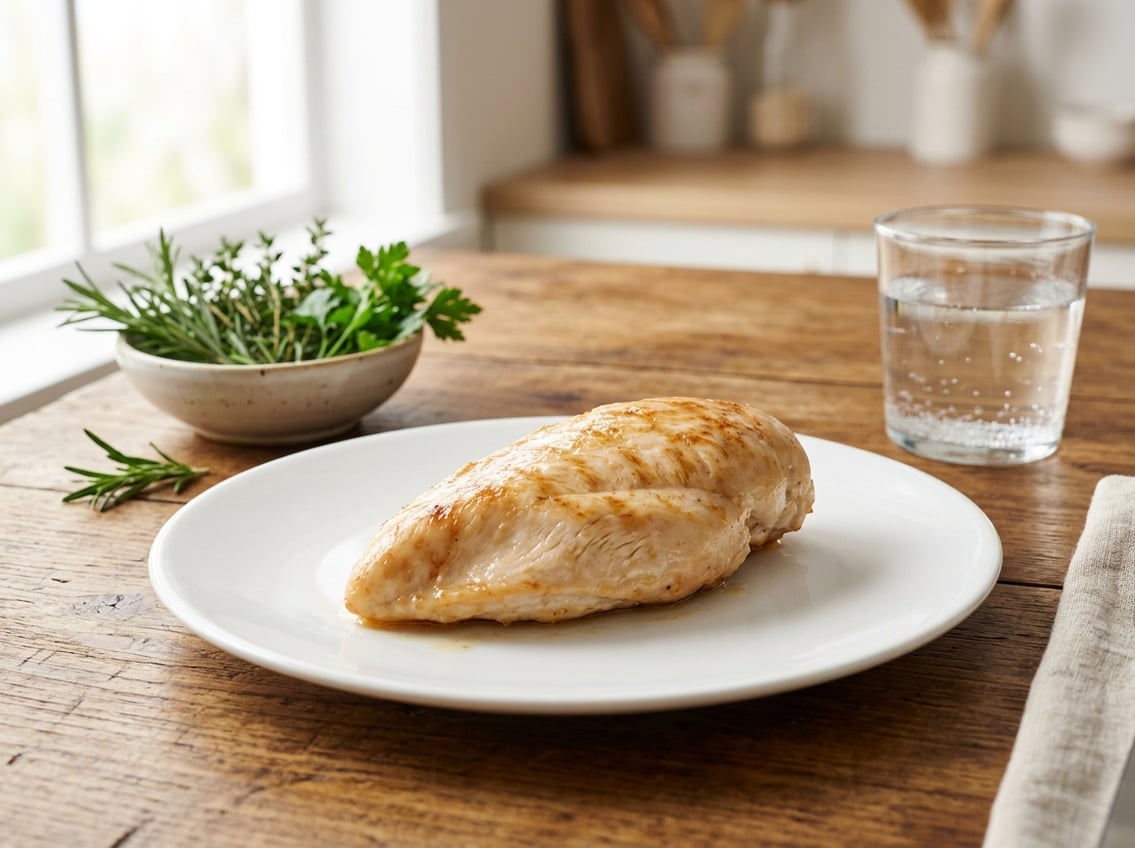
Plain skinless chicken breast is a lean protein food, and in its basic form it does not provide meaningful carbohydrate.
That is why it shows up so often in low-carb meal plans and fitness tracking tools.
Why Plain Skinless Chicken Breast Usually Has Zero Carbs
A plain skinless chicken breast is mostly protein and water, with a small amount of fat.
Standard nutrition data lists the carb count as zero, or so close to zero that it rounds down.
FatSecret’s chicken carb listing shows roasted chicken breast with no carbs.
A plain chicken breast recipe with no coating or sauce is usually a safe choice when you want low chicken breast macros.
Why Some Nutrition Databases Show Tiny Carb Amounts
Some databases show 0.1 to 1 gram of carbs for chicken breast, even when the chicken is plain.
This usually comes from rounding, food database differences, or how a cooked serving is entered.
Raw and cooked entries can also vary a little because of water loss during cooking.
The food itself does not gain carbohydrate from heat, so the small differences are usually from measurement, not from the chicken.
How Chicken Breast Macros Compare With Other Protein Foods
Chicken breast macros are different from foods like beef, salmon, eggs, or tofu because chicken breast is very lean and usually carb-free.
A raw skinless chicken breast listed by Eat This Much shows 0% carbs, with most calories coming from protein.
Chicken breast is useful when you want high protein without adding carbs from the protein source itself.
It is easier to fit into tight macro targets than many mixed foods or prepared meats.
Where the Carbs Actually Come From
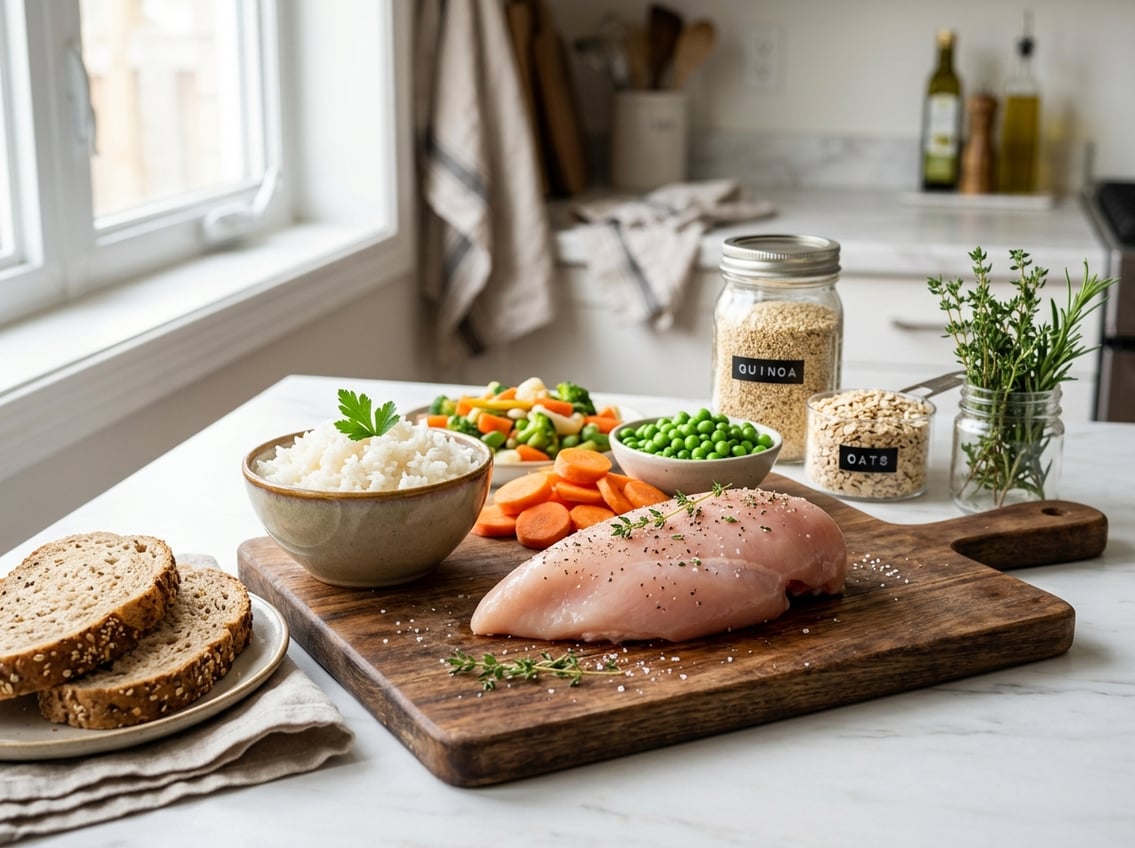
When chicken breast seems to have carbs, added ingredients are usually the source.
Breading, sugary sauces, restaurant preparation, and processed fillers are the most common reasons.
Breading, Coatings, and Fried Chicken
Breading adds flour, breadcrumbs, or starch, and those ingredients contain carbohydrates.
That is why fried or breaded chicken breast can be very different from plain grilled chicken breast.
A breaded piece can jump from zero-carb territory into double digits quickly.
If you are watching chicken breast macros closely, check the coating first.
Marinades, Glazes, and Sweet Sauces
Sweet marinades and glazes often include sugar, honey, syrup, or fruit juice.
That includes foods like creamy southwest chicken and chicken caesar salad when the dressing or toppings use sweetened ingredients.
Even a grilled chicken breast can pick up carbs if it sits in a sweet marinade before cooking.
The chicken stays the same, while the coating on top changes the carb count.
Processed Chicken Products and Added Fillers
Packaged chicken products may include starches, binders, or flavor blends.
These can add carbs even when the product still looks like plain chicken.
Deli meats, patties, nuggets, and frozen breaded items are the most likely to vary.
If the label lists flour, maltodextrin, starch, or sugar, the carb count is probably higher than plain chicken breast.
How to Read Labels and Track Macros Accurately
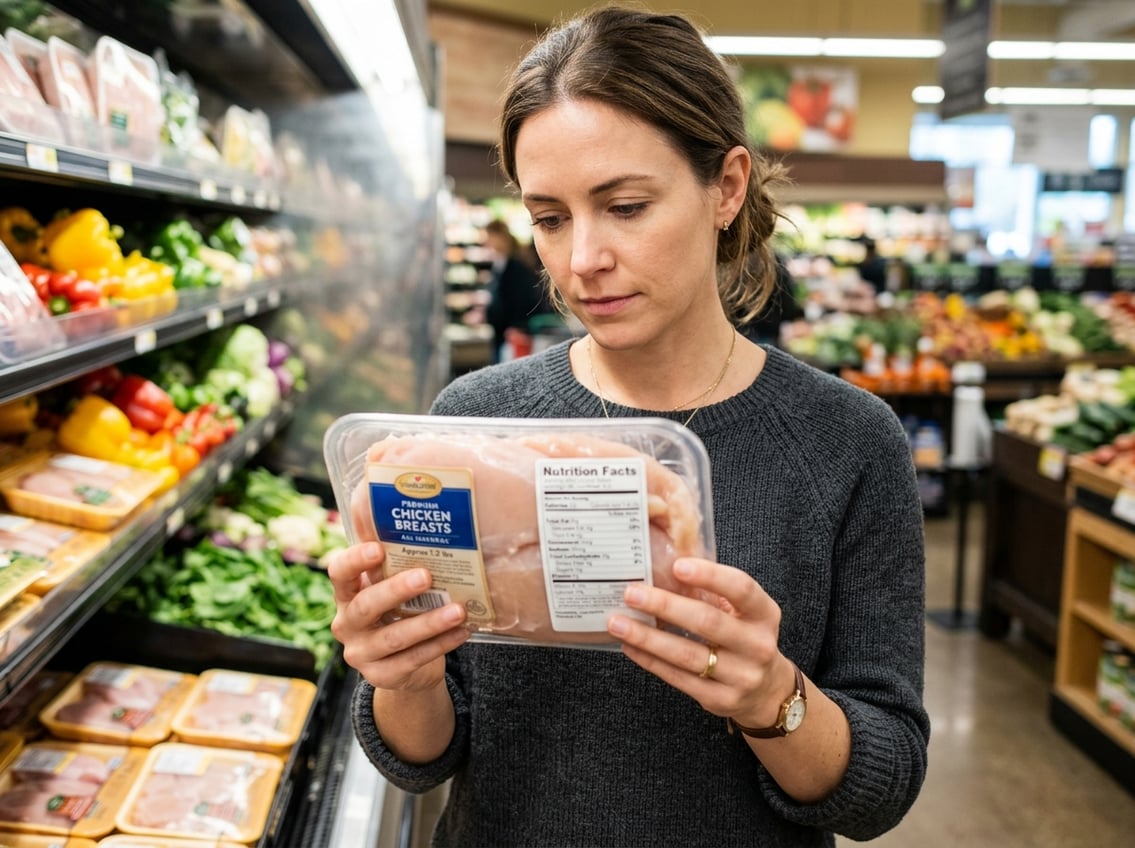
Start accurate macro tracking with the label and the serving size.
You also need to know whether the weight you enter is raw or cooked, since that can change the numbers you log.
Serving Size, Raw vs Cooked Weight, and Label Differences
Nutrition labels use the serving size listed on the package, not the whole package unless the package says so.
Macro counting guidance recommends checking the serving size first.
Raw chicken weighs more before cooking because it holds more water.
After cooking, the weight drops, but the protein, fat, and carb amounts in the portion you eat stay tied to the actual food amount.
Tracking raw versus cooked food explains that the change is mostly water loss, not a change in the food’s macro content.
Restaurant Meals and Hidden Carbs in Prepared Dishes
Restaurant chicken dishes often look plain but can have hidden carbs in seasoning blends, marinades, sauces, or salad toppings.
A grilled chicken breast can be low-carb on its own, then become a higher-carb meal once it is placed in a sauced bowl or sandwich.
If you order something like a chicken Caesar salad, ask what is in the dressing, croutons, and chicken seasoning.
The main protein may still be chicken breast, but the full meal can track very differently.
How to Keep a Chicken Breast Recipe Lower in Carbs
Start with plain chicken and add fat and flavor from low-carb ingredients. Use herbs, spices, lemon, garlic, oil, butter, or vinegar instead of sweet sauces.
Try these habits:
- Choose grilled chicken breast instead of breaded chicken.
- Check labels for sugar, flour, and starch.
Weigh your chicken the same way each time, raw or cooked. Track sauces, dressings, and marinades as part of the recipe.


