
What Can Make Chicken Breast Tender? Best Methods
You can make chicken breast tender with a few simple habits. The best results come from controlling thickness, adding moisture, and keeping the heat gentle enough to avoid drying the meat out.
If you want to make chicken breast tender, focus on even thickness, salt, careful cooking, and slicing against the grain. These steps do more for a juicy chicken breast than any fancy ingredient or special tool.
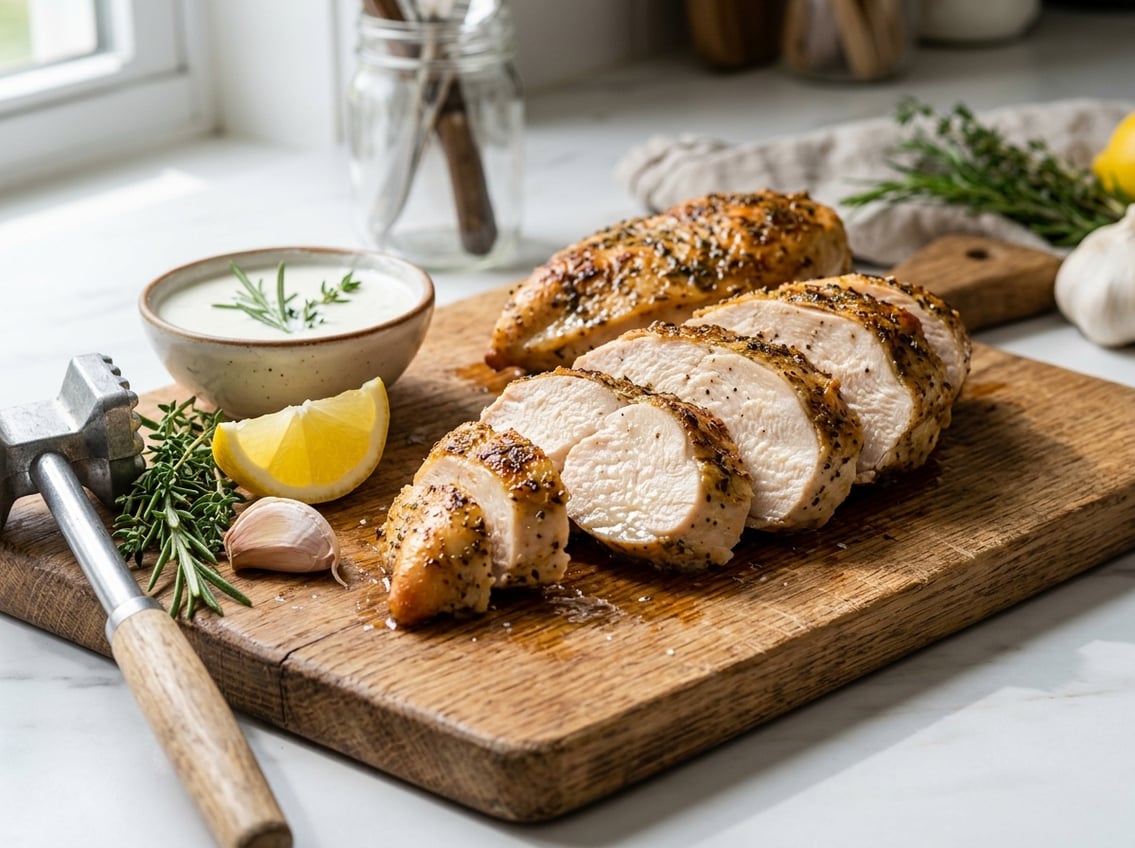
Chicken breast is lean, so it dries out faster than darker cuts. Tenderizing chicken is really about protecting moisture and controlling texture before and during cooking.
What Actually Makes Chicken Breast More Tender
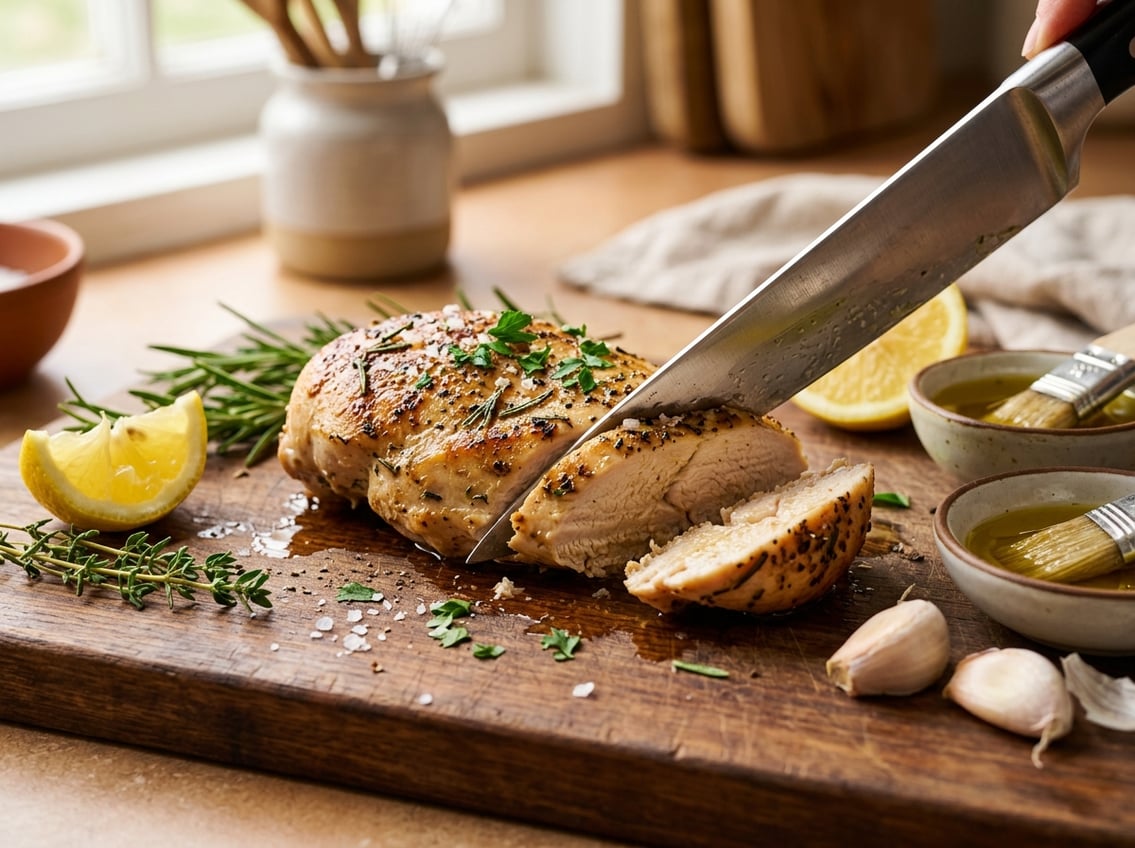
A tender chicken breast feels soft, juicy, and easy to chew because its moisture stays in place and its fibers stay relaxed. High heat or long cooking times make the proteins tighten and the meat turn dry.
Why Lean Meat Dries Out So Easily
Chicken breast has less fat than many other cuts, so it has less natural protection against drying out. A small timing mistake can turn a moist chicken breast into one that feels firm or stringy.
High heat and long cooking times cause chicken breast to lose tenderness. Careful heat control matters.
How Moisture, Fiber Breakdown, and Even Thickness Help
Moisture keeps the meat soft. Even thickness helps it cook at the same rate from edge to edge.
When one side is much thinner, it often dries before the thick side is done. When the meat stays juicy and does not tighten too much, the texture stays softer and more pleasant.
When Tender Texture Comes From Slicing Against the Grain
Even a well-cooked juicy chicken breast can feel tougher if you slice it the wrong way. Cutting across the grain shortens the muscle fibers, which makes each bite easier to chew.
If you slice with the grain, the fibers stay long and the meat can seem drier than it really is. Let the chicken rest first, then slice it across the grain for the best texture.
Best Prep Methods Before Cooking
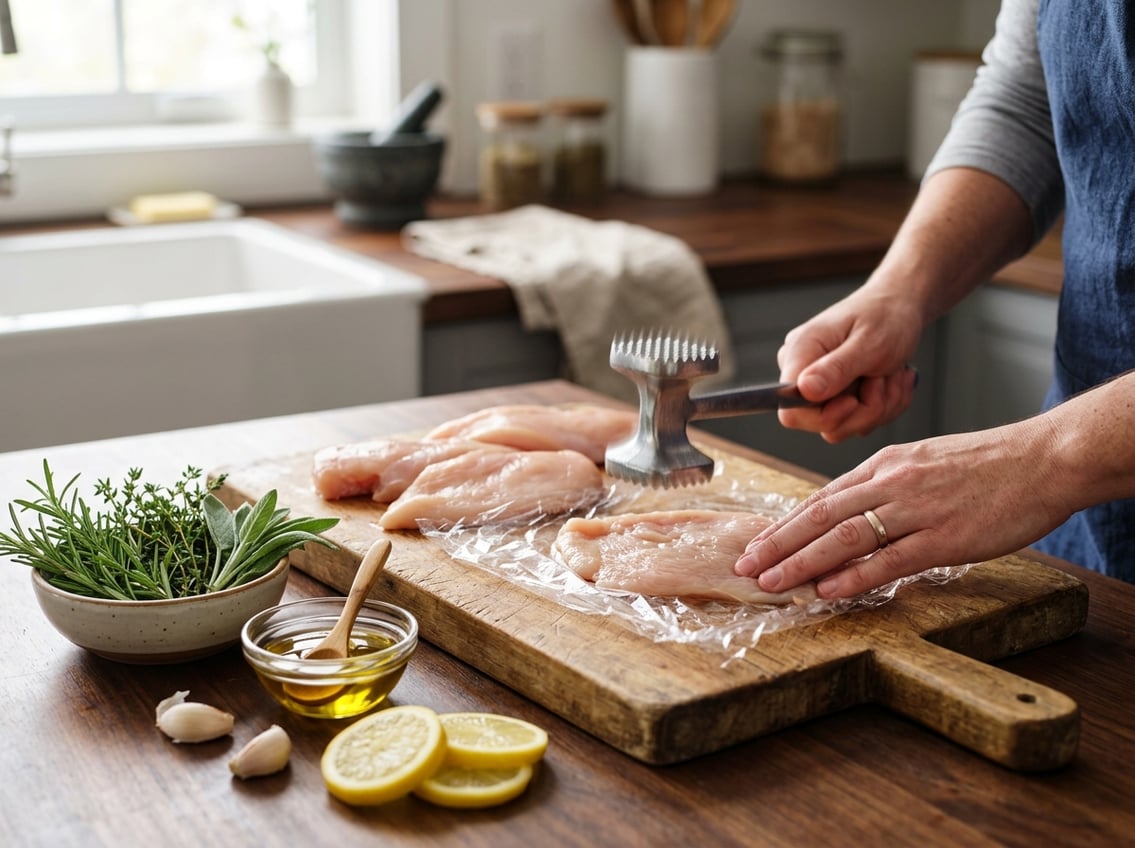
Good prep can tenderize chicken breast before it ever touches the pan. The most useful methods improve even cooking and help the meat hold onto moisture.
Pounding and Flattening for Faster, Even Cooking
Pounding chicken makes each piece the same thickness. That reduces the chance of dry edges and an undercooked center.
Use a meat mallet, rolling pin, or heavy pan, and aim for even thickness rather than making the meat paper thin. This simple step helps chicken cook at a steady rate from edge to edge.
Brining for Better Moisture Retention
A short brine helps chicken breast hold more water during cooking. A basic saltwater soak works well for plain weeknight dinners and meal prep.
Keep brining times moderate so the texture stays pleasant. Too much time in salt can make the chicken taste too salty or feel odd at the surface.
Marinades With Yogurt, Buttermilk, Citrus, or Vinegar
Marinating chicken breast adds flavor and can soften the surface. Yogurt and buttermilk are popular because they are mild and pair well with herbs and spices.
Citrus and vinegar also work, though they need care because strong acid can affect texture if you leave the chicken too long. Moderate timing gives you better results than an overnight soak in a very acidic mix.
Butterflying and Scoring Thick Pieces
Butterflying a thick breast helps it cook faster and more evenly. Scoring the surface helps seasoning and marinade spread more evenly.
These methods are useful when one piece is much thicker than the rest. They reduce the risk of a dry outside and underdone middle.
Cooking Methods That Keep Chicken Breast Juicy
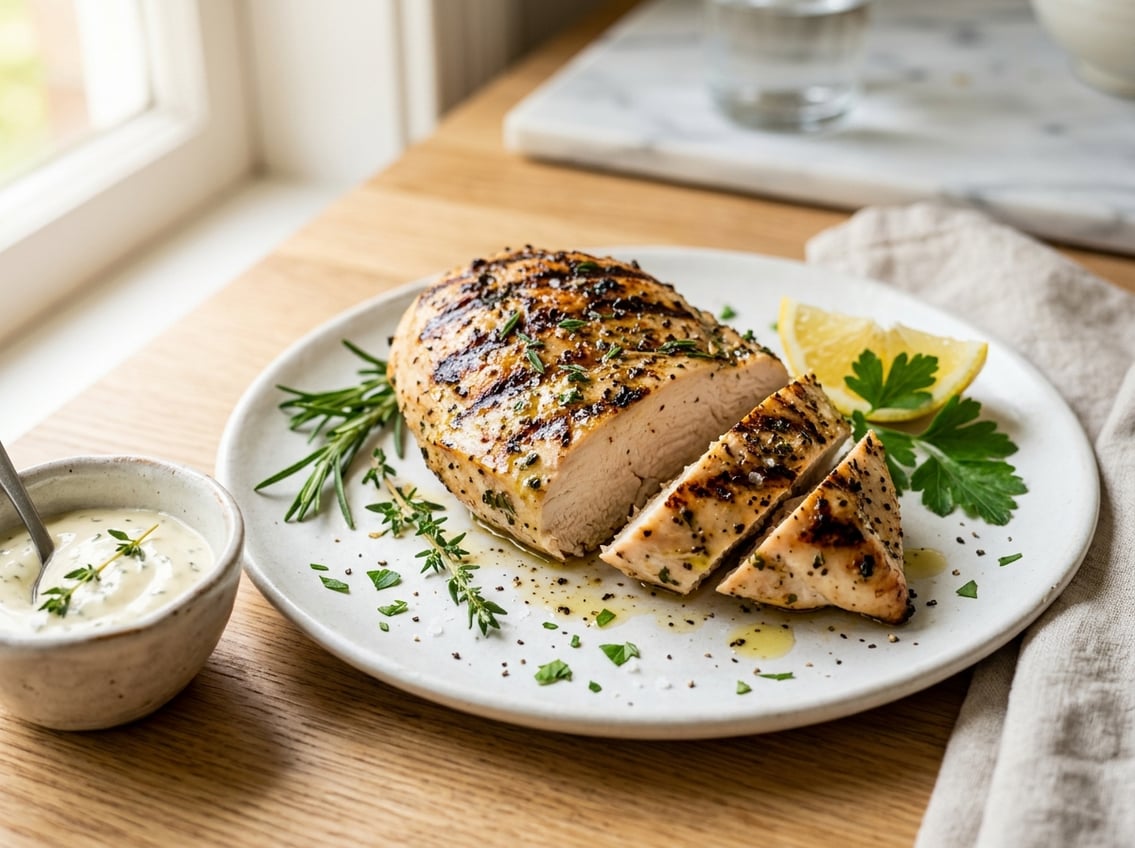
The best cooking methods for a juicy chicken breast use steady heat and avoid overcooking. You want the meat to reach a safe temperature without pushing out too much moisture.
Covered Skillet Cooking and Gentle Pan Cooking
A covered skillet traps steam, which helps finish the chicken more gently after browning. This method works well when you want a moist chicken breast without a long oven time.
Keep the heat moderate and avoid moving the meat too much. A steady, gentle cook gives you more control and less dryness.
Braising and Poaching for Reliable Results
Braising and poaching give you tender chicken breasts with little guesswork. Cooking in liquid protects the meat from harsh heat.
These methods are good for shredded chicken, soups, and recipes where the chicken will be mixed with sauce. They also work well when texture matters more than a crisp exterior.
Grilling Without Drying It Out
You can keep grilled chicken breast juicy if you use even thickness and remove it at the right time. Overcooking is the most common reason grilled chicken turns dry.
Use medium heat, not high heat for too long, and let the chicken rest before slicing. That keeps the juices inside the meat instead of spilling out on the cutting board.
Baking and Slow Cooking Without Overcooking
Baking works well when the pieces are similar in size and you watch the temperature closely. A covered dish or a light coat of oil can help protect the surface.
Slow cooking can also make chicken tender, as long as you do not keep it cooking past the point where it is done. Using temperature instead of guesswork gives you more reliable results.
How to Use Tender Chicken in Everyday Meals
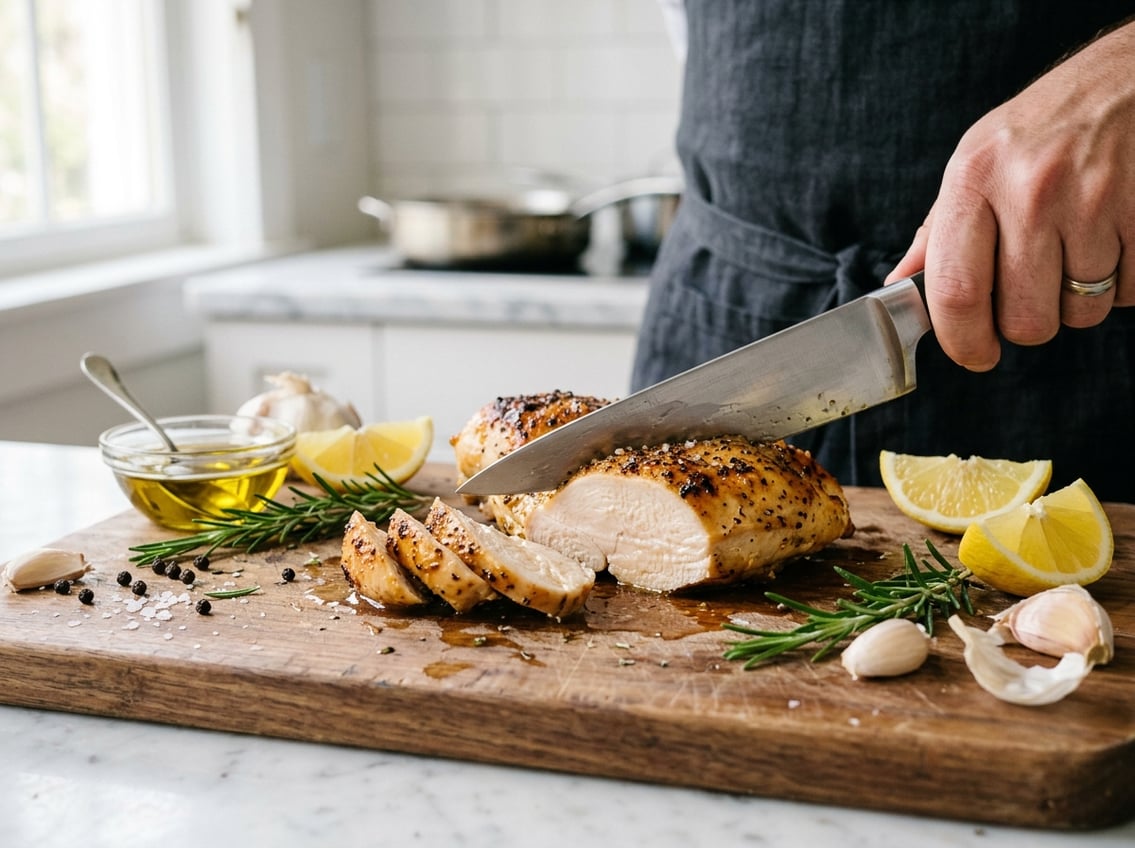
Tender chicken breast fits into many simple meals because it stays easy to slice, top, or mix into sauces. Handle it gently after cooking to keep the texture you worked to create.
Best Ways to Rest, Slice, and Serve
Let the chicken rest for several minutes before you cut it. Resting gives the juices time to settle, which helps keep every slice moist.
When you serve it, slice across the grain and use a sharp knife. This matters as much as the cooking method when you want a truly tender bite.
Dishes That Benefit Most From Tender Chicken Breast
Tender chicken breasts work well in chicken alfredo, salads, rice bowls, wraps, pasta, and stuffed chicken breast recipes. They also fit dishes with sauce because the meat absorbs flavor without falling apart.
For more ideas, choose meals where the chicken stays the focus instead of being hidden in heavy seasoning.
When to Choose Breast for Quick Weeknight Recipes
Chicken breast makes a strong choice when you need a fast dinner and want a lean protein.
It cooks quickly and takes on seasoning well.
You can pair it with many sides.
For busy nights, you can pan-sear or bake the breast for a simple meal.
If you control the thickness and cook it carefully, you can make a reliable dinner easily.


