
What Does Chicken Breast Look Like? Size, Color, and Freshness
You can identify what chicken breast looks like by checking its shape, color, and surface texture.
In the U.S. market, most stores sell a boneless, skinless piece that is pale pink, thick, and gently tapered at one end.
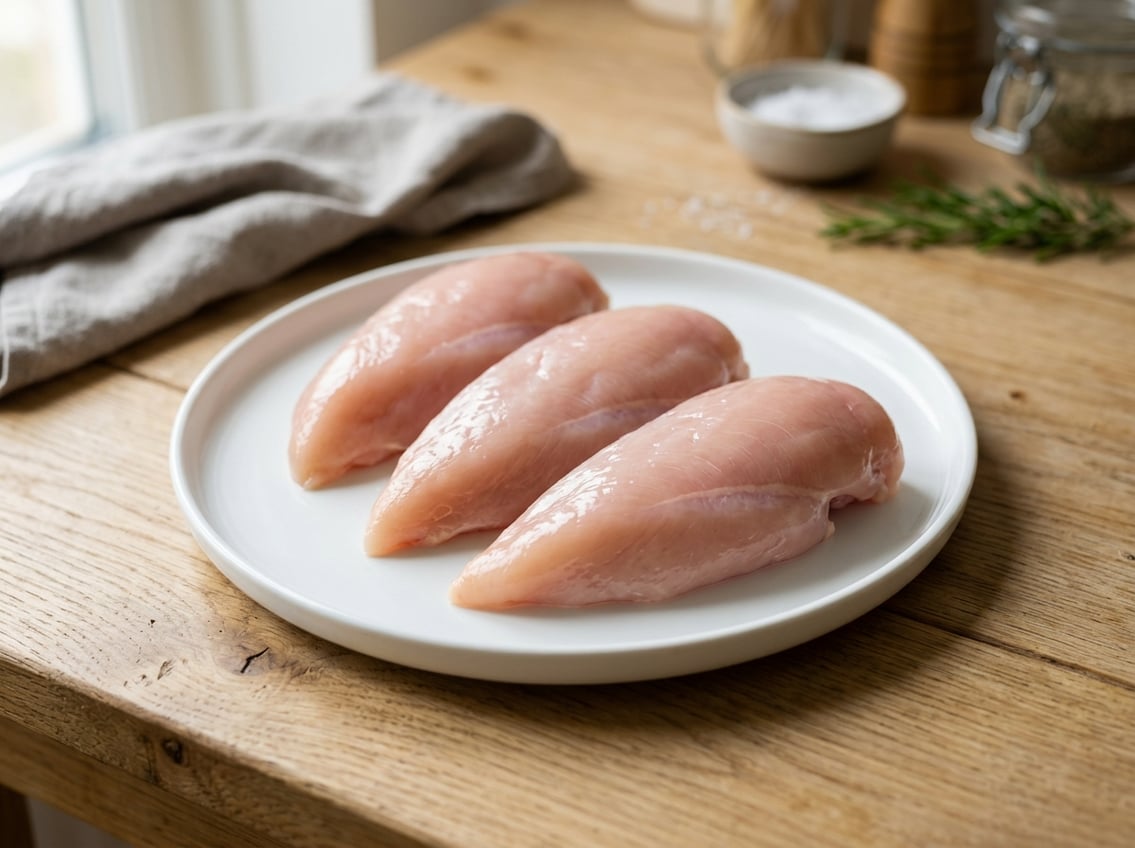
Fresh chicken breast appears firm, lightly glossy, and light pink to peach.
It should not have a strong odor, slimy feel, or gray patches.
A simple visual check helps you spot the difference between a normal raw piece, a cooked piece, and chicken that may be past its best.
You can also judge chicken breast by size and weight.
A package may contain one large breast, two medium breasts, or several smaller pieces that together equal 1 pound.
Thickness matters too, since a thin cut cooks much faster than a thick one.
How to Identify Chicken Breast at a Glance
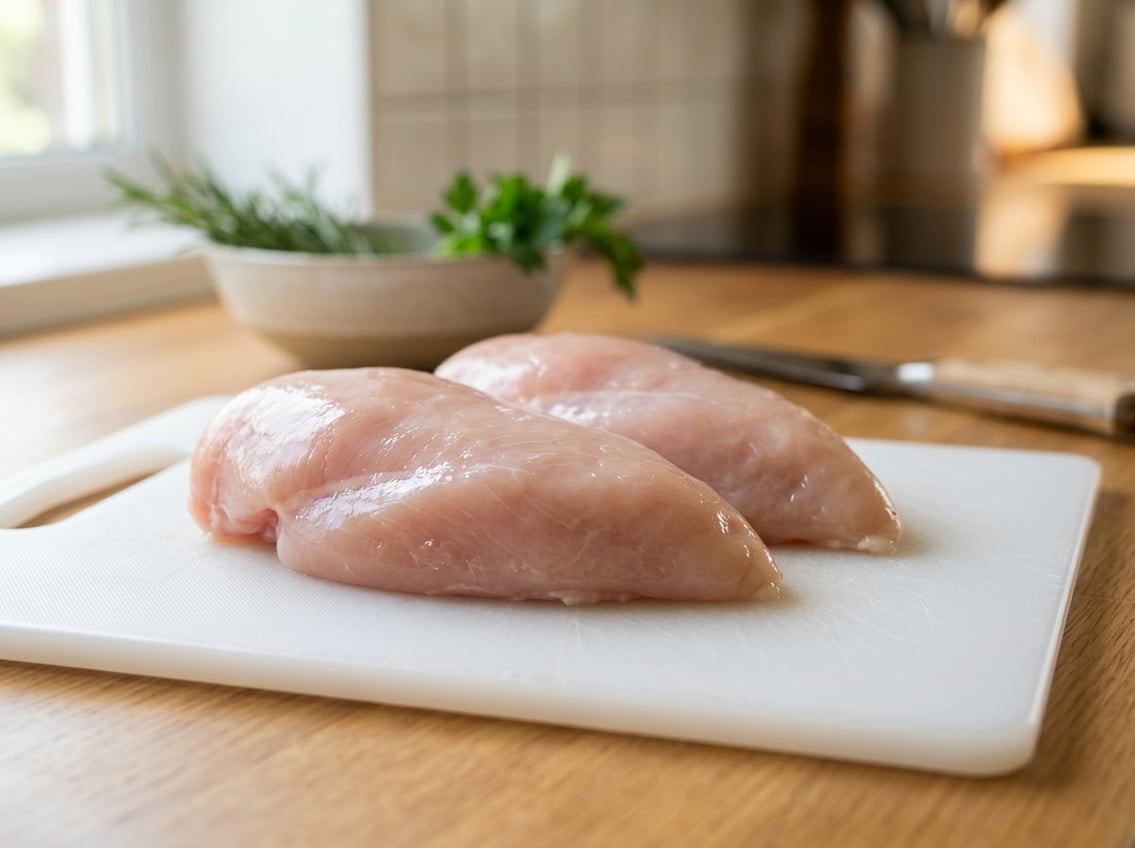
The pectoral muscle on the front of the bird gives chicken breast its smooth, meaty, and oval-shaped look.
Most stores offer boneless, skinless pieces, which many recipes use as the standard cut.
A good visual check starts with shape, color, and texture.
The breast is the upper, lean part of the chicken, which explains its broad, fleshy look.
Typical Shape, Color, and Texture
Raw chicken breast is usually plump on one end and narrower on the other.
The surface should look smooth or slightly moist, not sticky or dry.
The color is usually pale pink to light peach.
Some natural white streaks or slight variation in tone can be normal, especially in larger pieces.
How Raw and Cooked Pieces Differ Visually
Raw chicken breast looks soft pink and glossy.
Cooked chicken breast turns opaque white with a firmer texture, and the juices run clear when it is fully cooked to a safe internal temperature of 165°F, as noted by the USDA.
Cooked chicken should not look translucent.
If the center still looks pink and the meat feels rubbery, it may need more time.
Common Cuts: Boneless, Bone-In, Skinless, and Skin-On
Boneless, skinless chicken breast is the most common grocery store cut.
It looks clean and streamlined, with no bone or visible skin.
Bone-in breasts look larger because the bone adds volume.
Skin-on pieces look fuller and may show a pale layer of skin covering part or all of the breast.
Size and Weight Visual Guide
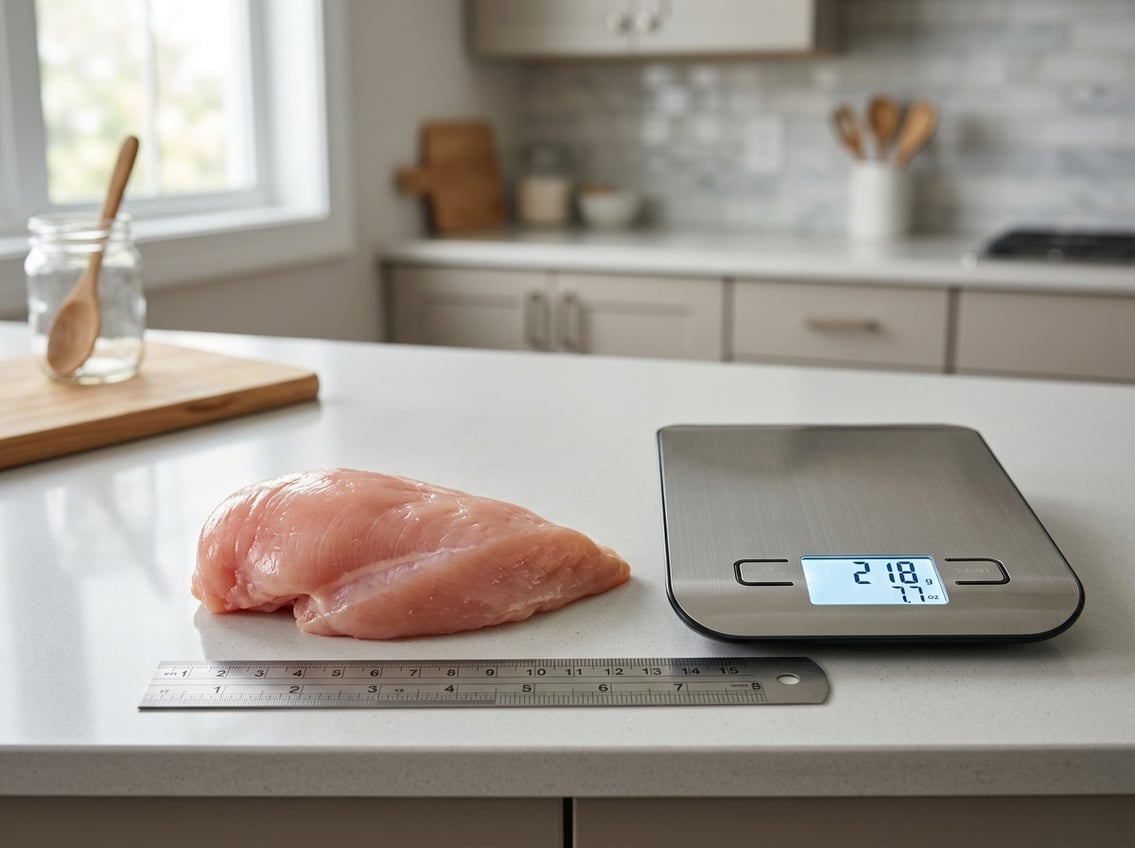
Chicken breast sizes vary a lot, so appearance can change from package to package.
A small breast may look like a modest palm-sized piece, while a larger one can be wide, thick, and heavy enough to cover most of a plate.
Weight also changes the look, especially when bones or trim are included.
A few practical visual clues can help you estimate portion size before you cook.
Average Chicken Breast Sizes and Portion Ranges
A chicken breast often weighs about 4 to 12 ounces, depending on the cut and whether it is raw or cooked, boneless or bone-in.
For boneless, skinless pieces, many packages contain 2 to 3 breasts per pound, though the exact count depends on size.
Smaller breasts may be more uniform, while large ones can be thick enough to split for even cooking.
What 1 Pound Looks Like Without a Scale
One pound of chicken breast usually looks like two average boneless, skinless breasts, or sometimes three smaller ones.
If the pieces are large, 1 pound may be only one or two breasts.
A bone-in package can look bigger for the same weight because the bone adds bulk.
Why Trim, Bone, and Thickness Change Appearance
Trimmed breast looks smaller because fat and extra connective tissue have been removed.
Bone-in breasts look heavier and wider, even when the edible meat is similar.
Thickness matters most for cooking.
A thick breast can look smaller than a flat piece of the same weight, since more of its mass sits in the center instead of spreading out.
Signs of Freshness and Spoilage
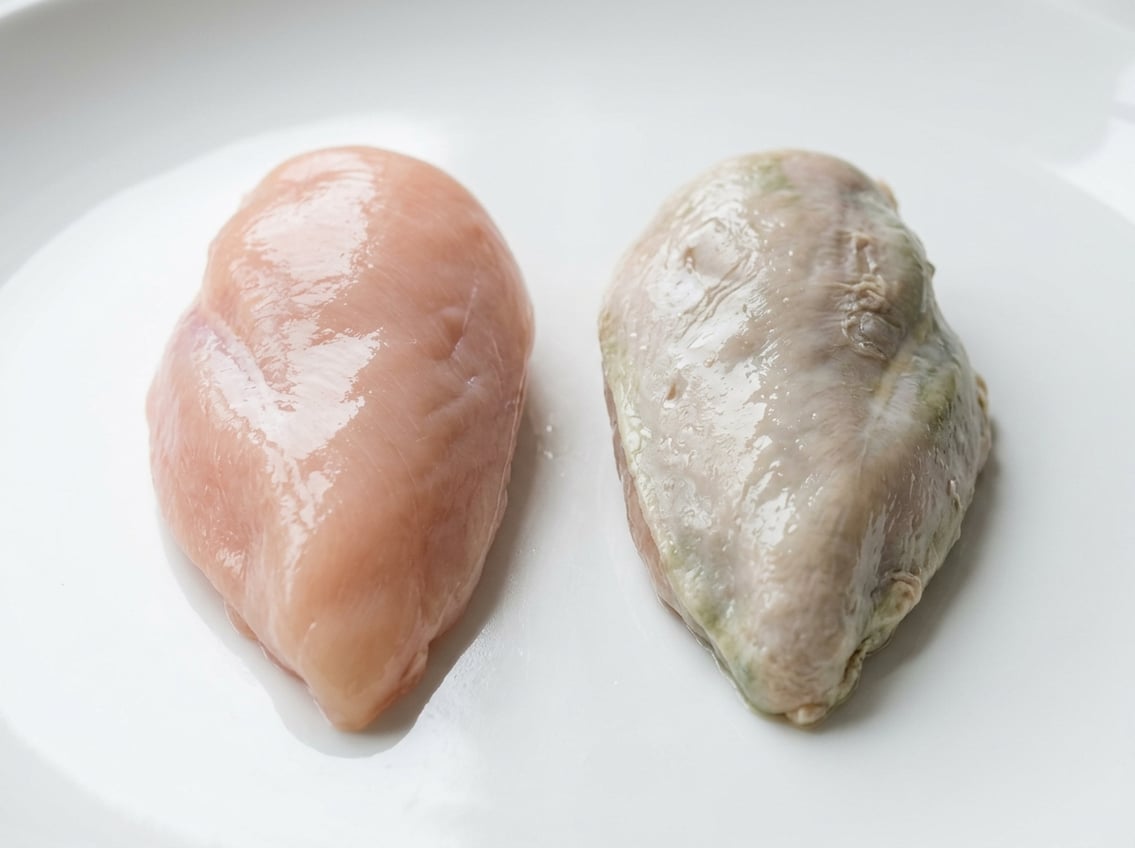
Fresh chicken breast should look clean, moist, and light in color.
Spoiled chicken often shows color changes, a bad smell, or a sticky surface.
Those signs matter more than the date on the package alone.
Packaging also gives clues.
Clear liquid is normal in small amounts, while excessive liquid, torn wrapping, or swollen packaging can point to a storage problem.
What Fresh Packaging and Juices Should Look Like
Fresh chicken breast is usually packed tightly with little excess fluid.
The package should be sealed well and free from leaks.
A small amount of clear or slightly pink juice can be normal.
Pools of cloudy liquid or damaged packaging are warning signs, especially if the chicken has been sitting in the fridge too long.
Color, Smell, and Surface Changes to Watch For
Fresh raw chicken should look light pink and feel firm, not slimy.
A gray, green, or dull yellow tone can signal spoilage.
A sour, sulfur-like, or ammonia smell is a strong warning sign.
If the surface feels tacky or sticky instead of moist, it is safer to throw it away.
When to Refrigerate or Freeze for Later Use
Keep raw chicken breast refrigerated at 40°F or below and use it soon after buying it.
If you do not plan to cook it in time, freeze chicken breast before the quality drops.
Freezing works best when you wrap the meat tightly to reduce freezer burn.
If the chicken already smells off or feels slimy, freezing it will not make it safe again.
How Appearance Connects to Cooking Use
Chicken breast size affects cook time, texture, and the best recipe choice.
Thin pieces cook quickly and work well for fast meals, while large thick breasts need more time or a gentler method.
Visual size also helps you decide whether to leave the breast whole, slice it, or pound it flat.
That choice can change both the final texture and how evenly the meat cooks.
What Different Sizes Mean for Cooking Time
Small breasts cook faster and are easier to keep juicy.
Large, thick breasts take longer and can dry out if the outside finishes before the center.
If your chicken pieces are very uneven, the thinner parts may overcook before the thickest part is done.
Even thickness helps the meat cook at the same rate.
Best Uses for Whole, Thin, or Large Pieces
Whole breasts work well for baking, grilling, and stuffing.
Thin pieces fit quick skillet meals, salads, and sandwiches.
Large breasts are a good choice for recipes where you plan to slice or shred the meat later.
Thin, even pieces also work well for chicken tacos when you want fast cooking and easy seasoning, though you should still cook them to a safe internal temperature.
Recipes Where Visual Size Matters Most
Visual size matters most in stir-fries, cutlets, grilled chicken, and stuffed chicken breast.
These recipes depend on even cooking, so thickness is more important than weight alone.
If you are meal prepping, choose breasts with similar size and shape.
That makes portions more consistent and helps you avoid dry spots or undercooked centers.


