
Is Chicken Breast Same as Thigh? Key Differences
You may wonder, is chicken breast same as thigh when you are shopping, cooking, or comparing recipes. The short answer is no, they come from different parts of the bird and behave differently in the kitchen.
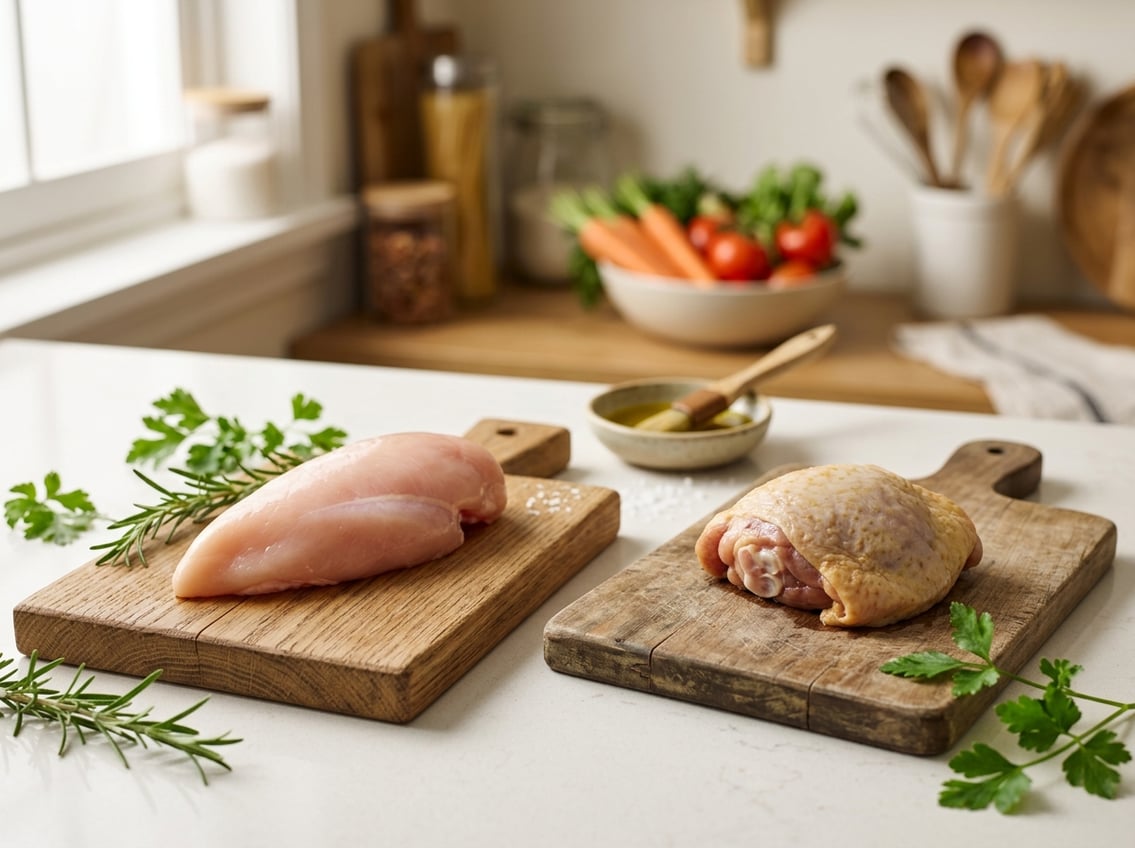
Chicken breast and chicken thigh differ in texture, flavor, fat, and cooking method. Choosing the right cut for your meal gives you better results, whether you want lean protein, richer flavor, or a cut that stays juicy under heat.
What Makes These Cuts Different
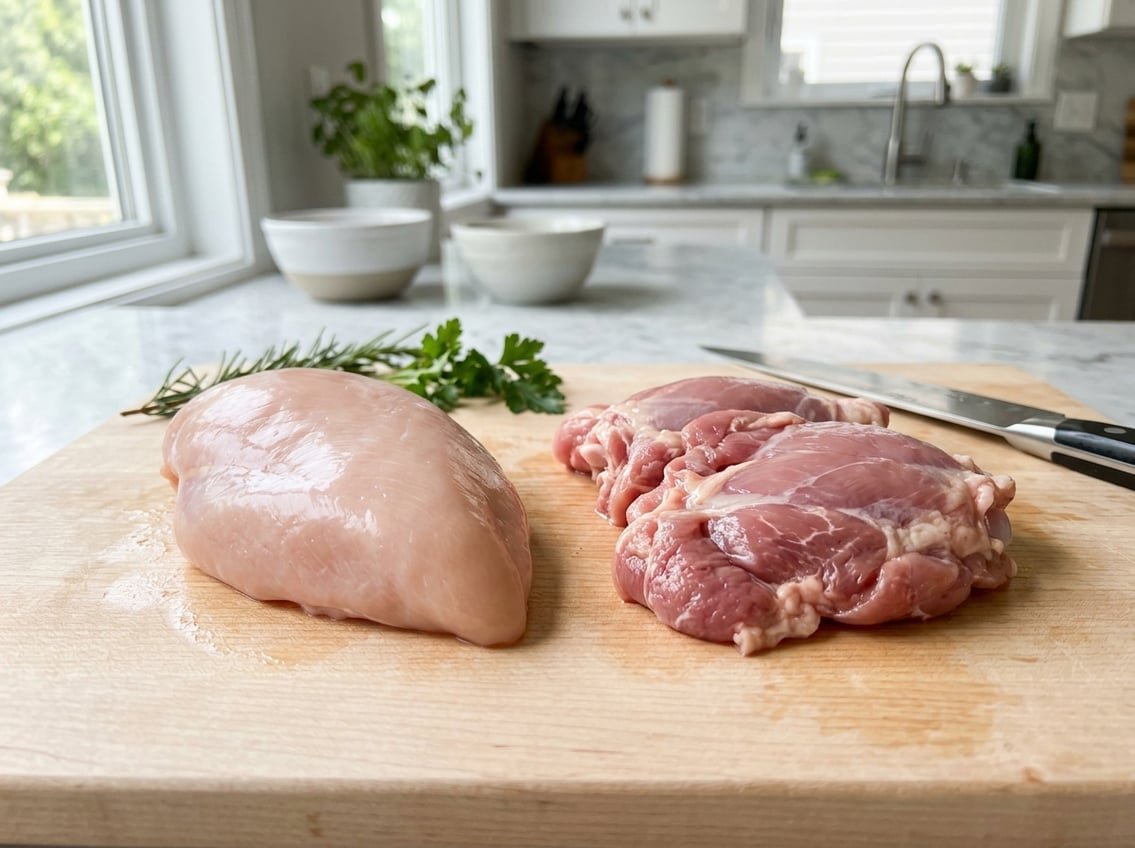
Chicken breast vs thigh comes down to anatomy, muscle use, and fat. These differences shape the texture, flavor profile, and how each cut reacts to heat.
Where Chicken Breast and Thigh Come From
Chicken breast comes from the pectoral muscles on the bird’s chest. Chicken thigh comes from the upper leg, a part that does more work as the chicken moves.
That location matters. Stores sell breast meat as boneless or bone-in, with skinless and skin-on options. Stores also sell thighs in both bone-in and boneless forms, including skinless and skin-on chicken thighs.
White Meat vs Dark Meat
Chicken breast is white meat. Chicken thigh is dark meat.
The color difference comes from muscle use and fat content, which changes both flavor and cooking behavior. Breast has a mild taste and a tender texture when cooked well.
Thigh has a deeper flavor and a richer bite because it contains more intramuscular fat and connective tissue.
How Fat and Muscle Structure Affect Texture
Chicken breast has less fat and less connective tissue, so it cooks faster and can become dry if overdone. Chicken thigh has more intramuscular fat and connective tissue, which gives it a juicier, more forgiving texture.
Thighs stay tender during longer cooking times, while breasts need more care. If you want a cut that holds up in recipes with sauce or heat, thigh usually gives you more room for error.
Nutrition Differences That Matter
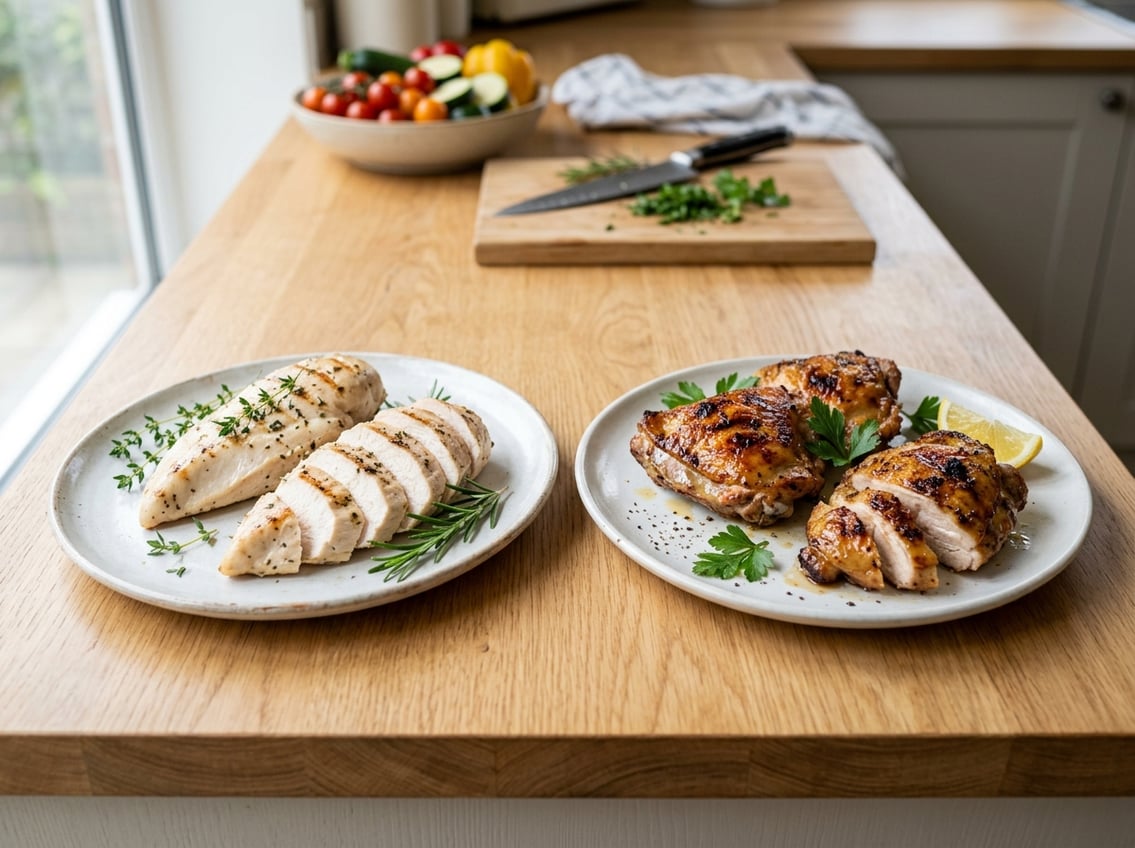
Both cuts can fit a healthy eating plan, yet they are not nutritionally the same. The main differences show up in calories, fat content, and a few key micronutrients.
Calories, Protein, and Fat Content
If you want lean protein, chicken breast is the more compact choice. A three-ounce serving of boneless, skinless chicken breast has about 140 calories and 3 grams of fat, while the same serving of boneless, skinless chicken thighs has about 170 calories and 9 grams of fat, according to The Pioneer Woman.
Chicken breast also has a little more protein per calorie, which is useful if you are aiming for a high-protein meal with less fat. Chicken thigh still offers plenty of protein, just with a richer calorie profile.
Micronutrients in Each Cut
Chicken thighs often provide more iron, zinc, selenium, and phosphorus than breasts. These nutrients support energy use, immune function, and bone health.
Chicken breast supplies niacin and other B vitamins, along with high-quality protein. If you want a lighter cut for frequent meals, breast works well.
If you want a slightly richer cut with more minerals, thigh has an edge.
Which Option Fits Different Health Goals
If your goal is calorie control, chicken breast is usually the better fit. If your goal is satiety, flavor, or a meal that feels more filling, chicken thigh may be the better match.
Both can work in balanced meals. Your choice depends on whether you want lean protein, more fat, or a stronger taste.
Best Uses in the Kitchen

Your cooking method should guide your cut choice. Chicken breast works best in quick, dry-heat recipes, while chicken thigh performs well in longer, wetter, or higher-heat cooking.
When Chicken Breast Works Best
Chicken breast is a strong choice for grilling, roasting, and poaching when you want a mild flavor and a neat slice. It also works well in salads, sandwiches, and dishes where the meat should stay firm.
Because it is lean, breast is popular for grilled chicken and roasted chicken recipes. A good marinade can help add flavor and reduce drying out.
When Chicken Thigh Is the Better Choice
Chicken thigh works well for braising, slow cooking, and stew. The extra fat and connective tissue help it stay moist and tender over time.
It also does well in grilling and roasting if you want a richer result. According to The Pioneer Woman, thighs are harder to overcook, which makes them useful for busy weeknight meals.
How to Avoid Dry or Tough Results
Cook chicken breast to 165°F and avoid cooking it past that point. Use even thickness and watch the cook time closely.
Let the meat rest before slicing. For thighs, use enough heat to render the fat and fully cook the meat.
Both cuts benefit from seasoning. Breast especially needs careful timing to avoid drying out.


