
Can Chicken Breast Be Refrozen After Thawed? Safety Rules
Can chicken breast be refrozen after thawed? Yes, in some cases you can refreeze it. The main rule is simple: the chicken must stay cold the whole time and never sit out long enough for bacteria to grow.
If you thawed your chicken breast safely in the refrigerator, you can usually refreeze it, though the texture may change.
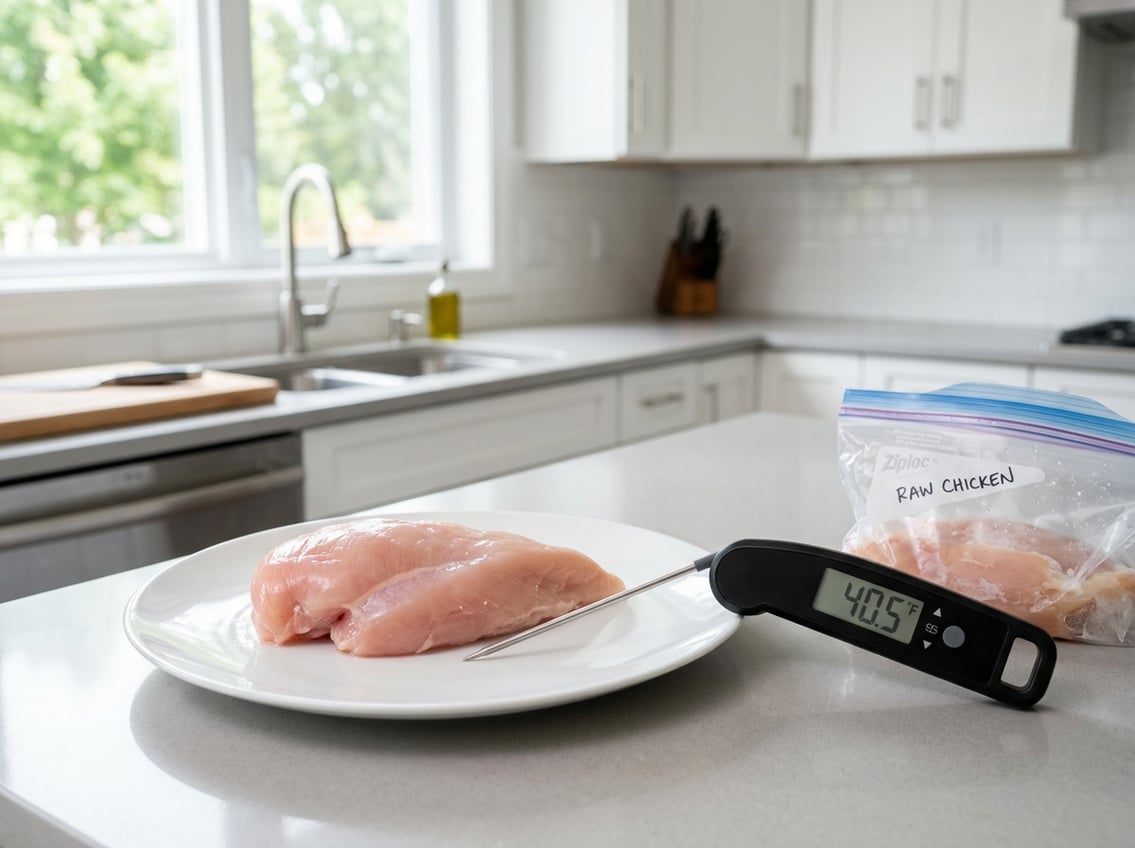
You can refreeze chicken breast only when it has stayed refrigerated at 40°F or below, has not been left out, and still looks and smells normal.
That rule matters because thawing method decides the risk. If you thaw chicken in the fridge, you can usually refreeze it, while chicken thawed in cold water or the microwave needs to be cooked first.
According to MedicineNet on refreezing chicken after thawing, food safety rules depend on how long the chicken has been thawed and whether it stayed cold enough.
When Refreezing Is Safe and When It Is Not
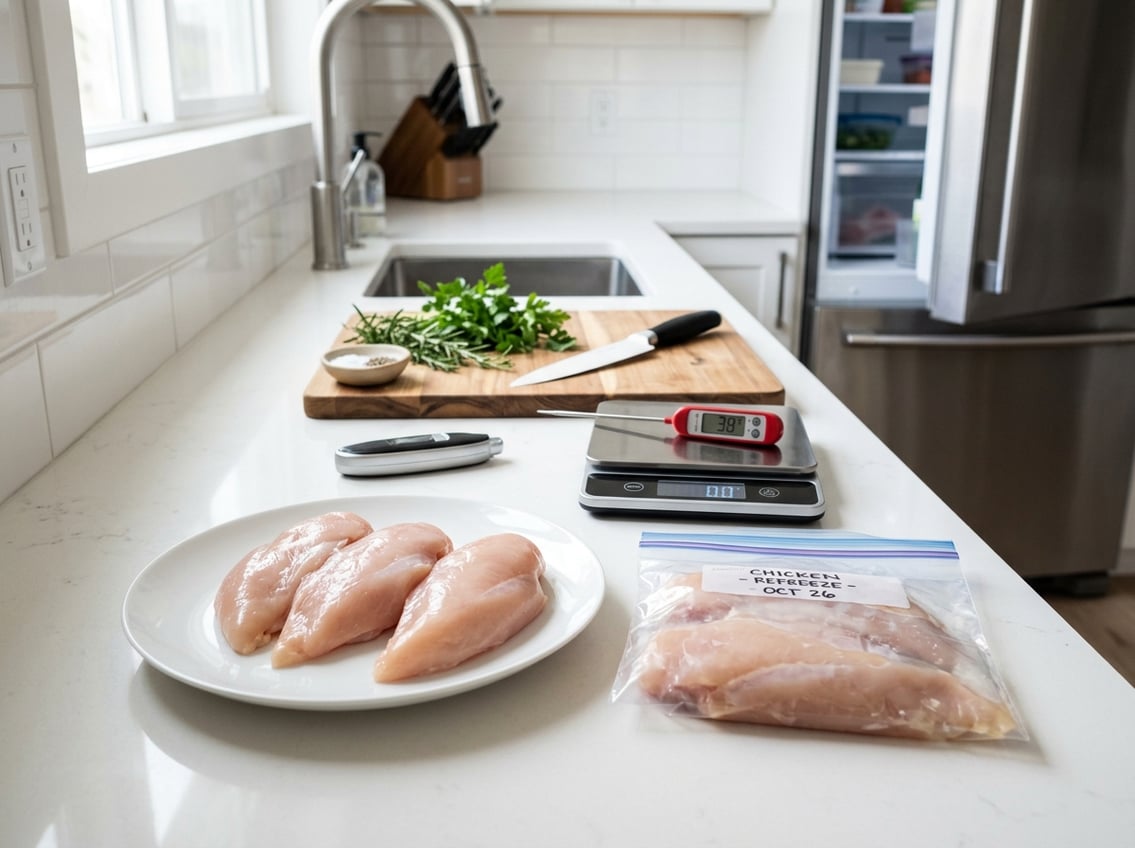
You can safely refreeze chicken when you thaw it in a controlled way and keep it cold the entire time.
The key questions are where it thawed, how long it stayed in the fridge, and whether any part of it warmed up too much.
Raw Chicken Thawed in the Refrigerator
When you thaw raw chicken in the refrigerator, you have the safest case. If it stayed at 40°F or below, you can safely refreeze it as long as it has not been sitting in the fridge for too long.
A practical rule is to refreeze within 1 to 2 days of thawing. That keeps the chicken within normal food safety guidelines and lowers the chance of spoilage.
Chicken Thawed in Cold Water or the Microwave
If you thaw chicken in cold water or the microwave, do not refreeze it raw. Those methods can warm parts of the meat enough to start bacterial growth, even if the center still feels cold.
If you use either method, cook the chicken right away. After cooking, you can freeze the cooked chicken if needed.
How Long Thawed Chicken Can Stay in the Fridge
Once it is thawed in the fridge, treat chicken like fresh raw chicken and use it within 1 to 2 days.
If you wait longer, the quality drops and the safety risk rises.
When Room-Temperature Exposure Makes It Unsafe
If you leave chicken out at room temperature for more than 2 hours, it is unsafe to refreeze. If the room is warm, that window is even shorter.
Room-temperature exposure gives bacteria a chance to grow, so food safety guidelines call for throwing it away.
How to Handle Raw and Cooked Chicken Before Freezing Again
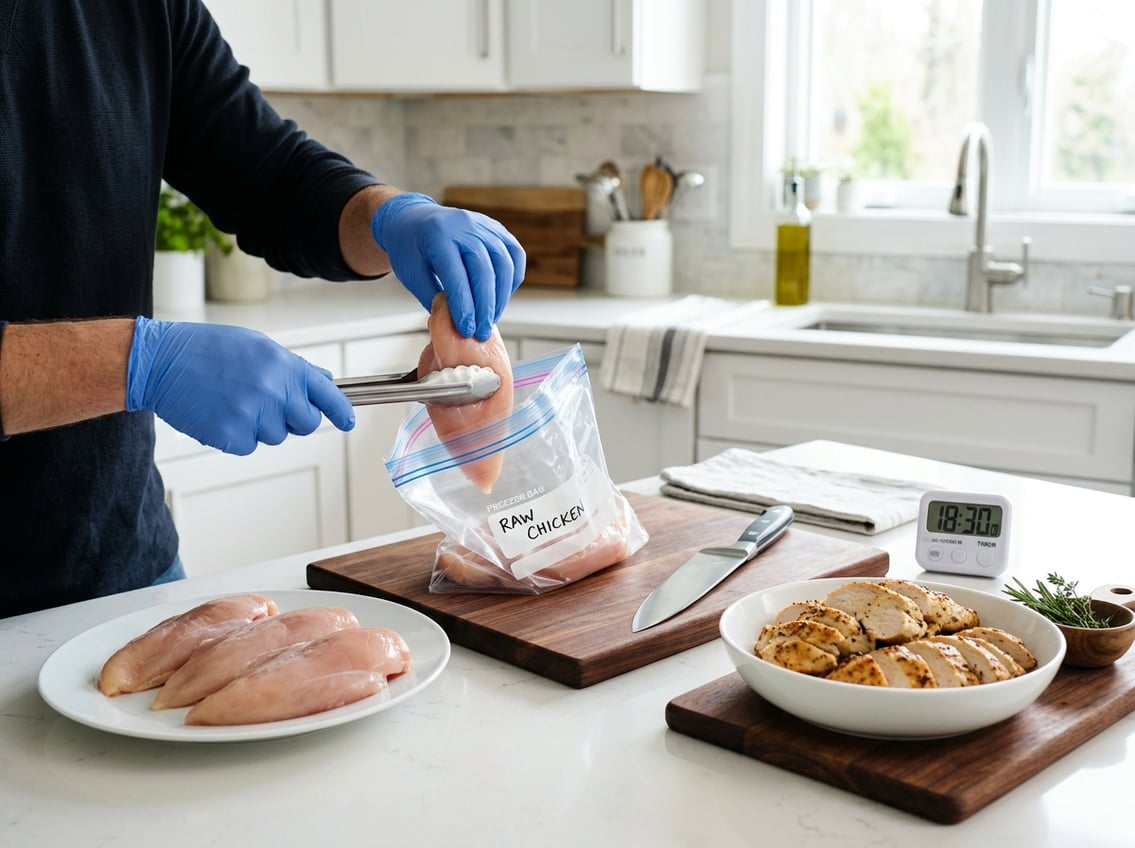
Safe refreezing starts with careful handling. Keep raw chicken separate from ready-to-eat food, and freeze cooked chicken the right way if you plan to save leftovers.
Handling Raw Chicken Without Cross-Contamination
When you handle raw chicken, keep it in a sealed container or bag and away from produce, bread, and cooked food. Wash your hands, knives, cutting boards, and counters with hot soapy water after contact.
Raw chicken can spread bacteria to other foods and surfaces. Good handling habits lower the risk before the chicken goes back in the freezer.
How to Refreeze Cooked Chicken Properly
You can refreeze cooked chicken if you cooked it thoroughly and cooled it quickly. Chill cooked chicken in the fridge first, then pack it in airtight portions and freeze it as soon as it is cold.
Use shallow containers or freezer bags so it freezes faster. Cooked chicken leftovers are best used within 3 to 4 days in the fridge before freezing again, according to MedicineNet’s guidance on cooked chicken storage.
Signs Chicken Should Be Discarded Instead
Throw chicken away if it smells sour, feels sticky, or has an unusual color. Any sign that it sat out too long or partially cooked in the thawing process is also a reason to discard it.
Do not try to save chicken you are unsure about. Food safety rules are strict because chicken can carry harmful bacteria.
Best Packaging to Prevent Freezer Burn
Use airtight freezer bags or freezer-safe containers to prevent freezer burn. Press out extra air before sealing, and wrap the chicken tightly if you plan to store it for more than a short time.
Freezer burn does not usually make food unsafe, but it does hurt taste and texture. Tight packaging helps refreeze chicken without drying it out too much.
Quality Changes, Storage Tips, and Common Mistakes
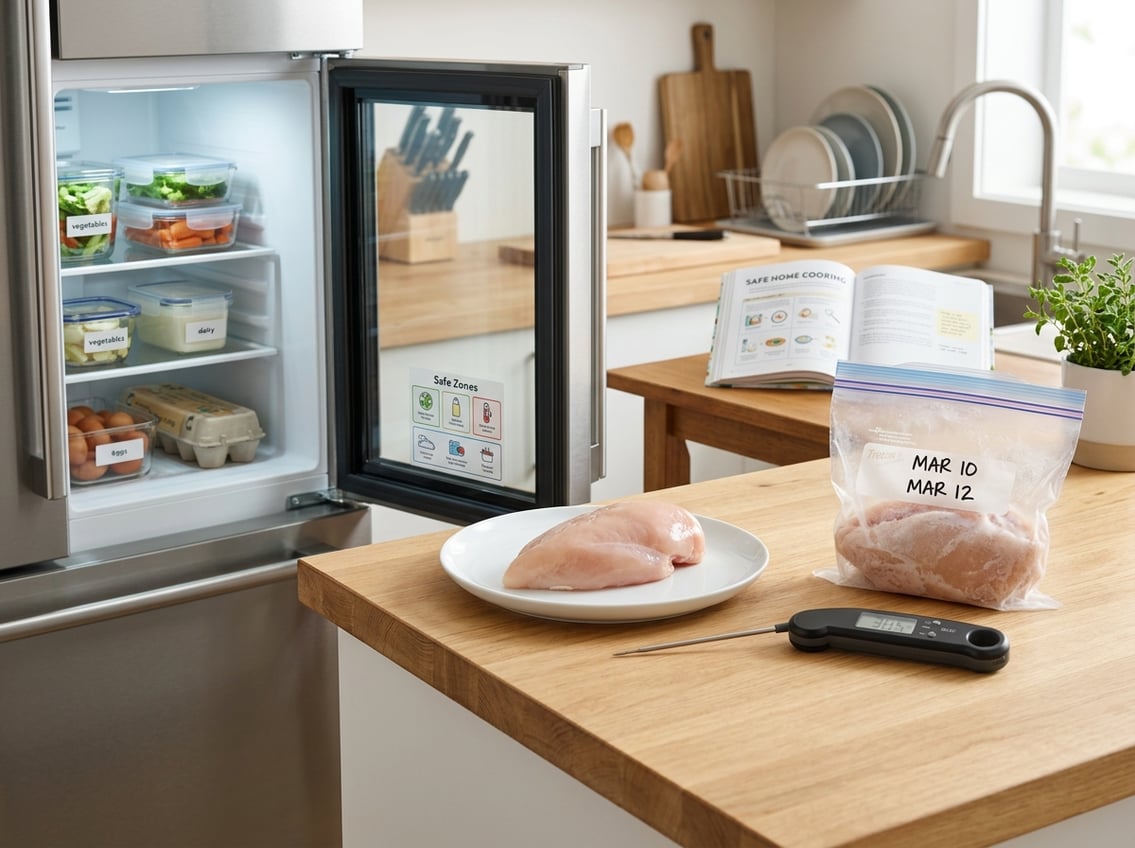
Refreezing changes chicken breast more than it changes safety, as long as you keep the food cold and handle it correctly. The biggest tradeoff is texture, followed by storage time and packaging quality.
What Refreezing Does to Texture and Moisture
Each freeze and thaw cycle pulls moisture out of the meat. That can make chicken breast drier, firmer, or slightly stringy after cooking.
You can still get good results if you cook it in a moist method, such as baking with a sauce or braising.
Best Practices for Freezing Chicken Breast
Start with fresh chicken, freeze it quickly, and thaw it only when you are ready to use it. Portion chicken into meal-size packs so you do not have to thaw more than you need.
Keep raw chicken in the coldest part of the refrigerator while it thaws. If you plan to refreeze chicken breast, avoid opening the package over and over, since that adds warmth and increases contamination risk.
Labeling, Timing, and Freezer Temperature
Label every package with the date so you can track how long it has been stored. Keep the freezer at 0°F to help maintain quality and slow spoilage.
Chicken can stay frozen for a long time, but its best quality is usually much better within the first several months.
Common Refreezing Mistakes to Avoid
People often thaw chicken on the counter, leave it in the fridge too long, or refreeze meat after it has warmed up too much.
Using packaging that lets air in causes freezer burn.
Do not wash raw chicken before freezing or cooking, because that can spread germs around your kitchen.
Do not rely on smell alone to judge safety, since harmful bacteria may not change the odor.


