
Can Chicken Breast Be Cooked From Frozen? Safety and Methods
You can cook chicken breast from frozen, and it is safe when you use the right method. You do not need to thaw it first if you cook it all the way through and keep food safety in mind.
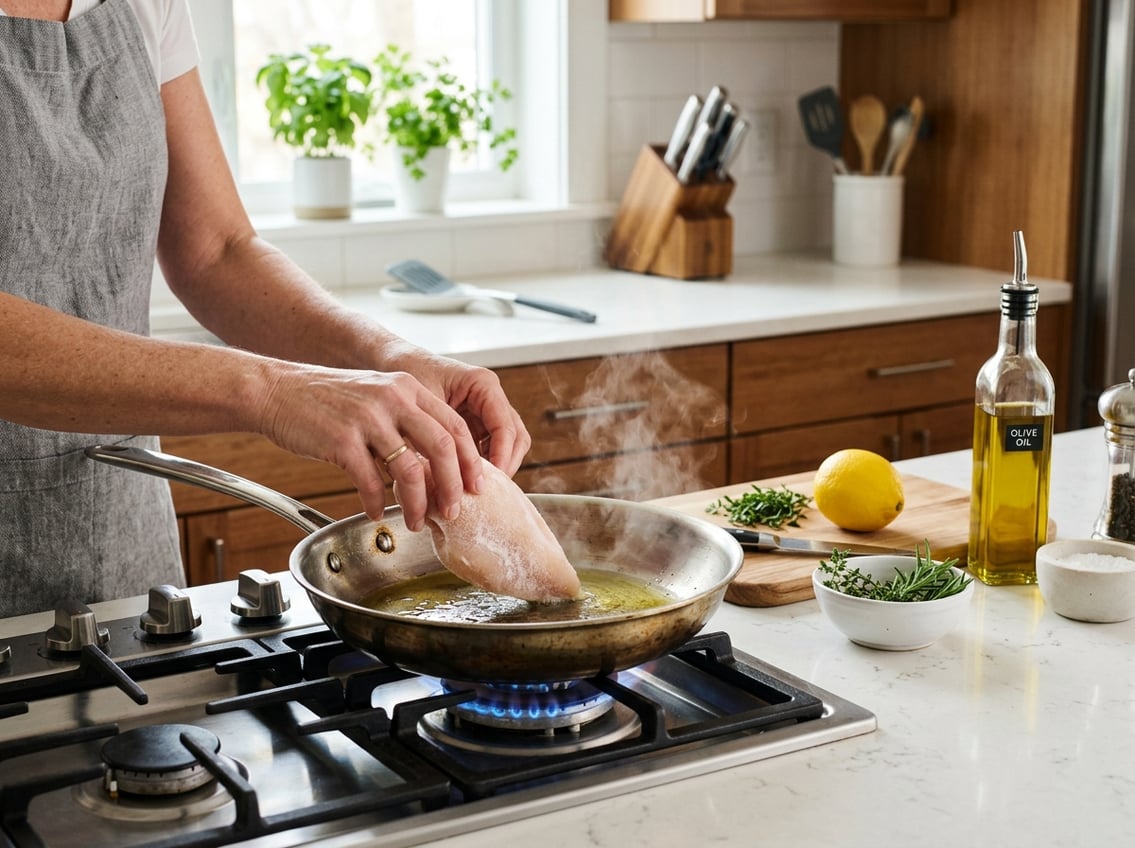
As long as the chicken reaches 165°F in the thickest part and you use a method that cooks it evenly, it is safe to eat.
Frozen chicken breast usually takes longer to cook, and the texture can suffer if you rush it or use very high heat.
The best results come from methods that add moisture or let the chicken cook gently.
According to Food Network’s frozen chicken breast guide, you can get juicy chicken breast when you bake, poach, or pan-fry it with enough moisture.
The main job is to cook it through without drying out the outside before the center is done.
Safety Basics Before You Start
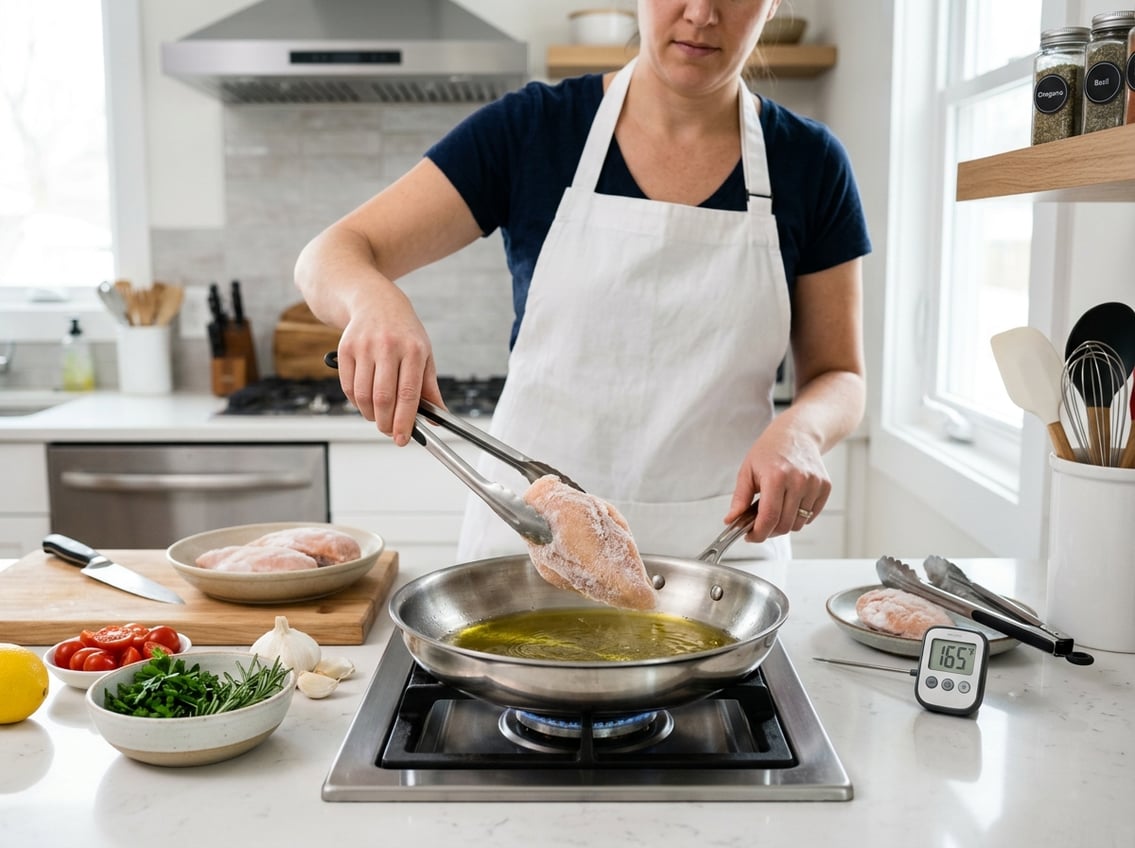
You can cook frozen chicken without thawing if the chicken stays at a proper temperature during cooking.
Avoid cooking the outside too fast while leaving the center undercooked.
Food safety matters because chicken can carry harmful bacteria before it is fully cooked.
A safe method gives the inside enough time to reach the right temperature without creating cold spots.
What Internal Temperature Chicken Breast Must Reach
Chicken breast must reach 165°F in the thickest part to be safe to eat.
Use a food thermometer, not color alone, because pink meat is not a reliable sign of doneness.
Why Cooking Time Takes Longer From Frozen
Frozen chicken takes longer because the meat must thaw as it heats, which slows the process.
A frozen breast may take about 1.5 times longer than a thawed one, according to the Food Network guide.
Why Partially Thawed Chicken Can Cook Unevenly
If the outside cooks much faster than the center, chicken that is partly thawed can be risky.
That uneven heat can leave one part dry and overdone while another part is still not safe.
Methods to Avoid for Food Safety
Do not use quick, high-heat methods that do not give the inside time to cook through, such as grilling a thick frozen breast over very hot flames with no lid or liquid.
Also, do not let chicken sit out on the counter to “half thaw” before cooking.
Best Ways to Cook Frozen Chicken Breast
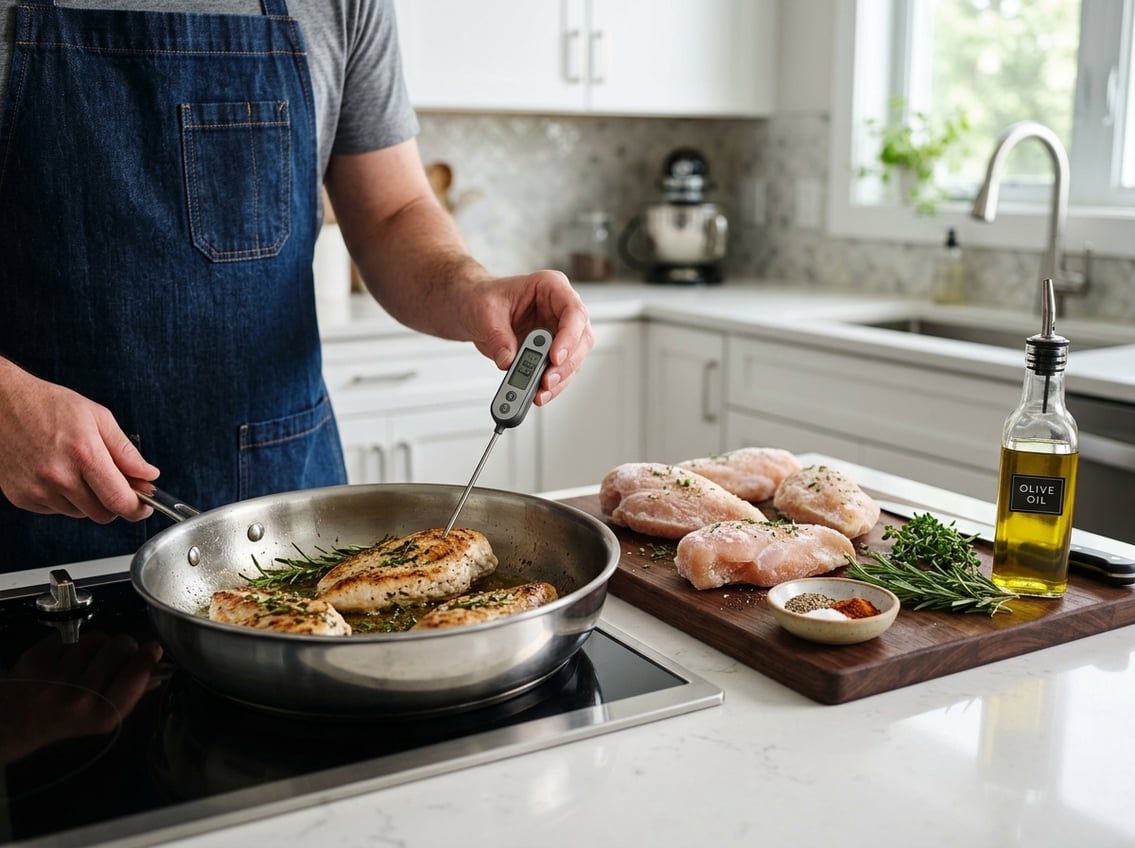
The best ways to cook frozen chicken breast control heat and help hold moisture.
Baking, simmering, and pressure cooking all work well when you adjust the time and check the temperature.
These methods fit common weeknight cooking.
A thermometer removes the guesswork and helps you avoid dry chicken.
Baking in the Oven
Baking works well when you coat the chicken with sauce, oil, or seasoning that helps trap moisture.
Put the frozen breast on a sheet pan and bake until it reaches 165°F, checking the center with a thermometer.
Simmering on the Stovetop
Simmering in broth, sauce, or water is one of the most forgiving ways to cook frozen chicken.
Gentle liquid heat keeps the outside from drying out while the center catches up.
Using an Instant Pot or Pressure Cooker
A pressure cooker can be a practical way to cook frozen chicken breast because it uses steady, enclosed heat.
Follow the manufacturer’s timing and verify that the chicken reaches 165°F before serving.
How to Check Doneness Without Guessing
Use an instant-read thermometer inserted into the thickest part of the breast.
If you do not have one, slice into the thickest area and look for fully opaque meat and clear juices, then confirm with a thermometer as soon as possible.
Texture, Moisture, and Everyday Cooking Results
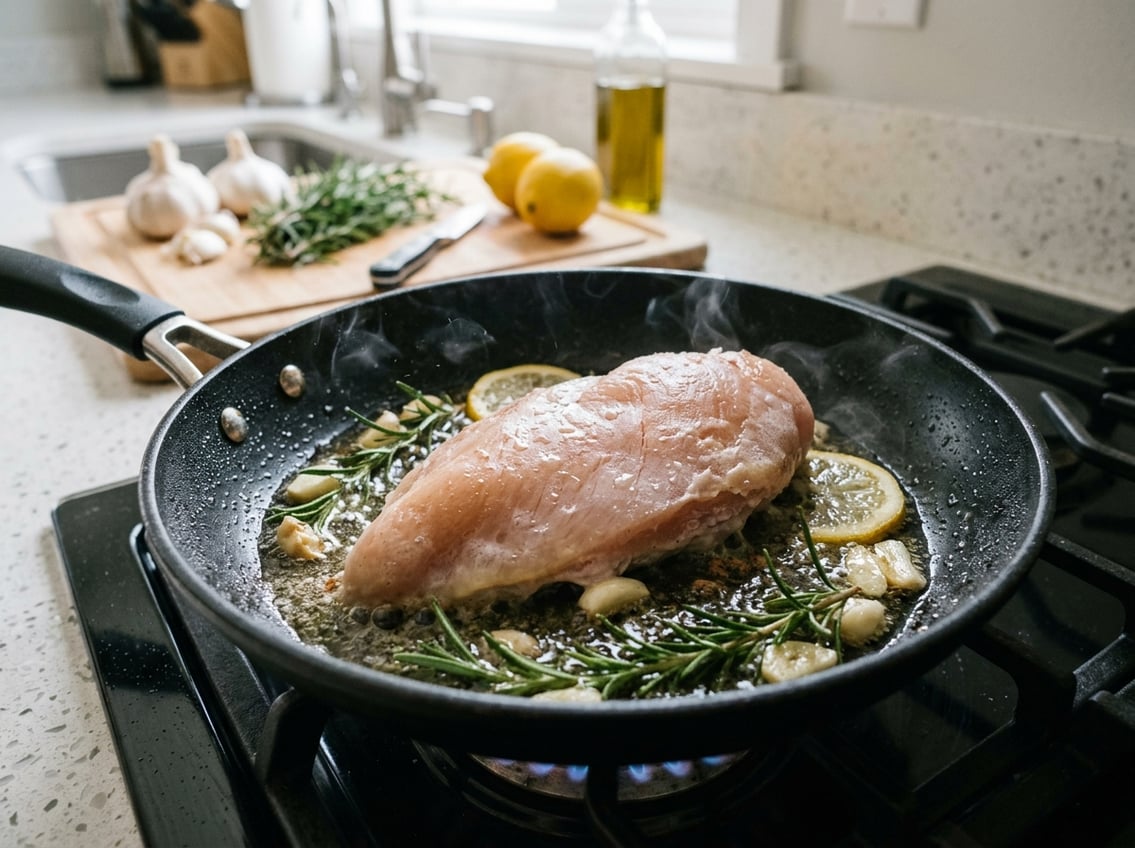
Frozen chicken breast can taste good, but the texture is often less tender than fresh chicken.
Ice crystals can damage the meat’s structure, which makes moisture loss more likely during cooking.
A few simple habits can improve the result.
Moist heat, sauces, and careful storage help keep the meat from turning dry or bland.
How to Keep Chicken Breast From Drying Out
Cook it with a little liquid, oil, or sauce, and avoid high heat for too long.
Pull the chicken as soon as it reaches 165°F, since extra time in the pan or oven makes dryness more likely.
When Sauce or Broth Helps Most
Sauce or broth helps most when you are baking, simmering, or pressure cooking.
These liquids add flavor and protect the chicken from direct heat, which is useful when you want to cook frozen chicken without thawing.
How Frozen Storage Affects Quality
Freezer burn can make the surface dry, pale, and tough.
To help prevent freezer burn, wrap chicken tightly, use sealed freezer bags, and keep air out of the package as much as possible.
Storage and Refreezing After Cooking
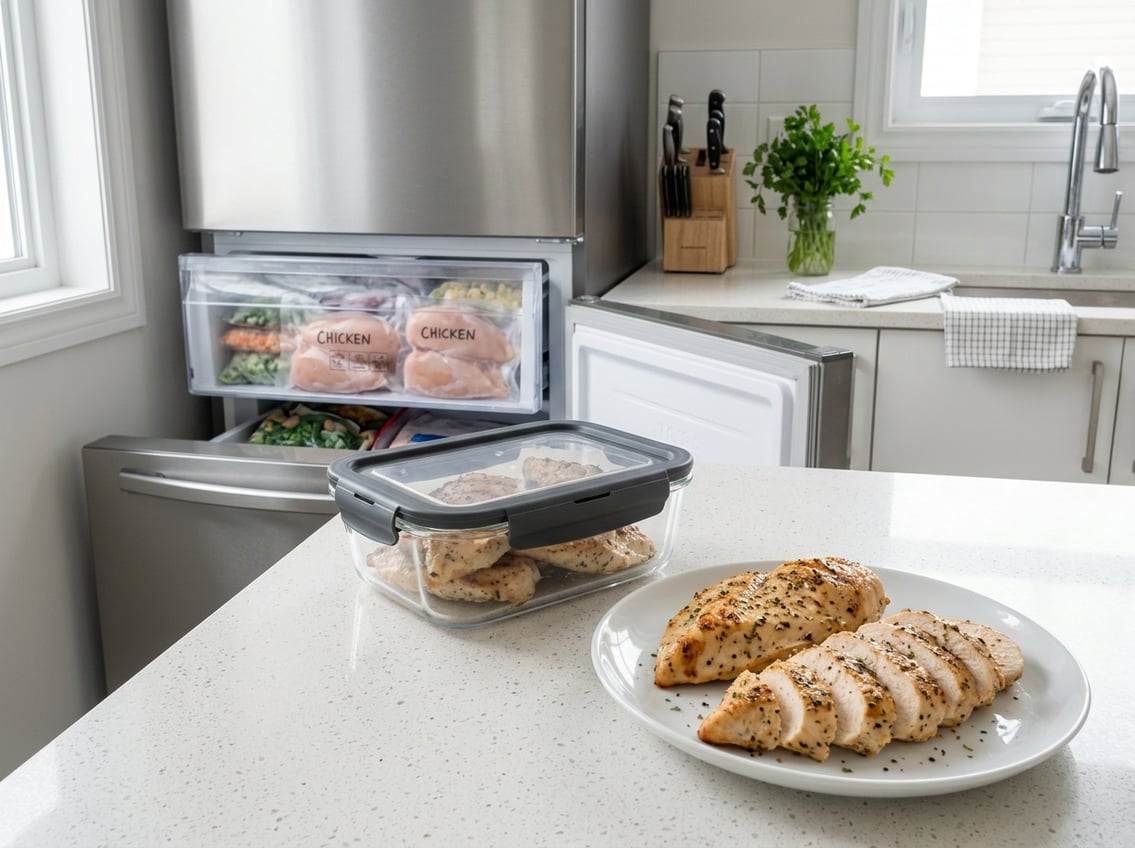
Once you cook chicken, you can store it for later use or freeze it again if you handled it safely.
Cool it quickly, package it well, and avoid repeated temperature changes.
Good storage protects flavor and texture.
Tight wrapping helps prevent freezer burn and keeps the chicken useful for meals later in the week.
When You Can Refreeze Cooked Chicken
You can usually refreeze cooked chicken if you cooled and stored it properly after cooking.
The quality may drop a little, but it is a practical way to reduce waste.
How to Cool and Store It Safely
Cool cooked chicken within 2 hours, then place it in shallow containers or sealed bags.
Refrigerate it promptly or freeze it once it is no longer steaming hot, and keep portions small so they cool faster.
When Frozen Chicken Should Be Discarded
Throw away frozen chicken if the package is torn.
If the chicken smells off after thawing, do not use it.
If the chicken stayed at unsafe temperatures for too long, discard it.
Heavy freezer burn affects quality, not safety, but spoiled or mishandled chicken should not be eaten.


