
Is It Possible to Overcook Chicken Breast? Key Signs
You may wonder, is it possible to overcook chicken breast? The answer is yes.
Chicken breast is lean, so it dries out fast once it stays on heat too long. That happens whether you bake, grill, pan-sear, or poach it.
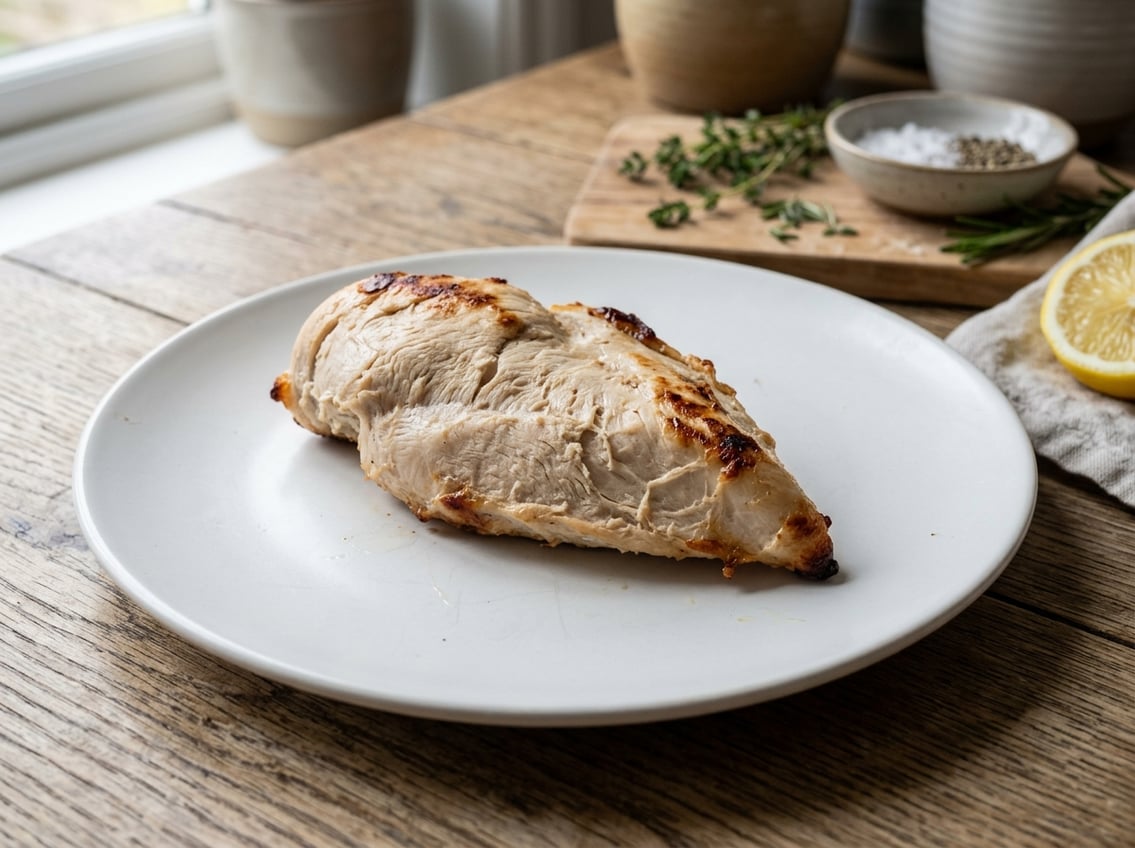
You can overcook chicken breast even when it is safe to eat. The main clues are a dry texture, a tight bite, and less juiciness.
Knowing the right doneness cues helps you avoid serving dry chicken and keeps the meat tender. Food safety still matters.
Chicken can carry Salmonella and Campylobacter, so you need to cook it enough to be safe, then stop before it turns tough. Using a thermometer makes it easier to find that balance.
How to Tell When Chicken Breast Is Done
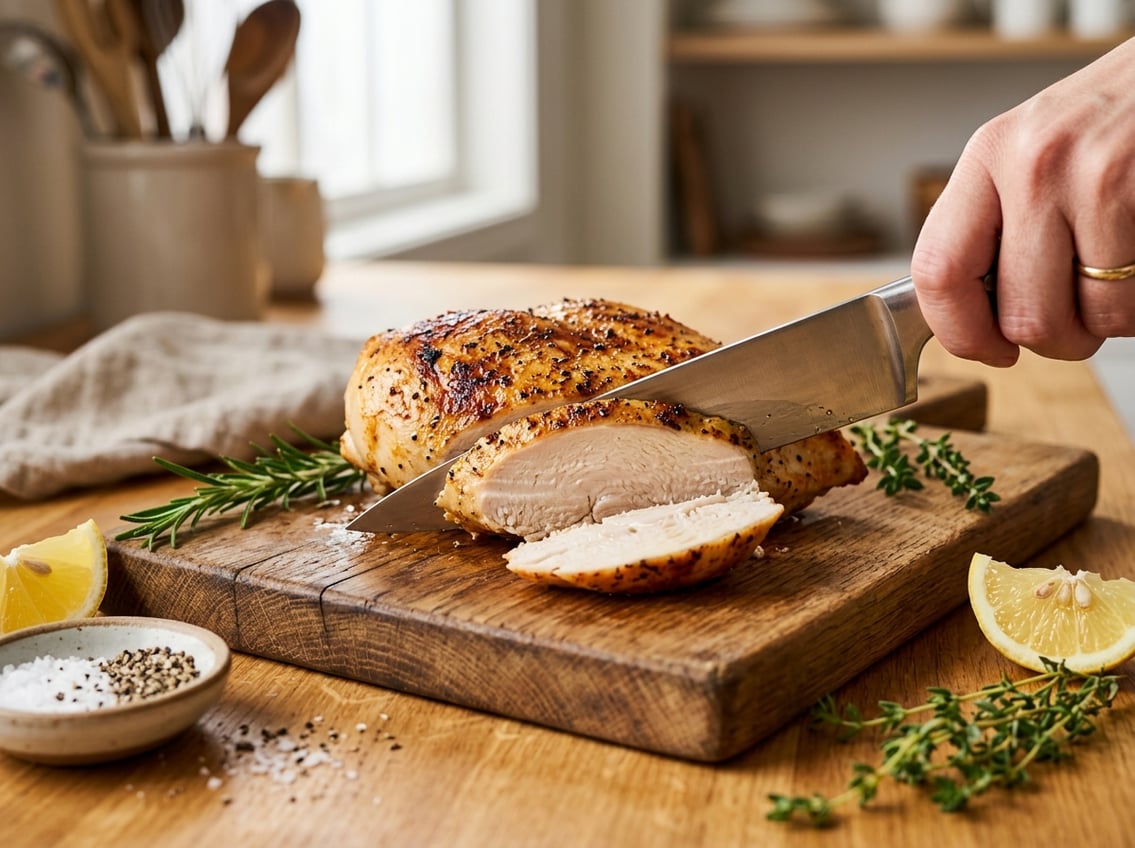
The safest way to judge chicken breast is by temperature, not color alone. Visual clues can help, but they work best when paired with a thermometer.
Safe Internal Temperature and Why 165°F (74°C) Matters
The standard temperature for chicken breast is 165°F (74°C), measured at the thickest part with a food thermometer. That temperature kills harmful bacteria like Salmonella and Campylobacter.
A meat thermometer or instant-read thermometer removes guesswork. Pull the chicken at the right point to reduce both food safety risk and the chance of overcooking.
Why a Meat Thermometer Beats Visual Cues
Chicken can look done before it is fully cooked. It can also stay moist after reaching a safe temperature.
A thermometer gives you the real number inside the meat, which is more reliable than the surface color. If you rely only on appearance, you may cook it too long.
Are Clear Juices a Reliable Sign?
Juices running clear can suggest the chicken is cooked through. Even so, this clue is not as exact as checking internal temperature.
Clear juices do not tell you whether the chicken has reached 165°F (74°C) in the center. For the best result, use both signs, with the thermometer as the final check.
What Overcooking Does to Texture and Moisture
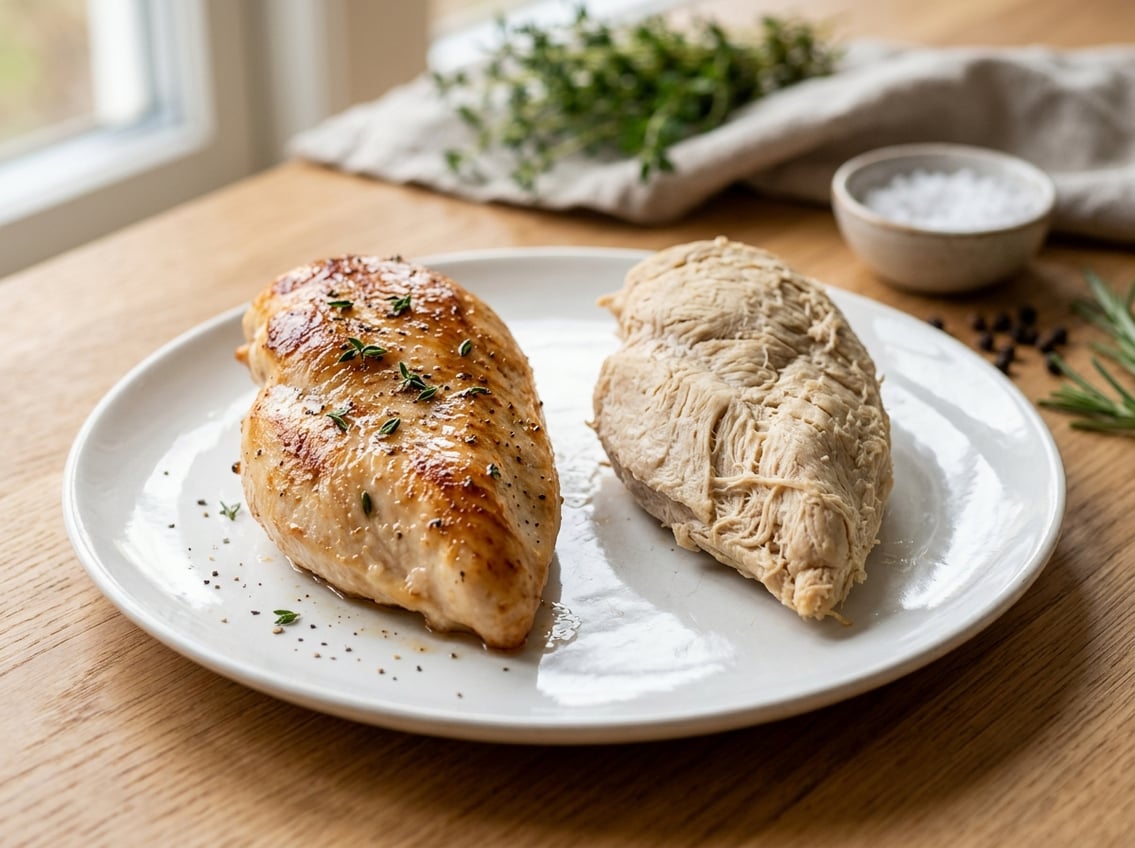
When you overcook chicken, the muscle fibers tighten and push out moisture. That makes overcooked chicken feel firm, stringy, or rubbery instead of tender.
Why Chicken Breast Turns Tough and Dry
Chicken breast has very little fat compared with darker cuts. As heat keeps working on the meat, moisture leaves faster than it can stay trapped inside.
This leads to dry chicken. Lean meat gives you a shorter window between perfectly cooked and overdone.
Common Signs You Left It on Too Long
The most common signs of overcooked chicken are easy to spot once you know them:
- dry, chalky, or stringy texture
- rubbery or leathery bite
You may also notice shrinkage around the edges or dull, pale, overly firm meat. Very little juice when you cut into it is another clue.
If the chicken feels tight when you slice it, it is usually past the ideal point. A slightly resilient bite is normal; a hard or chewy bite is a warning sign.
Carryover Cooking After It Leaves the Heat
Carryover cooking keeps raising the temperature after the chicken leaves the pan, grill, or oven. The center can keep cooking while the surface rests.
To prevent overcooking, remove the chicken a little before it reaches 165°F (74°C), then let it rest briefly. The internal temperature often climbs a few degrees during that time.
Best Ways to Keep Chicken Breast Juicy
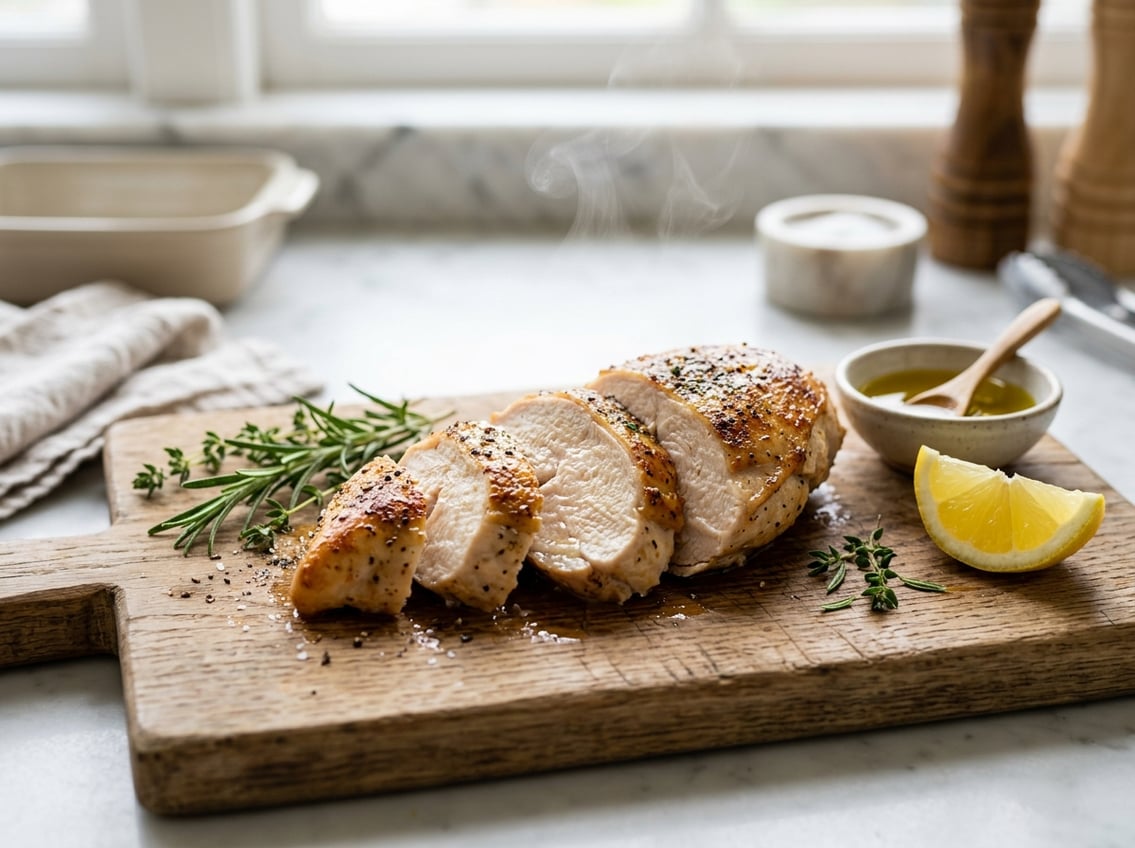
You can avoid overcooking chicken breast by controlling heat, timing, and cut size. Small changes in prep also make the meat easier to cook evenly and keep it juicy.
Choosing Heat Levels and Timing That Reduce Risk
Medium heat usually gives you more control than very high heat. High heat can brown the outside fast while the inside keeps cooking, which raises the chance of dry chicken.
Pounding thick breasts to an even thickness helps them cook at the same rate. That step reduces the risk that one end finishes late while the thinner end dries out.
A recent guide from The Family Meal Plan notes that even thickness helps chicken cook more evenly.
How Marinating and Searing Affect Moisture
Marinating chicken can help flavor the meat and add a little moisture protection. Acidic marinades with yogurt, citrus, or vinegar can also help tenderize the surface.
Searing chicken can improve flavor and color, but it does not lock in juices by itself. The best result comes from a quick sear, careful temperature control, and a thermometer.
When Thighs or Bone-In Cuts Are More Forgiving
If you want more room for error, chicken thighs are more forgiving than breast meat. They contain more fat and connective tissue, so they stay tender longer under heat.
Bone-in chicken also tends to stay moist better than boneless breast. If you often struggle to avoid overcooking chicken, switching cuts can make your results more reliable.
What to Do With Dry or Rubbery Chicken Breast
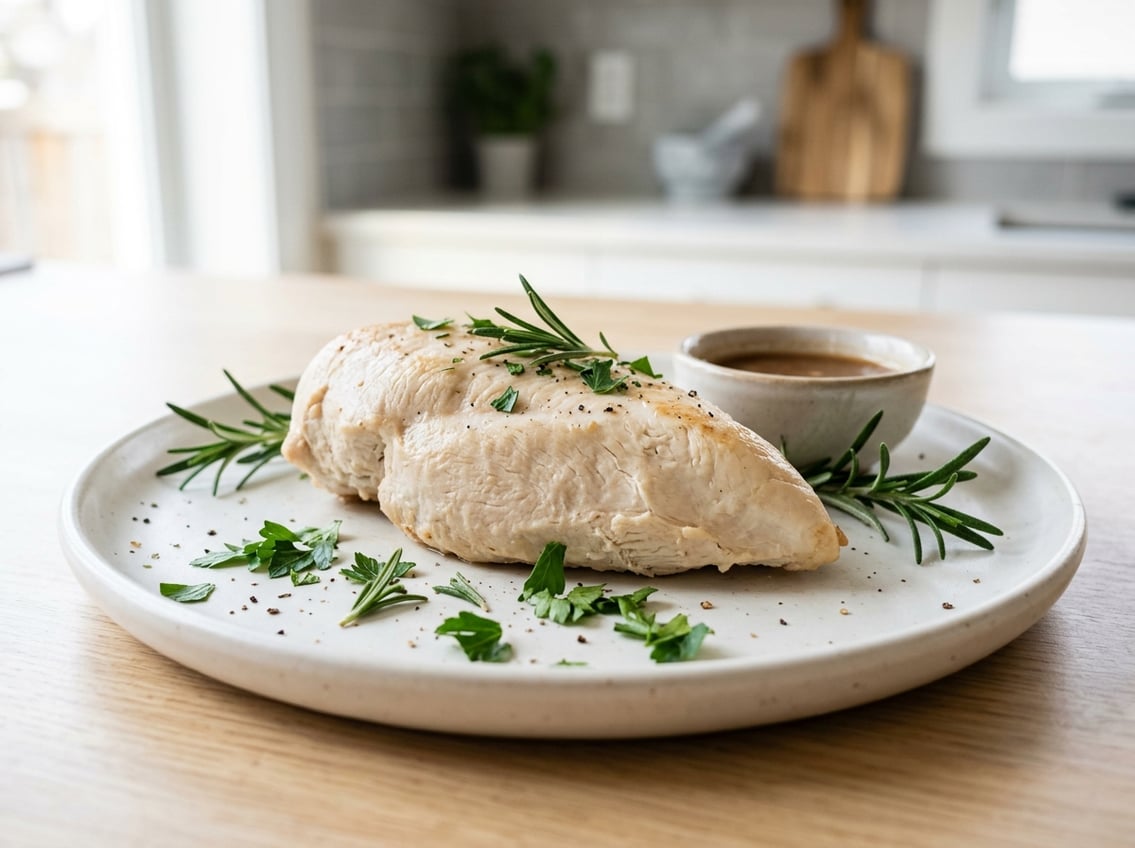
If you already made overcooked chicken, you still have options. You may not restore the original texture, but you can add moisture and make it useful in another dish.
Simple Ways to Add Moisture Back
Slice the chicken thin and serve it with sauce, gravy, broth, or a creamy topping. Moist ingredients help offset dry chicken and make each bite easier to chew.
You can also chop it and mix it into warm fillings, where liquid from the dish softens the meat. This is one of the easiest ways to salvage overcooked chicken.
Best Dishes for Repurposing Dry Meat
Dry chicken works well in dishes that already have moisture, such as:
- chicken salad with mayonnaise or yogurt
- soups and stews
You can also use it in casseroles, enchiladas, or wraps and sandwiches with sauce.
A helpful note from Tasting Table says moist ingredients are a practical way to salvage rubbery chicken breast. This approach makes the meat easier to eat and less noticeable in the final dish.
When Texture Means It Cannot Be Fully Fixed
If the chicken is very dry, stringy, or hard, you may not be able to fully fix it.
Use it in a dish where texture matters less than flavor.
If the chicken has a burnt taste or very tight fibers, no sauce will bring back the original juicy chicken feel.
At that point, repurpose the chicken in another dish.


