
Why Chicken Breast Is Expensive: Main Cost Drivers
Chicken breast costs more because of demand, limited supply, and added processing costs. In the U.S., the price also reflects feed, labor, packaging, transportation, and retail markups.
You pay more for chicken breast because it is a highly desired lean protein cut, but each bird provides only a small amount. Rising costs across the poultry industry push the price even higher.
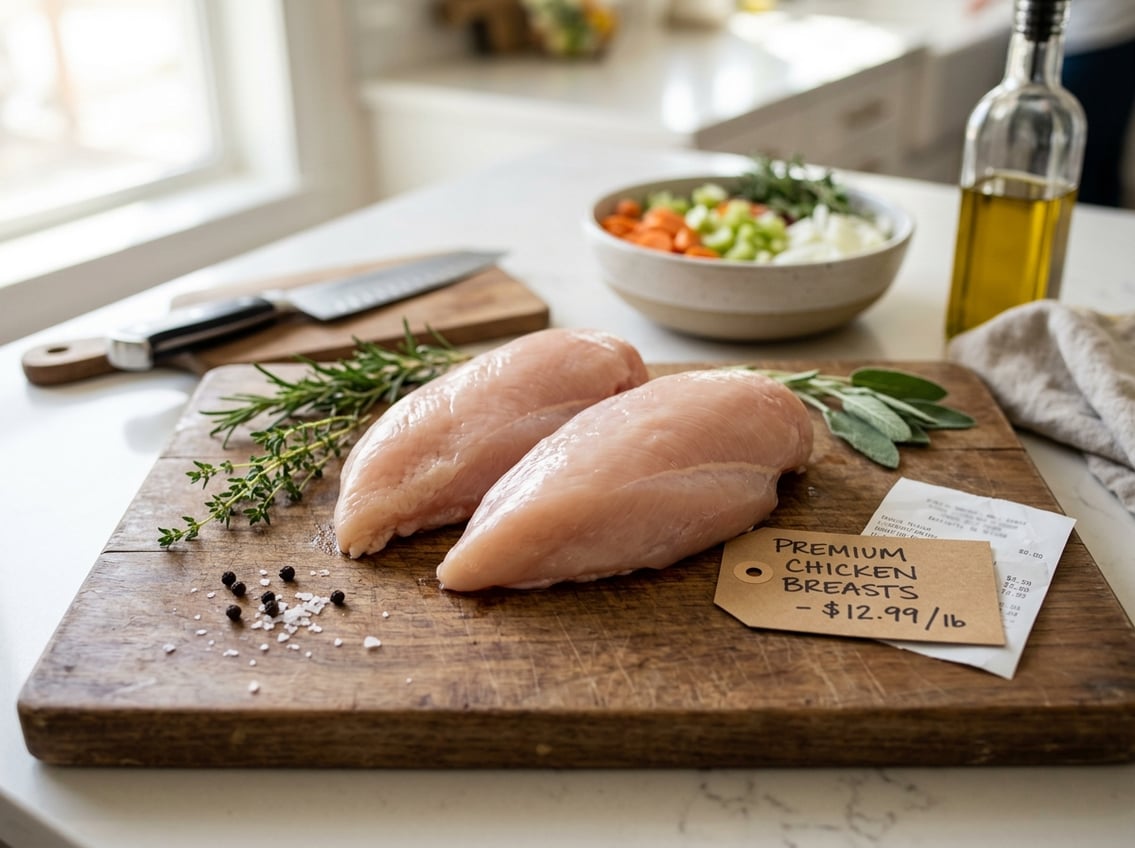
Why Breast Meat Costs More Than Other Cuts
Chicken breast usually costs more than thighs, drumsticks, or whole birds because shoppers want it most. It is lean, versatile, and easy to cook, so stores set higher prices for it.
The higher price also comes from how little breast meat each bird offers. When demand stays strong and supply stays limited, the price rises faster than other parts.
High Consumer Demand for Lean Meat
Many shoppers choose chicken breast for lean protein. It is low in fat, high in protein, and easy to use in meal prep, salads, wraps, and dinners.
That steady demand lets retailers keep prices high. The cut often becomes the default choice for health-focused shoppers and families wanting a simple protein.
Limited Breast Yield Per Bird
A chicken has only one breast on each side, so supply is naturally limited. A U.S. market analysis shows that breast meat is a small share of the bird by weight, which explains its premium price.
Processors cannot make more breast meat without raising total chicken production. When more buyers want the same limited cut, prices go up.
Convenience of Boneless, Skinless Portions
Boneless, skinless breasts are easy to cook and portion, making them attractive to busy shoppers. That convenience adds value and cost.
Workers or machines must trim and remove bones, which raises the price. Processed cuts save you time at home, but that time savings appears on the shelf tag.
Production and Supply Chain Costs
The poultry industry faces costs before chicken reaches the store. Feed, labor, processing, storage, and shipping all influence the final price.
When any of those steps becomes more expensive, prices rise. Boneless breast meat needs more handling than bone-in cuts, so the effect is stronger.
How Feed Shapes Farm-Level Costs
Feed is one of the biggest costs in poultry production. When grain prices rise, farms pay more to raise each bird, and those costs move through the supply chain.
Recent coverage of chicken prices points to rising feed costs as a major pressure on the market. Since poultry producers run on thin margins, even modest feed increases can affect the price in stores.
Labor, Deboning, and Processing Expenses
Workers or machines must cut, trim, inspect, and debone chicken breast. That added processing raises labor costs.
Boneless breast meat usually costs more than legs, thighs, or whole chickens with less handling.
Cold Storage, Packaging, and Transportation
Chicken breast must stay cold from the plant to the store. Refrigeration, packaging, and truck transport all add cost.
Retail packs use more materials than bulk or whole-bird sales. Those extra expenses become part of the price at checkout.
Market Pressures Pushing Prices Higher
The rising cost of chicken is not only about farms and factories. Consumer habits, animal health issues, and retail pricing strategies also push prices higher.
These pressures affect lean protein cuts more because they are already in high demand. When supply tightens, the price reacts quickly.
Diet Trends and Demand Surges
Chicken breast is popular in high-protein diets, meal prep plans, and fitness routines. Demand can jump during grilling season, back-to-school meal planning, and New Year health goals.
When more people buy the same cut at the same time, prices climb. A retail and foodservice analysis notes that heavy restaurant demand can also tighten supply for home shoppers.
Disease Outbreaks and Supply Disruptions
Poultry diseases can reduce flock sizes or slow production. When farms lose birds or face stricter controls, supply drops.
Supply chain disruptions can add more strain. Fewer birds, slower processing, and tighter transport networks often lead to higher prices.
Premium Labels and Retail Markups
Organic, free-range, and antibiotic-free labels cost more to produce and sell. Consumers often pay extra for those claims.
Retailers use markups based on demand and store strategy. A premium shelf tag can lift the price of chicken breast above standard packages.
Lower-Cost Protein Alternatives
If the price of chicken breast stretches your budget, you have other protein choices. Some cuts and foods offer strong nutrition at a lower cost per serving.
The best choice depends on your budget, taste preferences, and cooking plans.
Cheaper Chicken Cuts and Whole Birds
Chicken thighs, drumsticks, wings, and whole birds usually cost less than breast meat. They often give you more flavor, especially when you roast or braise them.
Buying a whole chicken can lower your cost per pound because you get multiple meals from one purchase. If you are flexible, this is an easy way to save money.
Plant-Based and Other Protein Options
Plant-based proteins can help add variety. Lentils, beans, tofu, chickpeas, and tempeh are common alternative protein sources that often cost less per serving than chicken breast.
You can also mix protein choices through the week. Eggs, Greek yogurt, canned tuna, and turkey breast may fit your budget better, depending on local prices.
When Paying More Still Makes Sense
Chicken breast still offers value when you need a lean, easy-to-portion protein.
It works well for fast meals and meal prep.
Use it in recipes where lower fat matters.
If convenience saves you time and reduces food waste, the higher price may make sense.


