
Does Chicken Breast Have Fiber? Nutrition and Meal Pairing
Does chicken breast have fiber? No, plain chicken breast does not provide dietary fiber.
Chicken breast is an animal food, so its nutrition profile centers on protein, water, fat, and key vitamins and minerals, not the fiber you get from plant foods.
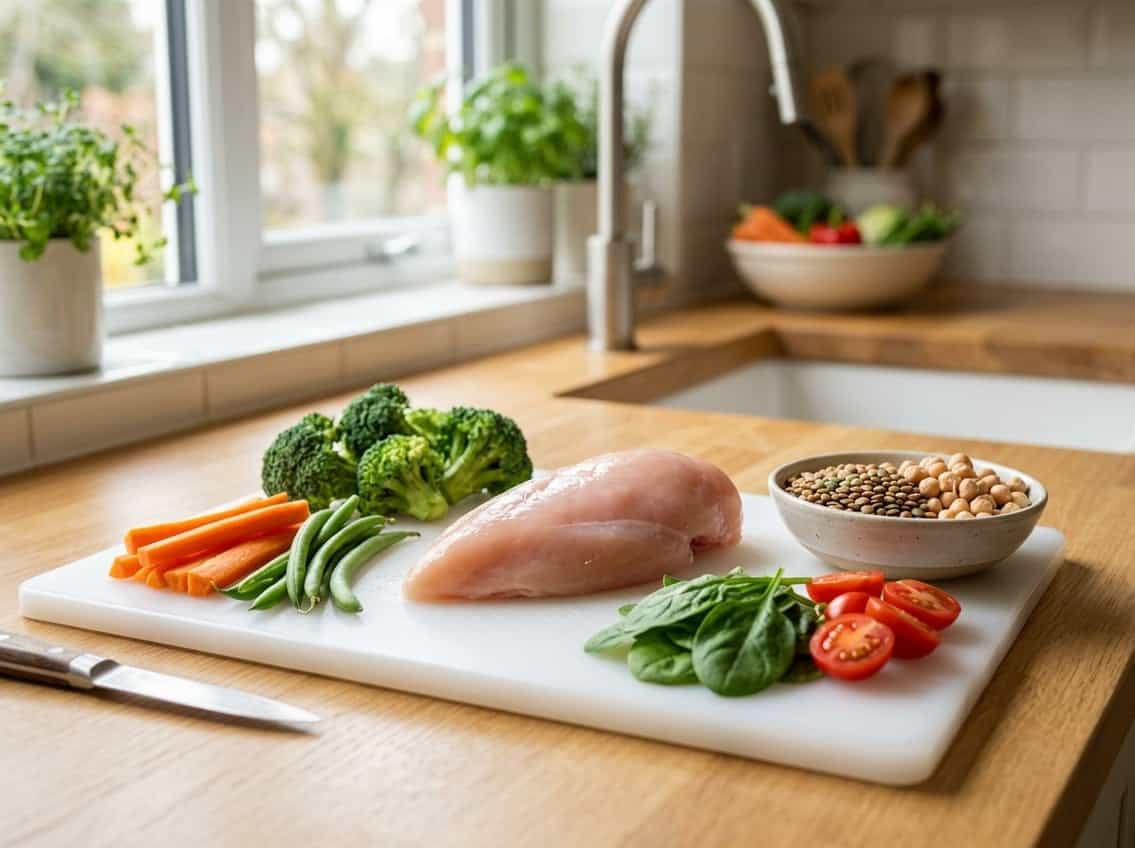
If you want more fiber in a chicken meal, you need to get it from the foods you serve with it, such as beans, vegetables, whole grains, fruit, and seeds.
That is the most practical way to balance chicken and fiber in the same meal.
Chicken breast still has an important place in a healthy diet.
It is a lean protein choice, and that makes it useful when you want a filling meal with relatively few calories and little fat.
The Direct Answer
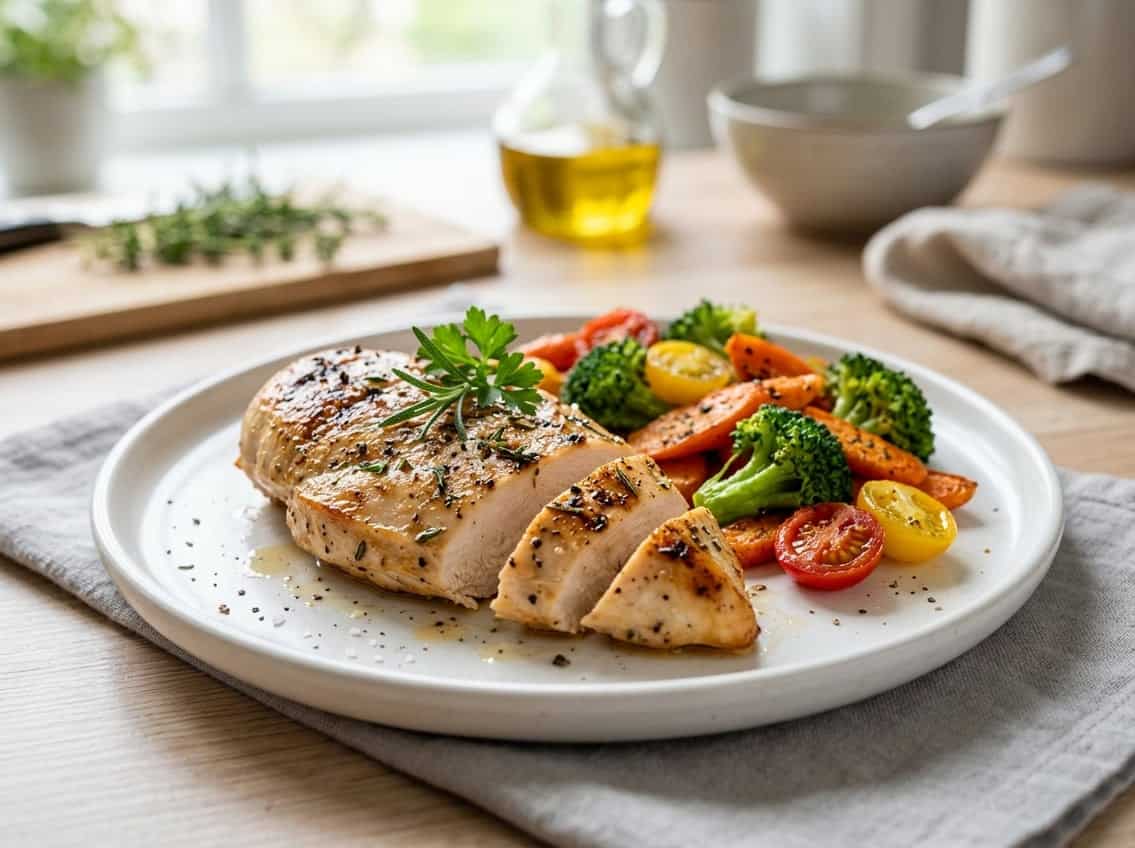
Chicken breast contains no meaningful fiber, whether you buy it fresh, cooked, or plain roasted.
Nutrition data for boneless, skinless chicken breast lists zero fiber, which matches standard chicken breast nutrition data.
Why Plain Chicken Breast Contains No Dietary Fiber
Plant cell walls provide fiber, especially in foods like vegetables, fruits, legumes, and whole grains.
Chicken breast is muscle tissue, so it does not contain the structures that provide fiber.
You get protein and micronutrients from a plain serving of chicken breast, not dietary fiber.
Whether Skinless Chicken Breast Changes the Fiber Content
Skinless chicken breast still has zero fiber.
Removing the skin changes the fat and calorie content, not the fiber content.
Skinless chicken breast is often the version used in nutrition labels and meal plans because it is leaner.
The fiber amount stays the same.
How Chicken Breast Nutrition Labels Show Zero Fiber
Most labels list chicken breast with 0 grams of fiber per serving.
That number stays at zero unless the product includes added ingredients.
If you see fiber on a chicken label, check the ingredient list.
The fiber usually comes from breading, grains, vegetables, sauces, or fillers, not from the chicken itself.
What Chicken Breast Provides Instead
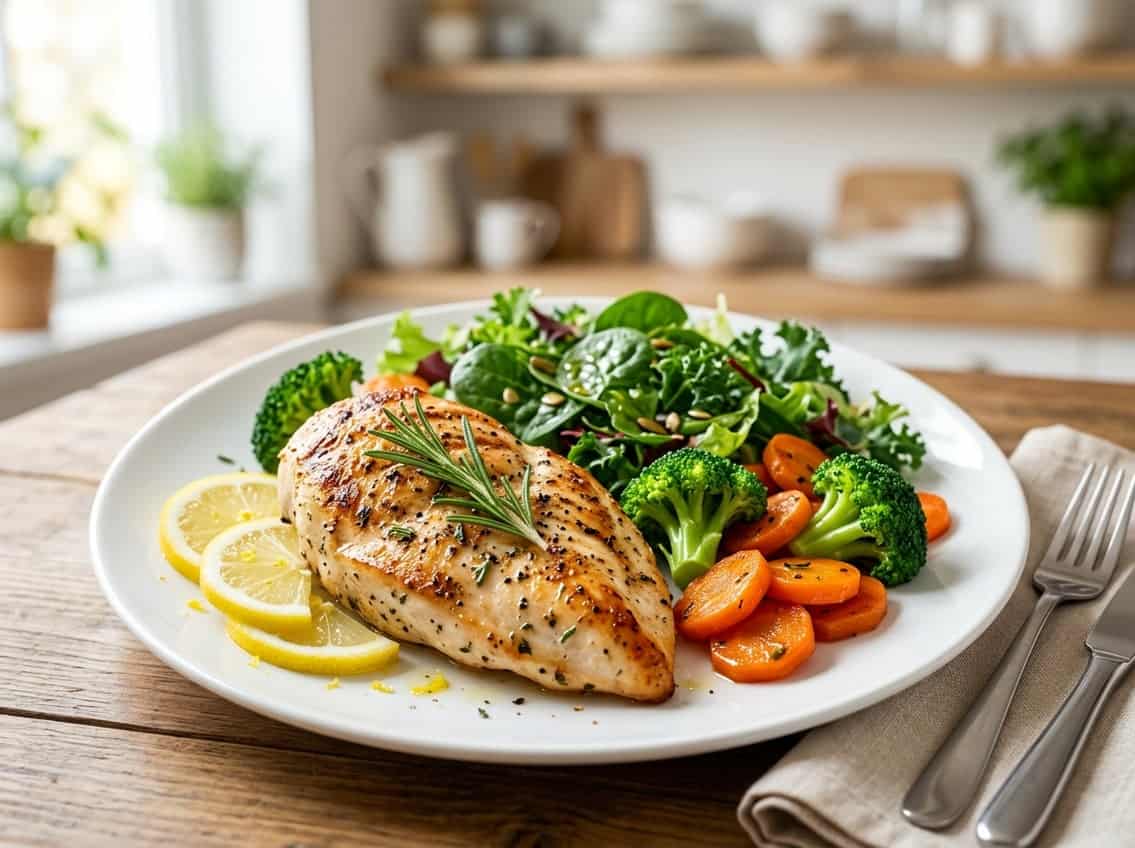
Chicken breast provides lean protein and several B vitamins and minerals.
In grilled or baked form, it fits easily into many meal plans.
Why It Is Considered a Lean Protein
Chicken breast gives you a high amount of protein with relatively little fat.
A 3-ounce cooked portion is commonly used as a standard serving, and it is a familiar choice for people who want a filling main dish.
This makes chicken breast useful for strength, recovery, and satiety.
Key Nutrients in Grilled Chicken and Other Common Preparations
Plain grilled chicken keeps the nutrition profile simple.
According to a review of chicken nutrition facts, chicken breast is a good source of protein and also provides nutrients such as niacin, vitamin B6, selenium, and phosphorus.
Baked, roasted, and air-fried chicken breast are usually similar if you do not add breading or sugary sauces.
Cooking method mainly changes moisture and added fat, not fiber.
How Processing, Breading, or Added Ingredients Can Affect the Label
Processed chicken products can look very different on the label.
Breaded chicken may contain small amounts of fiber from flour, oats, or breadcrumbs, while marinades and coatings can add sugar, sodium, and calories.
That does not turn chicken breast into a true fiber food.
It only means the recipe added plant ingredients that contribute fiber.
How to Build a Balanced Chicken Meal
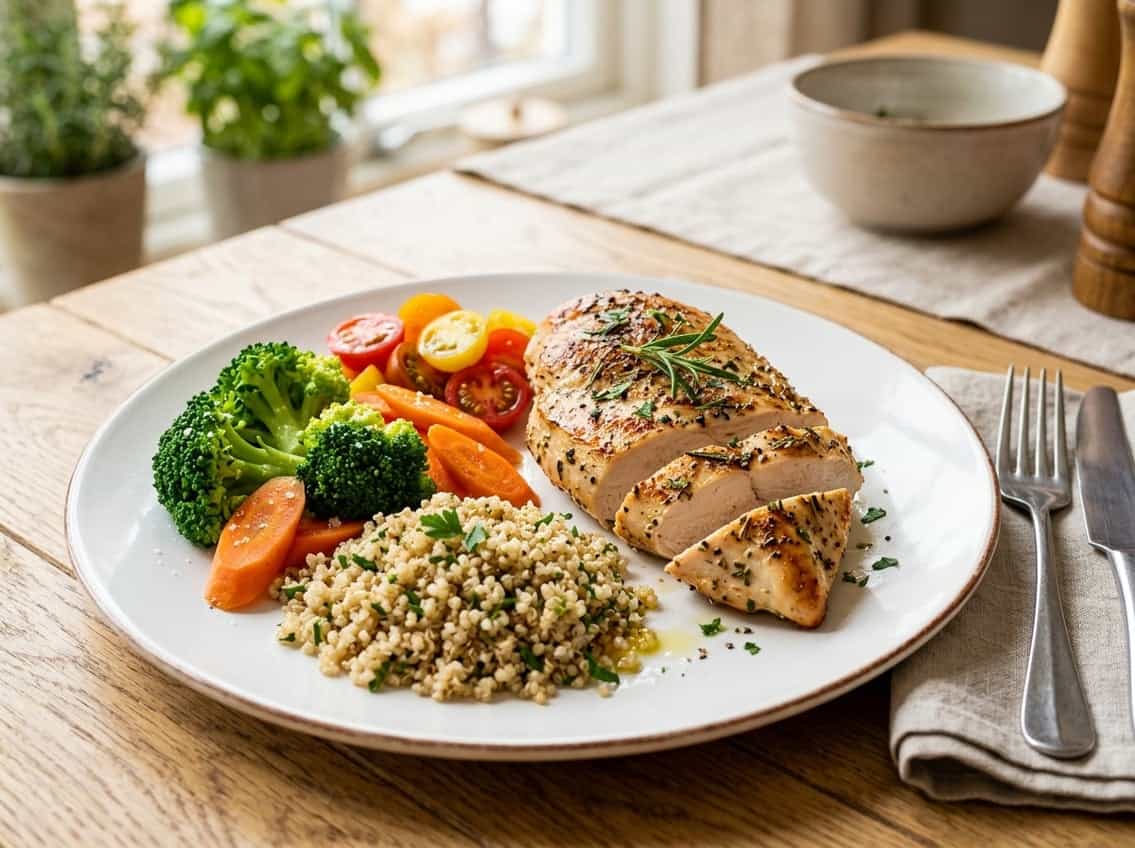
A balanced chicken meal pairs protein with foods that supply fiber, color, and texture.
Chicken and fiber work well together only when the plate includes plant foods.
Pairing Chicken With Fiber-Rich Foods
The easiest method is to serve chicken with beans, lentils, vegetables, fruit, or whole grains.
This is the most direct way to pair chicken with fiber without changing your main protein.
Good combinations include chicken with black beans, chicken with roasted broccoli, or grilled chicken over brown rice and vegetables.
These meals help close the fiber gap that chicken breast leaves behind.
Best Side Dishes to Help Meet Recommended Daily Fiber Intake
Most adults in the U.S. aim for about 25 grams of fiber per day for women and 38 grams for men.
The Dietary Guidelines for Americans support choosing nutrient-dense foods like vegetables, fruits, legumes, and whole grains to help meet that target.
Useful sides include:
- Lentils or beans
- Roasted Brussels sprouts, broccoli, or carrots
- Brown rice, quinoa, or barley
- A salad with leafy greens, chickpeas, and seeds
- Fruit, such as berries, apples, or pears
These sides add fiber without making the meal heavy.
When Chicken-Based Meals Fall Short on Fiber
Chicken-based meals lack fiber when the plate contains mostly meat and very few plant foods.
A chicken breast with white rice and no vegetables provides protein but very little fiber.
Add one or two fiber-rich foods to each meal.
This simple habit helps chicken fit better into your daily fiber goals.


