
Do Chicken Breasts Have Bones? What to Know
You may wonder if chicken breasts have bones or if they are always boneless at the store. Chicken breasts start on the bird with bones attached, and processors often sell them as boneless after removing the bones.
If you buy a boneless chicken breast, butchers have removed the bones during processing. A bone-in chicken breast still includes part of the rib cage, breastbone, or keel bone.

That difference matters for cooking and food safety. It also helps you choose the cut that fits your time, budget, and recipe.
The Short Answer and What It Means

A boneless chicken breast has no bone in the finished product. A bone-in chicken breast still has part of the skeleton attached, so you may see or feel bones in chicken breast when it is sold that way.
Butchers remove the bones to make the boneless cut. The breast starts as meat attached to the rib cage and breastbone, and the butcher trims those parts away.
Why the Cut Starts Out Attached to Bone
The breast meat grows on the front of the bird, over the rib cage and sternum. In its natural state, it is not a loose piece of meat.
When you buy a bone-in chicken breast, you get that original cut with part of the bone structure still attached. Bone-in cuts usually take longer to cook and can stay juicier because the bone slows heat transfer.
When Boneless Really Means Deboned
Boneless means the breast has been deboned before sale. You should not expect a whole bone in a properly trimmed boneless chicken breast.
Labels can vary, and a little cartilage or a tiny shard can still remain if trimming was not perfect. A clean boneless chicken breast should feel smooth and be free of obvious bone fragments.
Why Small Bone Fragments Can Still Happen
Small bone fragments can occur during cutting or trimming. This can be a food safety concern, especially if the breast was packed quickly or handled roughly.
If you feel a hard point or sharp edge, check it before cooking. Remove the fragment if you can do so safely, or choose another piece.
Chicken Breast Anatomy Explained
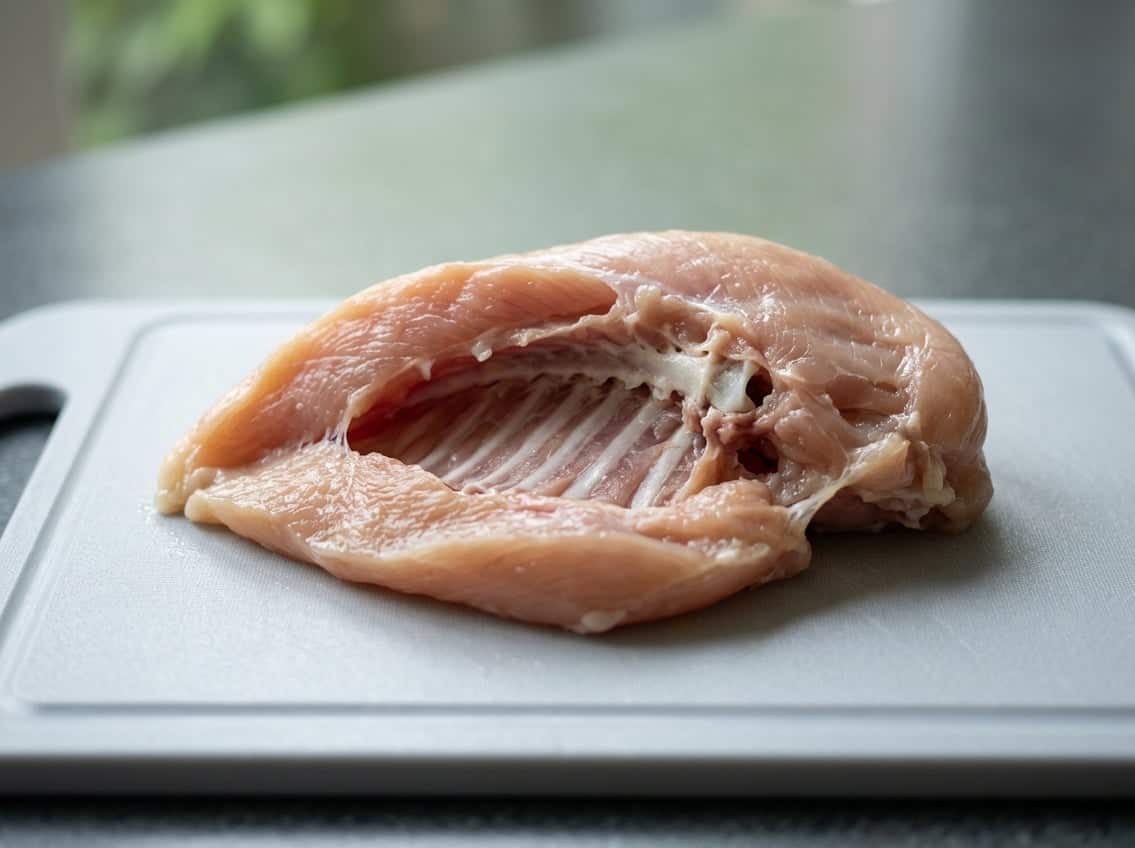
Chicken anatomy explains why some breasts have bones and some do not. The main breast muscles sit over the chest bones, and the smaller inner muscle is often sold as the chicken tender.
Where the Pectoralis Major and Minor Sit
The pectoralis major is the large outer breast muscle. The pectoralis minor sits beneath it and is often called the tender or chicken tender.
These are the main white-meat muscles you see in the breast. The tender is not a bone, and it is not attached to a bone once the breast is fully processed.
How the Breastbone, Sternum, and Keel Bone Connect
The breastbone and sternum are closely related terms for the chest bone. The keel bone is the ridge that runs along the sternum and helps support the breast area.
When you buy a bone-in chicken breast, you may get part of that sternum area attached. That is why bone-in cuts can look different from one package to the next.
What Rib Cage, Rib Meat, and Chicken Tender Refer To
The rib cage supports the breast muscles and is part of what stays attached in a bone-in cut. Rib meat is the meat that comes from the rib area and may remain on some packaged breasts.
A chicken tender refers to the smaller inner muscle under the breast. It is breast meat, not a separate bone-in piece.
How Store Labels Change What You Are Buying
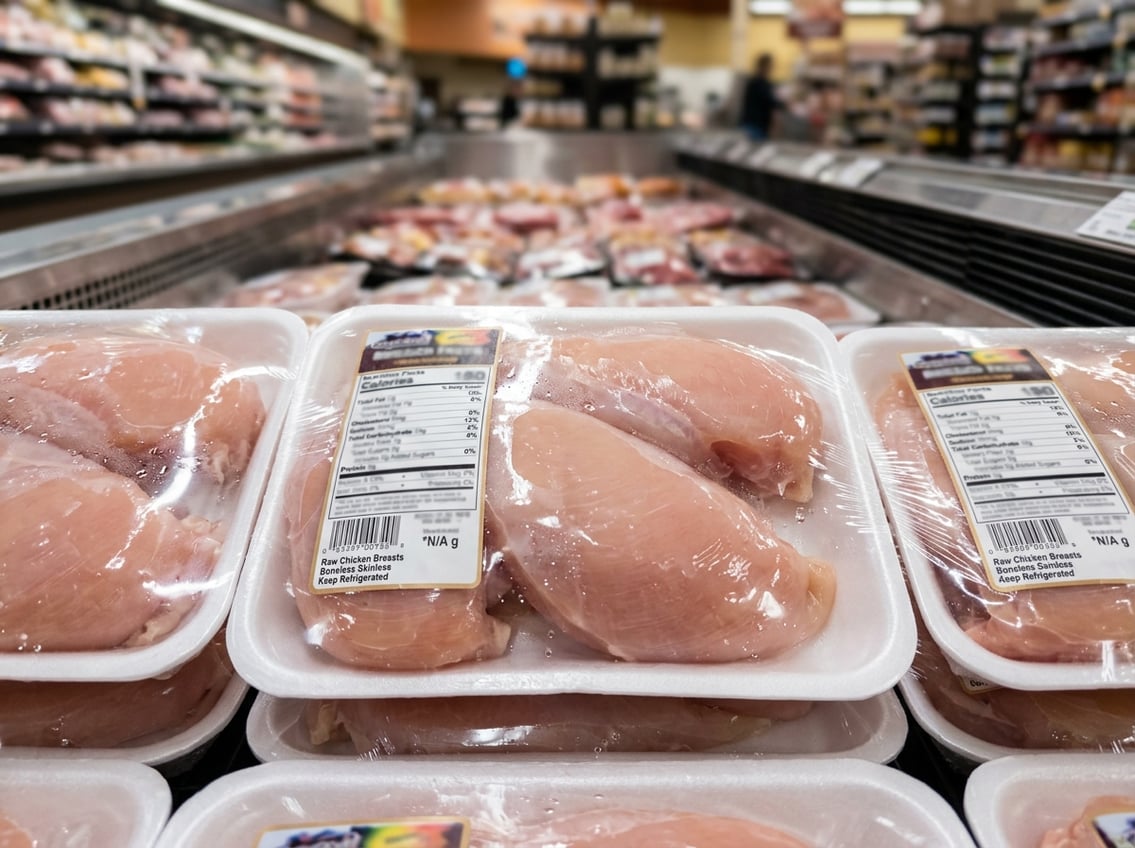
Store labels tell you whether you are getting bone-in or boneless breast meat. Some terms are clear, while others mean there may still be rib meat or skin attached.
What Split Breast and Split Chicken Breast Usually Mean
A split breast or split chicken breast usually means a bone-in breast cut down the middle of the bird. It often includes part of the rib cage and may include the breastbone.
This cut is common in stores and can be labeled in different ways. A package may show skin-on, bone-in, or simply split breast.
How to Read Boneless Skinless Chicken Breast Labels
A boneless skinless chicken breast should not have bones or skin attached. If the label says skinless chicken breast, check whether it still says bone-in, because skinless does not always mean boneless.
A boneless skinless chicken breast is usually the most convenient option for quick cooking. It is also one of the most common lean protein choices in the U.S. market.
What Chicken Breast With Rib Meat Tells You
Chicken breast with rib meat means the package may include some meat from the rib area still attached. It does not mean the breast is fully boneless in the strictest sense.
If you want only breast meat, read this label carefully. It can be useful for cost and flavor, yet it may not match what you expect from a fully trimmed boneless chicken breast.
Checking and Preparing Chicken Safely

Good food safety starts before cooking. You can reduce the risk of bone fragments and handle either bone-in chicken breast or boneless skinless chicken breast more safely with a careful prep routine.
How to Feel for Hidden Bones Before Cooking
Run clean fingers gently over the surface of the meat. You are checking for hard points, sharp spots, or small bone fragments that do not belong in a boneless piece.
If a piece feels uneven in a way that seems like bone, inspect it before cooking. This matters most when you buy fresh product from a butcher counter or process a chicken breast at home.
How the Deboning Process Works at Home
At home, use a sharp knife to follow the bone closely and separate the meat with short, controlled cuts. The goal is to remove the bone while keeping as much breast meat as possible.
A careful deboning process takes practice. If you are not comfortable with it, buying boneless chicken breast is usually the easier choice.
Tools and Surfaces for Safer Prep
Use a sharp knife and a clean cutting board.
A dull knife can slip and make it harder to work around bones safely.
Keep raw chicken separate from other foods to protect food safety.
Wash your hands, clean the board, and sanitize any surface that touched raw poultry before you start cooking.


