
What Is the Weight of Chicken Breast? Size Guide
The weight of chicken breast depends on the cut, whether it is boneless or bone-in, and whether the skin is left on.
For most grocery store chicken, a single boneless skinless breast usually weighs about 6 to 8 ounces.
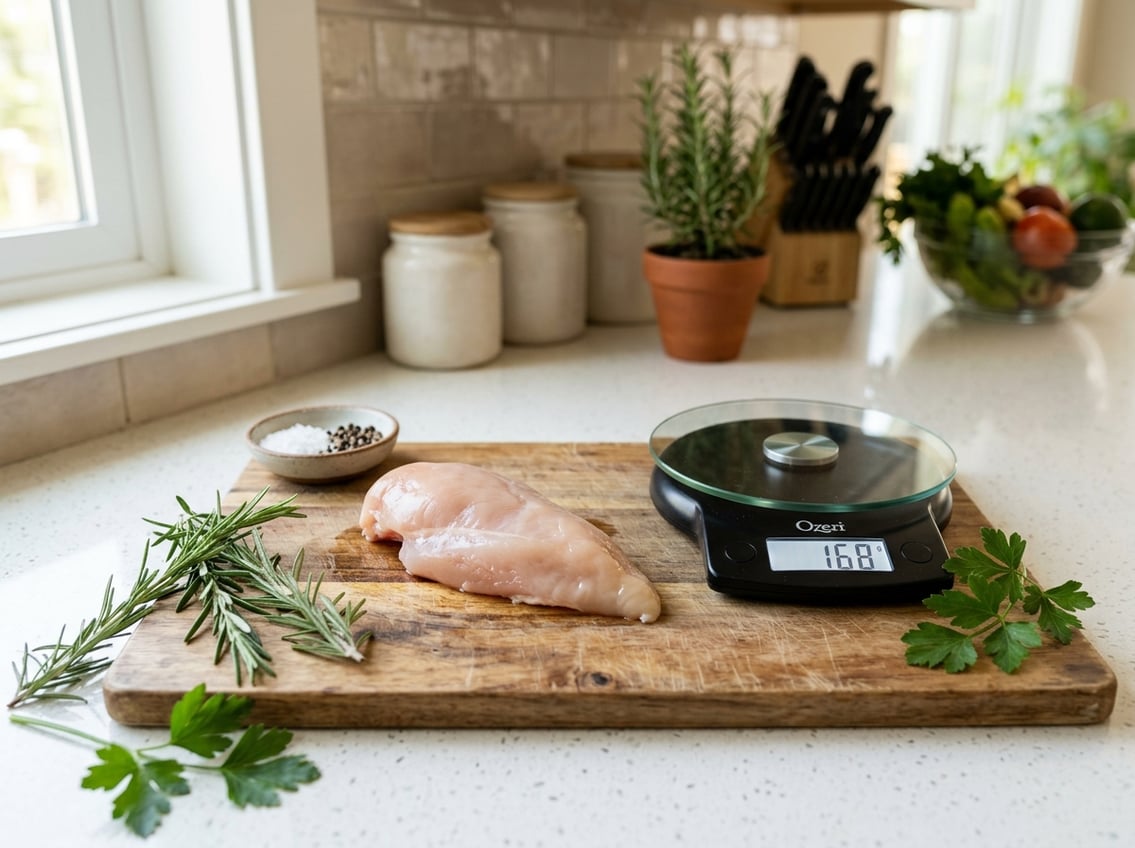
If you want to plan meals, count calories, or size up a recipe, use the raw weight before cooking.
That gives you the clearest match to nutrition labels and package information.
Chicken breast sizes can vary a lot.
A small breast may feed one person in a light meal, while a large one may be enough for two smaller servings.
The sections below give you practical ranges you can use at home.
Average Weights by Chicken Breast Type
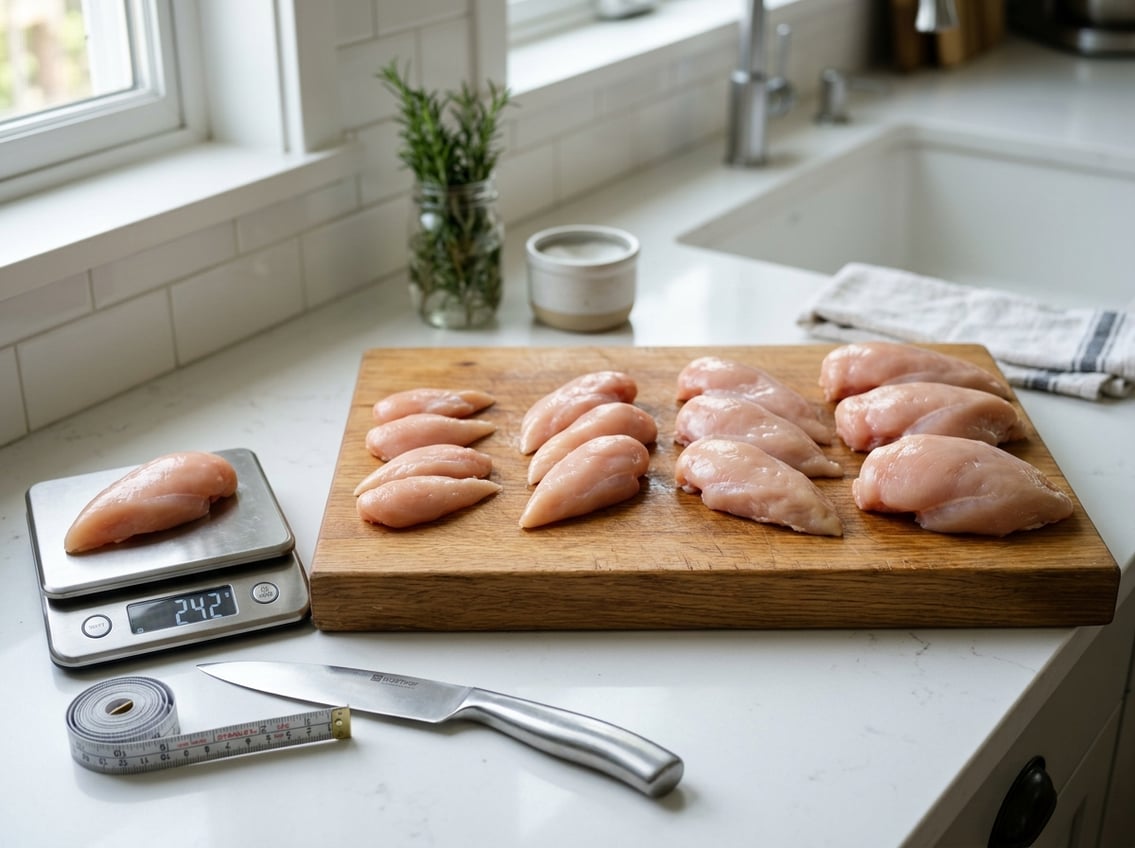
The weight you see in stores depends on the cut and how processors handled it.
Boneless breasts work well for quick cooking, while bone-in pieces weigh more because the bone adds mass.
Boneless Skinless Size Range
A boneless, skinless breast often weighs about 6 to 8 ounces, or roughly 170 to 227 grams.
A recent chart of average chicken breast weight data puts a typical skinless breast at about 180 to 200 grams, with smaller pieces around 140 to 150 grams and large ones up to 250 grams.
Bone-In and Skin-On Weight Range
A bone-in, skin-on breast is usually heavier, often around 8 to 12 ounces or more.
The same chart reports an average skin-on breast around 210 to 230 grams, or about 7.4 to 8.1 ounces.
Small, Average, and Large Portion Benchmarks
You can use these simple portion guides:
- Small: about 4 to 5 ounces
- Average: about 6 to 8 ounces
- Large: about 9 to 12 ounces
These ranges help you judge chicken breast weight when a package label is not specific.
They also make it easier to scale recipes.
How to Measure Portions Accurately
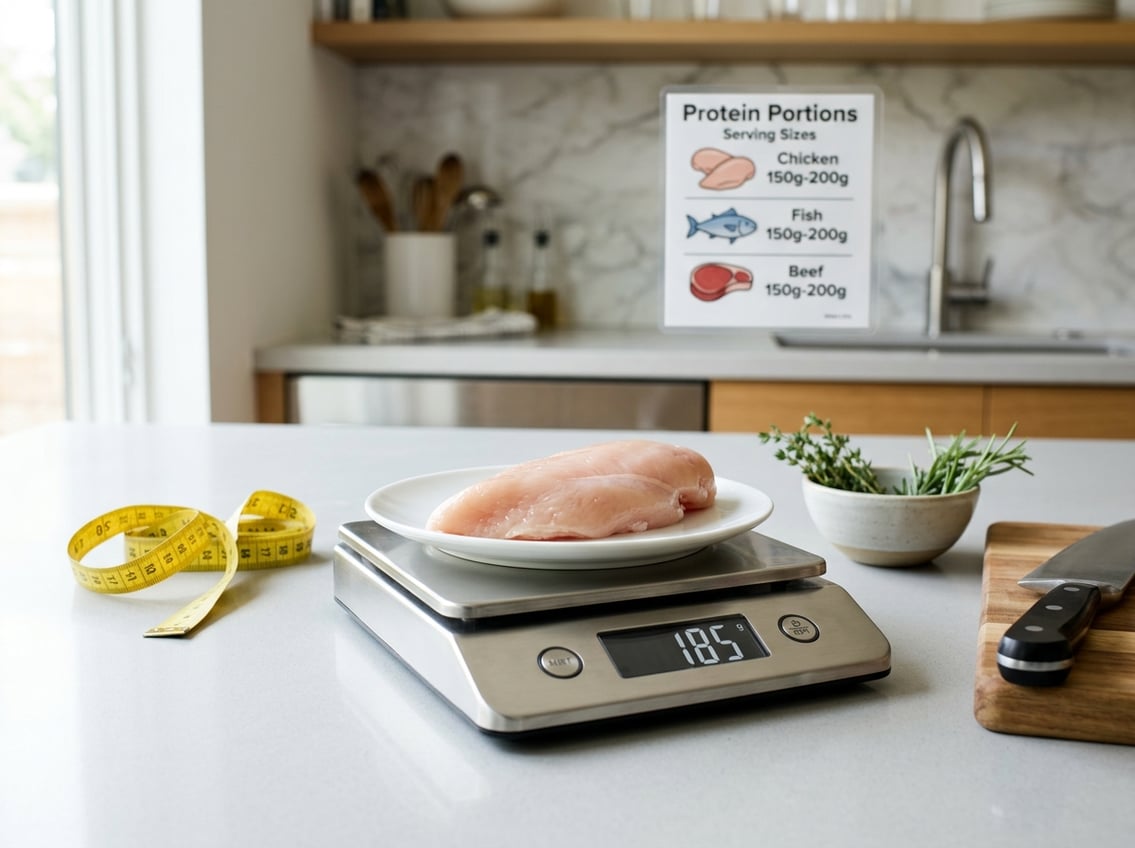
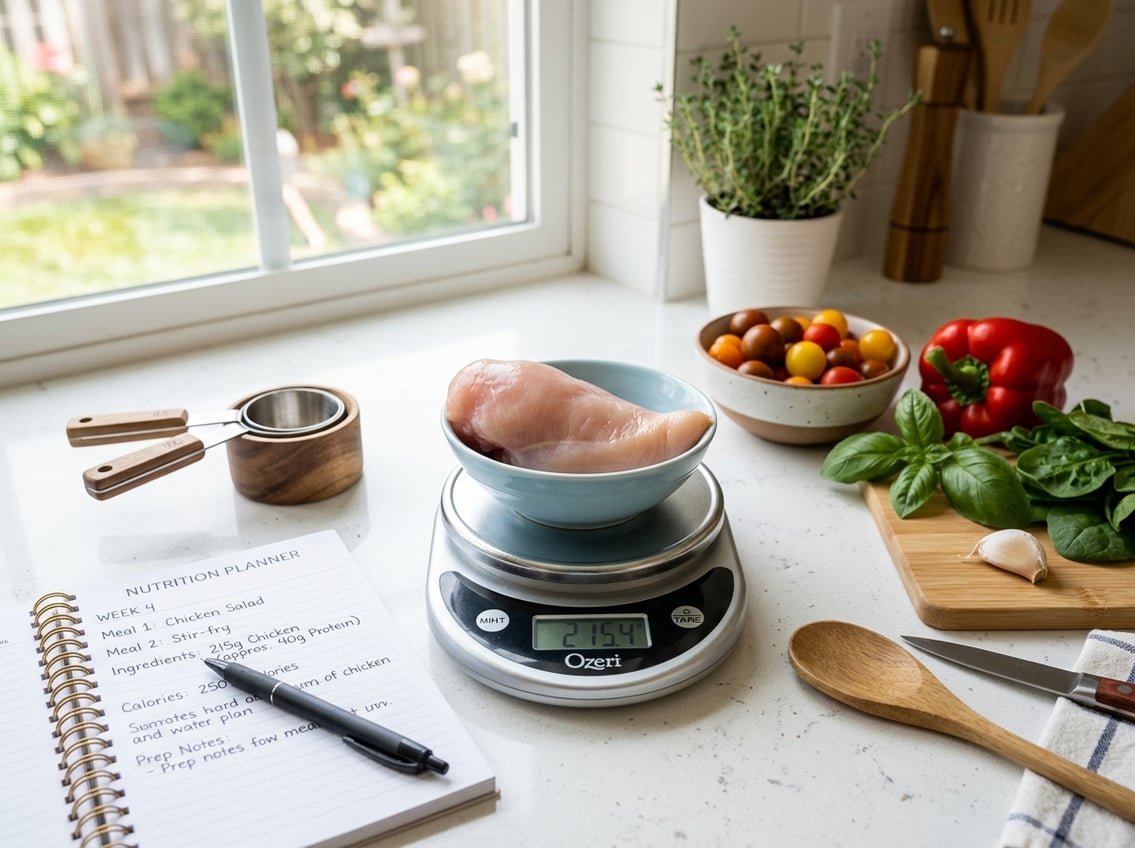
You get the most accurate chicken breast weight by measuring it raw on a scale.
If you do not have a scale, you can estimate portions by using package weight and visual cues.
Using a Kitchen Scale at Home
Place the chicken breast on a digital kitchen scale and set the scale to grams or ounces.
A simple kitchen scale gives you reliable results for meal prep.
If you are counting calories, weigh the raw meat before seasoning or cooking.
Nutrition labels and databases are usually based on raw weight.
Estimating From Package Weight
Many packages list total weight, not the weight of each breast.
If a 2-pound package has 4 breasts, each one averages about 8 ounces before trimming.
This method works best when the pieces are similar in size.
If one breast looks much larger than the others, the package average will be less useful.
Visual Size Cues Without a Scale
A breast about the size of a deck of cards is often near the average range.
Smaller pieces look closer to the palm of your hand, while larger pieces may be thick and wide enough to cover most of a small plate.
Visual estimates are helpful, yet not exact.
For recipe work and nutrition tracking, scale-based measurement is still better.
Raw vs Cooked Weight Differences
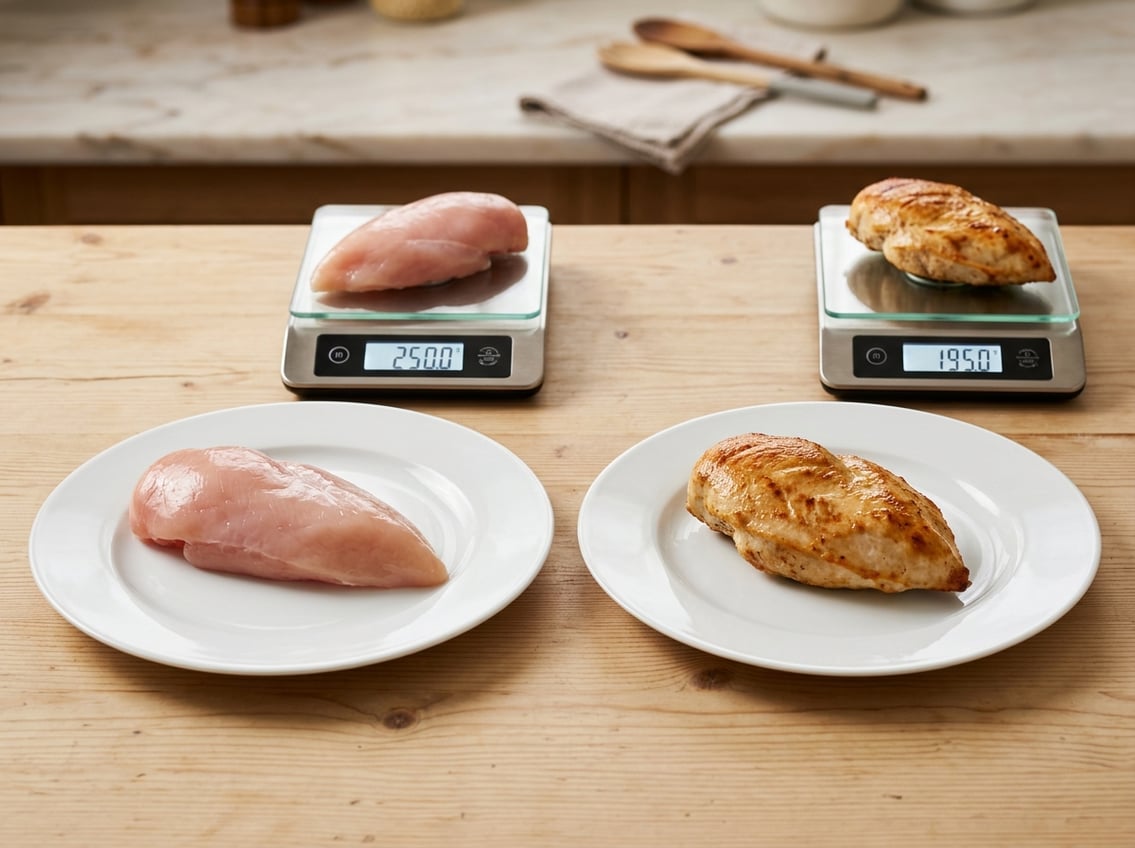
Chicken breast weighs less after cooking because moisture leaves the meat.
The amount of loss depends on the quality of the chicken, how much added water it had, and the cooking method.
Why Chicken Shrinks During Cooking
Heat causes moisture to evaporate and muscle fibers to tighten.
The cooked piece looks smaller and weighs less, even though the protein content stays largely the same.
Typical Percentage of Weight Loss
Good quality chicken breast with no added water typically loses about 25% of its weight during cooking.
Chicken with added water can lose up to 40% during cooking.
A raw 8-ounce breast may end up near 6 ounces cooked if it loses about 25%.
If it loses more moisture, the final cooked weight can be lower.
How Cooking Method Changes Final Weight
Dry heat methods such as baking, roasting, and grilling usually cause more shrinkage than gentle poaching.
Higher heat and longer cook times also tend to reduce final weight more.
Buying, Serving, and Nutrition Planning
Chicken breast weight matters most when you shop, portion meals, and plan protein intake.
A little math at the start saves you from underbuying or overserving later.
How Many Breasts Are in a Pound
Using an average boneless skinless breast of about 6 to 8 ounces, you usually get 2 to 3 breasts per pound.
The average chart from Weigh School puts one skinless breast around 0.4 to 0.44 pounds, which works out to about 2.4 breasts per pound.
If the breasts are larger, you may get closer to 2 per pound.
If they are smaller, you may get more than 3.
Portion Size for Recipes and Meal Prep
For most recipes, 1 average boneless breast is enough for 1 serving.
For meal prep, you may want to portion cooked chicken by cooked weight after you understand the raw-to-cooked change.
If your recipe calls for a specific number of ounces, weigh each breast first.
That keeps your portions consistent from batch to batch.
Weight, Calories, and Protein Context
Chicken breast is popular because it gives you a lot of protein for its size.
A 3-ounce cooked, boneless, skinless portion provides about 26 grams of protein, according to Verywell Fit’s chicken breast nutrition data.
You can use weight for more than just cooking.
It helps you match your protein target, compare package sizes, and keep calorie counts more accurate.


