
What to Do if Chicken Breast Smells: Safety Steps
If you notice an odd smell from chicken breast, pause and inspect it before cooking or eating. Mild odors can come from packaging, but strong sour, rotten, or ammonia-like smells often mean spoilage and a real food safety risk.
When the smell seems off, decide quickly, check for other spoilage signs, and protect your kitchen from cross-contamination.

Fresh chicken should smell very mild, not sharp or unpleasant. If the smell makes you hesitate, treat it as spoiled chicken and keep it out of your meal.
Cooking does not make unsafe chicken safe.
Decide Right Away Whether to Keep or Toss It
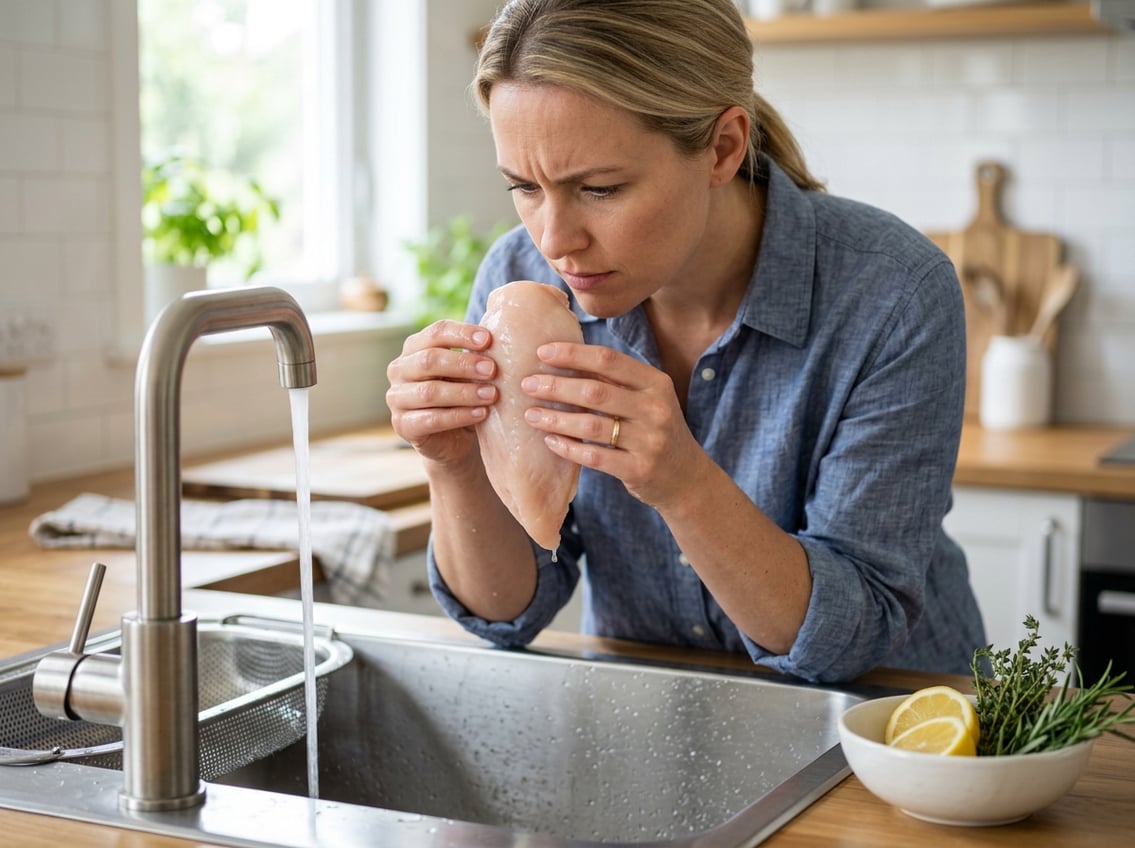
Start with the smell itself. A light odor right after opening the package may fade, while a strong unpleasant odor usually means the chicken smells off and should not be used.
Decide quickly, because waiting too long raises the risk of food poisoning. If the smell is clearly bad, toss it.
When a Mild Odor May Be From Packaging
Some chicken smells odd right after opening because of vacuum sealing, trapped juices, or normal storage odors. That smell should go away within a few minutes if the meat is still fresh.
If the chicken breast looks normal, feels firm, and the odor is faint, you can give it a short check before deciding. A slight smell is not always a sign of spoilage, especially when packaging is involved, as noted in this overview of slight chicken smell.
When Chicken Smells Off and Should Be Discarded
If the chicken smells sour, rotten, ammonia-like, or plainly unpleasant, treat it as spoiled chicken. A bad smell usually points to bacterial growth, so throw it away.
Do not try to cover the odor with seasoning, washing, or marinating. Those steps do not fix spoiled chicken and can spread contamination around your sink and counter.
What to Do if Chicken Smells Like Eggs
If chicken smells like eggs, take that as a warning sign. A sulfur-like or rotten egg smell can happen with spoiled meat, and you should not cook it if the odor is strong or lingering.
Some guides on chicken smells like eggs note that a packaged smell may occur at times, yet a bad egg odor is still a reason to be cautious. When in doubt, discard it and avoid the risk of food poisoning.
Check the Other Signs of Spoilage

Smell is only one clue. Fresh chicken should also look clean, feel firm, and keep a normal color.
Spoiled chicken often changes in texture and appearance. Use all three checks together, because a weak chicken breast smell can be misleading on its own.
Texture Changes Like Sliminess or Stickiness
Fresh chicken should feel moist, not slippery. If the surface feels slimy, sticky, or tacky, the chicken has likely gone bad.
That texture change happens as bacteria break down the meat. If the chicken feels wrong to the touch, do not cook it.
Color Changes That Signal Trouble
Raw chicken is usually pale pink with some white fat. Gray, green, yellow, or dull patches can signal spoilage, especially when paired with a bad smell.
A little color variation from packaging is normal, but widespread discoloration is not. If the color looks wrong and the odor is off, treat it as spoiled chicken.
Why Dates Alone Are Not Enough
Sell-by and use-by dates help, but they do not tell the whole story. Chicken stored too warm, handled badly, or left in the fridge too long can spoil before the printed date.
Your own senses matter most. A package date cannot cancel out sliminess, bad odor, or any other sign of trouble.
Handle Unsafe Chicken Without Spreading Risk
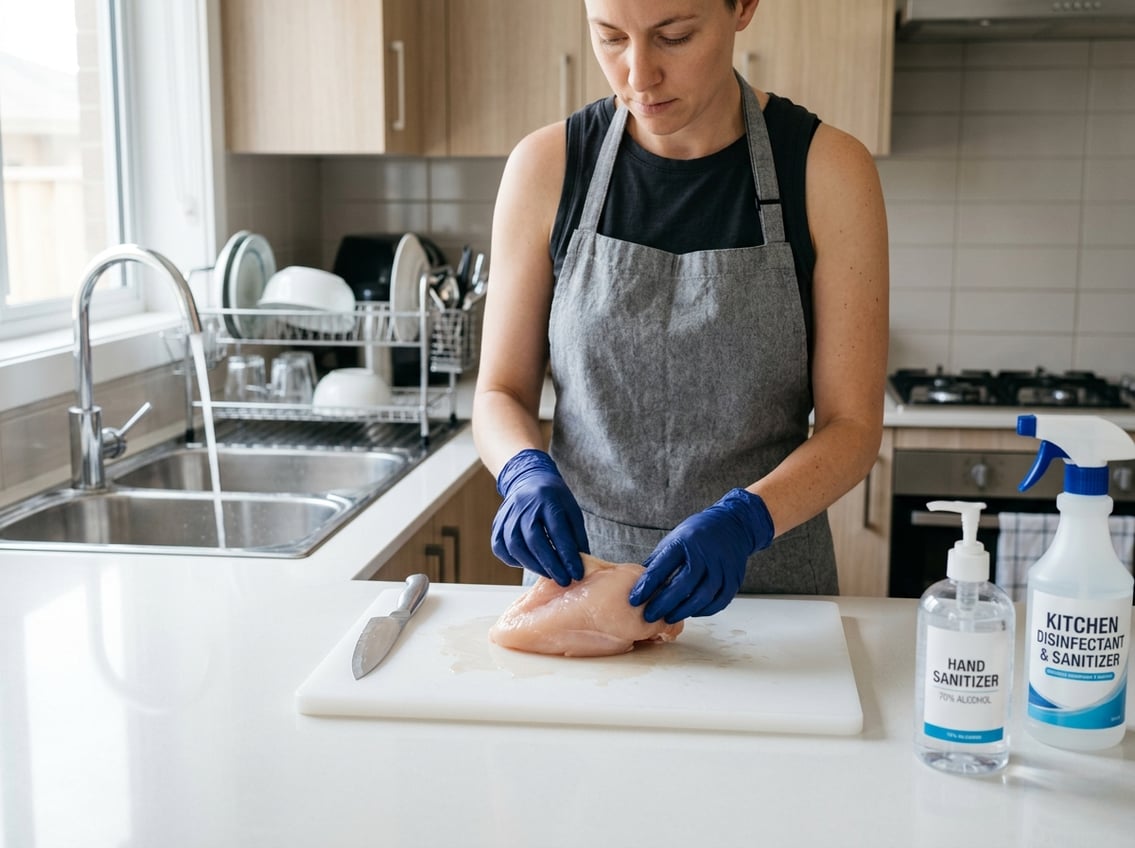
If you decide the chicken is unsafe, dispose of it cleanly and clean up carefully. Raw poultry can spread salmonella, E. coli, and other germs through hands, surfaces, and drips.
Keep the meat away from ready-to-eat foods. Clean every surface it touched.
How to Dispose of It Safely
Seal the chicken in a plastic bag or a wrapped container before putting it in the trash. This helps stop leaks, odor, and contact with other food or pets.
Wash your hands well after handling the package, even if you only touched the outside. If liquid leaked out, clean the trash area too.
How to Clean Surfaces and Prevent Cross-Contamination
Wash cutting boards, knives, sinks, counters, and fridge shelves with hot soapy water. Sanitize the area using a kitchen-safe sanitizer or a dilute bleach solution made for food-contact surfaces.
Do not rinse raw chicken in the sink, since splashing can spread bacteria. USDA guidance on safe poultry handling also notes that keeping raw poultry bagged helps reduce contamination of other groceries and surfaces.
When Foodborne Illness Is the Main Concern
If you already ate chicken that smelled bad and now feel sick, watch for nausea, vomiting, diarrhea, stomach cramps, fever, or dehydration.
Get medical advice sooner if symptoms are severe, if you cannot keep fluids down, or if you are in a higher-risk group.
Store Chicken Breast to Prevent Odors Next Time
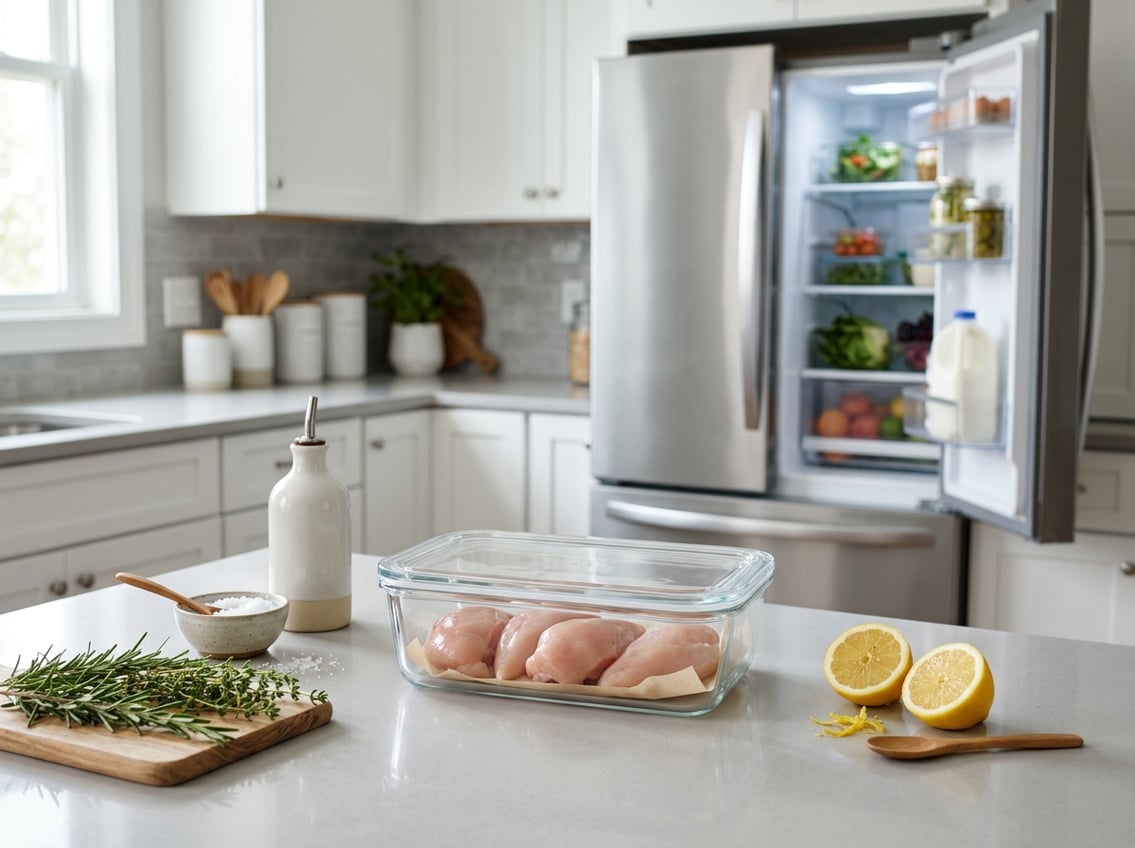
Good storage helps keep fresh chicken from developing odors early. Aim for cold storage, tight packaging, and fast use.
A few simple habits can help you store chicken breast safely and reduce spoilage smells.
How to Store Chicken Breast in the Fridge
Keep raw chicken breast at 40°F or below, in its original package or in a sealed container on the lowest shelf. That placement prevents drips from landing on produce or cooked food.
Use it within 1 to 2 days if you keep it in the fridge. If you need more time, freezing is the better choice.
When to Freeze Chicken
Freeze chicken breast if you are not cooking it soon. Wrap it tightly or place it in a freezer-safe bag, then remove as much air as you can before sealing.
Label the package with the date so you can track how long it has been stored. Only freeze meat that still smells fresh and looks normal.
Safe Thawing and Cooking Basics
Thaw chicken in the fridge, in cold water that you change every 30 minutes, or in the microwave if you plan to cook it right away.
Never thaw chicken on the counter.
Cook chicken breast to 165°F in the thickest part.
Reaching this temperature keeps your food safe, even if the chicken looks and smells normal.


