
What Should Chicken Breast Internal Temperature Be? Quick Guide
Cook chicken breast to an internal temperature of 165°F (74°C) for safety. This is the standard safe temperature for poultry, giving you a clear target when you check doneness.
Pull the breast a little early, then let carryover cooking finish while it rests before slicing. This helps you avoid overcooking and still reach a safe final temperature.
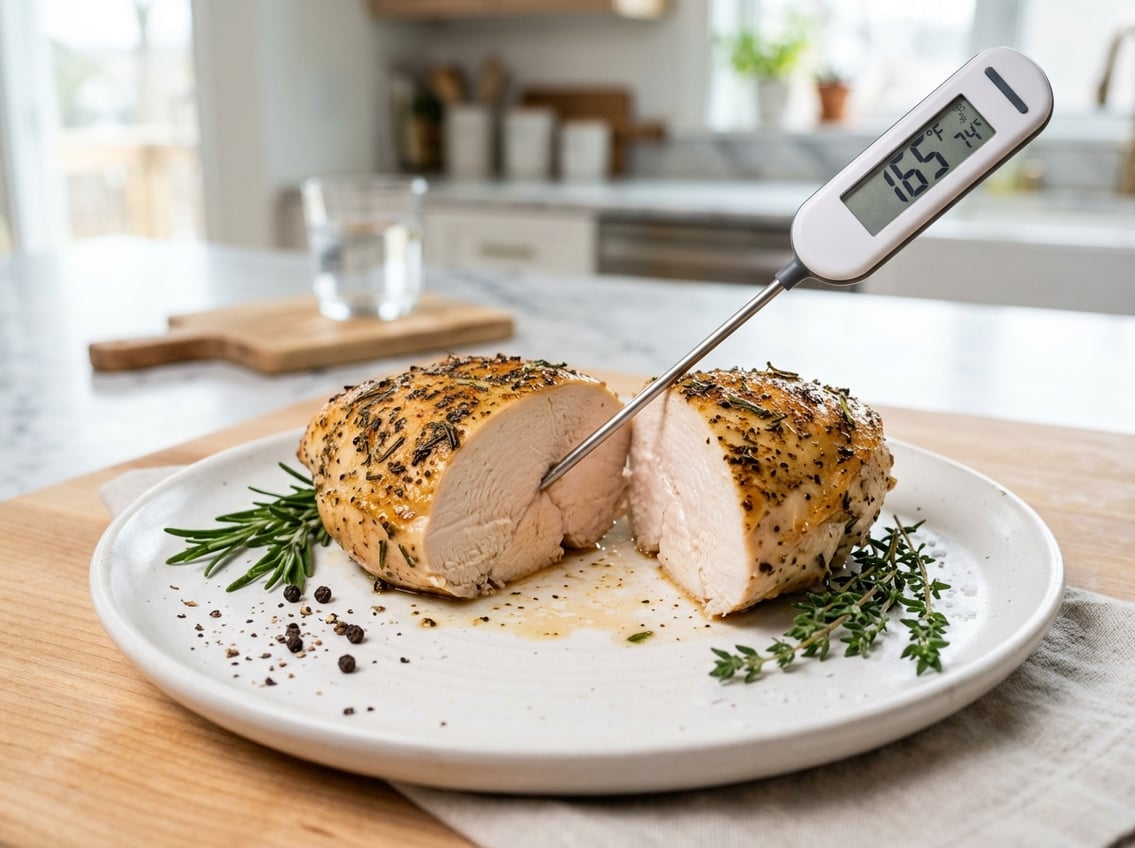
Knowing the right internal temperature for chicken removes guesswork from dinner. It also helps you make juicy chicken breast instead of dry meat.
The Safe Number for Chicken Breast
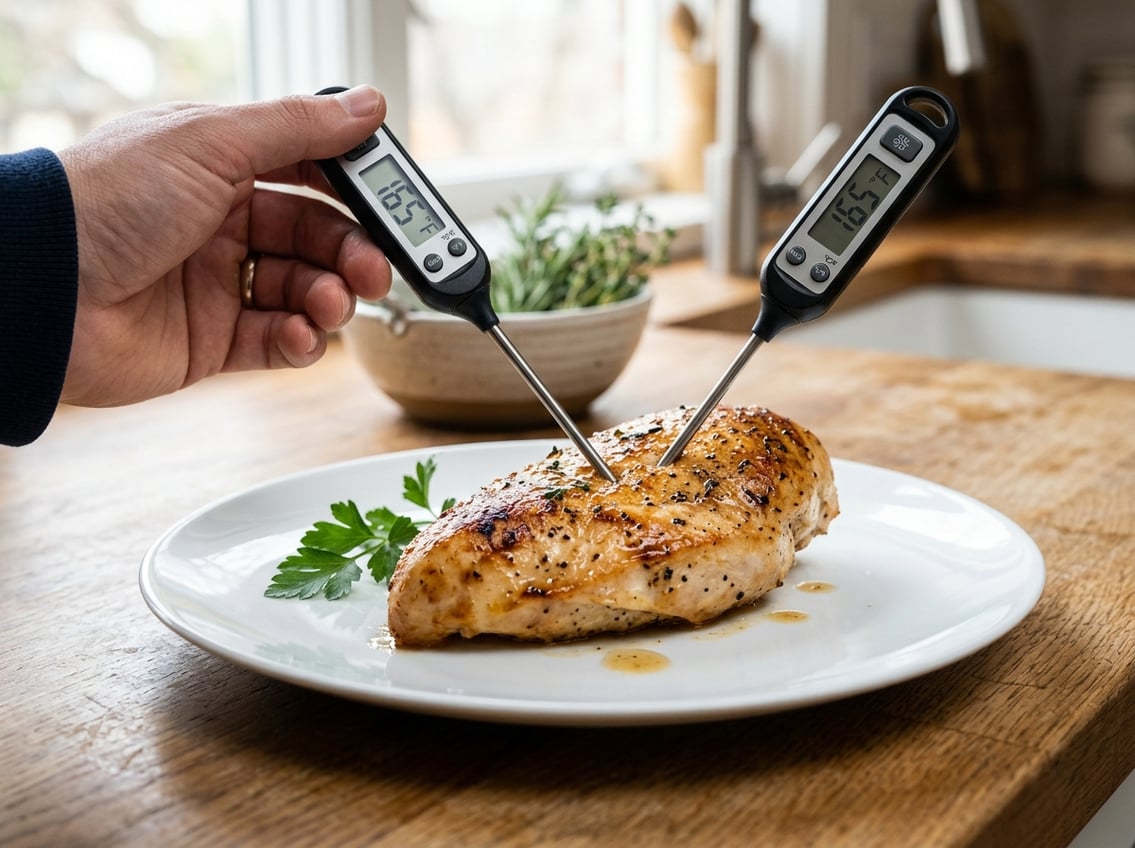
For chicken breast, the safe target is 165°F, or 74°C. The USDA standard in the United States is 165°F (74°C).
This number gives you a simple rule for safe cooking and helps you keep the meat tender.
Why 165°F Is the Safety Standard
Chicken can carry harmful bacteria such as salmonella and campylobacter. Cooking the meat to 165°F destroys these bacteria and makes the chicken safe to eat, according to this chicken internal temperature guide.
A breast can look done before it is fully safe, so the internal temperature matters more than color or timing.
When to Pull at 160°F and Let It Rest
Many cooks pull chicken breast from the heat at 160°F and let it rest. During the rest, carryover cooking raises the temperature to 165°F.
This gives you chicken with better texture and helps you avoid overcooking.
Why Chicken Internal Temperature Matters
Chicken internal temperature affects both safety and texture. If you cook too low, you risk foodborne illness.
If you cook too high, you lose moisture. Temperature control helps you make juicy chicken and lets you know when to rest before slicing.
How to Measure It Accurately
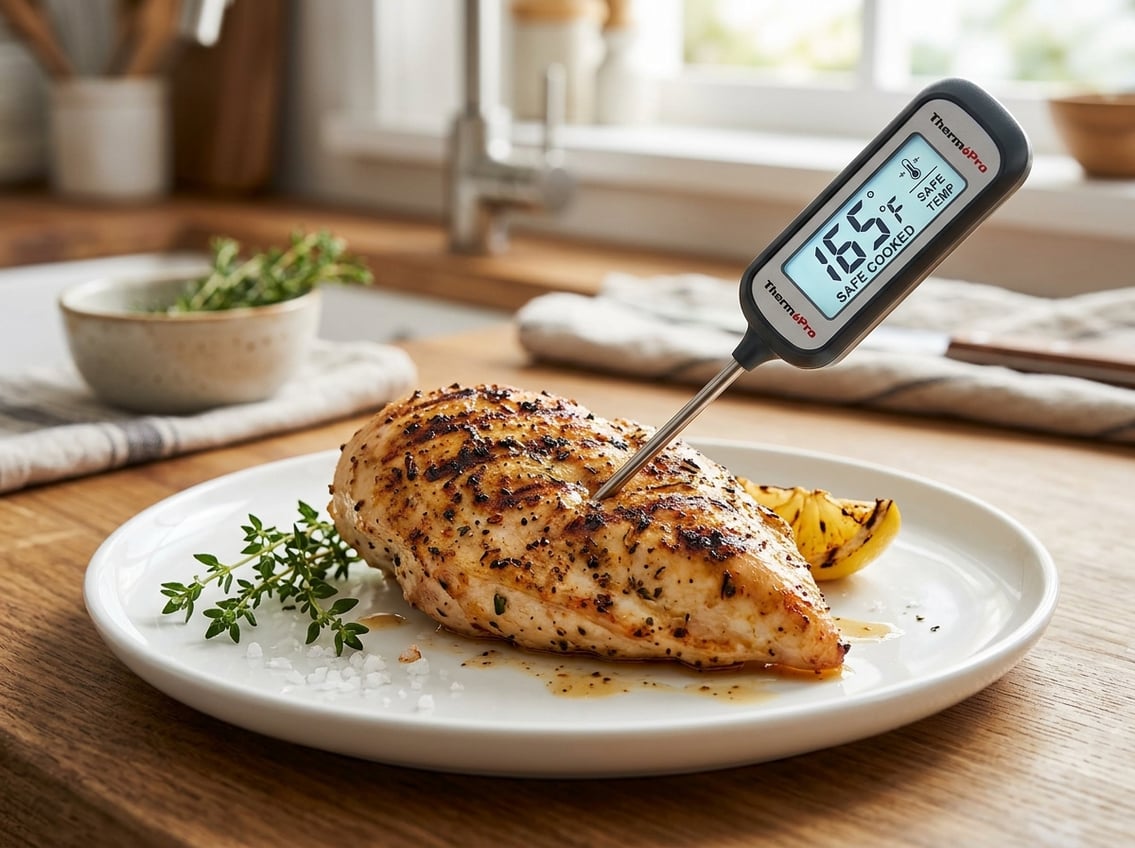
Use the right tool and placement to get an accurate reading. Check the thickest part of the breast for the true internal temperature.
Avoid checking near the pan, the bone, or the edge of the meat. Those spots can give a false reading.
Best Thermometer Types for Home Cooks
Use a meat thermometer for reliable results. A digital meat thermometer or instant-read thermometer works well for quick checks.
A probe thermometer lets you monitor temperature as the chicken cooks. Fast, accurate readings help you avoid overcooking, which matters most with breast meat.
Thermometer Placement in the Thickest Part
Insert the thermometer into the thickest part of the breast. Keep the tip in the center of the meat and away from bone or the tray.
If the breast is uneven, check more than one spot for accuracy.
Why Color and Juices Can Mislead You
Color is not a reliable test for doneness. Chicken can stay a little pink even when it reaches a safe temperature.
Juices can run clear before the center is fully cooked. A thermometer is the only dependable way to check chicken internal temperature.
Cooking Methods That Keep Breast Meat Juicy
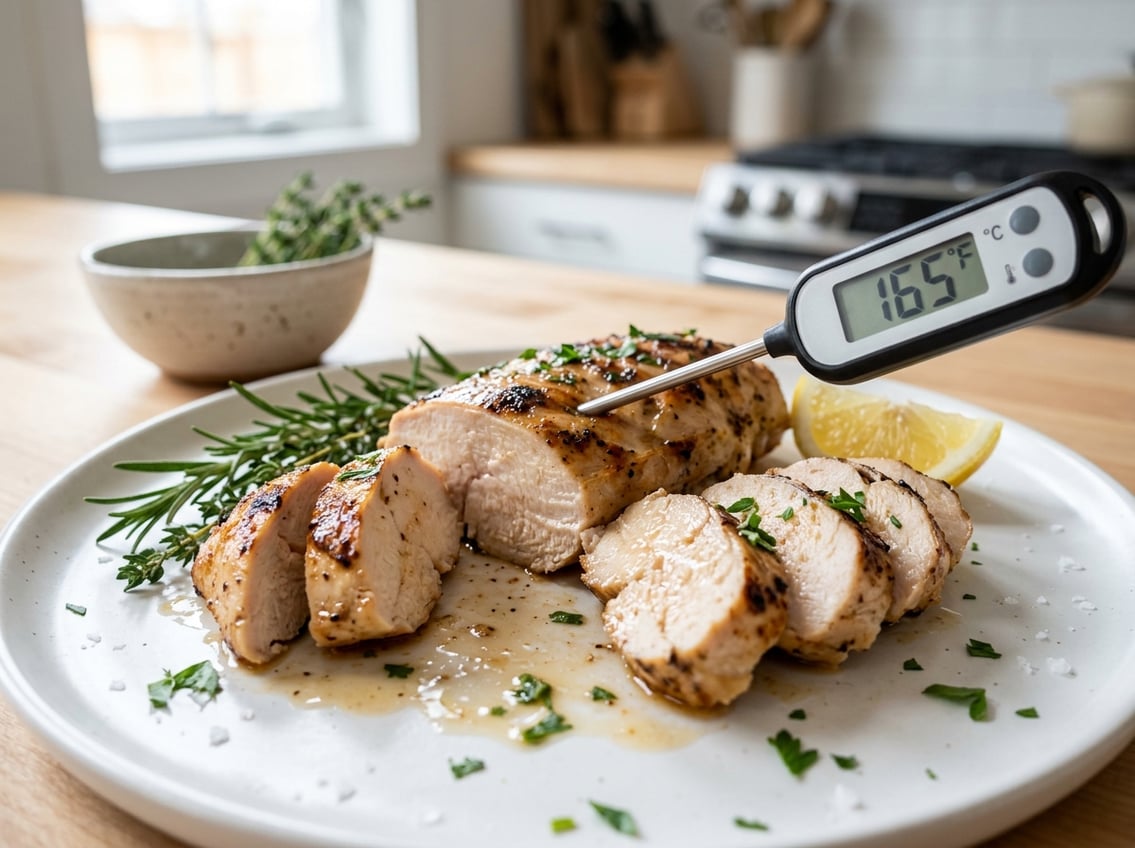
Different cooking methods can give juicy results if you watch the temperature closely. Remove the breast before it dries out and let it finish gently.
That works for oven meals, quick dinners, and simple chicken recipes.
Baking Chicken Breast Without Drying It Out
When baking chicken breast, use moderate to high heat and check early. Thinner breasts finish faster, so start checking near the end of the expected cook time.
Pull the chicken at about 160°F and let it rest. This helps the meat stay juicy instead of turning stringy.
Air Fryer Chicken Breast Timing and Checks
Air fryer chicken breast cooks quickly, so timing matters. Start checking a few minutes before you think it is done, especially with small or pounded breasts.
Use your thermometer instead of relying on browning. The outside can look finished while the center is still below the safe target.
Resting and Slicing for Better Texture
Let the chicken rest before slicing so the juices stay inside the meat. A short rest also gives carryover cooking time to bring the temperature to the safe level.
Slice against the grain for a softer bite. This small step helps your chicken feel more tender and less dry.
How Breast Temperature Compares With Other Cuts
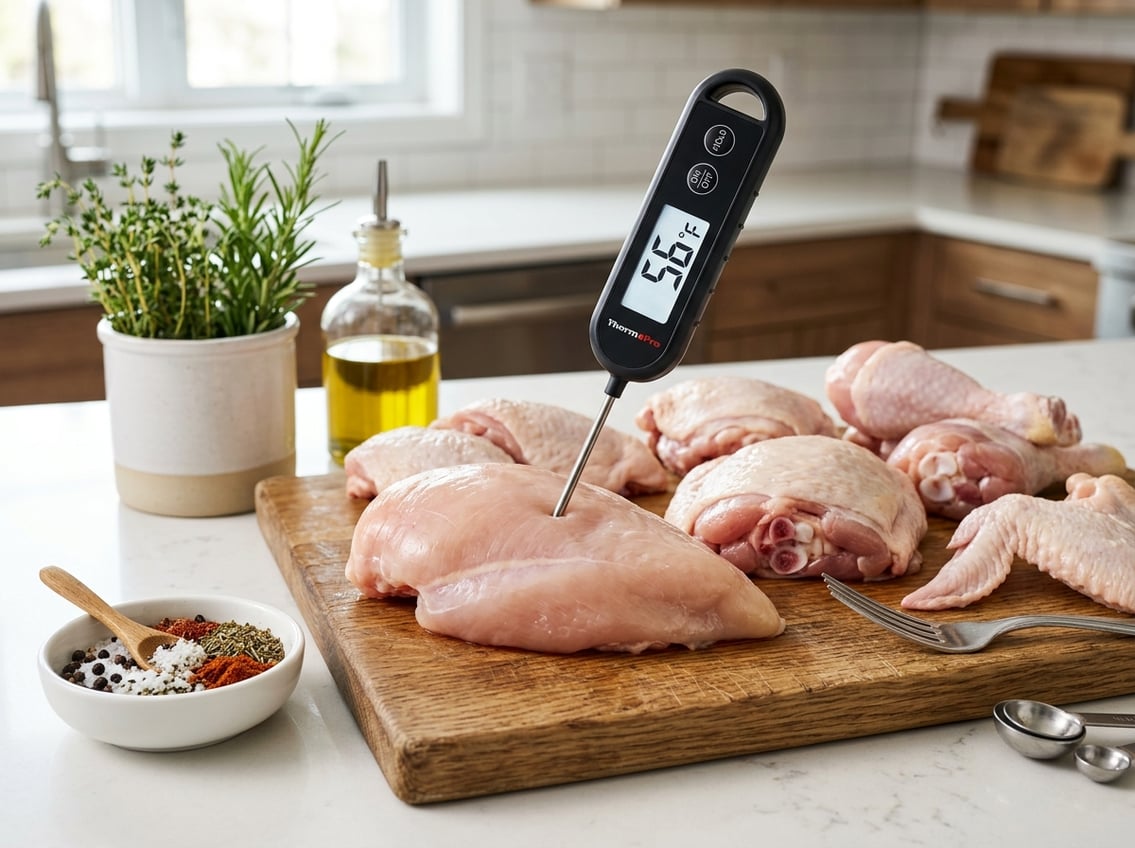
The same safe chicken temperature rule helps across all poultry, but some cuts taste better at different final temperatures. Lean breast meat and dark meat do not finish the same way.
Knowing the difference helps you cook each cut with better texture.
Why Thighs Often Taste Better at 79°C
Chicken thighs often taste better at 79°C, or about 175°F. Dark meat has more connective tissue, so the extra heat helps it become more tender.
Thighs can taste richer and juicier at a higher temperature than breast meat. The same rule applies to drumsticks.
Checking a Whole Bird in More Than One Spot
When you roast a whole chicken, check more than one spot.
The breast and the inner thigh should both reach 165°F for safe results, as shown in this chicken temperature chart.
Different parts cook at different speeds.
Test the thickest areas, and make sure both reach the right temperature for poultry before serving.


