
How Long Do I Boil Chicken Breasts? Time Guide
How long should you boil chicken breasts? In most cases, you boil boneless, skinless chicken breasts for 12 to 15 minutes and bone-in breasts for about 30 minutes.
The exact time depends on thickness, whether the chicken is frozen, and the cooking temperature.
Check for an internal temperature of 165°F at the thickest point to ensure your boiled chicken breast is done. Time gives you a guide, but temperature tells you when the chicken is fully cooked.
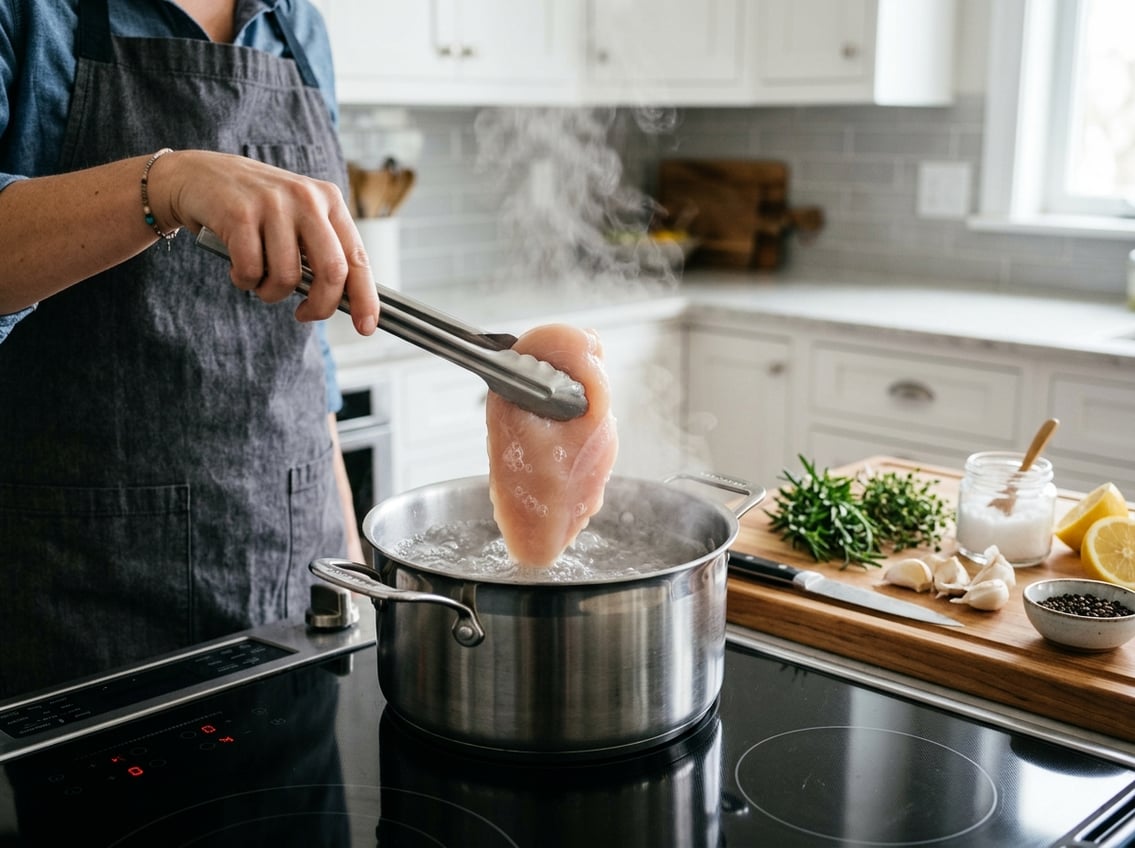
Boiling is a simple way to make chicken that stays moist for salads, soups, casseroles, and shredding.
It works well when you want plain chicken to season later in different recipes.
Boiling chicken breasts in simmering liquid keeps them tender, especially compared with high-heat roasting or grilling.
This method is useful for meal prep and quick weeknight cooking.
Chicken Breast Boiling Times at a Glance
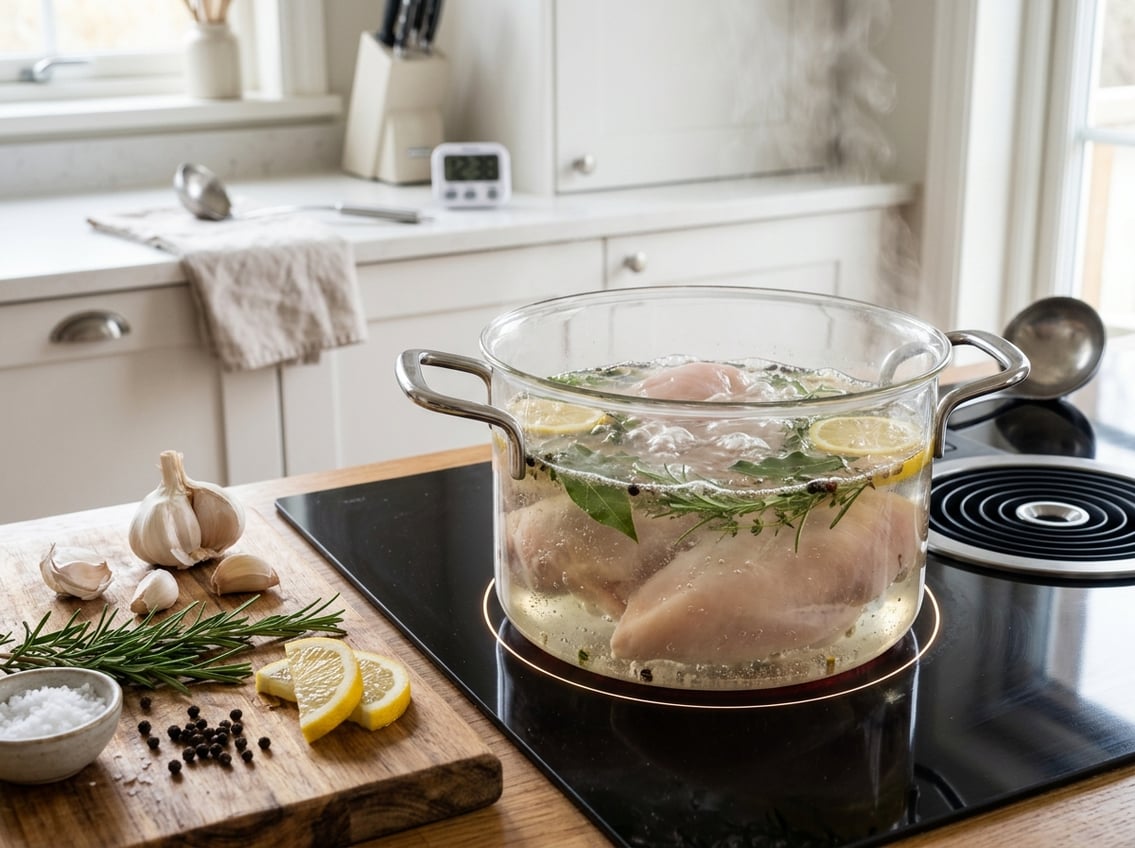
Your cook time changes based on the cut, size, and whether you start with fresh or frozen chicken.
Use the chart below as a practical guide, then confirm doneness with a thermometer.
Timing for Boneless, Skinless Pieces
Boneless, skinless breasts usually cook fastest.
Most take 12 to 15 minutes when simmered in liquid, while smaller 2-inch pieces can be done in 8 to 10 minutes.
Timing for Bone-In Cuts
Bone-in, skin-on chicken breasts need more time, usually about 30 minutes.
These pieces often make a richer cooking liquid, which can be useful if you want broth or stock.
Timing Adjustments for Frozen Poultry
If you boil frozen chicken, the time increases.
Boneless, skinless breasts may take 18 to 22 minutes, while bone-in breasts may take about 45 minutes.
Thawing first is preferred, and the U.S. Food Safety and Inspection Service recommends increasing cooking time by about 50% for frozen chicken.
How Size and Thickness Change Cook Time
A thick breast takes longer than a thin one, even if the weight is similar.
If the pieces are uneven, the thinner ends can overcook before the center is done.
For the most even results, pound very thick breasts to a similar thickness or cut them into smaller pieces before cooking.
That helps your chicken breast cook at the same pace throughout.
Best Method for Tender, Juicy Results
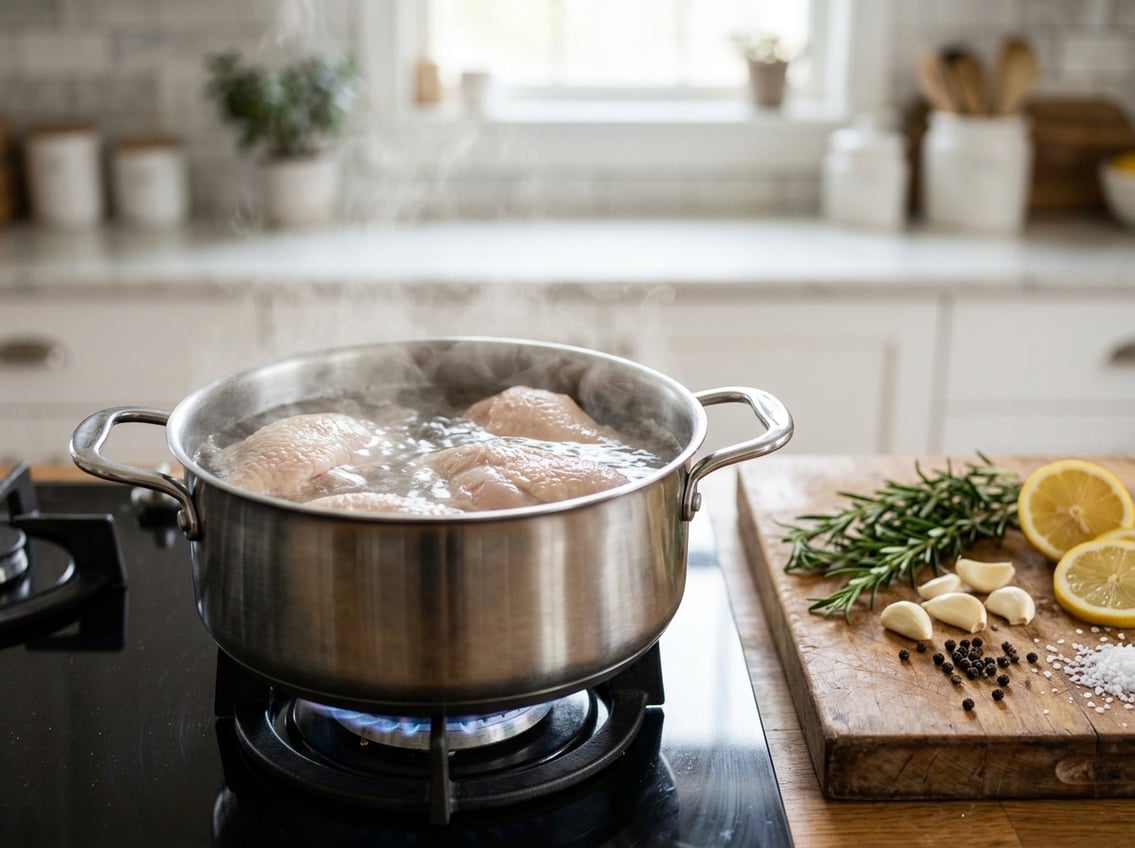
You can get juicy chicken by using a gentle simmer, enough liquid, and checking the temperature quickly.
These steps help you avoid dry meat.
How to Set Up the Pot and Liquid
Place the chicken in a large pot or deep skillet and add enough water or broth to cover it.
Use plain water for neutral flavor, or add broth, onion, garlic, herbs, or lemon for more taste.
Season the cooking liquid to give your boiled chicken breast more flavor from the start.
This is especially useful if you plan to use the meat in simple dishes later.
Why a Gentle Simmer Beats a Rolling Boil
A rolling boil can make the outside tough before the inside is finished.
A gentle simmer cooks the meat more evenly and helps keep it tender.
Once the liquid reaches a boil, lower the heat so the surface stays just barely active.
That is the best approach for boiling chicken breast without drying it out.
How to Check for 165°F Doneness
Use an instant-read thermometer in the thickest part of the breast.
The chicken is ready when it reaches 165°F.
Do not rely on color alone.
Clear juices help, yet temperature is the most reliable check.
When to Rest, Slice, or Shred
Let the chicken rest for a few minutes after cooking so the juices settle.
If you slice too soon, more moisture escapes.
For shredded chicken, wait until it is cool enough to handle, then pull it apart with two forks or your fingers.
That gives you a better texture for tacos, soups, and casseroles.
Flavor, Uses, and Meal Prep Ideas
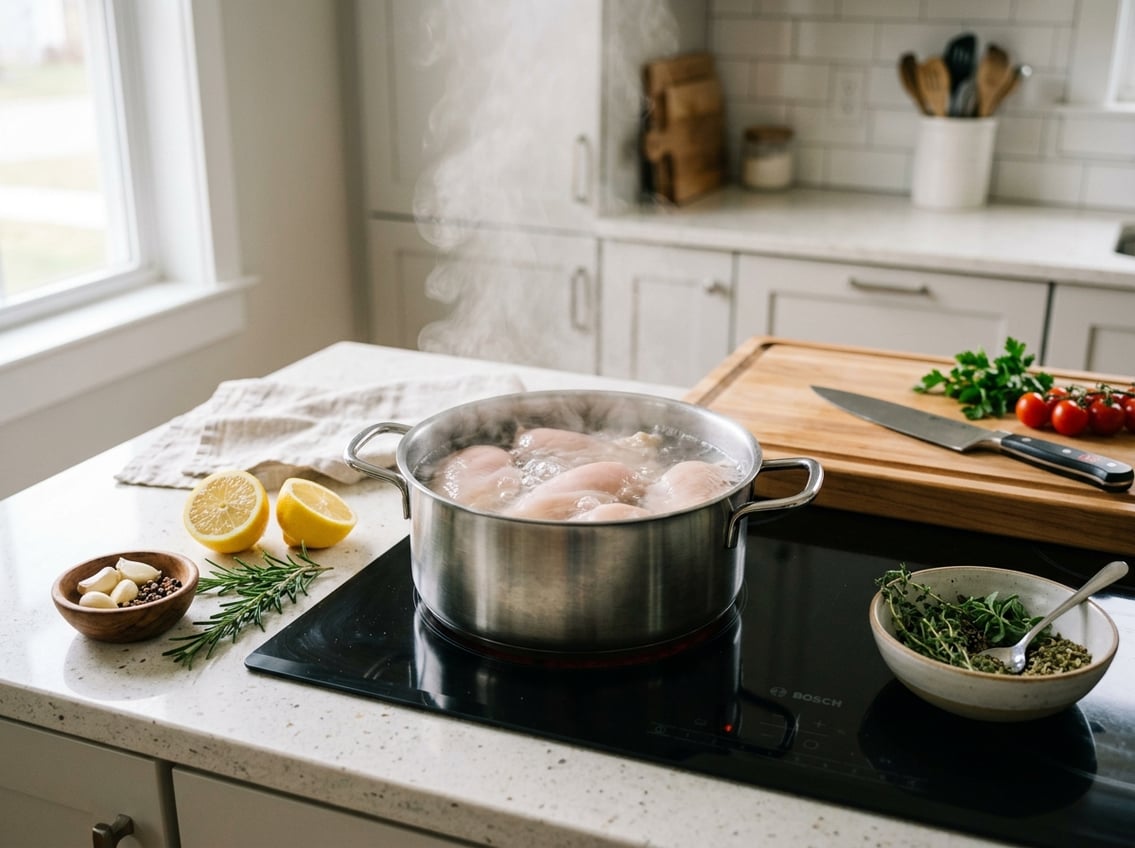
Boiled chicken does not need to taste plain.
The cooking liquid is your main chance to build flavor, and the finished meat works in many easy meals.
Seasoning the Cooking Liquid
Salt, pepper, garlic, onion, bay leaf, thyme, and parsley all work well.
You can also add celery, carrot, or lemon for a light broth flavor.
If you want the chicken to stay mild for later recipes, keep the liquid simple.
If you want the meat ready for soup or shredded bowls, use a stronger broth base.
Best Ways to Use Cooked Meat in Meals
Boil chicken breasts when you want a flexible protein for the week.
The cooked meat works in chicken salad, enchiladas, casseroles, pasta, grain bowls, sandwiches, and soups.
It also makes meal prep easier because you can cook once and portion it for several meals.
How to Make and Use Shredded Portions
Shred the chicken once it has cooled enough to handle.
For faster prep, use a stand mixer with the paddle attachment for a short burst.
Portion shredded chicken into containers or freezer bags so you can pull out only what you need.
That makes it easy to add protein to lunches, tacos, soups, and quick dinners.
Storage and Reheating Without Drying It Out
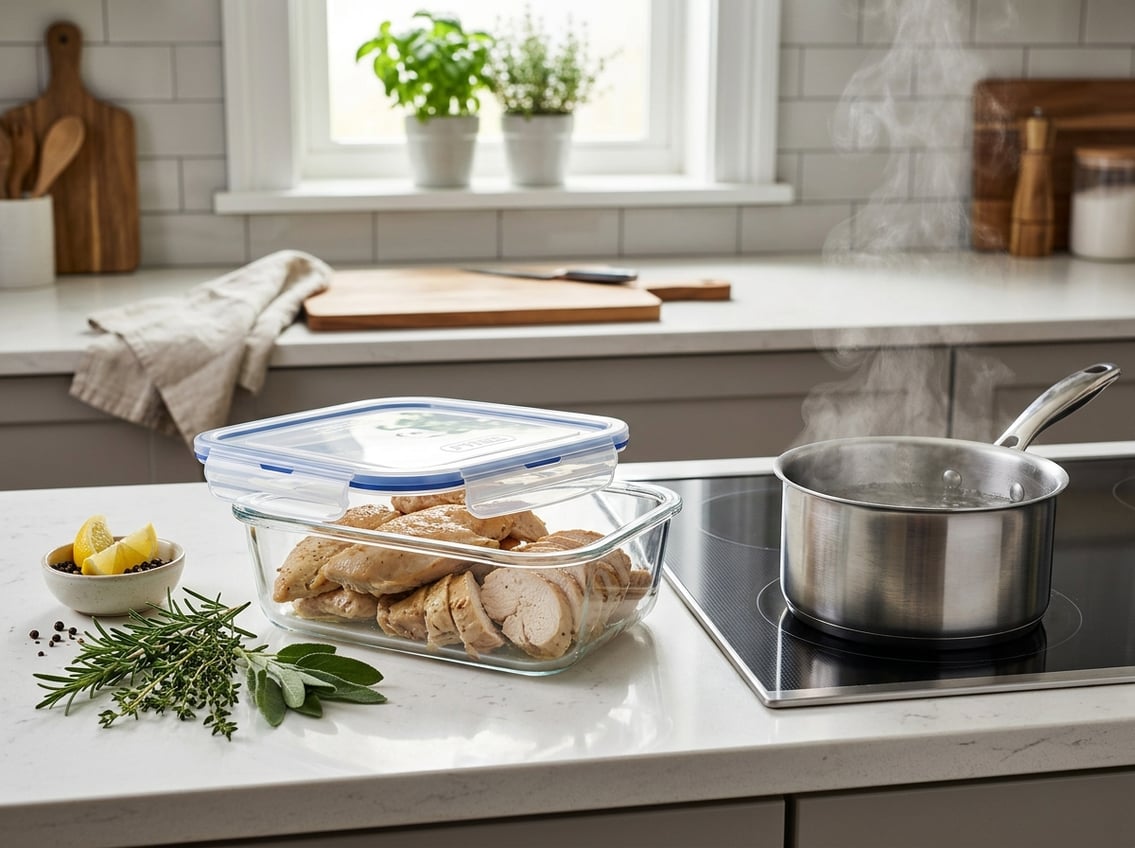
Store boiled chicken safely by cooling it quickly and keeping it in a clean, covered container.
Good storage protects both texture and food safety.
How to Cool and Refrigerate Safely
Let the boiled chicken breast cool completely before refrigerating.
You can keep it in the refrigerator for up to three days.
Do not leave the chicken at room temperature for too long.
Move it to the fridge once it is no longer steaming hot.
Freezing Tips for Later Meals
If you want to freeze boiled chicken, package it in airtight containers or freezer bags.
Label the container with the date so you can track how long it has been stored.
Frozen boiled chicken keeps for up to two months.
Freezing shredded portions in small bags makes it easier to thaw only what you need.
How to Reheat While Keeping Moisture
Reheat gently so the chicken stays moist. Use low heat in the oven, warm it in a covered skillet with a little broth, or microwave it with added moisture.
If the meat seems dry, add a spoonful of broth before heating. This helps bring back juiciness without changing the flavor.


