
When Is Chicken Breast Boiled? Timing and Doneness
Chicken breast is boiled when the thickest part reaches 165°F and the meat is no longer pink in the center. If you use the right timing and check doneness the right way, you get safe, tender chicken breast that stays juicy instead of turning dry.
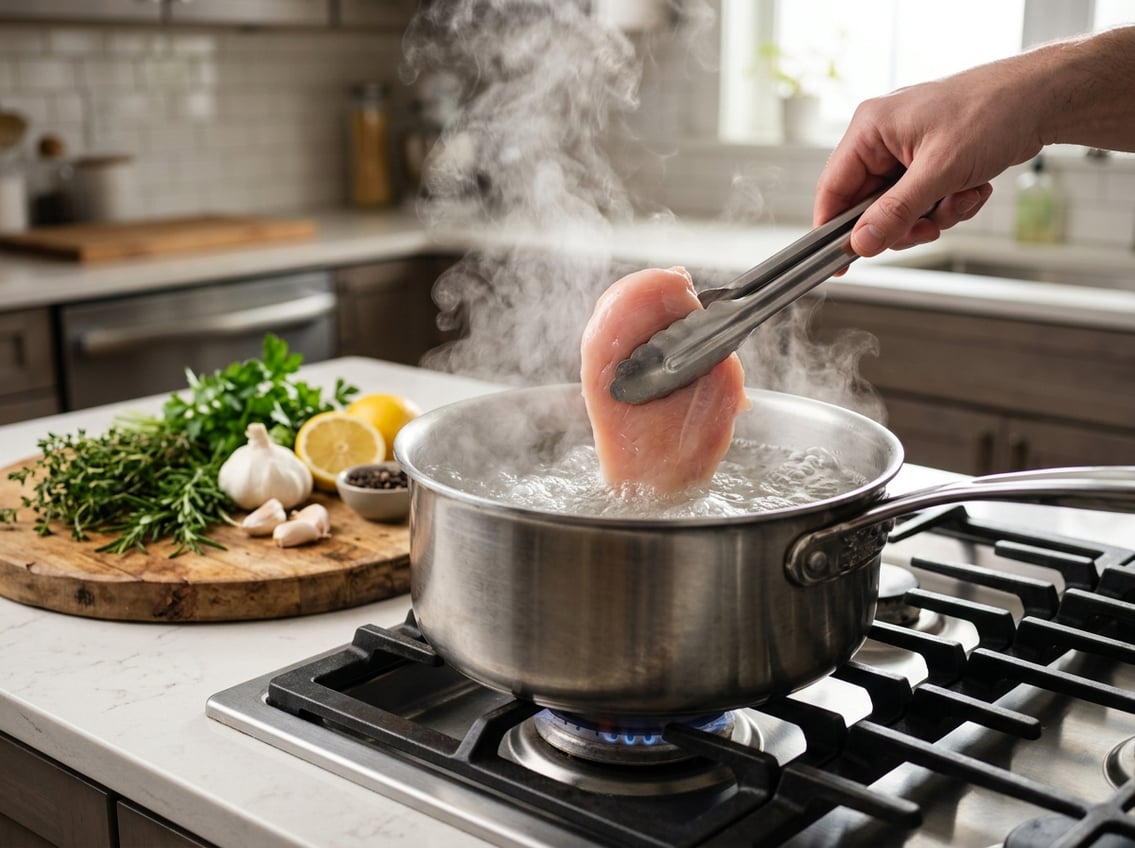
Boiling chicken is a simple way to cook chicken breast for quick meals. Whether you boil chicken for salads, soups, or meal prep, focus on the temperature, not just the clock.
If you want easy boiled chicken, use water, broth, and a gentle simmer. Small choices make a big difference in texture.
How to Tell When Chicken Breast Is Done
The time to boil chicken depends on the size, cut, and whether the meat is fresh or frozen. Time gives you a starting point, but an instant-read thermometer gives you the most accurate answer.
Safe Internal Temperature and Why It Matters
Chicken breast is done when the center reaches 165°F. That temperature makes the meat safe to eat and keeps the texture juicy.
Use an instant-read thermometer for best results. Insert it into the thickest part of the chicken breast, not touching the pan or bone.
How Long Boneless and Bone-In Pieces Usually Take
Skinless, boneless chicken breast halves usually take about 12 to 15 minutes. Bone-in, skin-on pieces usually take about 30 minutes.
Larger or thicker chicken breasts may need a few extra minutes. If you boil chicken breast in a crowded pot, heat moves more slowly and cooking takes longer.
Visual Signs of Doneness Without Guesswork
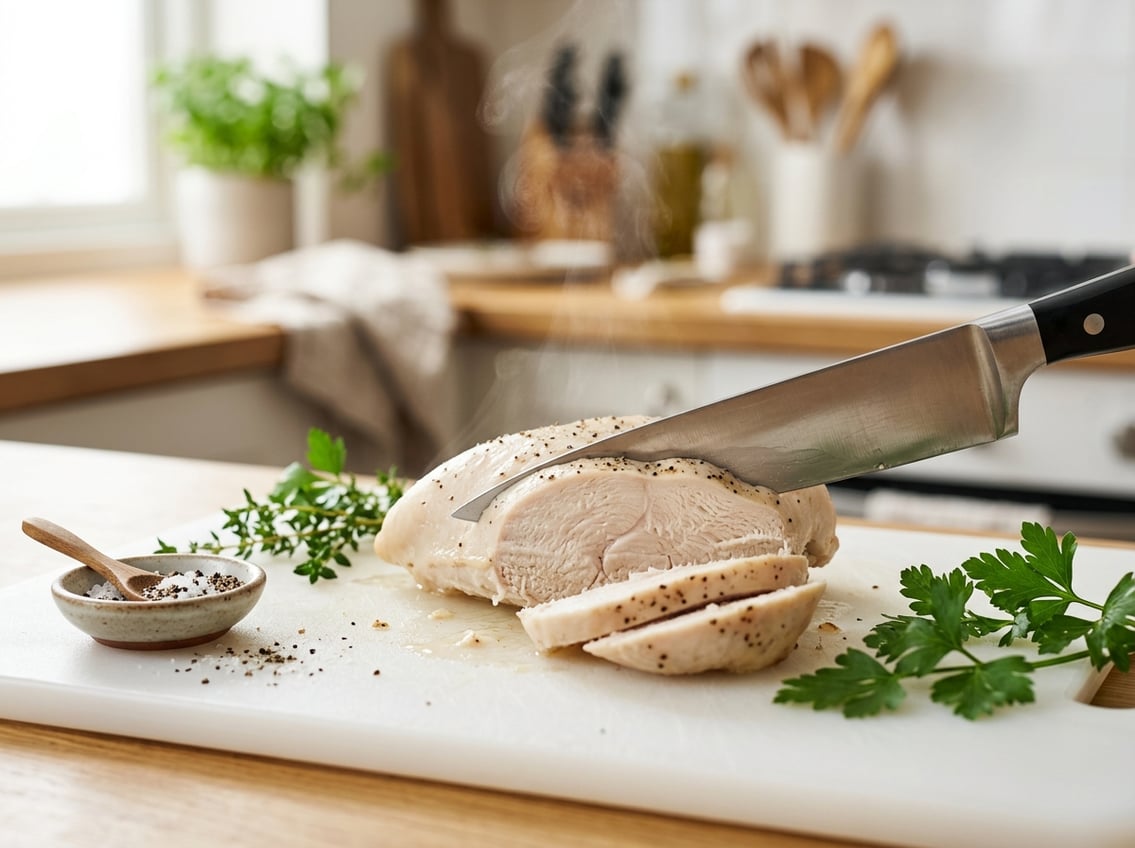
A boiled chicken breast should look opaque and white all the way through when you cut into the thickest part. The juices should run clear, not pink.
Visual checks can help, but the thermometer is still the best way to know when the meat is finished.
The Best Method for Tender, Juicy Results
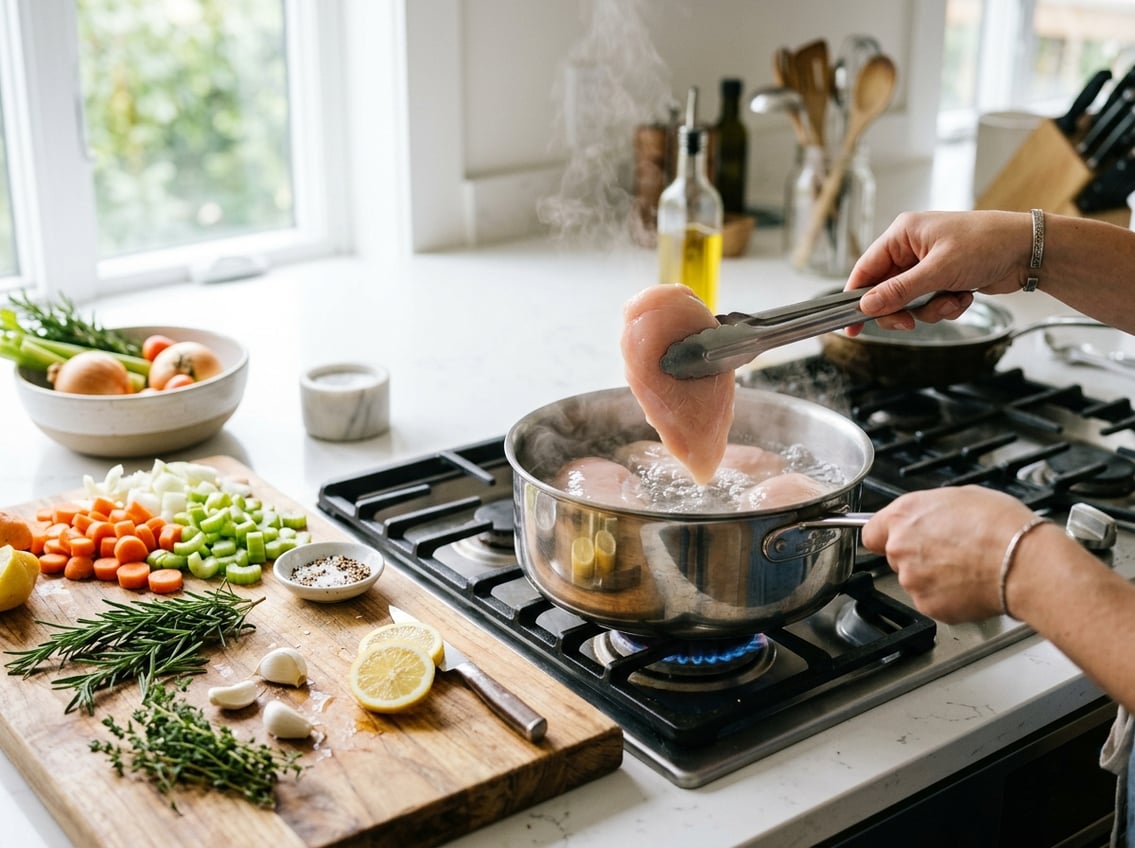
To keep chicken breast moist, use gentle heat. Start in cold liquid and avoid a hard boil for even cooking.
Start in Cold Liquid and Bring to a Gentle Simmer
Place the chicken breast in a pot and cover it with cold water or broth. Bring the liquid up slowly until it simmers, not boils.
This helps the outside and inside cook at a similar pace. It is a simple way to make boiled chicken that stays tender.
Boiling vs. Poached Chicken
Boiled chicken and poached chicken both use hot liquid, though poaching usually means keeping the liquid below a full boil. For chicken breast, a gentle simmer is a smart choice.
This lowers the risk of tough edges and dry meat.
How to Boil Chicken Breast Step by Step
-
Place chicken breast in a pot or deep skillet.
-
Add water or broth until the meat is covered.
-
Add salt, herbs, onion, garlic, or other seasonings if you want more flavor.
-
Bring the liquid to a boil, then lower it to a simmer.
-
Cook until the internal temperature reaches 165°F.
-
Remove the chicken and let it rest for a few minutes before slicing.
If you want to use the broth later, strain it and save it. That liquid can add flavor to soup, rice, or sauces.
Fresh vs. Frozen Cooking Times
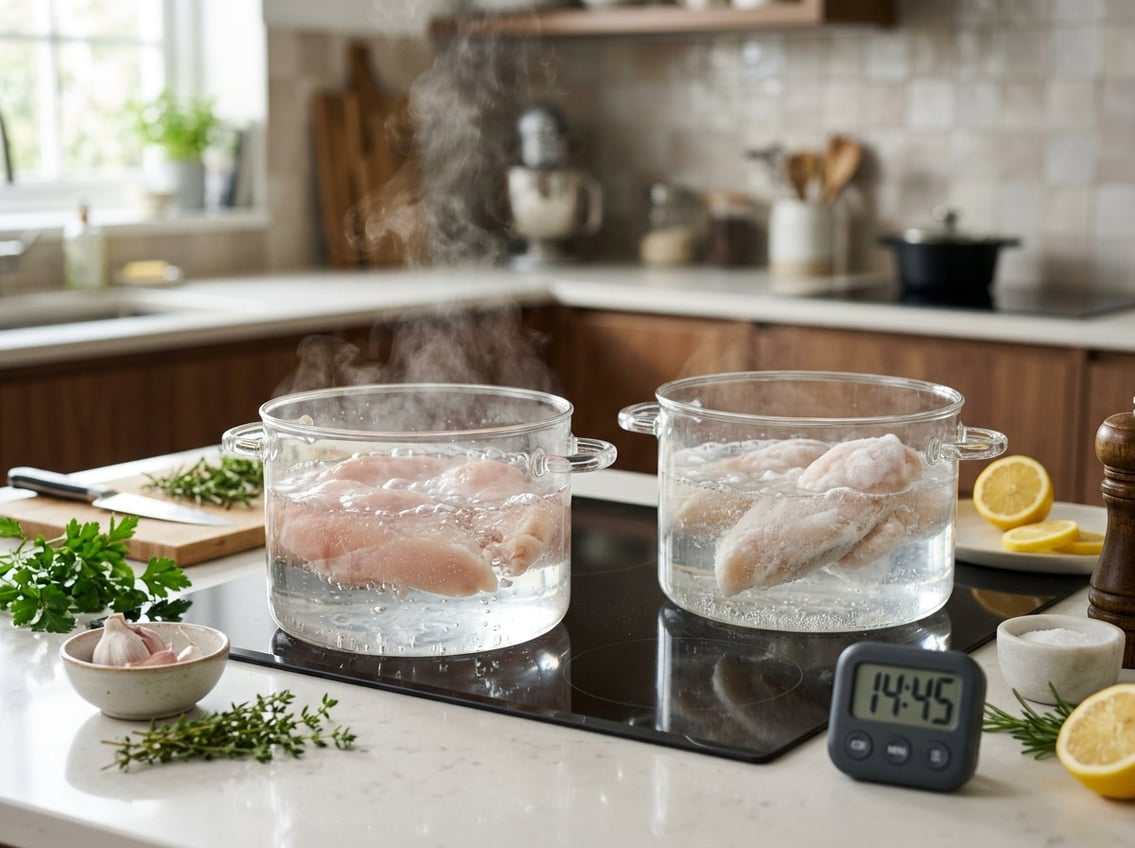
You can boil frozen chicken, including frozen chicken breast, when needed. Timing changes, and thawing first is usually easier and more even.
Can You Boil Frozen Chicken Safely
You can boil frozen chicken safely as long as it reaches 165°F in the center. The bigger issue is even cooking, since the outside may cook faster than the middle.
Boiling frozen chicken works best as a backup plan. If you have time, thawing gives you more control.
How Much Extra Time Frozen Breasts Need
For frozen boneless chicken breast, expect extra cooking time compared with fresh or thawed meat. Frozen boneless breasts usually take about 18 to 22 minutes, while bone-in frozen pieces may take about 45 minutes.
A general rule is to increase cooking time by about 50% for frozen chicken. Even then, check the thickest part with a thermometer.
When Thawing First Is the Better Option
Thawing first is better when you want even texture and more predictable timing. It also makes it easier to season the meat and check doneness.
If you are planning ahead, thaw chicken in the fridge. That gives you more reliable results than starting from frozen.
What to Do With It After Cooking
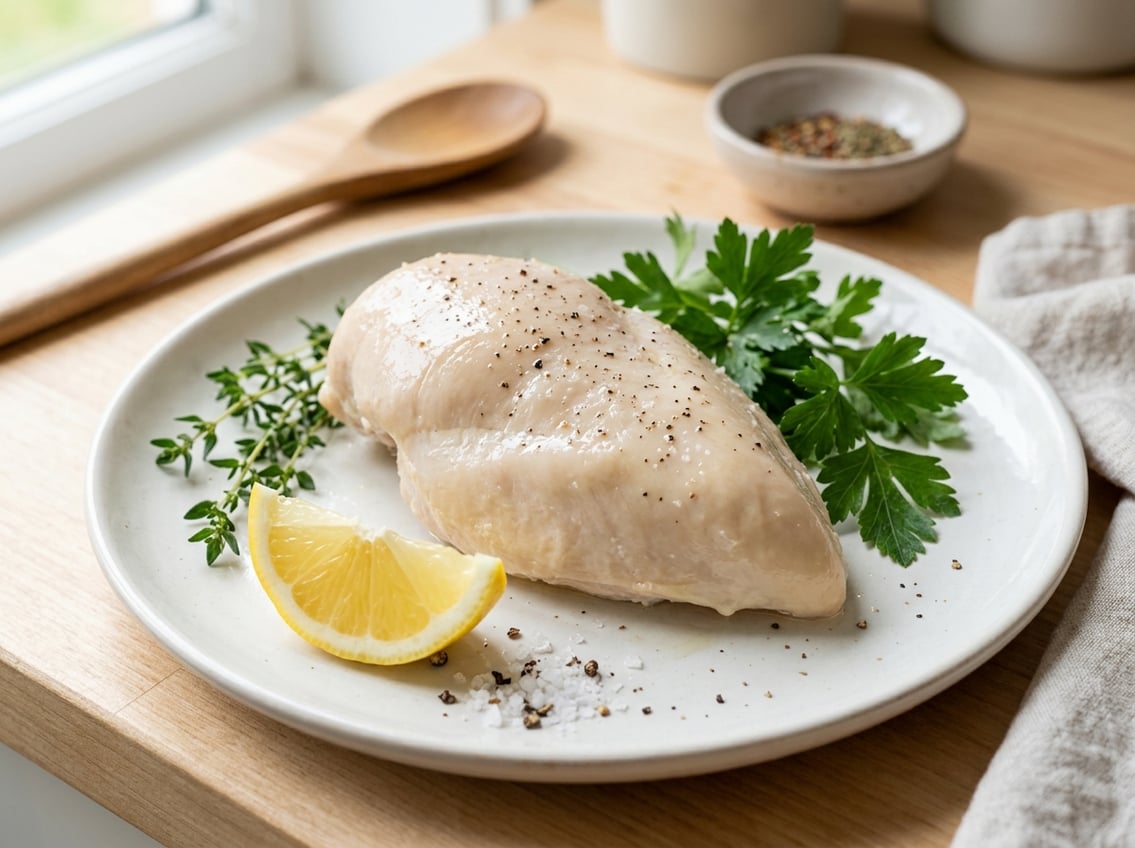
Once boiled chicken cools a little, you can turn it into many meals. It works well as shredded, chopped, or sliced chicken for quick lunches.
How to Make Shredded or Chopped Chicken
Let the chicken cool until you can handle it comfortably. Pull it apart with two forks for shredded chicken, or cut it into cubes for chopped chicken.
Shredded chicken is useful for tacos, soups, casseroles, or a fast chicken salad. Chopped chicken gives you more defined pieces for pasta or grain bowls.
Best Uses for Meal Prep and Leftovers
Boiled chicken fits many recipes because the flavor is mild and easy to season later. You can use it in chicken salad, pot pie, wraps, enchiladas, or pasta dishes.
It also works as a shortcut for recipes that use shredded chicken. Since the chicken is already cooked, you can move straight to mixing and serving.
How to Store Cooked Chicken and Broth
Let the chicken cool completely before you store it.
You can refrigerate cooked chicken for up to three days or freeze it for up to two months, according to Better Homes & Gardens.
Store broth in a separate container if you saved it.
Use the broth within two days in the fridge or freeze it for later use.


