
Why Chicken Breast Is Healthy for Everyday Diets
Chicken breast is healthy because it gives you a lot of protein with relatively few calories and little saturated fat.
If you are trying to build balanced meals, manage your weight, or follow healthy diets, this lean white meat fits those goals well.
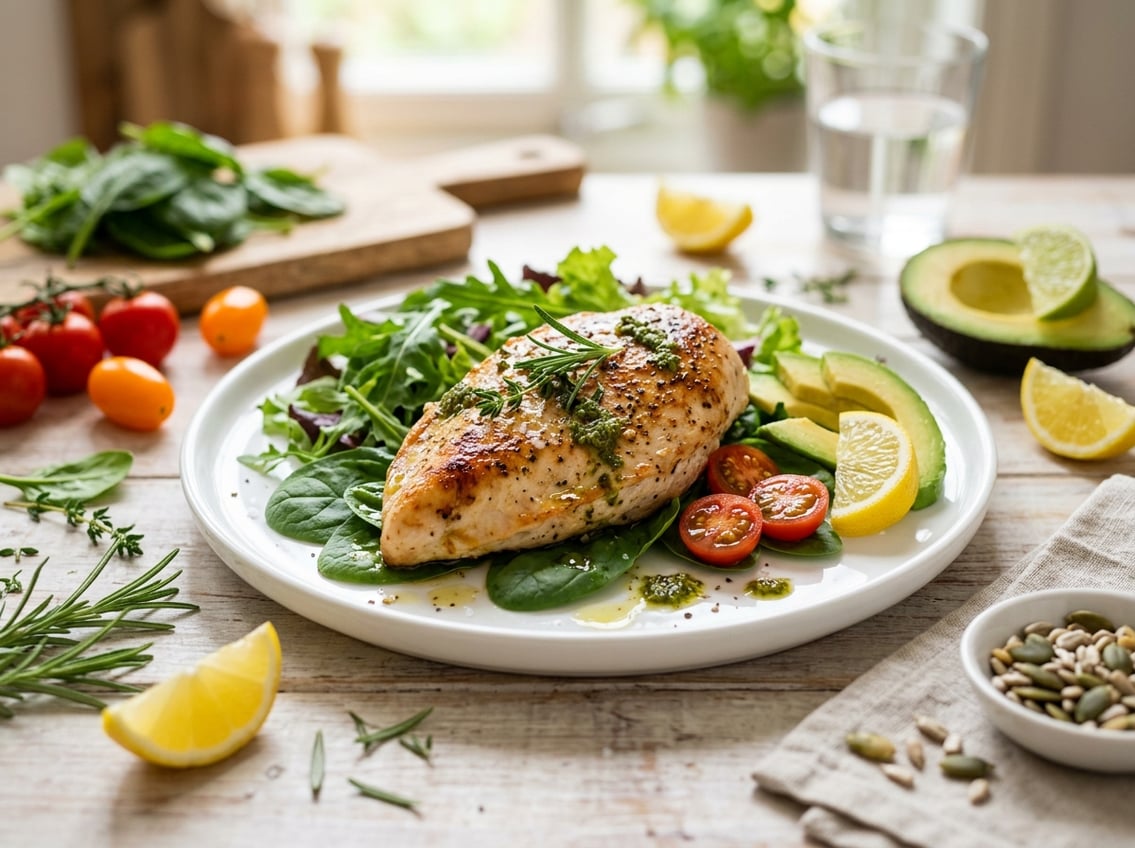
When you choose skinless chicken breast and prepare it with simple cooking methods, you get a versatile food that supports protein intake, fullness, and heart-friendly eating.
It also brings useful nutrients such as niacin, vitamin B6, selenium, choline, zinc, and pantothenic acid.
Chicken breast works in salads, bowls, fajitas, soups, and grain plates without needing much effort.
What Makes Chicken Breast a Nutritious Choice
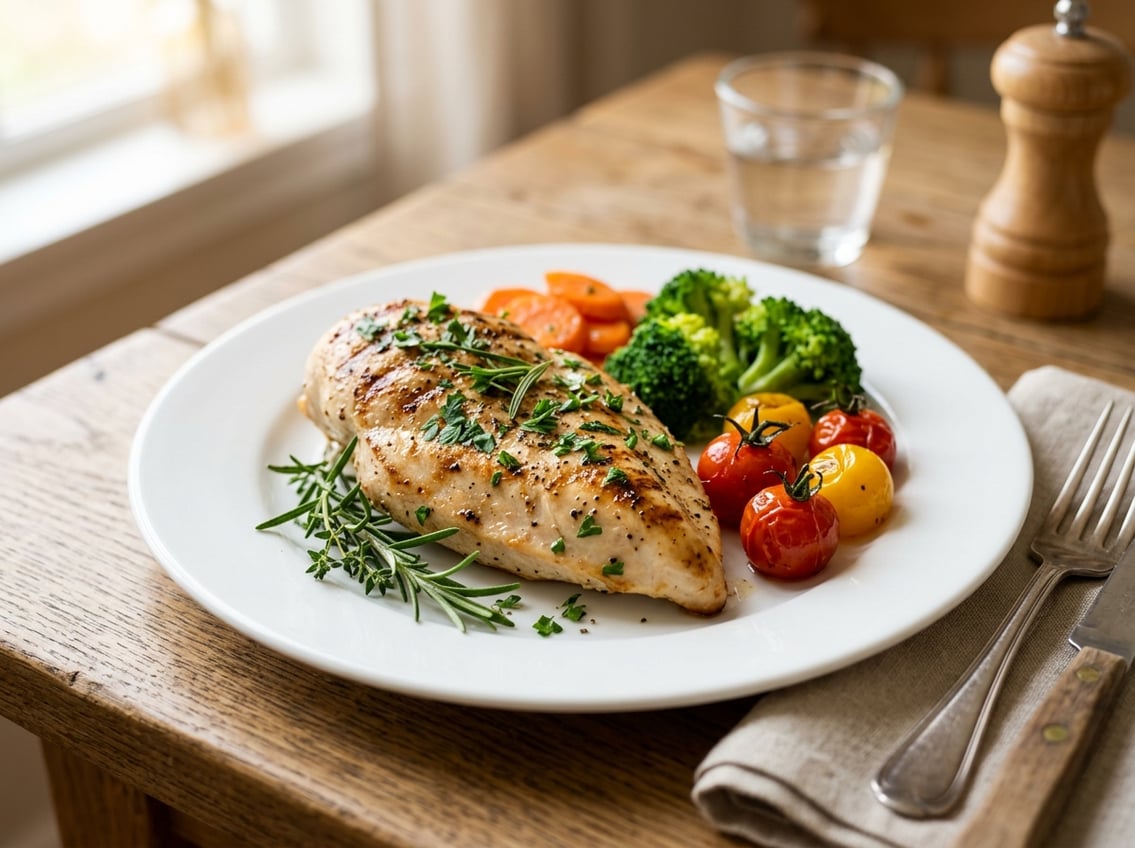
Chicken breast stands out because it gives you a strong protein-to-calorie ratio.
It is also a lean white meat, so you get useful nutrients without a lot of extra fat.
Protein, Calories, and Fat at a Glance
A 3-ounce serving of skinless cooked chicken breast has about 128 calories, 26 grams of protein, and 3 grams of total fat.
It contains only about 1 gram of saturated fat.
That combination makes chicken breast a practical choice when you want more protein without a large calorie load.
The amino acids, including essential amino acids, help support muscle repair and other body functions.
Key Micronutrients That Add to Its Value
Chicken breast nutrition goes beyond protein.
It also provides choline, zinc, niacin, vitamin B6, pantothenic acid, and selenium.
These nutrients help with energy use, nerve function, and immune support.
Chicken breast also gives you a small amount of iron and other B vitamins, which adds to its value in healthy diets.
Skinless vs. Skin-On Nutrition
Skinless chicken breast is the leanest option.
Keeping the skin on adds more calories and fat, so the nutrition profile changes if you eat it that way.
If your goal is lower fat intake, skinless chicken breast is usually the better pick.
Skin-on chicken can still fit into a balanced diet, but the extra fat matters if you are watching portions closely.
How It Supports Common Health Goals
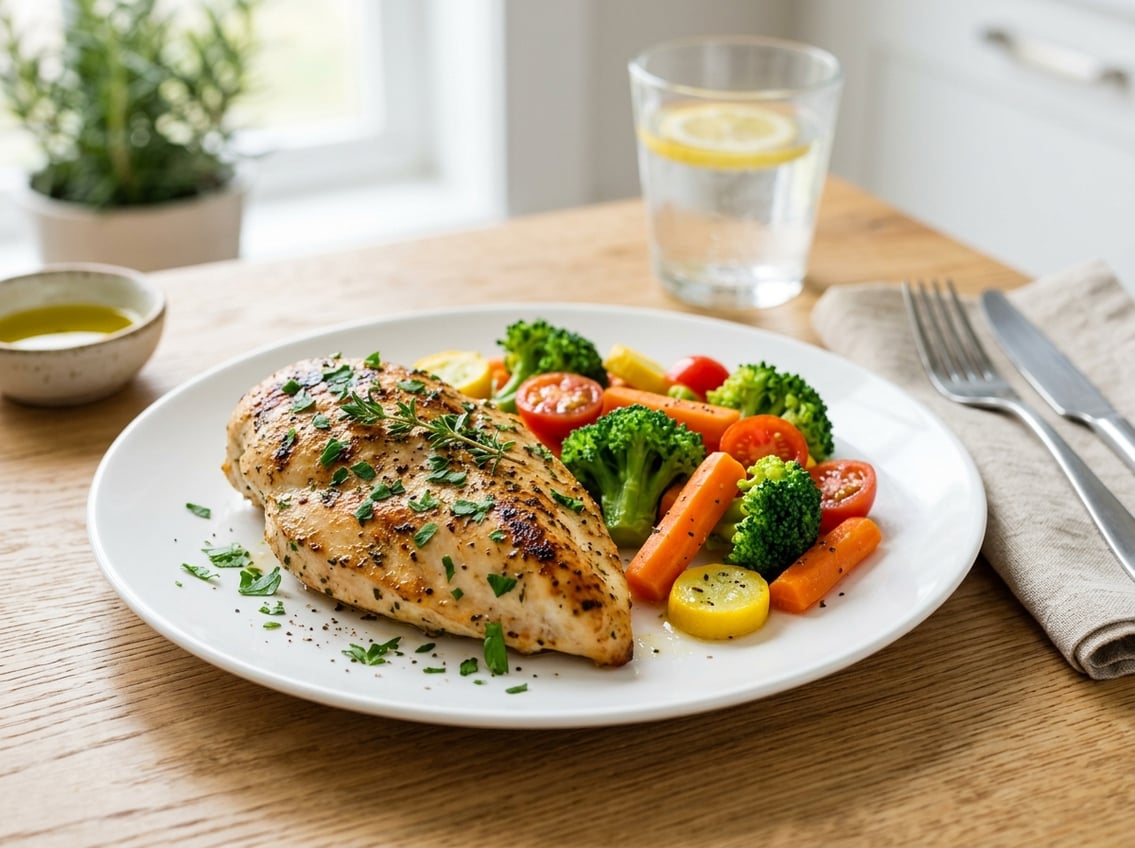
Chicken breast supports several common health goals at the same time.
It can help you feel full, keep saturated fat intake lower, and fit into eating styles that focus on vegetables, beans, and healthy fats.
Weight Management and Fullness
Protein is one of the most filling nutrients, so chicken breast can help you stay satisfied after a meal.
That satiety can make it easier to manage portions and reduce snacking.
A protein-rich meal built around chicken breast, vegetables, and beans often feels more complete than a meal built around refined carbs alone.
Heart Health and Lower Saturated Fat Intake
Chicken breast is lower in saturated fat than many red and processed meats.
That matters because lower saturated fat intake is linked with better heart health choices.
The American Heart Association includes lean poultry in a heart-healthy pattern.
Fresh lean white meat may support cardiometabolic health, according to EatingWell’s review of chicken breast health benefits.
Choosing chicken breast instead of higher-fat meats can be a simple way to improve the fat profile of your meals.
How It Fits Mediterranean and DASH Eating Patterns
Chicken breast works well in the Mediterranean diet and the DASH diet because both patterns emphasize lean protein, vegetables, beans, and healthy fats.
It pairs easily with olive oil, herbs, whole grains, and produce.
It also fits meals aimed at reducing type 2 diabetes risk when it replaces processed red meat and high-saturated-fat foods.
The key is to keep the rest of the plate balanced and avoid heavy breading, excess salt, and sugary sauces.
When Preparation Changes the Health Picture
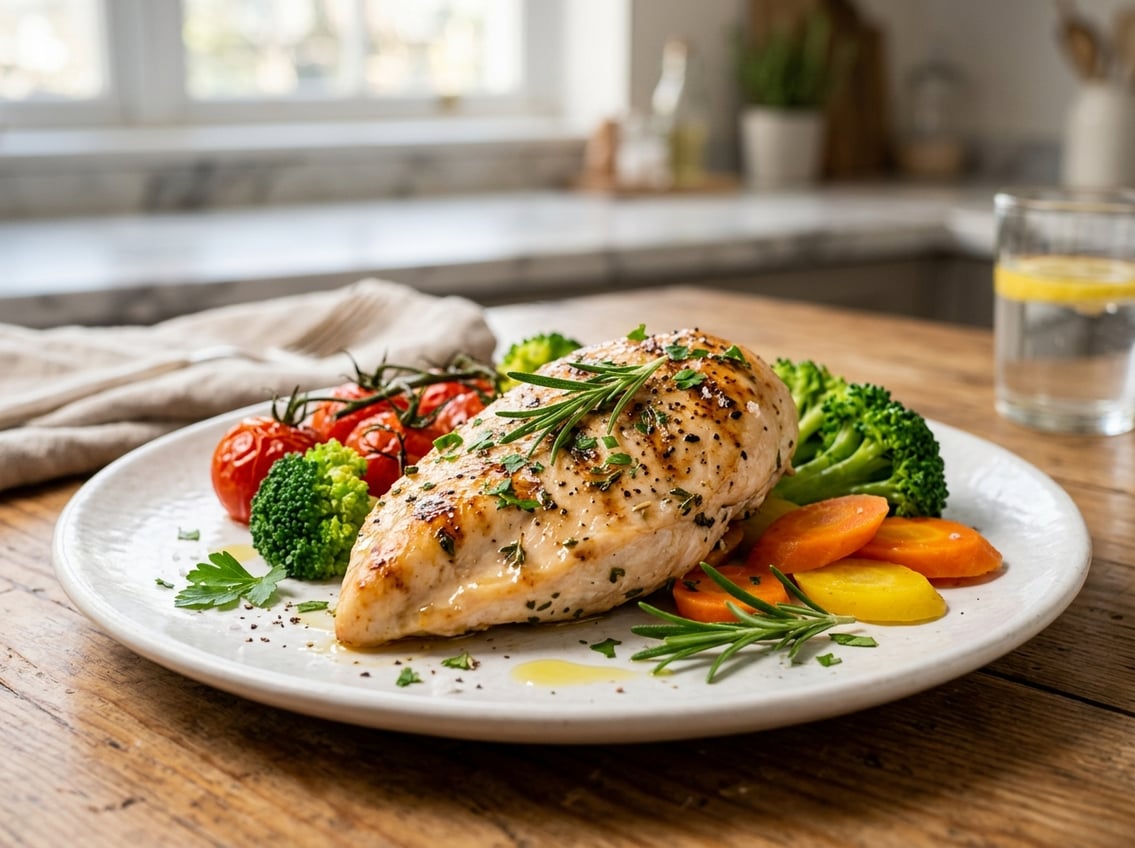
How you cook chicken breast changes how healthy it is.
The meat is lean, yet added oil, breading, sugary glaze, or rich cheese sauces can quickly increase the calorie and fat count.
Best Cooking Methods for a Healthier Result
Grilling, baking, poaching, and roasting are simple choices that keep chicken breast lighter.
Poaching can be especially useful when you want a moist result without extra fat, as noted by Health.
Grilled chicken breast is also a good option when you keep seasoning simple.
Use herbs, lemon, garlic, pepper, or salsa instead of heavy coatings.
Why Fried and Heavily Sauced Versions Are Different
Fried chicken adds oil and breading, which raises calories and fat.
Dishes like chicken parmesan often include cheese, oil, and sauce, so they are no longer the same as plain chicken breast.
A maple-glazed chicken breast can still fit into a healthy diet, yet the sugar content matters.
The more sauce, cheese, and frying you add, the less the meal reflects the natural nutrition of chicken breast.
High-Heat Cooking, AGEs, and Food Safety Basics
High-heat cooking can create advanced glycation end products, or AGEs.
These compounds form when protein and sugar are exposed to intense heat.
Lower-heat methods such as poaching may reduce that effect.
Always cook chicken until it reaches a safe internal temperature.
Avoid cross-contamination with raw juices to keep the meal safe.
Smart Ways to Add It to Balanced Meals
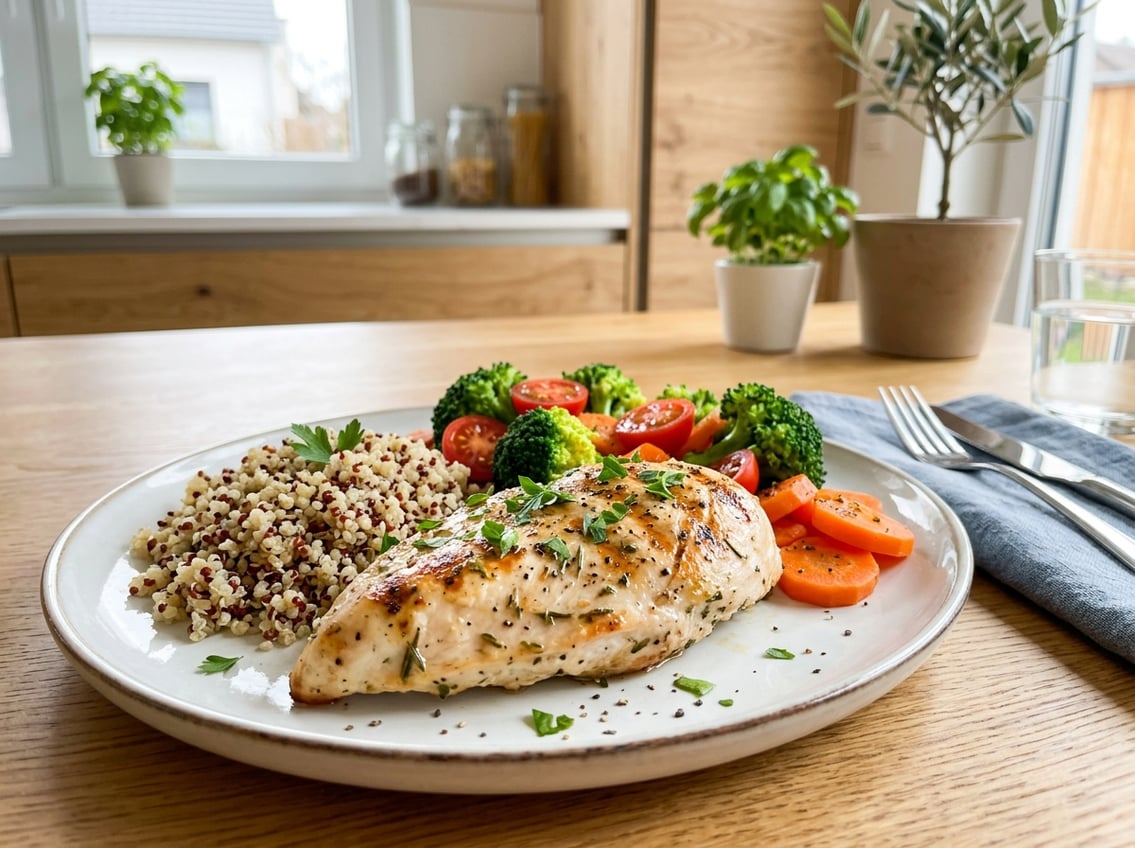
Chicken breast is easy to build into meals you already know.
The best plates combine it with fiber-rich sides, color, and enough healthy fats to make the meal satisfying.
Pairing Chicken Breast With Fiber-Rich Sides
You get a stronger meal when you serve chicken breast with vegetables, beans, and whole grains.
Fiber helps with fullness and supports steady eating habits.
Try chicken breast with roasted broccoli, black beans, brown rice, or a salad with olive oil dressing.
These sides add texture and nutrients without hiding the flavor of the chicken.
Comparing It With Chicken Thighs in Real Meals
Chicken thighs are also useful, but they usually have more fat than chicken breast.
That can make them richer and more forgiving in some recipes.
If you want a leaner meal, chicken breast is the easier choice.
If you want more fat and flavor, thighs may work better in certain dishes, yet the nutrition difference matters if you eat chicken often.
Simple Meal Ideas Readers Already Recognize
You can use grilled chicken breast in salads. Add it to grain bowls and wraps.
Make chicken fajitas by keeping the tortillas moderate. Add peppers, onions, and salsa.
Enjoy chicken parmesan or maple-glazed chicken breast by balancing the rest of the plate. Make familiar meals more nutritious with smarter preparation and better sides.


