
Does Chicken Breast Cause Cancer? What Evidence Shows
Does chicken breast cause cancer? Plain, unprocessed chicken breast is not strongly linked to cancer in the way processed meat is.
Your risk depends much more on your overall diet, cooking methods, and other lifestyle factors than on chicken breast alone.

If you eat chicken breast as part of a balanced diet and avoid heavy charring or highly processed versions, the evidence does not show that chicken breast itself is a major cancer cause.
A lot of confusion comes from studies about chicken and cancer. These studies often mix together different cooking methods, kinds of poultry, and eating patterns.
What The Evidence Says About Chicken Breast
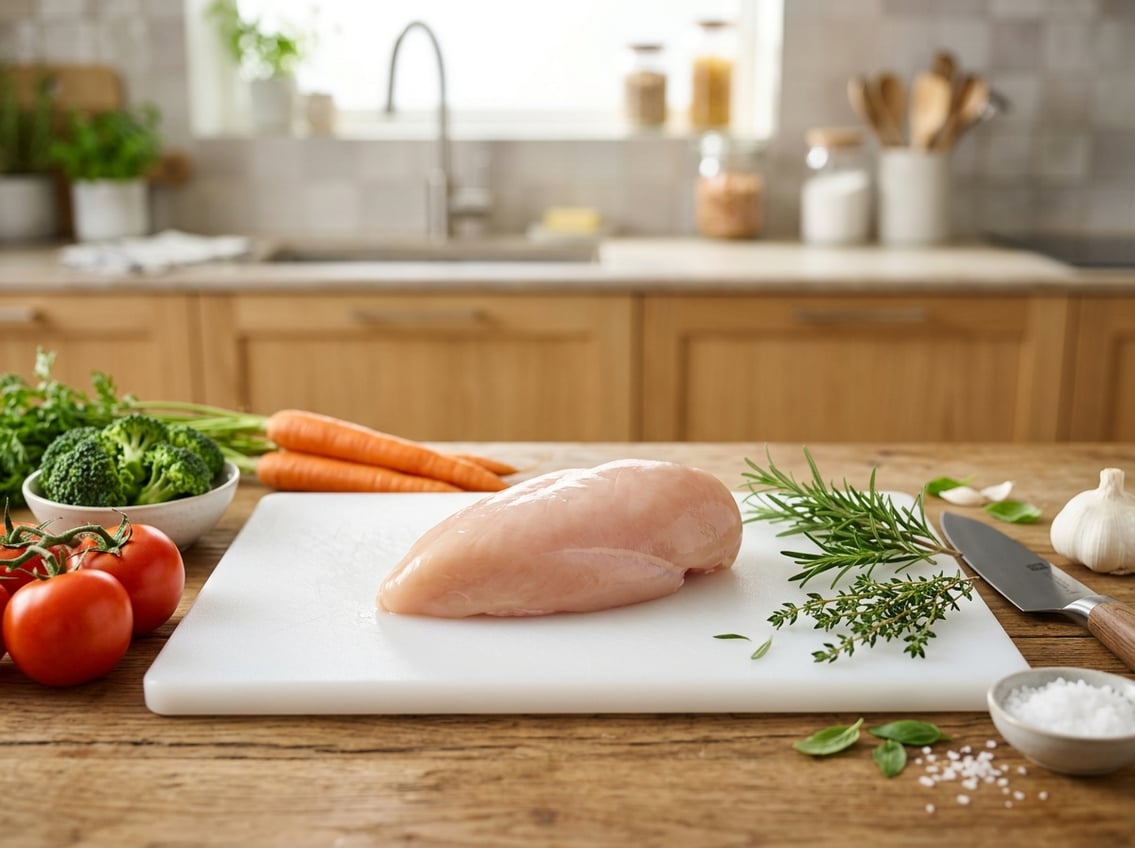
The strongest cancer concern is not plain chicken breast. The way poultry is prepared and your overall diet pattern matter more.
Groups such as the World Cancer Research Fund and American Institute for Cancer Research focus on patterns, portion size, and processing more than on unprocessed poultry alone.
Why Unprocessed Chicken Breast Is Usually Considered Low Concern
Chicken breast is an unprocessed poultry food. It is lean, high in protein, and usually appears in cancer guidance as a neutral or lower-concern choice compared with processed meats.
That does not mean you can eat unlimited amounts with no tradeoffs. When you compare chicken breast with bacon, sausage, or other processed meats, the cancer concern is much lower.
What Observational Research Can And Cannot Prove
Most evidence on poultry consumption and cancer comes from observational studies. These studies can find patterns, but they cannot prove that chicken consumption directly causes cancer.
People who eat more poultry may also differ in many other ways, such as physical activity, alcohol use, total calorie intake, and cooking habits. Those differences can change the result.
How Meta-Analysis And Epidemiology Shape The Bigger Picture
Epidemiology studies how disease appears in groups of people over time. A meta-analysis combines results from many studies to look for a broader trend.
When researchers combine the research, the picture for unprocessed poultry stays mixed and usually modest at most. This is very different from the stronger, more consistent evidence seen with processed meat.
When Risk Goes Up: Processing And High-Heat Cooking

Chicken breast itself is not the only issue. Your cooking methods can change what ends up on your plate.
Some forms of processed poultry raise a different set of questions.
How Grilling, Frying, And Other Cooking Methods Change Exposure
High-temperature cooking can create compounds that are not present in raw chicken. Grilling and frying are the main methods people often ask about, especially when the meat gets dark or crisp.
A simply cooked breast and a heavily charred breast are not the same exposure. A VCU Health review on grilling notes that marinating and avoiding direct flare-ups can reduce some of these compounds.
HCAs And PAHs: Why Charring Matters
Heterocyclic amines, or HCAs, form when meat is cooked at high heat. Polycyclic aromatic hydrocarbons, or PAHs, can form when fat drips onto flames and smoke rises back onto the food.
These compounds matter because repeated exposure may raise long-term cancer risk. The risk is greatest with frequent charring, blackened surfaces, and cooking over open flame, as explained by ColumbiaDoctors.
Why Processed Poultry Products Are A Different Question
Processed poultry is not the same as fresh chicken breast. Products such as chicken nuggets and chicken sausage often include extra salt, fillers, breading, and industrial processing.
Those products fit into a broader processed food pattern, which is usually more concerning than plain chicken breast. If you want to lower cancer risk, choose less processed chicken.
How To Interpret Headlines About Poultry And Cancer

News headlines often turn a single study into a broad warning. The details matter, especially when the study does not measure key factors like cooking methods or full diet patterns.
What The 2025 Italian Study Reported
A 2025 study from Italy reported that higher poultry consumption, especially above about 300 grams per week, was linked with a modest increase in gastrointestinal cancer risk and higher all-cause mortality.
The reporting around it created a lot of concern, including coverage in The Independent and Medical News Pakistan.
A link in one study is not the same as a direct cause.
Key Study Limits Including Missing Cooking Method Data
A major limit is that many studies do not know how the poultry was cooked. Boiled chicken breast, fried chicken, and grilled chicken can lead to very different exposures.
Some reports on the study also noted concerns about incomplete detail and possible confounding, which can weaken the results. If the study cannot separate the role of cooking methods, the chicken itself may get blamed for something else.
Why Lifestyle And Diet Pattern Confounding Matter
Lifestyle factors can distort observational study results. People with higher poultry intake may also differ in physical activity, smoking, alcohol intake, or the rest of their diet.
A person’s cancer risk usually reflects a whole pattern, not one food.
Cancer Types Often Mentioned In Poultry Research

Different cancer types come up in poultry research for different reasons. The strength of the evidence is not the same for each one.
Diet pattern still matters more than a single food.
Colorectal And Gastrointestinal Cancer Discussions
Colorectal cancer and other gastrointestinal cancers are the most common focus in poultry studies. Cooking byproducts and long-term diet patterns may affect the digestive tract first.
The evidence is still mixed for unprocessed poultry. Risk looks more concerning when poultry is heavily processed, heavily grilled, or part of a low-fiber diet.
What Research Says About Prostate, Breast, And Esophageal Cancer
Prostate cancer and breast cancer are often mentioned in meat research because some studies have linked these cancers to diet quality, obesity, and cooking-related compounds.
Esophageal cancer also appears in discussions of charred meats and smoking-related exposures.
The evidence does not show that plain chicken breast is a direct cause of these cancers. The bigger concern is a broader pattern of poor diet, frequent high-heat cooking, and low intake of plant foods.
How Substitution Within A Balanced Diet May Affect Risk
What you replace chicken with matters.
In a balanced diet, you may benefit by swapping processed meat for unprocessed poultry. You can also support lower risk by choosing more beans, fish, or plant proteins instead of poultry.
Choose less processed foods. Use gentler cooking methods.
Keep the rest of your diet rich in fiber, vegetables, and fruit.


