
Where to Temp Chicken Breast for Accurate Doneness
Check the thickest part of the chicken breast with an instant-read thermometer. Avoid touching bone, pan, or grill grates.
That spot gives you the most useful reading for chicken internal temperature. It is the safest way to judge doneness without cutting into the meat.
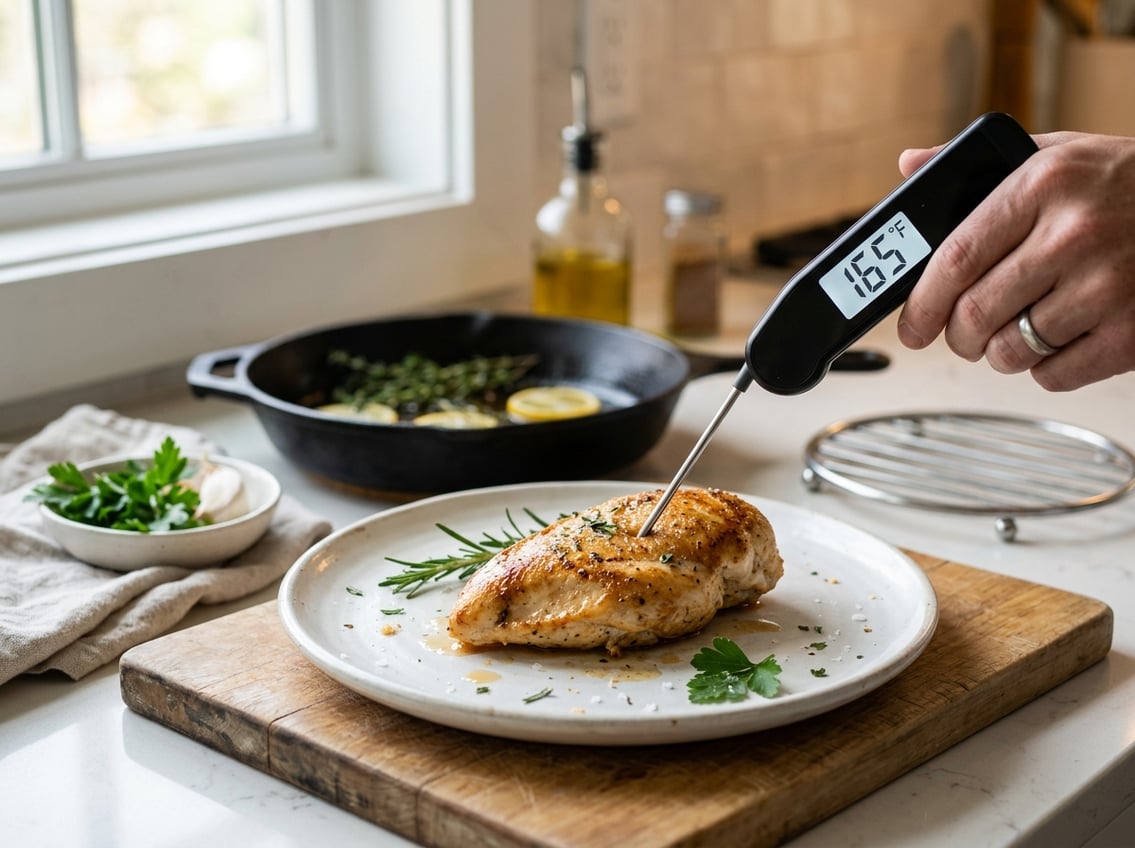
If you place your meat thermometer correctly and pull chicken at the right internal temperature, you can get safe, juicy chicken without guesswork.
Chicken breast dries out fast when it goes past the correct cooking temperature. A good thermometer reading keeps you from serving meat that is undercooked or overdone.
Best Spot to Check the Thickest Part
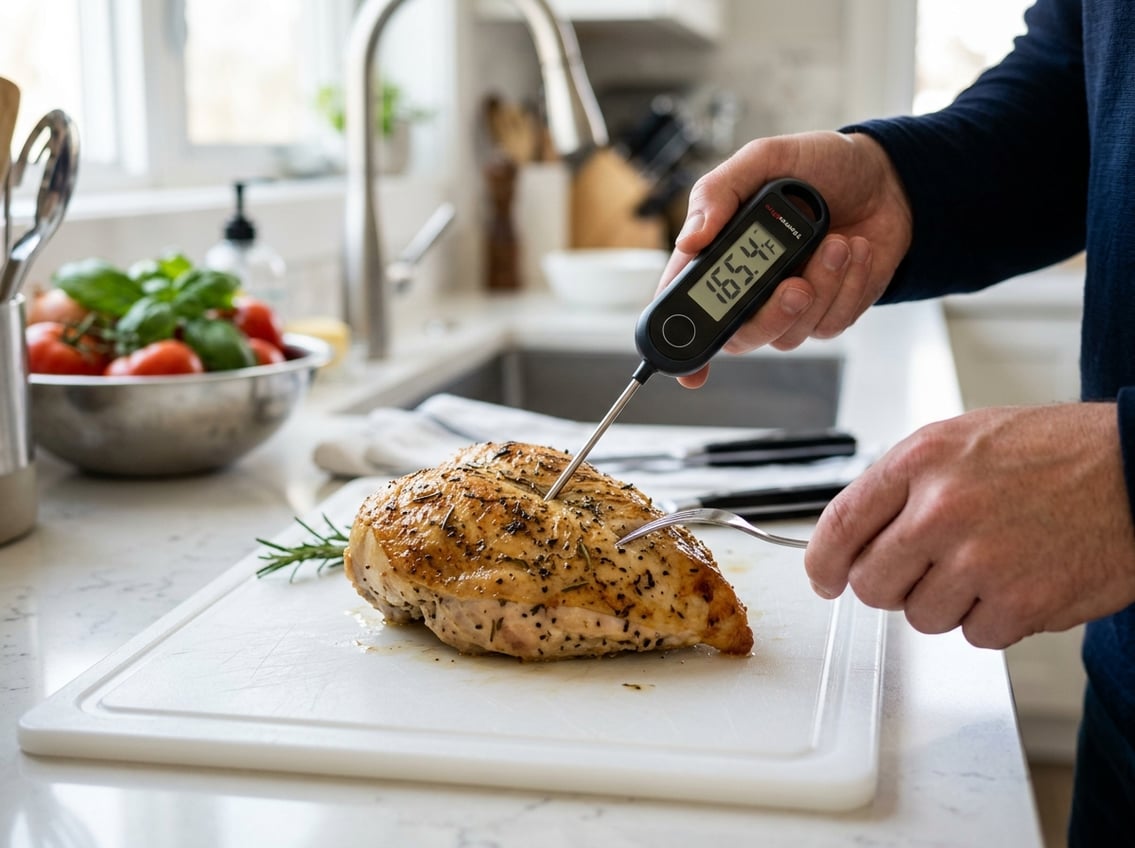
Place the thermometer in the thickest part of the breast, because that area usually finishes cooking last. An instant-read thermometer gives you a fast, accurate look at the chicken internal temperature.
Probe straight into the center of the thickest part, not the thin edge. This keeps you from reading a hotter outer layer and mistaking it for doneness.
Probe From the Side Into the Center
Insert the probe from the side when possible. This makes it easier to aim for the center and see whether the tip lands in the middle of the meat.
Side entry works well for thicker breasts and for pieces on a cutting board. It also helps you avoid pushing the thermometer through too much meat, which can throw off the reading.
How Deep the Thermometer Should Go
Push the probe in far enough that the sensing tip reaches the center of the thickest part. On many instant-read thermometers, insert the probe past the halfway point of the breast.
Read the thermometer only after the number stabilizes. If the tip is still near the surface, you may see a number that is too low or too high.
How to Avoid Bone, Pan Contact, and False Readings
Keep the probe away from bone, because bone can give a false high reading. The same problem happens if the tip touches the pan, baking sheet, or grill grate.
If the chicken is uneven, check more than one spot in the thickest part. This gives you a better picture of the true internal temperature and helps you avoid undercooked spots.
Temperature Targets for Safe, Juicy Results
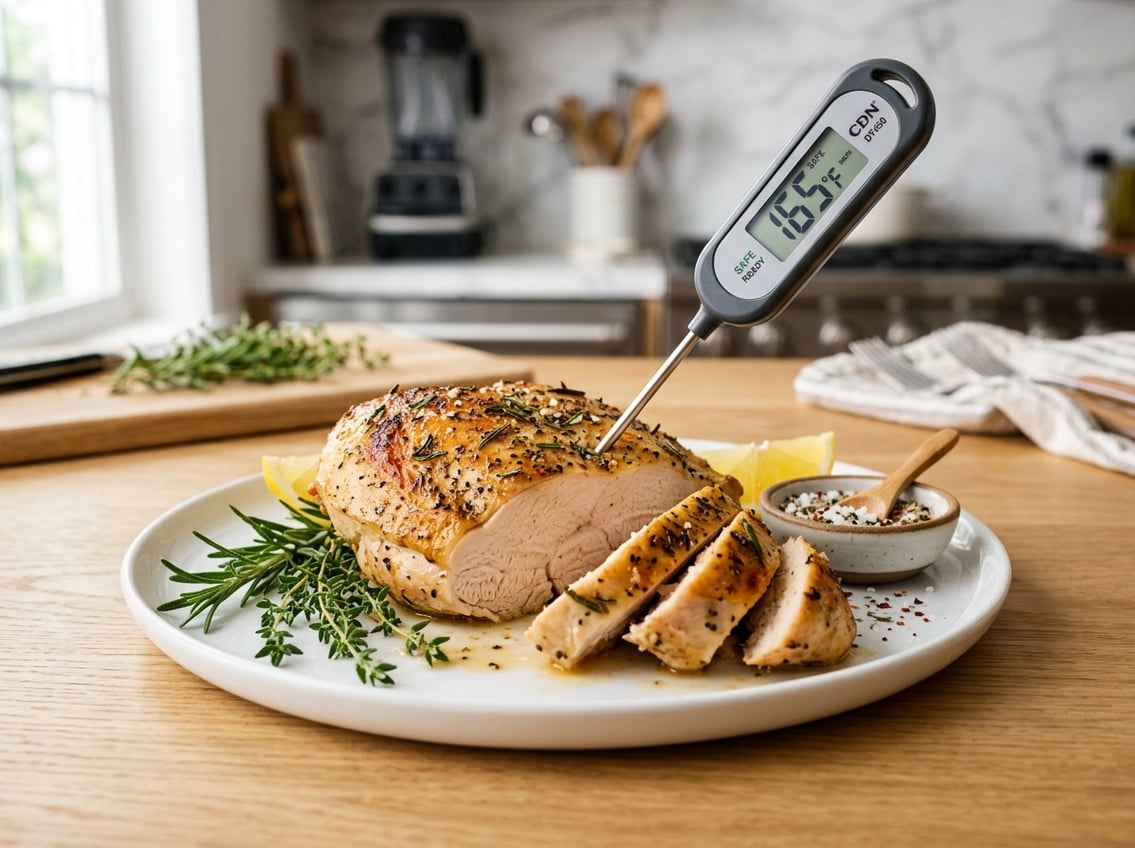
Aim for a safe chicken cooking temperature that keeps the meat tender. Use 165°F for the thickest part of the breast, which is the standard safe finish point for most home cooking.
The right number depends on when you check and how long the chicken will rest. Carryover heat can finish the job without pushing the breast too far.
When Chicken Breast Is Safely Done
Chicken breast is safely done when the center reaches 165°F. At that point, the meat is cooked through and safe to eat.
If you use a meat thermometer, check the thickest section, then confirm the reading in another nearby spot if the breast is large or uneven.
Why 165°F Is the Simple Rule
165°F is the easiest rule to remember because it is the widely used safe internal temperature for chicken. It gives you a clear target without needing to guess based on color or juice.
Some cooking guides suggest pulling chicken a little earlier if you understand carryover heat. According to Allrecipes, chicken can rest up to the safe range after leaving the heat.
When to Pull It Early for Carryover Cooking
You can remove chicken breast a few degrees before 165°F if you plan to rest it. The temperature often rises a bit while the meat sits, especially with thicker pieces.
Many cooks pull chicken at about 155°F to 160°F and rest briefly, as long as the chicken finishes at 165°F. This method can help you avoid overcooking while still reaching the right internal temperature.
How Placement Changes by Cooking Method
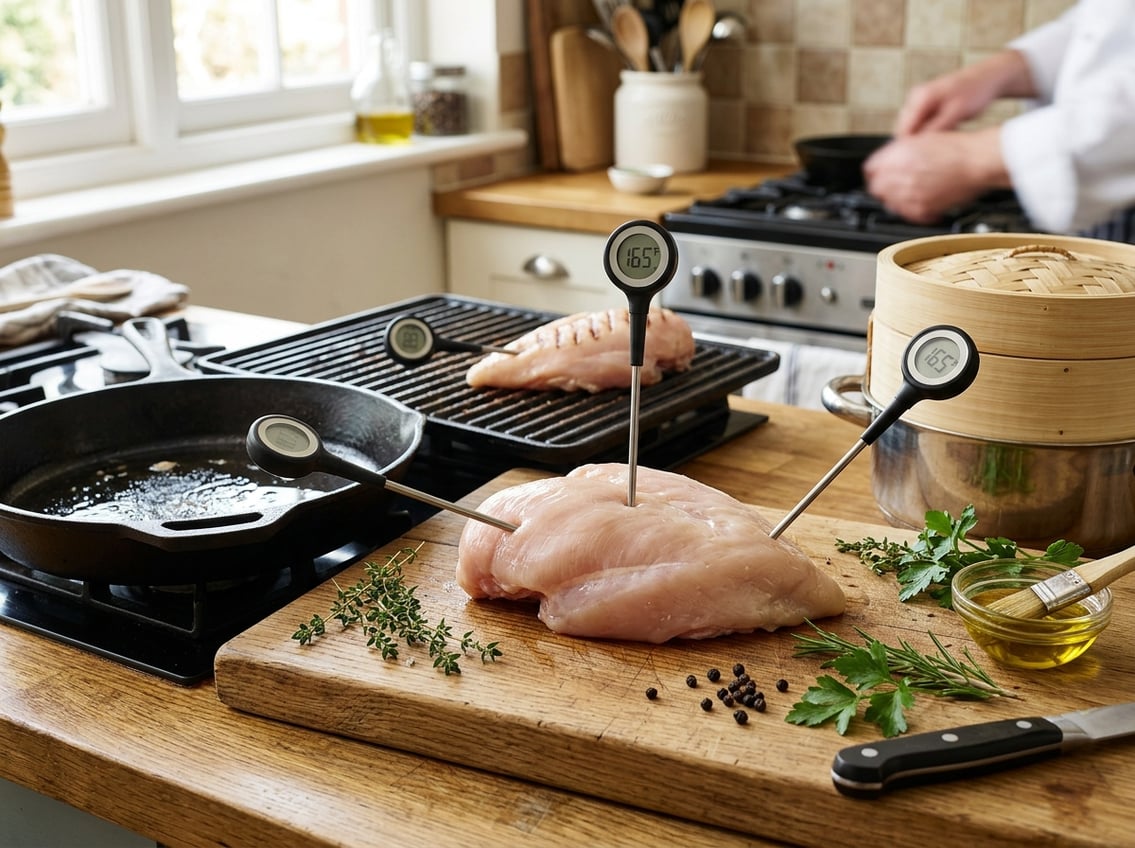
The place where you check chicken changes a little based on how you cook it. Baking, pan cooking, grilling, and roasting all create hot and cool zones, so the thickest part still matters most.
Use a meat thermometer the same way across methods. Adjust your approach based on the shape and heat source.
Baking Chicken Breasts in the Oven
When baking chicken breasts, check the thickest part near the end of the cook time. Oven heat can make the outside look done before the center catches up.
If the breasts are very uneven, rotate the pan and check more than one piece. Allrecipes on baking chicken breasts notes that thickness changes cook time, which is why a thermometer is more useful than timing alone.
Skillet and Grill Checks
In a skillet or on the grill, heat moves fast, so the outside can brown quickly. Insert the instant-read thermometer after flipping, then check the thickest part away from the hot surface.
If the breast is thick, lower the heat or move it to a cooler zone after searing. This gives the center time to reach the right temperature without burning the outside.
Roasting a Whole Chicken and Comparing Breast vs. Thigh
When roasting a whole chicken, check more than one location. The breast often reaches 165°F before the thigh is fully done, and the thigh can need a higher reading.
BBQ Host on where to probe chicken suggests checking the breast first, then the thigh.
Mistakes That Lead to Dry or Undercooked Meat
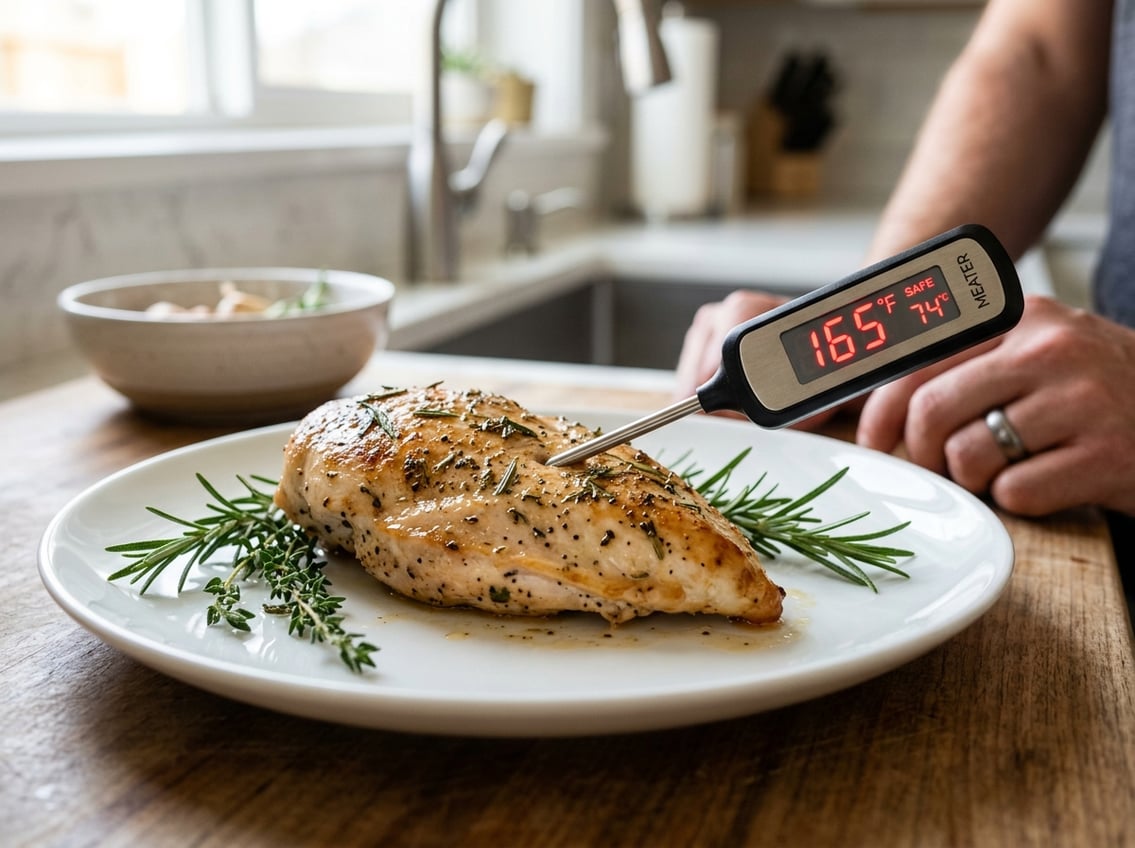
The most common mistakes are easy to avoid once you know where to temp chicken breast. Small placement errors can make juicy chicken turn dry or leave the center undercooked.
A good reading depends on the right spot, more than one check when needed, and enough rest time for residual heat.
Checking Too Close to the Surface
If you test too close to the surface, the thermometer may read the hotter outer layer instead of the center. That can make chicken look done before the middle is safe.
Aim for the deepest part of the thickest section. That is the best way to judge the true internal temperature.
Taking One Reading Instead of Multiple Spots
One reading can miss a cold spot, especially in thick or uneven breasts. If the piece is large, check two or three spots in the thickest area.
This is especially useful when the breast has a tapered shape. A second reading helps you avoid overcooking while still getting a safe result.
Ignoring Rest Time and Residual Heat
Rest time matters because the temperature keeps rising after cooking.
If you cut into the chicken right away, juices run out and the meat can seem drier.
Let the chicken rest a few minutes after you remove it from heat.
That short pause lets carryover cooking finish the center and helps create juicy chicken with a better texture.


