
How Chicken Breast Look Like: Raw and Cooked Signs
You can tell a lot from how chicken breast looks before and after cooking.
Raw chicken breast should look moist, pale pink, and firm. Cooked chicken breast should look opaque, white to light tan, and fully set through the thickest part.
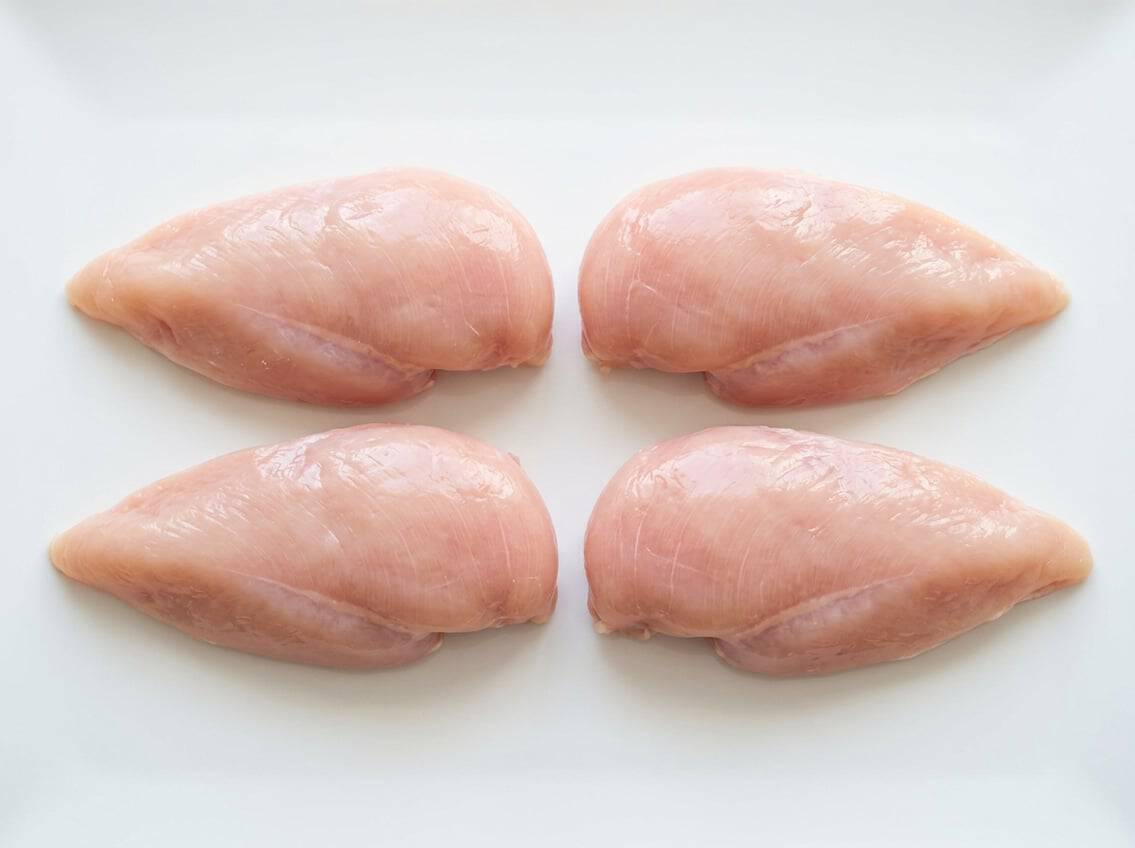
Use sight, touch, and temperature together to judge chicken breast.
Color alone is not enough, since lighting, seasoning, and cooking method can change the surface quickly.
What Fresh Raw Chicken Should Look and Feel Like
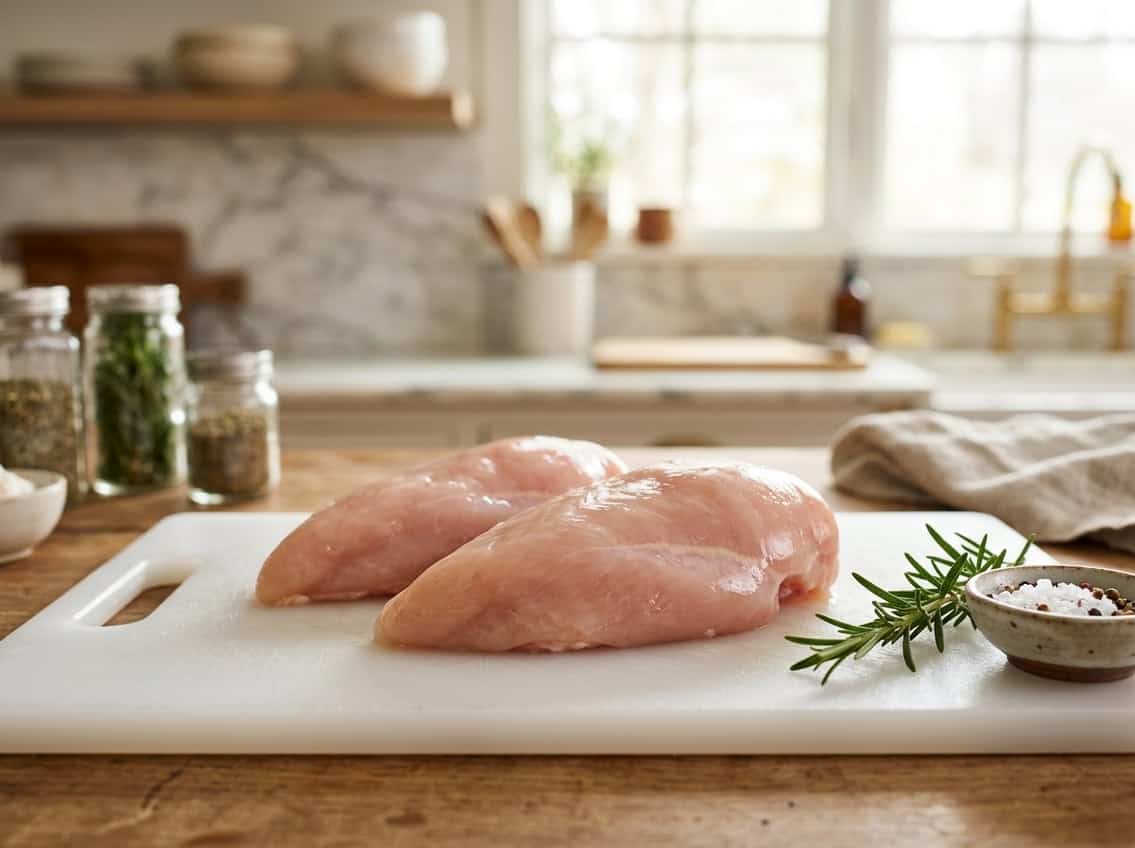
Fresh chicken breast looks simple and clean when it is in good condition.
The surface should not seem dull, sticky, or uneven.
A typical package of chicken breast should look moist and consistent.
It should have no strong odor or strange color changes.
Normal Color Range and Surface Appearance
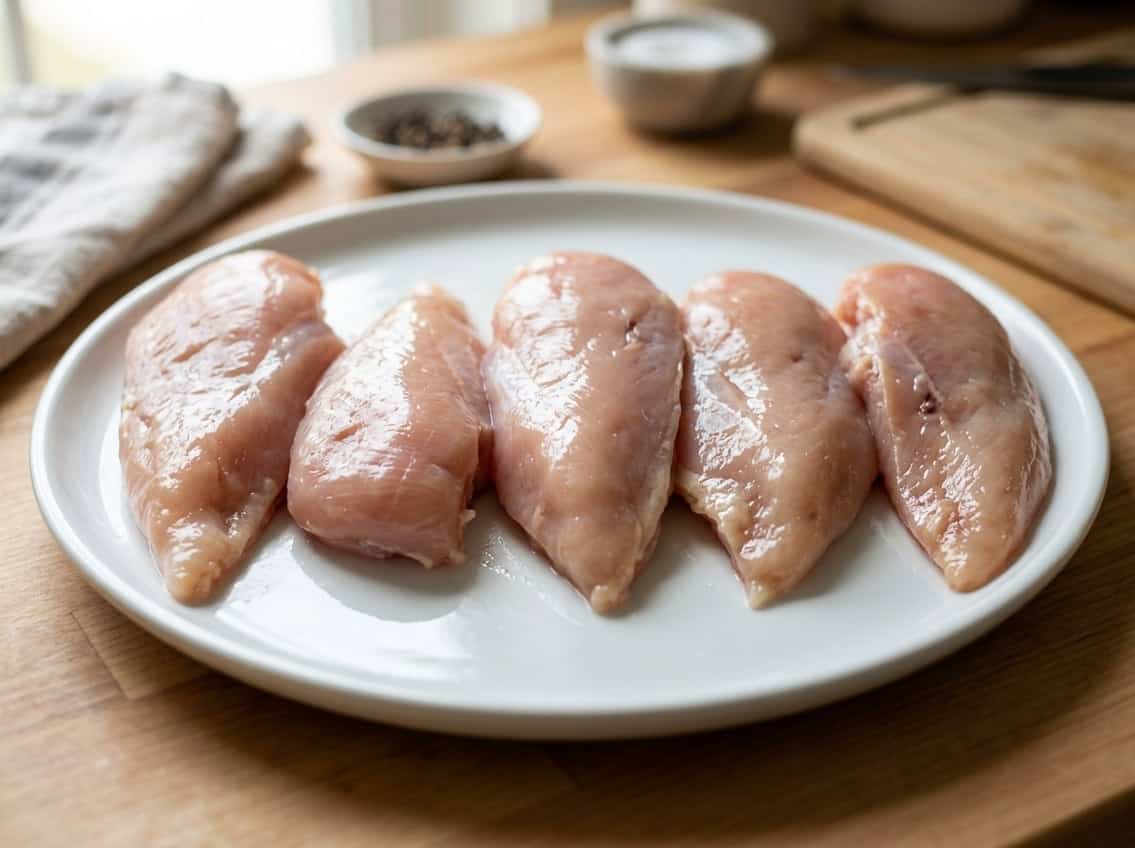
Raw chicken breast is usually pale pink to light peach with a slight natural sheen.
You may see a few white streaks of fat or small color differences between thicker and thinner areas.
Small variations are normal, especially if someone trims the breast by hand.
A healthy-looking breast should stay even in color and not show dark spots or heavy discoloration.
Texture, Moisture, and Packaging Clues
Fresh chicken breast feels firm and springs back a little when pressed.
It can feel damp but not slimy, and the liquid in the package should be clear or only lightly tinted.
Packaged chicken should sit well in the tray, with no puffed or damaged wrap.
A strong sour smell, sticky surface, or cloudy liquid can all point to spoilage.
Signs the Chicken May Be Spoiled
Spoiled chicken breast often looks gray, greenish, or dull.
It may feel tacky or slippery, and the smell can turn sharp or sour.
Watch for excessive liquid, torn packaging, or a swollen container.
If the chicken looks off in more than one way, do not use it.
How to Tell When It Is Fully Cooked
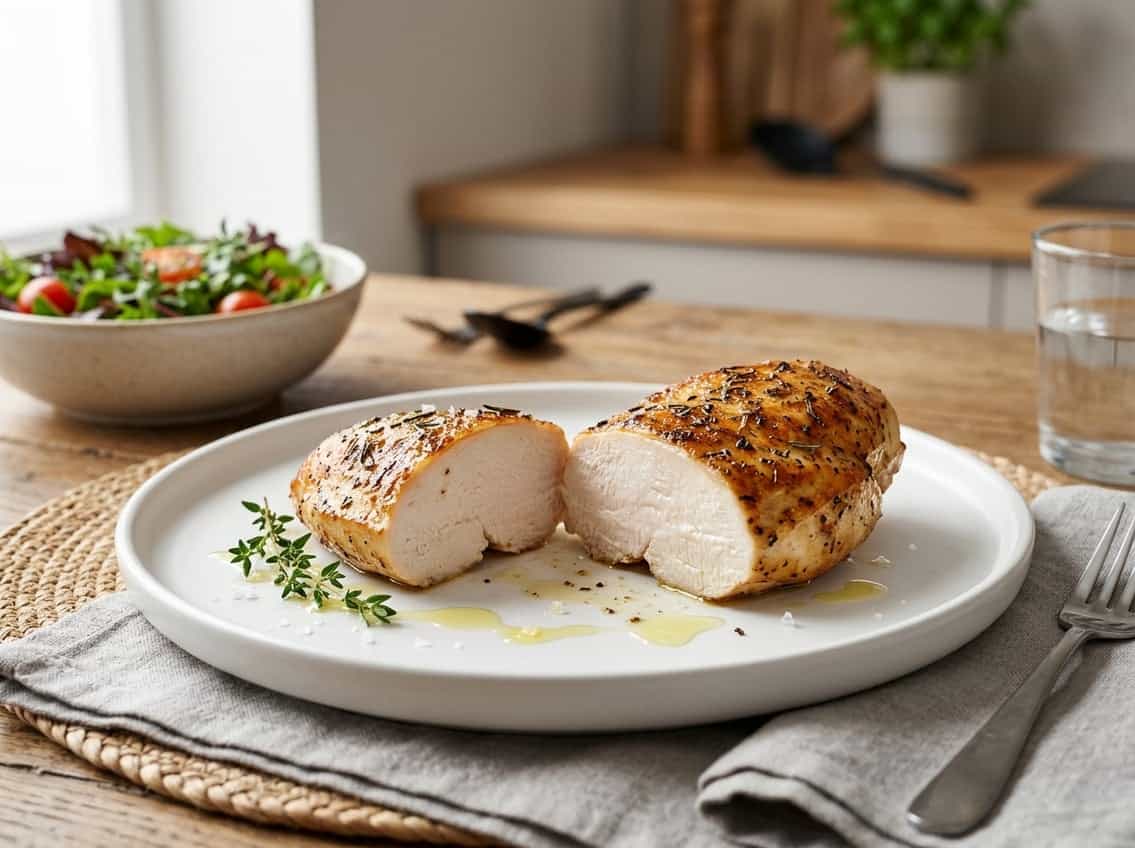
As chicken breast cooks, it changes from soft and glossy to firm and opaque.
The center should look set, the juices should run clear, and the temperature should reach a safe level in the thickest part.
Color Inside the Meat
A cooked chicken breast should look white or light tan all the way through.
It should not have a translucent or glossy raw-looking center.
Small pink areas near the bone can happen in bone-in pieces, but boneless breast should not have a shiny, jelly-like middle.
Pink color alone does not always mean it is unsafe, but a raw-looking center is a clear warning sign.
An undercooked chicken breast often still looks soft and slightly see-through in the middle.
Clear Juices and Firmness
When you cut into a cooked chicken breast, clear or very lightly tinted juices should come out.
The meat should feel firm, not squishy, and it should separate cleanly when sliced.
The texture of cooked chicken should feel springy and moist, not gelatinous.
It should hold together without looking wet in the center.
Using a Meat Thermometer the Right Way
A meat thermometer gives the most reliable way to check doneness.
Insert it into the thickest part of the breast, away from the pan, bone, or fat pocket.
Chicken breast should reach 165°F in the center.
That number matters more than surface color, since the outside can look done before the inside is safe.
How Cooking Method Changes the Appearance
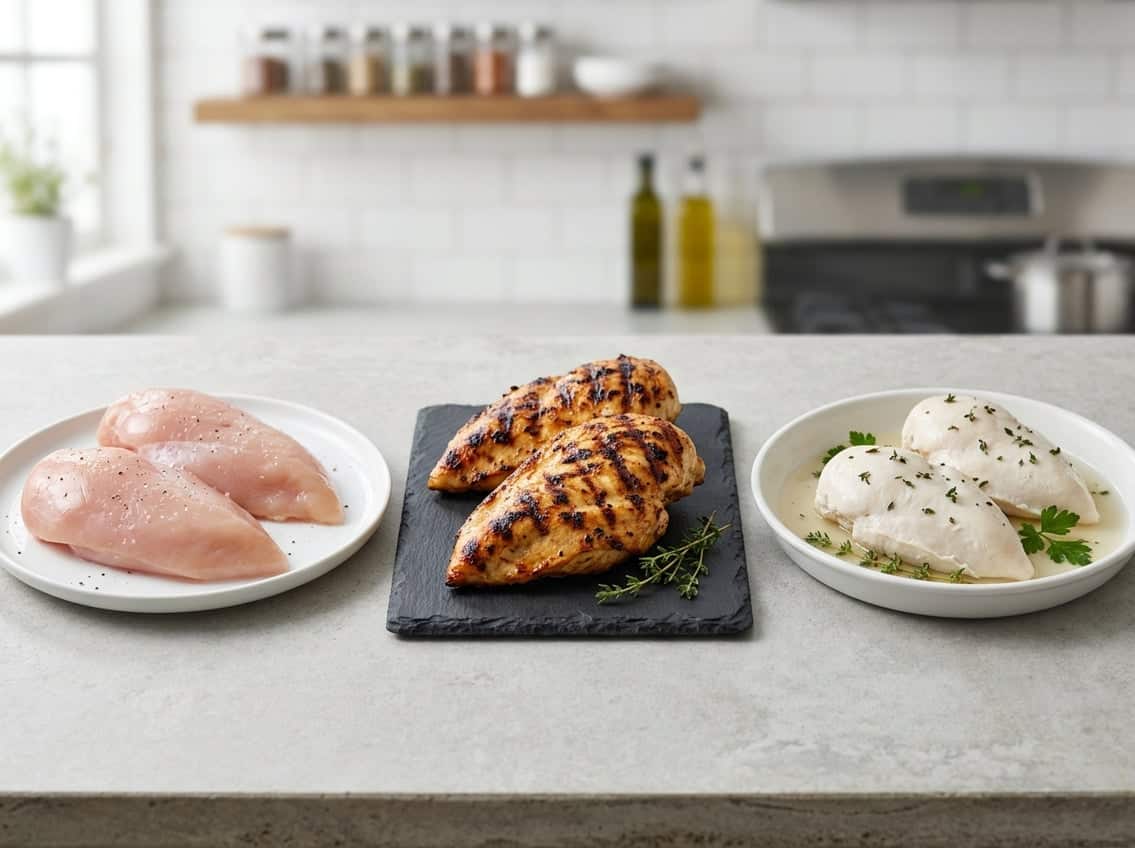
Different cooking methods change the surface, color, and moisture level of chicken breast.
A grilled chicken breast looks different from a baked or pan-seared one, even when all of them are fully cooked.
What Grilled Chicken Breast Should Look Like
Grilled chicken breast usually has dark sear marks or a browned, slightly charred surface.
The outside may look drier than baked chicken, while the inside should stay juicy.
Even grill marks show good cooking.
If the outside is very dark and the center is still pale and soft, the meat may not be finished cooking.
Baked and Pan-Seared Visual Differences
Baked chicken breast often looks evenly pale-golden with a smoother surface.
Pan-seared chicken breast usually has a deeper brown crust on one side and a lighter, more uniform interior after slicing.
Baking can keep the surface softer, while pan-searing creates more browning and a firmer outer layer.
Why Resting Changes Juiciness and Texture
After cooking, let chicken breast rest for several minutes before you cut it.
Resting lets the juices settle, so less moisture runs out onto the cutting board.
A rested breast usually slices more cleanly and looks more even inside.
If you cut too soon, the meat can look drier than it really is because the juices leave the center quickly.
Common Mistakes That Affect Look and Texture
Heat, thickness, and timing often cause appearance problems.
A chicken breast can look strange because someone overcooked, undercooked, or cut it in a way that hides its true doneness.
How Overcooked Chicken Turns Dry and Tough
An overcooked chicken breast often looks very pale, tight, and stringy.
The surface may shrink, and the meat can pull apart into dry fibers instead of clean slices.
The texture of cooked chicken gets tougher as moisture leaves the meat.
Once that happens, the breast can look smaller and feel rubbery or chalky.
Why Undercooked Centers Still Look Pink or Glossy
An undercooked chicken breast may still have a glossy center that looks slightly translucent.
The middle can feel soft while the outer layer looks done.
That mix is common when the heat is too high or the pan is too hot.
The outside cooks quickly, while the center stays raw for longer.
Size and Thickness Differences, Including 1 Pound Portions
A 1 pound of chicken breast may not cook evenly if it has a thick end and a thin end.
The thinner part can dry out before the thicker part is ready.
You get a more even look when you pound the breast to a similar thickness or slice it into cutlets.
This makes the color, texture, and final doneness much easier to judge.


