
How to Chicken Breast Tender: Best Methods That Work
You can learn how to chicken breast tender by controlling moisture, heat, and timing from the start. Chicken breasts are lean, so they dry out fast if you cook them unevenly or too long.
Even thickness, a light brine or marinade, and gentle cooking to the right internal temperature bring the best results. These steps help you get chicken that stays juicy and slices cleanly.
What Makes Chicken Breast Turn Tough or Stay Tender
Chicken breasts can go from juicy to dry very quickly because they have little fat. Texture depends on how evenly the meat cooks and how much moisture it keeps.
Heat, thickness, and timing matter more than the cut itself. Once you know those factors, making tender chicken breast at home becomes much easier.
Why Lean Meat Dries Out So Easily
Chicken breasts are naturally lean, so they do not have much fat to protect them during cooking. As moisture leaves the meat, the fibers tighten and the chicken turns firmer.
A juicy chicken breast depends on careful prep and steady heat. Small mistakes matter more with lean meat than with fattier cuts.
How Thickness Affects Even Cooking
A thick end and a thin end cook at different speeds. The thinner part can dry out before the thicker part reaches a safe temperature.
Even thickness helps the whole piece finish together. That is one of the simplest ways to make tenderizing methods work.
Why Overcooking Changes Texture
When chicken breasts stay on the heat too long, the muscle fibers squeeze out more moisture. The meat gets dry, tight, and sometimes rubbery.
A thermometer helps you stop cooking before the texture drops. That matters as much as any seasoning or sauce you use.
Best Ways to Improve Texture Before Cooking
Good prep gives you a better starting point before heat ever touches the pan or oven. A few small steps can help chicken breasts cook more evenly and stay softer.
These methods work well together, especially if you want to pound chicken, tenderize chicken breast, or marinate chicken for better results.
Pound to an Even Thickness
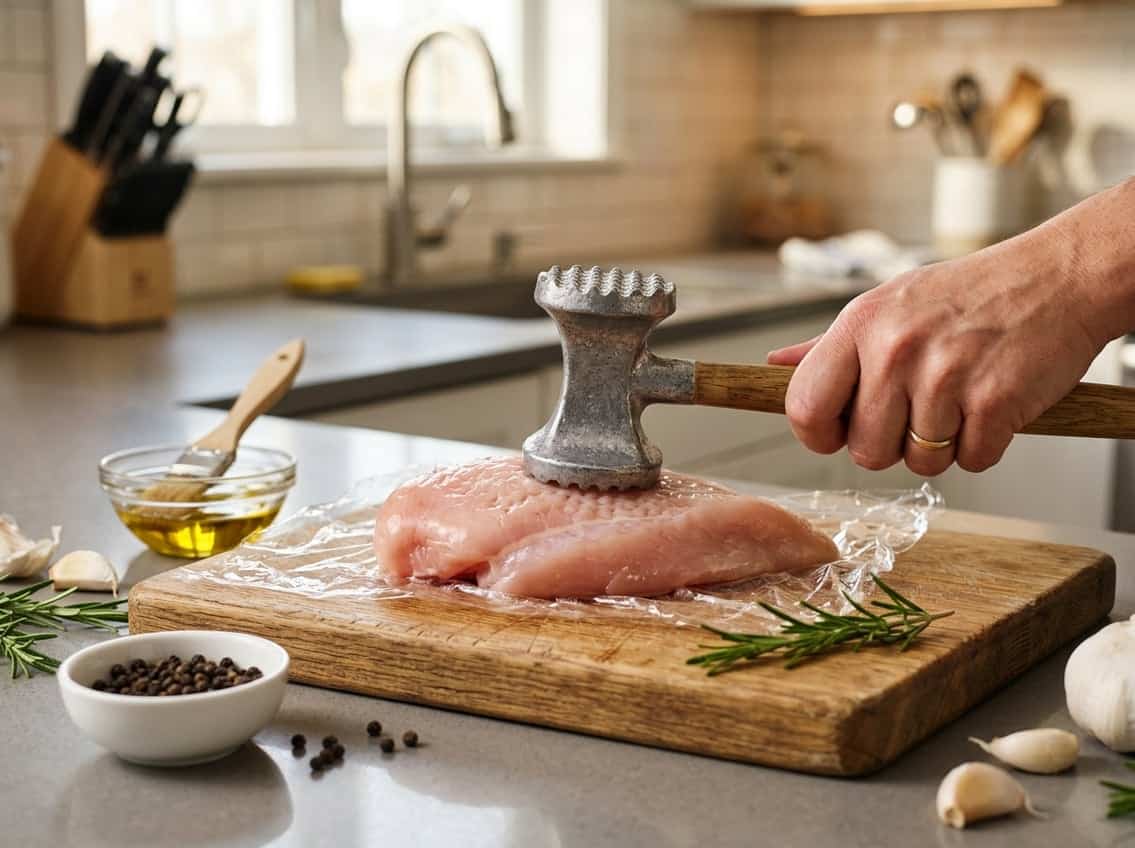
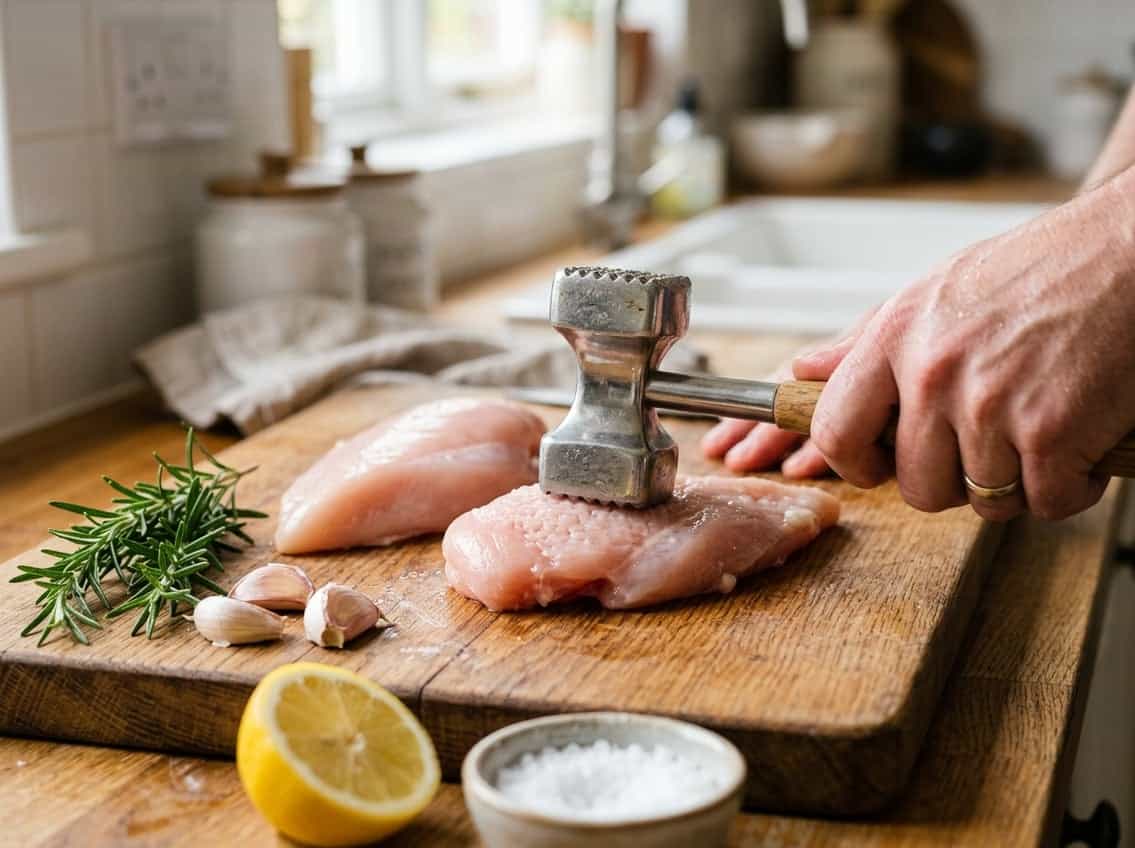
Place the chicken between plastic wrap or parchment and gently pound it to an even thickness. This helps the breast cook at the same rate from edge to center.
A meat mallet, rolling pin, or heavy pan can work. Flatten the thickest part without tearing the meat.
Cut Against the Grain for Easier Bites
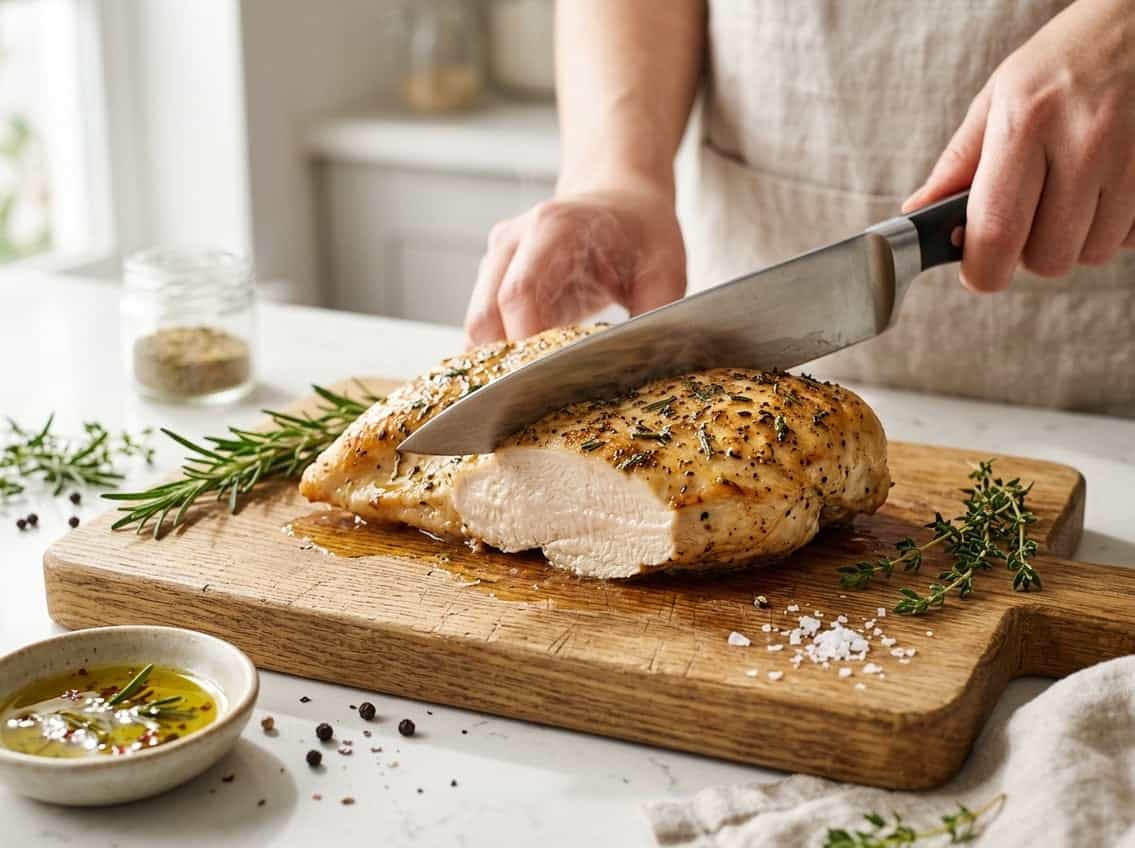
After cooking, slice across the grain so the muscle fibers are shorter in each bite. That makes the chicken feel softer and less chewy.
This step does not replace tenderizing, but it improves texture right away.
Brine for Better Moisture Retention
A simple saltwater brine helps chicken hold onto moisture during cooking. Brining is one of the reliable ways to improve tenderness and juiciness.
Keep the brine mild and limit the soak time so the meat does not taste too salty. A short brine can make a real difference.
Marinate for Flavor and Softness
A marinade adds flavor and can help with texture, especially when it includes an acid such as lemon juice, vinegar, or yogurt. Acidic ingredients can help break down tough fibers.
Do not over-marinate, or the surface can turn soft in a bad way. A few hours is often enough for chicken breasts.
Cooking Methods That Keep the Meat Moist
Once you prep the chicken, the cooking method matters just as much as the seasoning. Gentle heat, added moisture, and close attention to time help you keep the meat tender.
If you want juicy chicken breast, choose methods that cook the meat evenly instead of blasting it with heat.
Covered Skillet Cooking for Juicy Results
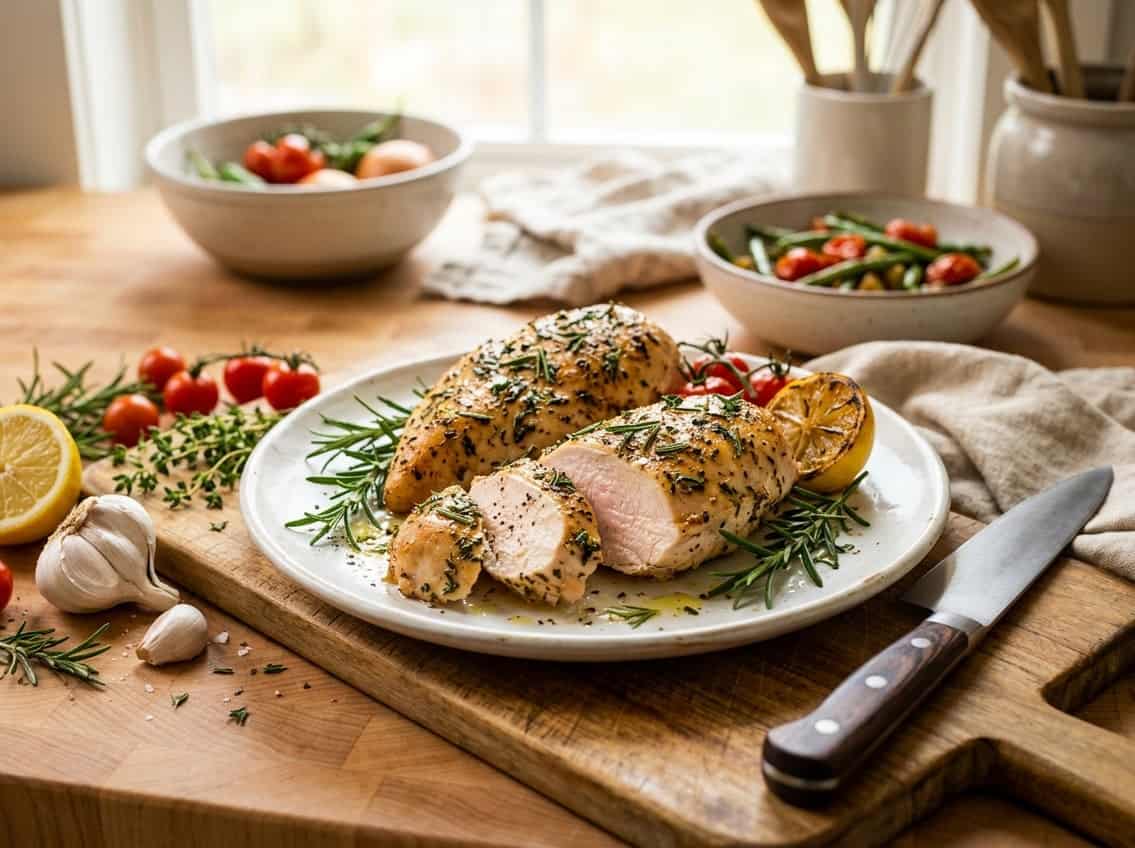
A covered skillet traps steam and helps the chicken cook through without losing as much moisture. Sear first, then cover the pan to get color and tenderness.
This method works well for thinner chicken breasts or pieces you have already pounded flat. Keep the heat moderate so the outside does not brown too fast.
Baking Chicken Without Drying It Out
Baking chicken works best when you use even thickness, a light coating of oil, and a moderate oven temperature. A covered dish or a foil tent can also help hold in moisture.
A quick skillet-style method also helps keep chicken juicy. Steady oven heat helps avoid dry edges.
Poaching and Slow Cooking for Extra Soft Texture
Poaching keeps the chicken in gentle liquid heat, which is useful when you want very soft texture. Slow cooking also works well when the goal is shreddable meat for soups, sandwiches, or tacos.
These methods are not ideal for crisp browning, but they are dependable for tender chicken. They are especially useful when you need chicken breasts that stay moist with little effort.
How to Know It Is Done Without Losing Juices
The easiest way to keep a juicy chicken breast is to stop cooking at the right time. Guessing by color alone often leads to dry meat.
Check temperature and rest the meat to get a tender chicken breast. That small amount of extra care makes a clear difference.
Use Internal Temperature Instead of Guessing
A food thermometer gives you the most reliable answer. Chicken breasts are done when the center reaches 165°F.
Check the thickest part of the meat, not the edge. This keeps you from pulling the chicken too early or letting it dry out.
Why Resting Matters Before Slicing
Rest the chicken for several minutes after cooking so the juices settle back into the meat. If you cut too soon, those juices run onto the plate instead of staying in the breast.
Resting helps the texture stay softer and more even. It is a simple step that protects the work you did during prep and cooking.
Common Mistakes That Make Chicken Rubbery
Overcooking, uneven thickness, and slicing right away often lead to rubbery chicken. High heat for too long causes chicken breasts to tighten.
Avoid crowding the pan. Use a thermometer to check doneness.
Limit the amount of acid in your marinade. These small changes help you get tender chicken breast.


